Minimal Invasive Spinal Device Market Size, Share & Trends Analysis Report By Product Type (Interbody Fusion Devices, Minimally Invasive Discectomy Devices, Motion Preservation Devices), By Application (Degenerative Disc Disease, Spinal Stenosis, Spondylolisthesis, ), By End User (Hospitals, Ambulatory Surgical Centers) and By Region (North America, Europe, Asia Pacific, Latin America, Middle East & Africa) Forecasts, 2026–2034
USD 3950
Minimal Invasive Spinal Device Market Size
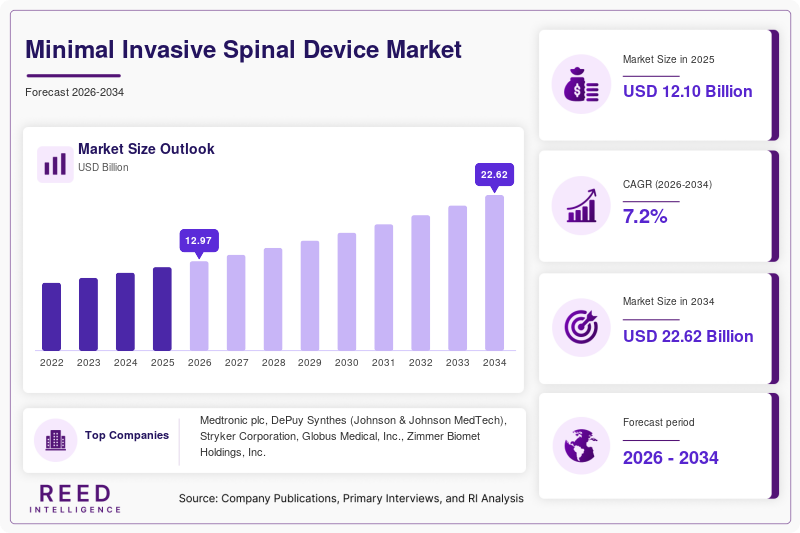
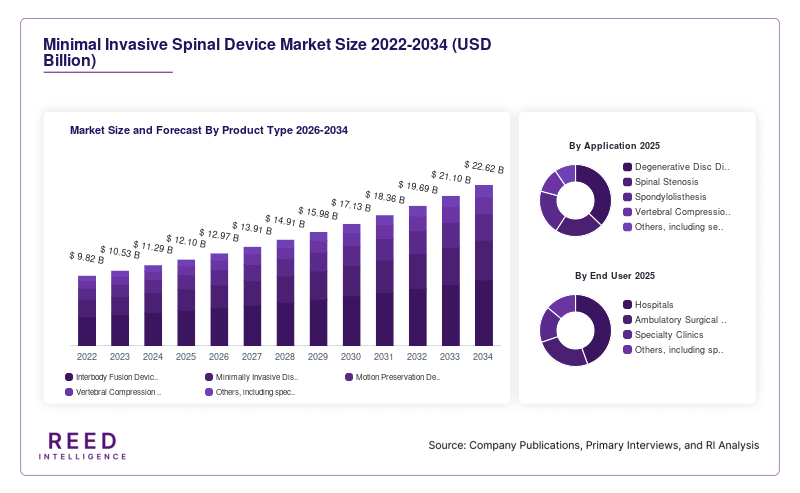
The global minimal invasive spinal device market was valued at USD 12.10 billion in 2025 and is projected to grow from USD 12.97 billion in 2026 to USD 22.62 billion by 2034, registering a compound annual growth rate (CAGR) of 7.2% during the forecast period (2026–2034).
The Minimal Invasive Spinal Device Market comprises medical devices and surgical instruments used to diagnose, treat, stabilize, decompress, or reconstruct spinal structures through procedures designed to minimize tissue disruption. These devices include interbody fusion implants, minimally invasive discectomy instruments, motion-preservation systems, vertebral compression fracture treatment devices, and specialized surgical access and fixation systems.
The market is expanding as surgeons and healthcare providers increasingly adopt techniques intended to reduce incision size, limit disruption to surrounding muscles, and support postoperative recovery. Minimally invasive spinal procedures are used to manage conditions such as degenerative disc disease, spinal stenosis, spondylolisthesis, and vertebral compression fractures.
Minimal Invasive Spinal Device Market Drivers
Rising Prevalence of Degenerative Spinal Disorders: Degenerative disc disease, spinal stenosis, spondylolisthesis, and other spinal conditions create demand for surgical interventions. An aging population and increasing recognition of spinal disorders are supporting demand for implants, decompression instruments, and minimally invasive stabilization technologies.
Growing Adoption of Minimally Invasive Surgical Techniques: Minimally invasive approaches can reduce tissue disruption and may support shorter hospital stays and recovery periods for appropriately selected patients. These potential benefits are encouraging hospitals and surgeons to adopt specialized instruments, implants, and surgical access systems.
Advancements in Surgical Navigation and Robotics: Navigation systems, intraoperative imaging, robotic-assisted platforms, and endoscopic visualization are improving surgical planning and instrument placement. Their integration with spinal implants and fixation devices is creating opportunities for advanced minimally invasive procedures.
Minimal Invasive Spinal Device Market Restraints
High Device and Procedure Costs: Advanced implants, navigation platforms, robotic systems, and specialized surgical instruments can increase upfront expenditure. Budget constraints and differences in reimbursement coverage may restrict adoption, particularly in healthcare facilities with limited capital resources.
Regulatory and Clinical Evidence Requirements: Spinal devices must meet stringent safety, performance, and regulatory requirements. Clinical trials, product testing, and approval processes can increase development costs and delay commercialization, especially for innovative implants and new surgical techniques.
Shortage of Specialized Surgical Expertise: Minimally invasive spinal procedures require appropriate training and familiarity with specialized instruments, imaging systems, and procedural workflows. Limited access to trained surgeons and specialized facilities can slow adoption in some healthcare markets.
Minimal Invasive Spinal Device Market Opportunities
Expansion of Endoscopic and Navigation-Assisted Procedures: Improvements in endoscopic instruments, imaging, and navigation create opportunities for manufacturers to develop systems that support precise access and instrumentation through smaller surgical openings.
Development of Advanced Implant Materials: Three-dimensional-printed titanium, porous implant structures, and advanced polymer materials provide opportunities to improve implant geometry, bone integration, and mechanical performance. Product differentiation can help manufacturers address specialized clinical requirements.
Growth of Ambulatory Surgical Centers: Selected minimally invasive spinal procedures may be suitable for outpatient settings when clinically appropriate and supported by local regulations and infrastructure. This creates opportunities for compact instrumentation, efficient procedural systems, and devices designed for streamlined workflows.
Minimal Invasive Spinal Device Market Segmental Analysis
By Product Type
Interbody Fusion Devices: Interbody fusion devices support spinal stabilization and fusion by maintaining disc-space height and providing a structure for bone growth between adjacent vertebrae. Products include cages and implants used in procedures such as transforaminal, lateral, anterior, and oblique lumbar interbody fusion. Their demand is supported by degenerative spinal conditions and ongoing improvements in implant materials and designs.
Minimally Invasive Discectomy Devices: These devices enable the removal of herniated or damaged disc material through small incisions. Specialized instruments, tubular retractors, and endoscopic systems help surgeons access affected areas while limiting disruption to surrounding tissues. Increasing use of endoscopic techniques supports innovation in this segment.
Motion Preservation Devices: Motion preservation devices, including artificial disc replacement and dynamic stabilization systems, are designed to address selected spinal conditions while retaining some degree of movement. Adoption depends on patient suitability, clinical outcomes, regulatory approvals, and surgeon preference.
Vertebral Compression Fracture Devices: These devices are used in minimally invasive procedures such as vertebroplasty and kyphoplasty to treat selected vertebral compression fractures. They support vertebral augmentation and are particularly relevant to fractures associated with osteoporosis or other underlying conditions.
By Application
Degenerative Disc Disease: Degenerative disc disease is a major application because changes in spinal discs can cause persistent pain, reduced mobility, and other symptoms requiring clinical management. Depending on patient condition, treatment may involve minimally invasive fusion, discectomy, or motion-preservation procedures.
Spinal Stenosis: Spinal stenosis involves narrowing of the spinal canal or neural passageways, which may compress nerves and cause pain, weakness, or difficulty walking. Minimally invasive decompression procedures and selected stabilization devices are used when clinically appropriate.
Spondylolisthesis: Spondylolisthesis involves displacement of one vertebra relative to another. In selected cases, minimally invasive fusion and fixation techniques can help stabilize the affected spinal segment and address associated symptoms.
Vertebral Compression Fractures: Vertebral compression fractures may result from osteoporosis, trauma, or pathological conditions. Minimally invasive vertebral augmentation procedures can be considered for appropriately selected patients when conservative treatment is insufficient.
Others: Other applications include selected spinal deformities, revision procedures, and additional conditions that may be treated using minimally invasive techniques.
By End User
Hospitals: Hospitals are important end users because they provide operating rooms, advanced imaging, specialist surgical teams, and postoperative care. Complex spinal procedures and cases requiring extensive clinical support are commonly managed in hospital settings.
Ambulatory Surgical Centers: Ambulatory surgical centers may perform selected minimally invasive spinal procedures when appropriate clinical, regulatory, and operational conditions are met. Their role is influenced by outpatient treatment trends, reimbursement policies, and the availability of specialized equipment.
Specialty Clinics: Specialty spine and orthopedic clinics contribute through patient evaluation, treatment planning, specialist referrals, and, where authorized and equipped, selected procedures. Their influence depends on local healthcare systems and clinical capabilities.
Others: Other end users include specialized surgical centers, academic medical institutions, and research facilities involved in spinal treatment, clinical training, and medical technology evaluation.
Minimal Invasive Spinal Device Market Regional Analysis
North America Minimal Invasive Spinal Device Market
North America is an important market for minimally invasive spinal devices, supported by advanced healthcare infrastructure, specialized spine centers, established reimbursement systems, and adoption of surgical navigation and robotic-assisted technologies. The United States is a major contributor because of its extensive medical device industry and access to advanced surgical procedures.
Canada also contributes through its hospital networks, specialist services, and adoption of modern spinal treatment techniques. Market growth is influenced by the prevalence of degenerative spinal disorders, device innovation, clinical evidence, reimbursement policies, and access to trained surgeons.
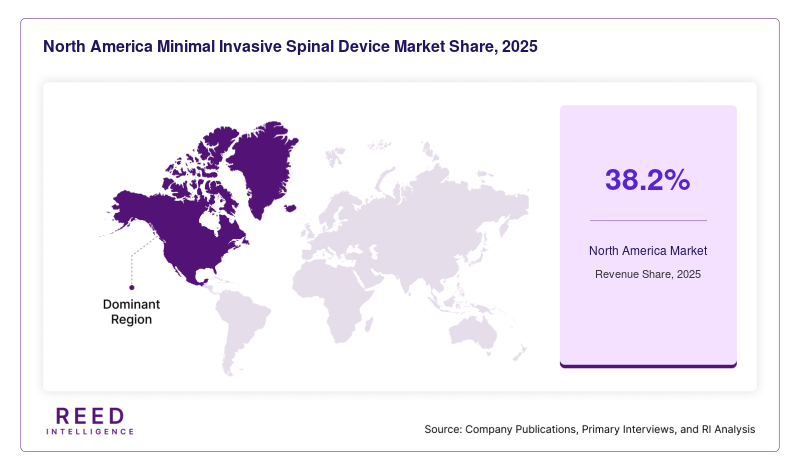
North America is the dominant region, with a published estimate placing its share at approximately 38.2% of global market revenue in 2025. Applying that share to the supplied global market size of USD 12.10 billion gives an indicative derived value of approximately USD 4.62 billion. Both figures align with the cited third-party report, but should be treated as estimates rather than independently verified market accounts.
Europe Minimal Invasive Spinal Device Market
Europe is supported by established healthcare systems, specialist orthopedic and neurosurgical centers, medical device manufacturers, and increasing adoption of advanced spinal procedures. Germany, France, the United Kingdom, Italy, and Spain contribute through healthcare expenditure, surgical infrastructure, and access to specialized clinical services.
Regional demand depends on national reimbursement systems, regulatory requirements, clinical training, and the availability of advanced surgical equipment. Medical Device Regulation requirements also influence product approval and commercialization strategies.
A published market estimate places Europe's share at approximately 28.5% in 2025, making it the second-largest region in that analysis. This is a third-party estimate and may vary with market scope and methodology.
Asia Pacific Minimal Invasive Spinal Device Market
Asia Pacific is supported by expanding healthcare infrastructure, rising healthcare expenditure, increasing awareness of minimally invasive procedures, and demand for advanced orthopedic and neurosurgical treatment. China, Japan, India, South Korea, and Australia represent important markets with different levels of healthcare access and medical technology adoption.
The region offers opportunities for manufacturers through hospital modernization, surgeon training, distribution expansion, and increasing access to specialized spinal procedures. However, affordability, reimbursement differences, and uneven access to specialist facilities may influence adoption rates across countries.
The cited third-party estimate assigns Asia Pacific 18.7% of global market share in 2025 and identifies it as the fastest-growing region. Its growth potential is associated with expanding healthcare capabilities and wider adoption of minimally invasive surgical techniques. The fastest-growing designation reflects that source's forecast rather than an independently verified comparison of all regional CAGRs.
Latin America Minimal Invasive Spinal Device Market
Latin America's market is influenced by healthcare modernization, increasing demand for orthopedic and neurosurgical services, and gradual adoption of advanced surgical techniques. Brazil and Mexico are important markets because of their healthcare systems, medical centers, and broader patient populations.
Adoption depends on public and private healthcare expenditure, device affordability, reimbursement, specialist availability, and access to surgical training. Distributors and manufacturers that provide clinical education and dependable device supply may find opportunities in expanding healthcare markets.
The cited market analysis estimates Latin America's share at approximately 8.9% in 2025. This figure is a third-party estimate and should be interpreted in the context of the source's market definition.
Middle East & Africa Minimal Invasive Spinal Device Market
The Middle East & Africa market is influenced by investment in healthcare infrastructure, the development of specialist hospitals, and increasing access to advanced orthopedic and neurosurgical services. Some Gulf countries are investing in modern surgical facilities and medical technology, while several African markets continue to face constraints in specialist access and healthcare funding.
Market expansion depends on healthcare spending, surgeon training, procurement processes, reimbursement coverage, and the availability of advanced imaging and operating-room infrastructure. Partnerships with hospitals and medical device distributors can support broader access to minimally invasive spinal technologies.
Minimal Invasive Spinal Device Market Competitive Landscape
The Minimal Invasive Spinal Device Market is characterized by competition among established orthopedic and spine device manufacturers, specialized implant developers, and companies offering integrated surgical navigation and robotics platforms. Competition is based on implant design, clinical outcomes, product safety, surgical efficiency, regulatory approvals, surgeon familiarity, and hospital purchasing requirements.
Stryker Corporation, DePuy Synthes, Zimmer Biomet, Medtronic, Globus Medical, and Orthofix Medical are among the major participants in the broader spinal device industry. Specialized manufacturers also compete through endoscopic systems, minimally invasive access platforms, interbody fusion products, and procedure-specific instrumentation.
Key Market Players
- Medtronic plc
- DePuy Synthes (Johnson & Johnson MedTech)
- Stryker Corporation
- Globus Medical, Inc.
- Zimmer Biomet Holdings, Inc.
- Orthofix Medical Inc.
- Alphatec Holdings, Inc.
- NuVasive
- B. Braun SE
- Spineart SA
- joimax GmbH
Minimal Invasive Spinal Device Market Recent Developments
- September 2026 - Medtronic begins first European procedures using Stealth AXiS. Medtronic announced that surgeons had begun using the Stealth AXiS surgical system in Europe, with more than 23 procedures performed across seven sites in Germany, the United Kingdom, Italy, and Spain. The platform integrates surgical planning, navigation, and robotic-assisted execution. The development reflects the growing role of integrated technologies in complex spinal procedures, including minimally invasive approaches.
- July 2026 - KYOCERA Medical Technologies launches the Tesera-K XL Lateral Interbody Fusion System. Announced on July 2026, the system was designed for lateral interbody fusion procedures that can be performed using minimally invasive approaches. The implant uses a three-dimensional-printed titanium structure, Resilience low-modulus technology, and a dual-wall lattice design. The development highlights continued innovation in implant geometry and material engineering for spinal fusion.
Minimal Invasive Spinal Device Market Segments
By Product Type
- Interbody Fusion Devices
- Minimally Invasive Discectomy Devices
- Motion Preservation Devices
- Vertebral Compression Fracture Devices
- Others, including specialized fixation systems
By Application
- Degenerative Disc Disease
- Spinal Stenosis
- Spondylolisthesis
- Vertebral Compression Fractures
- Others, including selected spinal deformities
By End User
- Hospitals
- Ambulatory Surgical Centers
- Specialty Clinics
- Others, including specialized surgical centers
By Region
- North America
- Europe
- APAC
- Middle East and Africa
- LATAM