Minimally Invasive Neurology Device Market Size, Share & Trends Analysis Report By Product Type (Neurosurgical Catheters, Stereotactic Frames, Neuroendoscopes, Other Devices), By Application (Stroke Treatment, Brain Tumor Management, Epilepsy Treatment), By End User (Hospitals, Specialty Clinics, Ambulatory Surgical Centers) and By Region (North America, Europe, Asia Pacific, Latin America, Middle East & Africa) Forecasts, 2026–2034
USD 3950
Minimally Invasive Neurology Device Market Size
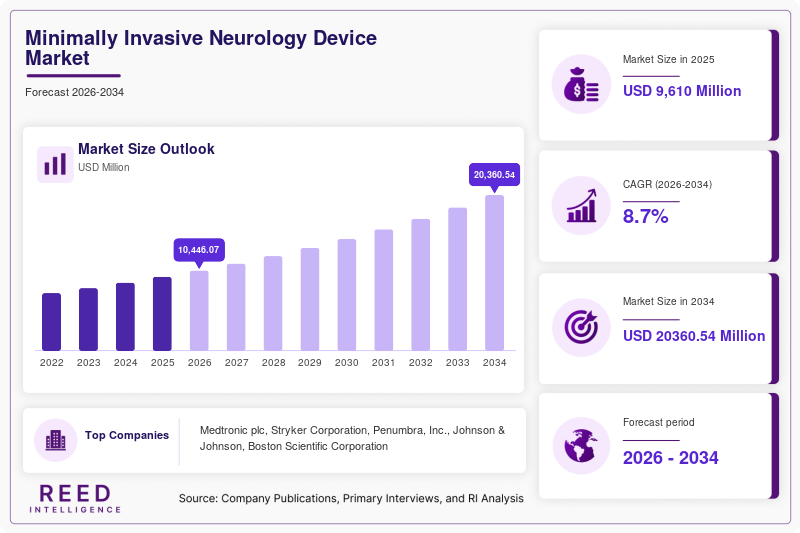
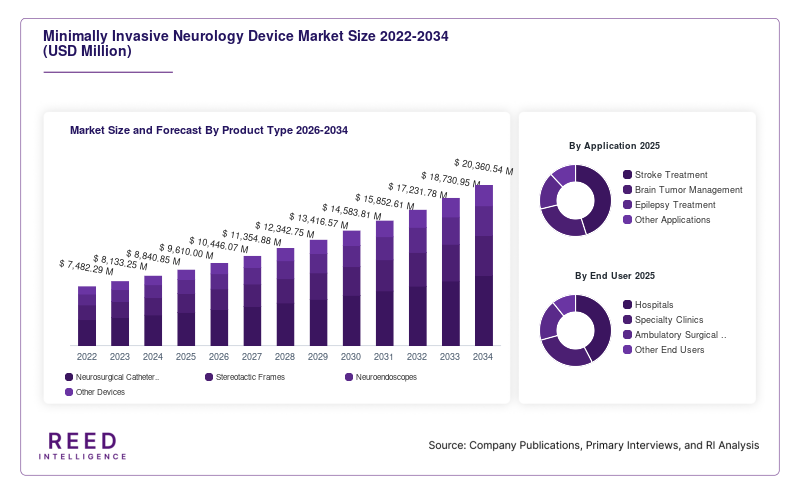
The global Minimally Invasive Neurology Device Market was valued at USD 9,610 million in 2025 and is projected to grow from USD 10,445.07 million in 2026 to USD 20,360.54 million by 2034, registering a CAGR of 8.7% during the forecast period (2026–2034).
The Minimally Invasive Neurology Device Market comprises medical devices used to diagnose, treat, or manage neurological conditions through procedures designed to reduce surgical trauma compared with conventional open surgery. The market includes neurosurgical catheters, neuroendoscopes, stereotactic instruments, neurovascular access devices, thrombectomy systems, and selected image-guided surgical technologies.
These devices are used in procedures involving ischemic stroke, cerebral aneurysms, brain tumors, epilepsy, hydrocephalus, and other neurological disorders. Catheter-based technologies allow clinicians to reach targeted structures through blood vessels or other limited-access pathways, while neuroendoscopes and stereotactic systems support visualization and precise intervention in selected brain and spinal procedures.
Minimally Invasive Neurology Device Market Drivers
Increasing Prevalence of Neurological Disorders
Stroke, brain tumors, cerebral aneurysms, epilepsy, and other neurological conditions create demand for specialized diagnostic and therapeutic devices. As healthcare providers expand neurological services, minimally invasive technologies are increasingly considered for appropriate patients. The demand for effective treatment options and improved procedural access supports the development of catheters, endoscopes, thrombectomy systems, and image-guided instruments.
Growing Adoption of Minimally Invasive Procedures
Clinicians and hospitals are evaluating procedures that can reach targeted neurological structures while limiting tissue disruption compared with conventional open approaches. Catheter-based neurovascular treatment and minimally invasive neurosurgical techniques can offer procedural advantages for selected conditions. These approaches support demand for specialized access devices, microcatheters, guidewires, endoscopes, and intervention systems.
Advancements in Neurovascular and Surgical Technology
Developments in catheter design, aspiration technology, visualization, image guidance, and navigation are expanding the range of procedures supported by minimally invasive devices. Improved device trackability, support, and compatibility can help clinicians navigate complex anatomical pathways. Manufacturers are also developing integrated product platforms to support more consistent procedural workflows.
Minimally Invasive Neurology Device Market Restraints
High Device and Procedure Costs
Specialized neurological devices may require expensive equipment, single-use components, advanced imaging systems, and dedicated operating or catheterization facilities. These costs can limit adoption in hospitals with restricted budgets. Healthcare providers must consider the overall cost of treatment, equipment maintenance, consumables, staff training, and supporting infrastructure.
Need for Specialized Clinical Expertise
Many minimally invasive neurological procedures require advanced training and experience. The availability of neurointerventional specialists, neurosurgeons, trained support teams, and appropriate hospital infrastructure varies by region. Limited access to specialists can restrict procedure volumes and delay the adoption of advanced technologies in smaller healthcare facilities.
Regulatory and Clinical Evidence Requirements
Neurological devices are subject to stringent regulatory requirements because device performance can directly affect patient safety and treatment outcomes. Manufacturers must establish safety, effectiveness, and appropriate indications for use. Clinical studies, regulatory submissions, and post-market monitoring can increase development costs and extend commercialization timelines.
Minimally Invasive Neurology Device Market Opportunities
Expansion of Stroke Intervention Services
The expansion of specialized stroke centers and access to endovascular treatment creates opportunities for neurovascular devices. Thrombectomy systems, aspiration catheters, microcatheters, guidewires, and related access devices may benefit as eligible patients gain access to advanced stroke treatment. Growth depends on clinical guidelines, timely diagnosis, referral pathways, and the availability of trained specialists.
Development of Advanced Neuroendoscopic and Image-Guided Systems
Improved visualization, navigation, and surgical planning technologies can support minimally invasive procedures for selected brain conditions. Manufacturers may develop more integrated platforms combining visualization instruments, navigation tools, and specialized surgical devices. Product differentiation will depend on clinical performance, ease of use, compatibility, and evidence of benefit.
Expansion in Emerging Healthcare Markets
Investment in hospitals, specialist neurological services, and advanced imaging infrastructure may expand the addressable market in developing economies. Training initiatives, clinical partnerships, and access to appropriately priced devices can help increase adoption. Growth will depend on reimbursement, affordability, regulatory pathways, and the availability of experienced clinical teams.
Minimally Invasive Neurology Device Market Segmental Analysis
By Product Type
Neurosurgical catheters are used to access targeted neurological structures and support procedures involving fluid drainage, diagnostic access, or therapeutic intervention. Neurovascular catheters and related access devices are important in endovascular procedures because they help clinicians navigate complex blood vessels and deliver therapeutic devices to the intended treatment site.
Stereotactic frames and related instruments support precise localization during selected neurosurgical procedures, including interventions for movement disorders and other neurological conditions. Neuroendoscopes provide visualization through minimally invasive access routes and may be used in selected procedures involving brain tumors, hydrocephalus, and other intracranial conditions. Other devices include specialized instruments and technologies used in navigation and image-guided treatment.
Dominant segment: Neurosurgical catheters. One market estimate identifies this category as the largest product segment, with a reported share of approximately 38.2%. This is a source-reported estimate and depends on the source's product scope.
Fastest-growing segment: Neurosurgical catheters may benefit from the expansion of catheter-based interventions and stroke treatment. A comparable, independently verified CAGR ranking across all product categories is unavailable.
By Application
Stroke treatment is an important application for minimally invasive neurological devices, particularly for eligible patients requiring endovascular intervention. Thrombectomy systems, aspiration catheters, microcatheters, guidewires, and related devices support access to blocked vessels and the delivery of treatment. Demand depends on stroke incidence, treatment eligibility, access to specialized stroke centers, and procedural capability.
Brain tumor management may involve endoscopic visualization, stereotactic instruments, image-guided tools, and other specialized devices used in selected diagnostic and therapeutic procedures. Epilepsy treatment can involve minimally invasive localization, ablation, or surgical approaches for selected patients. Other applications include treatment of certain vascular abnormalities, hydrocephalus, and additional neurological conditions.
Dominant segment: Stroke treatment. A market estimate reports an approximate 44.7% application share. This figure is specific to that source's market definition and has not been independently verified across all market taxonomies.
Fastest-growing segment: Stroke treatment is a potential growth area due to the adoption of endovascular therapies and expansion of specialized stroke services. However, a consistent, independently verified application-level CAGR ranking is unavailable.
By End User
Hospitals are major users of minimally invasive neurology devices because they provide neurosurgical services, advanced imaging, operating rooms, and specialized stroke intervention facilities. Many complex neurological procedures require multidisciplinary teams and supporting infrastructure, making hospital capability an important factor in device procurement.
Specialty clinics may provide selected diagnostic and neurological services, while ambulatory surgical centers may use relevant devices for procedures within their capabilities and permitted clinical scope. The level of adoption across end users varies according to procedure complexity, available specialists, equipment requirements, reimbursement, and institutional investment.
Minimally Invasive Neurology Device Market Regional Analysis
North America Minimally Invasive Neurology Device Market
North America is an important market for minimally invasive neurology devices, supported by advanced hospital infrastructure, specialized stroke centers, established neurointerventional services, and access to advanced imaging. The United States is a significant market for neurovascular and neurosurgical technologies, with demand influenced by clinical research, product innovation, specialist availability, and the adoption of minimally invasive treatment approaches.
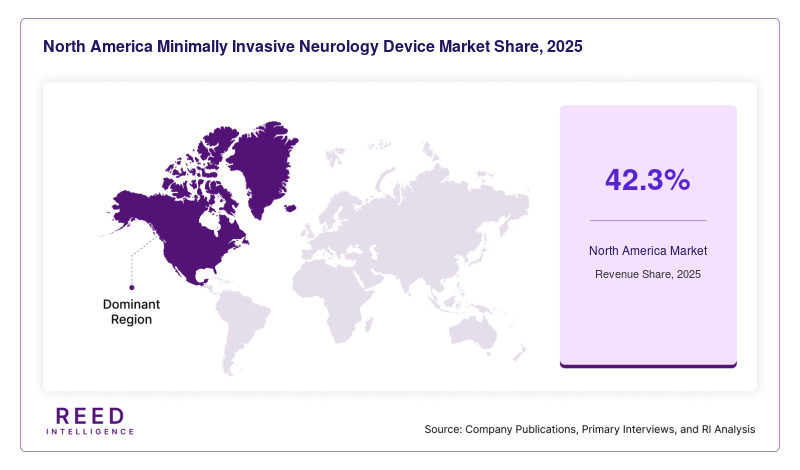
Hospitals and specialist centers evaluate devices according to clinical evidence, regulatory clearance, procedural performance, and compatibility with existing infrastructure. One market estimate reports North America at 42.3% of the global Minimally Invasive Neurology Device Market in 2025. This is a source-reported figure rather than an independently audited market share, and the region's exact share may vary with the products included in the market definition.
Europe Minimally Invasive Neurology Device Market
Europe has an established neurological care network supported by specialist hospitals, stroke centers, neurosurgical departments, and medical technology research. Demand for minimally invasive devices is influenced by stroke treatment pathways, hospital modernization, clinical evidence, and the availability of specialists trained in neurovascular intervention and minimally invasive neurosurgery.
Market adoption varies across countries according to healthcare budgets, reimbursement policies, procurement processes, regulatory requirements, and access to advanced treatment centers. One market estimate reports Europe's share at approximately 31.5% of the global market in 2025. This figure is specific to the cited market definition and should not be treated as a universal regional share across all neurovascular and neurosurgical device categories.
Asia Pacific Minimally Invasive Neurology Device Market
Asia Pacific presents growth opportunities as healthcare systems expand neurological services, modernize hospitals, and invest in advanced imaging and intervention capabilities. China, Japan, India, South Korea, and other regional markets differ in healthcare infrastructure, specialist availability, reimbursement, and access to minimally invasive procedures. These differences influence both the adoption of advanced devices and the rate at which services expand.
Demand may benefit from investments in stroke centers, specialist training, and endovascular treatment capabilities. However, affordability, equipment availability, clinical training, and differences in healthcare access remain important considerations. One market estimate reports Asia Pacific at approximately 18.2% of global revenue in 2025. This figure is source-reported and depends on the source's market scope; a different neurovascular-only definition may produce a different regional share.
Latin America Minimally Invasive Neurology Device Market
Latin America's market is influenced by hospital investment, access to neurological specialists, stroke treatment capacity, and the expansion of advanced medical services. Larger healthcare centers may adopt neurovascular catheters, thrombectomy systems, endoscopic instruments, and other specialized devices for eligible patients. Adoption varies according to public and private healthcare expenditure, procurement policies, and the availability of advanced imaging.
Potential opportunities include the development of specialized stroke centers, physician training, and wider access to minimally invasive procedures. However, device costs, uneven specialist distribution, and differences in reimbursement can constrain market growth. A comparable, verified regional market-share percentage and CAGR for Latin America are unavailable for this specific market definition.
Middle East & Africa Minimally Invasive Neurology Device Market
The Middle East & Africa market is influenced by investments in advanced hospitals, neurosurgical services, stroke treatment infrastructure, and specialist medical facilities. Some countries are expanding their capacity for complex neurological interventions, while others face limitations in equipment availability, specialist training, and healthcare budgets. These differences create an uneven adoption landscape.
Minimally Invasive Neurology Device Market Competitive Landscape
The Minimally Invasive Neurology Device Market includes established medical technology companies and specialized manufacturers developing devices for neurovascular intervention, neurosurgery, and minimally invasive neurological treatment. Competition is influenced by product performance, clinical evidence, regulatory approvals, procedural compatibility, device deliverability, and the breadth of the product portfolio.
Medtronic plc: Medtronic offers a broad neurovascular portfolio that includes thrombectomy systems, embolization technologies, guidewires, and related devices used in the treatment of selected neurological and cerebrovascular conditions. Its portfolio supports minimally invasive interventions for ischemic stroke and cerebral aneurysms. The company competes through device development, clinical evidence, specialist support, and a global commercial presence.
Key Market Players
- Medtronic plc
- Stryker Corporation
- Penumbra, Inc.
- Johnson & Johnson
- Boston Scientific Corporation
- Integra LifeSciences Holdings Corporation
- KARL STORZ SE & Co. KG
- Elekta AB
- Terumo Corporation
- B. Braun SE
Minimally Invasive Neurology Device Market Recent Market Developments
- June, 2025 Stryker launched the AXS Lift Intracranial Base Catheter Stryker announced the AXS Lift Intracranial Base Catheter, designed to simplify neurovascular access and support the delivery of interventional therapies. The device was developed to provide reach and stable support through complex vascular pathways, potentially reducing the need to use multiple catheters during certain procedures. The launch reflects continued development of access technologies used in minimally invasive neurovascular interventions.
- February, 2025 Penumbra launched the ACCESS25 Delivery Microcatheter Penumbra announced the ACCESS25 Delivery Microcatheter for accessing the neurovasculature and delivering its .020-inch coil platform. The device was designed to provide trackability and stable support during neurovascular embolization procedures, including selected aneurysm treatments. The announcement demonstrates ongoing product development in microcatheters used to deliver therapeutic devices through complex vascular anatomy.
Minimally Invasive Neurology Device Market Segments
By Product Type
- Neurosurgical Catheters
- Stereotactic Frames
- Neuroendoscopes
- Other Devices
By Application
- Stroke Treatment
- Brain Tumor Management
- Epilepsy Treatment
- Other Applications
By End User
- Hospitals
- Specialty Clinics
- Ambulatory Surgical Centers
- Other End Users
By Region
- North America
- Europe
- APAC
- Middle East and Africa
- LATAM