Minimally Invasive Robotic Surgical System Market Size, Share & Trends Analysis Report By Product Type (Multi-Port Robotic Surgical Systems, Single-Port Robotic Surgical Systems), By Application (General Surgery, Urology, Gynecology, Orthopedic Surgery), By End User (Hospitals, Ambulatory Surgical Centers, Specialty Surgical Clinics) and Forecasts 2026–2034
USD 3950
Minimally Invasive Robotic Surgical System Market Size
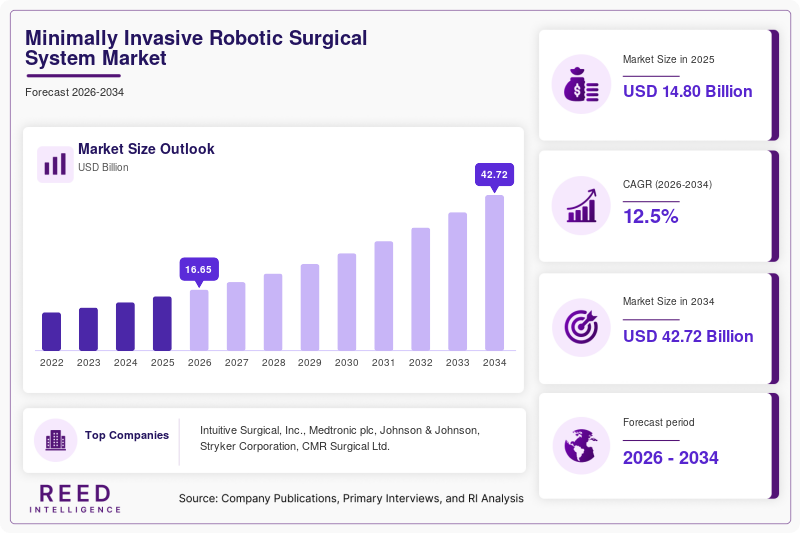
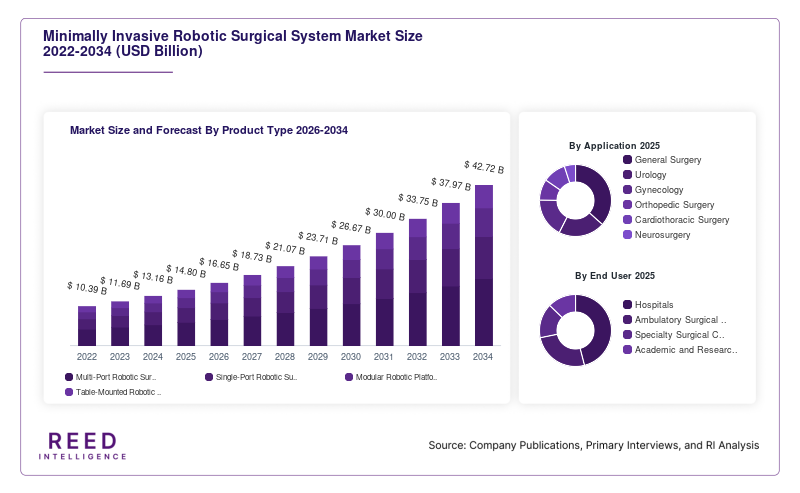
The global Minimally Invasive Robotic Surgical System Market was valued at USD 14.80 billion in 2025 and is projected to grow from USD 16.65 billion in 2026 to USD 42.72 billion by 2034, registering a compound annual growth rate (CAGR) of 12.5% during the forecast period of 2026–2034.
The Minimally Invasive Robotic Surgical System Market includes robotic platforms that assist surgeons in performing procedures through small incisions or specialized access points. These systems typically combine robotic arms, surgical instruments, high-definition visualization, surgeon consoles, and software that supports precise instrument control. Depending on the platform, they may be designed for soft-tissue surgery, orthopedic procedures, or other specialized surgical applications.
Hospitals and surgical centers are increasingly considering robotic systems to support procedural precision, improved dexterity, enhanced visualization, and standardized surgical workflows. The market is also evolving through modular robotic architectures, single-port systems, advanced imaging, digital connectivity, and AI-enabled surgical support. However, high acquisition costs, maintenance requirements, training needs, and the importance of clinical evidence remain significant considerations when healthcare providers evaluate these technologies.
Minimally Invasive Robotic Surgical System Market Drivers
Growing Preference for Minimally Invasive Procedures: Patients and healthcare providers increasingly consider minimally invasive approaches because they may reduce incision size, postoperative discomfort, and recovery time for appropriate procedures. Robotic platforms can support these approaches by providing instrument articulation, magnified visualization, and surgeon-controlled movement in confined anatomical spaces.
Technological Advancements in Robotic Surgery: Improvements in robotic instrumentation, three-dimensional visualization, force feedback, imaging integration, and digital operating-room technologies are expanding the capabilities of surgical platforms. These developments are encouraging hospitals to assess robotic systems for a broader range of procedures and clinical specialties.
Expansion of Surgical Infrastructure: Investments in advanced operating rooms and specialty surgical services are creating opportunities for robotic systems. Healthcare providers are evaluating technologies that can support complex procedures, improve workflow consistency, and help differentiate their surgical services in competitive healthcare markets.
Minimally Invasive Robotic Surgical System Market Restraints
High Acquisition and Operating Costs: Robotic surgical platforms can require substantial initial investment, in addition to expenses for instruments, consumables, maintenance, software, and service contracts. These costs can restrict adoption in smaller hospitals and healthcare systems with limited capital budgets.
Training and Learning Requirements: Surgeons, operating-room nurses, and technical teams need specialized training to use robotic platforms safely and effectively. Establishing training programs and developing procedural experience can require considerable time and resources, particularly when hospitals introduce new systems.
Regulatory and Clinical Evidence Requirements: Robotic surgical systems must meet applicable regulatory and safety requirements. Manufacturers also need to demonstrate appropriate clinical performance and support adoption with reliable evidence, which can increase development costs and delay market entry or expansion into new indications.
Minimally Invasive Robotic Surgical System Market Opportunities
Expansion into Emerging Healthcare Markets: Improving healthcare infrastructure and increasing investment in specialized surgical care create opportunities for robotic-system manufacturers in developing markets. Flexible financing, service support, and training partnerships can help address adoption barriers.
Development of Modular and Lower-Cost Platforms: Modular designs and systems intended for specific procedures may help hospitals manage space, equipment, and capital requirements. Manufacturers that demonstrate clinical value while reducing ownership complexity may be better positioned to reach a wider range of healthcare providers.
AI-Enabled Surgical Support and Digital Integration: Surgical data analytics, advanced imaging, workflow support, and AI-enabled guidance offer opportunities to improve system capabilities. Continued development in these areas may strengthen integration between robotic platforms, hospital information systems, and broader digital surgery environments.
Minimally Invasive Robotic Surgical System Market Segmental Analysis
By Product Type
Multi-port robotic surgical systems are an established product category because their multiple instrument arms support complex procedures across several surgical specialties. These platforms can provide surgeons with articulated instrument movement, magnified visualization, and the ability to control multiple instruments from a dedicated console. Their established clinical use and expanding procedural applications support continued demand.
Single-port robotic surgical systems are designed to perform selected procedures through a single access point. Their compact access approach may be attractive in appropriate clinical settings, although adoption depends on procedure suitability, platform capabilities, clinical evidence, and surgeon training. Modular robotic platforms may also attract healthcare providers seeking adaptable equipment configurations and flexibility across operating rooms.
By Application
General surgery is an important application area for robotic-assisted minimally invasive systems because robotic platforms can support procedures involving the abdomen and other soft tissues. Applications may include hernia repair, gallbladder removal, and selected gastrointestinal procedures, subject to the system's regulatory authorization and clinical suitability.
Urology and gynecology are also important application areas, with robotic assistance used in selected procedures that require precise dissection, suturing, and instrument control. Orthopedic surgery, cardiothoracic surgery, and neurosurgery represent additional areas of development, although the technology and clinical requirements differ substantially by specialty. A definitive fastest-growing application and its CAGR cannot be confirmed here without a consistent, independently verifiable dataset specific to this market definition.
By End User
Hospitals represent a major end-user category because they typically have the operating-room infrastructure, specialist surgical teams, and capital resources needed to deploy robotic surgical systems. Large hospitals and academic medical centers may also support clinical training, research, and the introduction of robotic procedures across multiple specialties.
Ambulatory surgical centers and specialty surgical clinics may offer opportunities as suitable procedures move toward outpatient settings. Adoption depends on the types of procedures performed, reimbursement arrangements, equipment utilization, staffing, and the total cost of ownership. Academic and research institutes also contribute to evaluation, training, and clinical development of robotic-assisted techniques.
Minimally Invasive Robotic Surgical System Market Regional Analysis
North America Minimally Invasive Robotic Surgical System Market
North America is an important market for minimally invasive robotic surgical systems because of its advanced healthcare infrastructure, established medical-device industry, specialist surgical workforce, and adoption of technology-intensive procedures. Hospitals and academic medical centers in the region are active users and evaluators of robotic-assisted platforms. Regulatory clearances and expanded indications can also influence the range of procedures supported by commercially available systems.
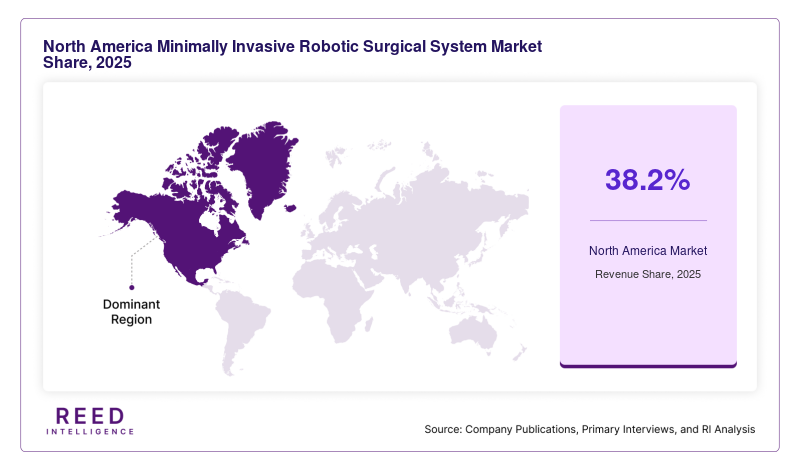
The region's outlook is supported by investments in surgical technology, clinical training, and competition among established manufacturers and emerging platform developers. However, procurement decisions remain influenced by capital budgets, procedure volumes, reimbursement, and evidence of clinical and economic value. A precise North American share of this specific market in 2025 could not be independently verified against a comparable market definition; therefore, a numeric share is not stated.
Europe Minimally Invasive Robotic Surgical System Market
Europe benefits from established hospital networks, specialist surgical centers, medical-device research, and demand for advanced surgical approaches. Adoption varies by country according to healthcare funding, procurement processes, regulatory requirements, and access to trained clinical teams. Manufacturers also evaluate regional partnerships and clinical programs to expand the availability of robotic systems.
The European market is expected to be influenced by advances in surgical robotics, wider procedural authorization, and efforts to improve operating-room efficiency. Nevertheless, equipment costs and differences in healthcare budgets may affect adoption rates between countries. A reliable market-specific regional share and growth rate have not been established here.
Asia Pacific Minimally Invasive Robotic Surgical System Market
Asia Pacific offers opportunities through expanding hospital infrastructure, growing demand for specialist surgery, increasing healthcare investment, and the development of domestic medical-technology capabilities. Markets such as China, Japan, India, and South Korea have differing levels of robotic-surgery adoption, regulatory pathways, and hospital purchasing capacity.
The region may benefit from investments in healthcare modernization and interest in systems designed for local clinical and budgetary needs. Partnerships, surgeon training, local manufacturing, and service networks may support broader adoption. However, affordability, access to specialist training, and uneven infrastructure remain important challenges. A precise 2025 regional market share and a comparable fastest-growing-region CAGR could not be verified for the exact market definition used in this report.
Latin America Minimally Invasive Robotic Surgical System Market
Latin America's market development is shaped by the availability of advanced hospitals, investment in private healthcare, specialist surgical capacity, and access to capital-intensive medical technologies. Larger urban medical centers are better positioned to evaluate robotic platforms, while adoption may be more limited in facilities facing budget and infrastructure constraints.
Potential opportunities include clinical partnerships, professional training, flexible financing, and service networks that support reliable system operation. Manufacturers seeking to expand in the region must also consider procurement requirements, import costs, and differences in healthcare funding across countries.
Middle East & Africa Minimally Invasive Robotic Surgical System Market
The Middle East & Africa region presents opportunities linked to healthcare infrastructure development, investment in advanced hospitals, and efforts to expand specialist surgical services. Some markets are investing in technology-enabled medical facilities and international clinical partnerships, creating potential demand for robotic-assisted systems.
Minimally Invasive Robotic Surgical System Market Competitive Landscape
The Minimally Invasive Robotic Surgical System Market is competitive, with established surgical-robotics companies, diversified medical-technology manufacturers, and newer developers pursuing different platform designs and clinical specialties. Competition is shaped by clinical evidence, regulatory approvals, installed systems, surgeon training, instrument portfolios, service quality, and the ability to support additional procedures over time.
Intuitive Surgical, Inc. is a prominent participant through its da Vinci robotic-assisted surgery platforms and associated instruments, accessories, and digital ecosystem. Its continued system development and expansion of authorized indications help it compete across multiple minimally invasive surgical specialties.
Key Market Players
- Intuitive Surgical, Inc.
- Medtronic plc
- Johnson & Johnson
- Stryker Corporation
- CMR Surgical Ltd.
- Zimmer Biomet Holdings, Inc.
- Smith & Nephew plc
- Asensus Surgical, Inc.
- Siemens Healthineers AG
- MicroPort MedBot (Group) Co., Ltd.
Minimally Invasive Robotic Surgical System Market Recent Developments
- September 2026 Intuitive receives European approval for da Vinci 5 cardiac procedures. Intuitive announced that its da Vinci 5 surgical system received a CE mark for adult cardiac surgery in Europe, including selected minimally invasive cardiac procedures. The development expands the system's authorized applications in the region.
- September 2026 Medtronic announces a strategic partnership with Cornerstone Robotics. Medtronic announced a partnership intended to expand global access to robotic-assisted surgery and broaden the choices available to surgeons and healthcare systems. The company said the arrangement includes a USD 700 million investment.
Minimally Invasive Robotic Surgical System Market Segments
By Product Type
- Multi-Port Robotic Surgical Systems
- Single-Port Robotic Surgical Systems
- Modular Robotic Platforms
- Table-Mounted Robotic Systems
By Application
- General Surgery
- Urology
- Gynecology
- Orthopedic Surgery
- Cardiothoracic Surgery
- Neurosurgery
By End User
- Hospitals
- Ambulatory Surgical Centers
- Specialty Surgical Clinics
- Academic and Research Institutes
By Region
- North America
- Europe
- APAC
- Middle East and Africa
- LATAM