Mobile Cardiac Telemetry System Market Size, Share Demand Report By Type (Lead-Based Systems, Patch-Based Systems, Other Mobile Telemetry Systems), By Application (Arrhythmia Monitoring, Myocardial Infarction Detection, Cardiac Event Monitoring, Other Cardiac Applications), By End-Use (Hospitals, Ambulatory Surgical Centers, Homecare Settings, Specialty Cardiac Clinics), By Region & Segment Forecasts, 2025–2034
USD 3950
Market Overview
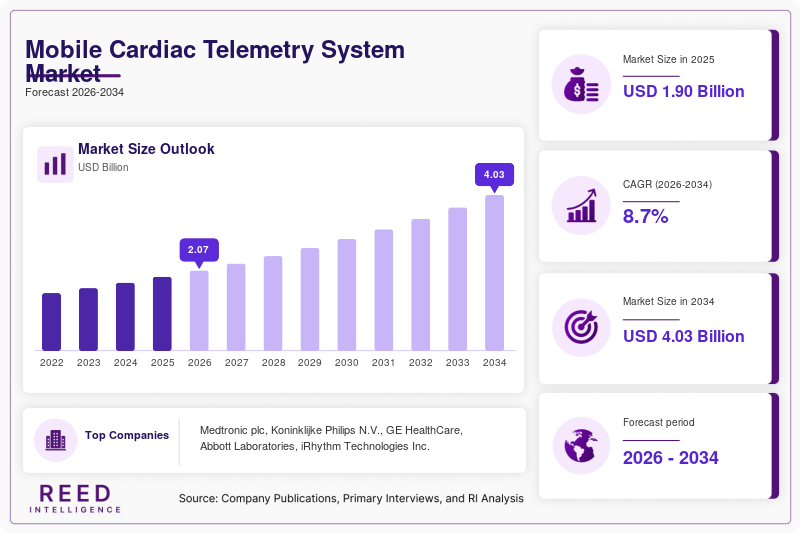
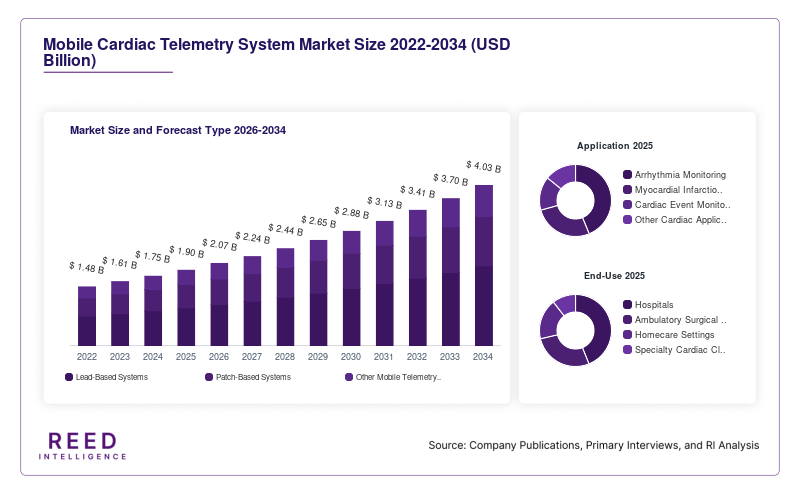
The Mobile Cardiac Telemetry System Market size is estimated at USD 1.9 billion in 2025 and is projected to reach USD 2.1 billion in 2026, reflecting consistent year-over-year growth. With expanding adoption across hospitals, outpatient centers, and homecare settings, the market is forecasted to reach USD 4.3 billion by 2034, registering a compound annual growth rate (CAGR) of 8.7% during 2025–2034.
The growing prevalence of cardiac arrhythmias and other heart-related conditions is one of the primary drivers fueling market growth. Mobile cardiac telemetry systems enable continuous real-time monitoring of patients, allowing clinicians to detect abnormalities early and intervene promptly. This capability is particularly valuable in managing high-risk patients and reducing hospital readmissions. Additionally, the increasing aging population worldwide is contributing significantly to demand, as elderly individuals are more prone to cardiovascular conditions requiring continuous monitoring.
Key Highlights
- The market is expected to expand significantly, growing from USD 1.9 billion in 2025 to USD 4.3 billion by 2034. This strong growth reflects increasing demand and continuous innovation across the healthcare ecosystem.
- A CAGR of 8.7% is anticipated over the forecast period, primarily driven by the rising prevalence of cardiovascular diseases worldwide. The growing burden of heart-related conditions is accelerating the need for advanced monitoring solutions.
- There is a notable rise in the adoption of remote patient monitoring and telehealth solutions across healthcare systems. This shift is supported by the need for continuous care, reduced hospital visits, and improved patient convenience.
- Ongoing technological advancements are enhancing device accuracy, reliability, and overall patient compliance. These innovations are enabling more effective diagnosis, real-time tracking, and better long-term health outcomes.
Market Trends
Integration of Artificial Intelligence and Advanced Analytics
The integration of artificial intelligence (AI) and advanced analytics into mobile cardiac telemetry systems is emerging as a major trend in the market. AI-powered algorithms can analyze large volumes of cardiac data in real time, enabling early detection of arrhythmias and other abnormalities. This reduces the burden on healthcare professionals and enhances diagnostic accuracy. Machine learning models also improve over time by learning from historical patient data, leading to more personalized treatment strategies. Additionally, predictive analytics allows clinicians to anticipate potential cardiac events, improving patient outcomes. As healthcare providers increasingly focus on data-driven decision-making, the adoption of AI-enabled telemetry systems is expected to grow steadily.
Expansion of Wearable and Patient-Centric Monitoring Devices
Another notable trend is the growing adoption of wearable, patient-friendly telemetry devices designed for continuous monitoring. Modern mobile cardiac telemetry systems are becoming smaller, more comfortable, and easier to use, encouraging long-term patient compliance. These devices are often integrated with smartphones and mobile applications, enabling patients to track their health metrics and share data with healthcare providers in real time. The shift toward patient-centric healthcare models is driving demand for such solutions. Furthermore, advancements in battery life, wireless connectivity, and sensor technology are enhancing device performance, making wearable telemetry systems a preferred choice for both patients and clinicians.
Market Drivers
Rising Prevalence of Cardiovascular Diseases
The increasing incidence of cardiovascular diseases worldwide is a major driver of the mobile cardiac telemetry system market. Conditions such as atrial fibrillation, heart failure, and arrhythmias require continuous monitoring for effective management. Mobile cardiac telemetry systems provide real-time monitoring capabilities, allowing early detection of irregular heart rhythms and timely medical intervention. This reduces the risk of complications and improves patient outcomes. Additionally, lifestyle factors such as sedentary habits, poor diet, and stress are contributing to the growing burden of heart diseases, further driving demand for advanced monitoring solutions.
Growing Adoption of Remote Patient Monitoring Solutions
The shift toward remote patient monitoring is another key factor driving market growth. Healthcare systems are increasingly focusing on reducing hospital stays and managing patients in homecare settings. Mobile cardiac telemetry systems enable continuous monitoring without requiring patients to remain in healthcare facilities. This not only reduces healthcare costs but also improves patient convenience and satisfaction. The expansion of telemedicine services and improved internet connectivity are supporting the adoption of remote monitoring technologies. As healthcare providers seek efficient ways to manage chronic conditions, the demand for mobile telemetry systems continues to rise.
Market Restraint
High Cost and Data Security Concerns
One of the primary restraints affecting the mobile cardiac telemetry system market is the high cost associated with these devices and related services. Advanced telemetry systems involve significant investment in hardware, software, and data management infrastructure, which can limit adoption, particularly in developing regions. Additionally, the cost of continuous monitoring services may not be affordable for all patients, especially where reimbursement policies are limited or inconsistent.
Data security and privacy concerns also pose a significant challenge. Mobile cardiac telemetry systems rely on the transmission and storage of sensitive patient data, making them vulnerable to cyber threats. Healthcare providers must comply with strict data protection regulations, which can increase operational complexity and costs. For example, any breach of patient data can lead to legal consequences and loss of trust among users. These factors collectively hinder the widespread adoption of mobile cardiac telemetry systems, particularly in regions with limited digital infrastructure.
Market Opportunities
Expansion in Emerging Markets
Emerging markets present significant growth opportunities for the mobile cardiac telemetry system market. Countries in Asia Pacific, Latin America, and parts of Africa are witnessing rapid improvements in healthcare infrastructure and increasing awareness about cardiovascular health. As disposable incomes rise and access to healthcare services improves, the demand for advanced diagnostic and monitoring solutions is expected to increase. Governments in these regions are also investing in digital healthcare initiatives, which can support the adoption of mobile telemetry systems. Furthermore, the large patient population in these regions provides a substantial opportunity for market players to expand their presence.
Integration with Telehealth Platforms
The integration of mobile cardiac telemetry systems with telehealth platforms offers another promising opportunity. Telehealth solutions enable remote consultations and continuous patient monitoring, creating a comprehensive healthcare ecosystem. By integrating telemetry systems with telehealth platforms, healthcare providers can offer real-time monitoring and immediate medical advice, improving patient outcomes. This integration also enhances operational efficiency by reducing the need for in-person visits. As telehealth adoption continues to grow globally, the demand for integrated mobile telemetry solutions is expected to increase significantly, providing new revenue streams for market players.
Segmental Analysis
By Type
The mobile cardiac telemetry system market is segmented by type into lead-based systems, patch-based systems, and others. Lead-based systems dominated the market in 2024, accounting for approximately 52% of the total market share. These systems are widely used due to their high accuracy and reliability in detecting cardiac abnormalities. Healthcare providers prefer lead-based systems for patients requiring continuous monitoring over extended periods. Additionally, the availability of advanced features such as multi-lead monitoring and real-time data transmission enhances their effectiveness in clinical settings.
Patch-based systems are expected to be the fastest-growing segment, with a CAGR of 9.8% during the forecast period. These systems offer greater convenience and comfort compared to traditional lead-based systems, making them ideal for long-term use. The increasing demand for wearable and minimally invasive devices is driving the adoption of patch-based systems. Furthermore, advancements in sensor technology and wireless connectivity are improving their performance and expanding their application in remote patient monitoring.
By Application
Based on application, the market is segmented into arrhythmia monitoring, myocardial infarction detection, and others. Arrhythmia monitoring held the largest market share in 2024, accounting for approximately 48% of the total market. The high prevalence of arrhythmias and the need for continuous monitoring drive demand for mobile cardiac telemetry systems in this segment. Early detection of irregular heart rhythms is critical for preventing complications, which makes these systems an essential tool in cardiac care.
Myocardial infarction detection is expected to be the fastest-growing segment, with a CAGR of 9.1% during the forecast period. The increasing incidence of heart attacks and the need for timely diagnosis are driving growth in this segment. Mobile telemetry systems enable real-time monitoring of cardiac activity, allowing healthcare providers to detect early signs of myocardial infarction. The integration of advanced analytics and AI further enhances diagnostic accuracy, supporting the growth of this segment.
By End-Use
The market is segmented by end-use into hospitals, ambulatory surgical centers, and homecare settings. Hospitals dominated the market in 2024, accounting for approximately 55% of the total market share. The availability of advanced infrastructure and skilled healthcare professionals makes hospitals the primary users of mobile cardiac telemetry systems. These systems are widely used in hospitals for continuous monitoring of high-risk patients and post-surgical care.
Homecare settings are expected to be the fastest-growing segment, with a CAGR of 10.5% during the forecast period. The increasing preference for home-based care and the rising adoption of remote monitoring solutions are driving growth in this segment. Mobile cardiac telemetry systems enable patients to receive continuous monitoring without the need for hospitalization, improving convenience and reducing healthcare costs. The growing elderly population and advancements in telehealth technologies further support the expansion of homecare settings.
Regional Analysis
North America
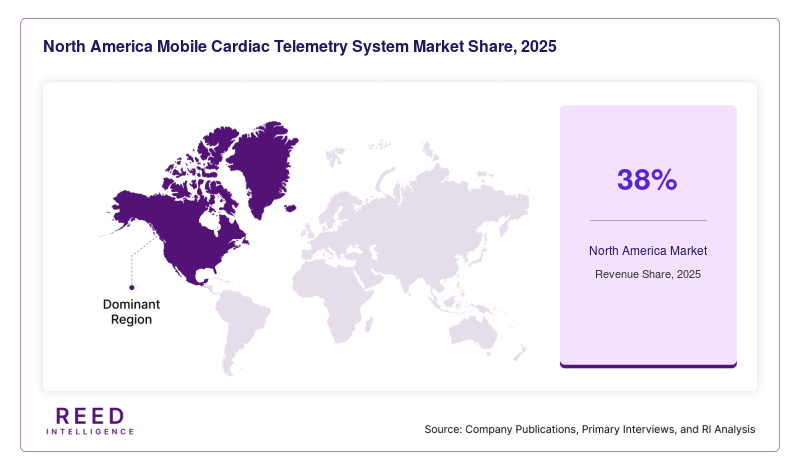
North America holds a significant share of the mobile cardiac telemetry system market, accounting for approximately 38% of the global market in 2025. The region is expected to maintain steady growth with a CAGR of around 7.9% during the forecast period. High healthcare expenditure, advanced medical infrastructure, and strong adoption of digital health technologies contribute to the region’s leading position. Additionally, favorable reimbursement policies and widespread awareness about cardiovascular diseases support market expansion.
The United States dominates the North American market due to its well-established healthcare system and high prevalence of cardiac conditions. A key growth factor in the country is the rapid adoption of remote patient monitoring technologies, supported by government initiatives and insurance coverage. The increasing use of wearable health devices and integration with electronic health records further strengthens market growth in this region.
Europe
Europe accounts for approximately 26% of the global market share in 2025 and is projected to grow at a CAGR of 7.5% over the forecast period. The region benefits from strong healthcare infrastructure, increasing adoption of telemedicine, and rising awareness about preventive healthcare. Government initiatives promoting digital health solutions and chronic disease management are also contributing to market growth.
Germany leads the European market due to its advanced healthcare system and strong focus on technological innovation. A unique growth factor in Germany is the increasing implementation of digital health policies, which encourage the use of remote monitoring solutions. The presence of key market players and ongoing research activities further support market development in the region.
Asia Pacific
Asia Pacific is expected to witness the fastest growth, with a CAGR of 10.2% during the forecast period, and holds around 22% of the market share in 2025. Rapid urbanization, increasing healthcare expenditure, and growing awareness about cardiovascular diseases are driving market growth. The expanding middle-class population and improving access to healthcare services also contribute to the region’s growth.
China dominates the Asia Pacific market due to its large population and increasing prevalence of heart diseases. A key growth factor is the government’s focus on expanding digital healthcare infrastructure, including telemedicine and remote monitoring services. The adoption of affordable wearable devices and growing investment in healthcare technology further accelerate market expansion in this region.
Middle East & Africa
The Middle East & Africa region accounts for approximately 7% of the global market share in 2025 and is expected to grow at a CAGR of 6.8%. The market is driven by improving healthcare infrastructure, increasing investment in medical technologies, and rising awareness about cardiovascular health. However, limited access to advanced healthcare facilities in certain areas may restrict growth.
Saudi Arabia is a dominant market in this region, supported by government initiatives to modernize healthcare systems. A unique growth factor is the increasing investment in digital health transformation projects, which promote the adoption of remote monitoring technologies. These initiatives are expected to drive demand for mobile cardiac telemetry systems in the region.
Latin America
Latin America holds around 7% of the global market share in 2025 and is projected to grow at a CAGR of 7.1% during the forecast period. The region is witnessing gradual improvements in healthcare infrastructure and increasing adoption of digital health solutions. Rising awareness about chronic diseases and the need for continuous monitoring are also contributing to market growth.
Brazil leads the Latin American market due to its large population and growing healthcare sector. A key growth factor in the country is the increasing adoption of telemedicine services, which supports the use of mobile cardiac telemetry systems. Government efforts to improve healthcare access and the presence of private healthcare providers further drive market expansion.
Competitive Landscape
The mobile cardiac telemetry system market is moderately competitive, with several global and regional players focusing on innovation and strategic partnerships. Key companies are investing in research and development to enhance device capabilities and expand their product portfolios. The market is characterized by the presence of established medical device manufacturers as well as emerging players offering innovative solutions.
BioTelemetry Inc. is considered a leading player in the market, known for its comprehensive range of cardiac monitoring solutions. The company has recently focused on expanding its remote monitoring services and integrating advanced analytics into its products. Other major players are also adopting strategies such as mergers, acquisitions, and collaborations to strengthen their market position. Continuous technological advancements and increasing demand for remote healthcare solutions are expected to intensify competition in the coming years.
Key Players List
- BioTelemetry Inc.
- Medtronic plc
- Koninklijke Philips N.V.
- GE HealthCare
- Abbott Laboratories
- iRhythm Technologies Inc.
- Boston Scientific Corporation
- Nihon Kohden Corporation
- Hill-Rom Holdings Inc.
- Preventice Solutions Inc.
- ScottCare Corporation
- Biotronik SE & Co. KG
- AliveCor Inc.
- InfoBionic Inc.
- Spacelabs Healthcare
Recent Developments
- A leading company introduced an AI-enabled mobile cardiac telemetry system to improve real-time arrhythmia detection and patient monitoring accuracy.
- A major healthcare technology provider expanded its telehealth platform by integrating mobile cardiac telemetry solutions for remote patient management.
- A global medical device manufacturer launched a next-generation wearable telemetry device with enhanced battery life and wireless connectivity features.
Mobile Cardiac Telemetry System Market Segments
Type
- Lead-Based Systems
- Patch-Based Systems
- Other Mobile Telemetry Systems
Application
- Arrhythmia Monitoring
- Myocardial Infarction Detection
- Cardiac Event Monitoring
- Other Cardiac Applications
End-Use
- Hospitals
- Ambulatory Surgical Centers
- Homecare Settings
- Specialty Cardiac Clinics
By Region
- North America
- Europe
- APAC
- Middle East and Africa
- LATAM