Monkeypox Treatment Market Size, Share & Demand Report By Drug Type (Antiviral Drugs, Vaccines, Immune Globulins), By Distribution Channel (Hospital Pharmacies, Retail Pharmacies, Online Pharmacies), By End-Use (Hospitals, Clinics, Research Institutes), By Region & Segment Forecasts, 2026–2034
USD 3950
Market Overview
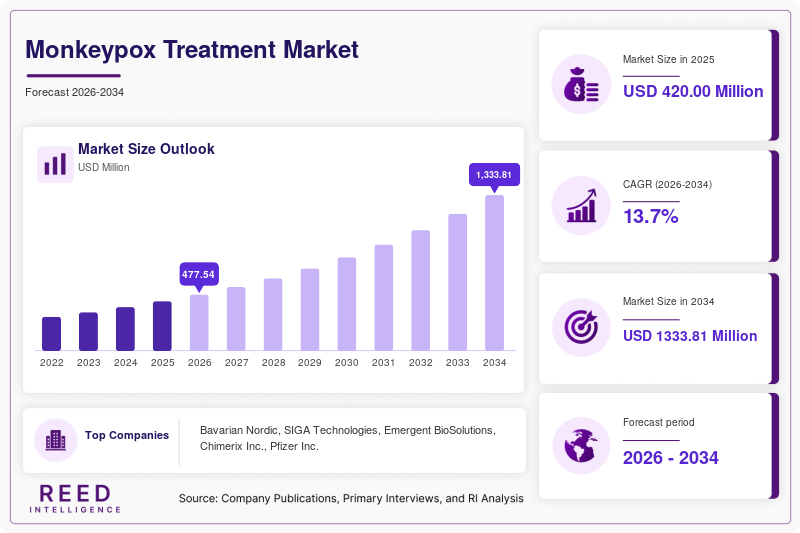
The Monkeypox Treatment Market size was valued at approximately USD 420 million in 2026 and is projected to reach USD 1180 million by 2034, expanding at a CAGR of 13.7% during the forecast period (2026–2034). The market is witnessing steady expansion due to the growing global emphasis on infectious disease preparedness and response frameworks. The resurgence of zoonotic diseases and increasing cross-border transmission risks have prompted governments and healthcare organizations to strengthen diagnostic and treatment infrastructures, thereby supporting demand for effective monkeypox therapeutics.
A key global factor driving market growth is the heightened focus on pandemic preparedness following recent public health crises. This has resulted in increased investments in antiviral research, vaccine stockpiling, and public health surveillance systems. Governments are collaborating with pharmaceutical companies to accelerate the development and approval of treatment solutions, including antiviral drugs and supportive care protocols.
Key Highlights
- North America dominated the market with a 36.4% share in 2025.
- Asia Pacific is expected to grow at the fastest CAGR of 14.8% during 2026–2034.
- By drug type, antivirals accounted for the largest share of 42.6%, while vaccines are projected to grow at a CAGR of 15.3%.
- By distribution channel, hospital pharmacies led with a 48.2% share, whereas online pharmacies are expected to expand at a CAGR of 16.1%.
- The United States remained the dominant country, with market values of USD 150 million in 2024 and USD 175 million in 2025.
Market Trends
Increasing Adoption of Antiviral Therapeutics
The market is observing a growing reliance on antiviral drugs as primary treatment options for monkeypox infections. These therapeutics are being prioritized due to their ability to reduce symptom severity and shorten recovery duration. Healthcare providers are increasingly adopting approved antivirals and investigational compounds, especially in regions with high infection rates. This trend is supported by advancements in drug development technologies and increased funding for infectious disease research. Pharmaceutical companies are also focusing on repurposing existing antiviral drugs to address monkeypox cases more efficiently. As clinical trials expand and regulatory approvals become streamlined, the adoption of antivirals is expected to rise steadily, contributing to improved patient outcomes and broader treatment accessibility across healthcare systems globally.
Expansion of Vaccine-Based Preventive Treatment
Another notable trend is the growing emphasis on vaccine-based prevention strategies as part of treatment protocols. Governments and global health organizations are increasingly incorporating vaccination programs into outbreak response plans. Vaccines are being used not only for prevention but also for post-exposure prophylaxis, which enhances their role in controlling disease spread. This shift is encouraging pharmaceutical companies to invest in next-generation vaccines with improved safety profiles and longer immunity duration. Additionally, stockpiling initiatives and strategic partnerships are ensuring the availability of vaccines during outbreaks. The integration of vaccination into treatment frameworks is expected to reshape the market landscape, particularly in regions with limited healthcare infrastructure, where prevention plays a critical role in disease management.
Market Drivers
Rising Incidence of Zoonotic Diseases
The increasing prevalence of zoonotic diseases is a major driver of the Monkeypox Treatment Market. Factors such as urbanization, deforestation, and increased human-animal interaction have contributed to the spread of infectious diseases from animals to humans. Monkeypox, being a zoonotic virus, has gained global attention due to its potential to cause outbreaks beyond endemic regions. This has led to heightened demand for effective treatment solutions. Governments and healthcare organizations are investing in surveillance systems and treatment infrastructure to manage outbreaks more efficiently. The rising incidence of such diseases is also encouraging pharmaceutical companies to develop targeted therapies, thereby driving innovation and growth in the market.
Government Initiatives and Funding Support
Strong government support and funding initiatives are significantly contributing to market growth. Many countries are allocating resources to strengthen healthcare systems and ensure preparedness for infectious disease outbreaks. Funding is being directed toward research and development of antiviral drugs, vaccines, and diagnostic tools. Public-private partnerships are also playing a crucial role in accelerating the development and distribution of treatment solutions. Regulatory agencies are expediting approval processes to ensure timely access to therapies. These initiatives are not only boosting market growth but also enhancing the availability of treatment options in both developed and developing regions, thereby supporting overall market expansion.
Market Restraint
Limited Access to Advanced Healthcare in Low-Income Regions
One of the primary challenges faced by the Monkeypox Treatment Market is the limited access to advanced healthcare infrastructure in low-income and rural regions. Despite increasing global awareness and funding, disparities in healthcare access remain a significant barrier to effective disease management. Many regions lack adequate diagnostic facilities, trained healthcare professionals, and access to antiviral drugs and vaccines. This results in delayed diagnosis and treatment, which can lead to higher transmission rates and increased mortality.
Additionally, the high cost associated with advanced treatment options and vaccine storage requirements further limits their accessibility in resource-constrained settings. Supply chain inefficiencies and logistical challenges also hinder the distribution of essential medical supplies. For example, during outbreak scenarios, remote areas often experience delays in receiving treatment due to inadequate transportation and storage infrastructure. These limitations not only affect patient outcomes but also slow down overall market growth. Addressing these disparities requires coordinated efforts from governments, international organizations, and private stakeholders to improve healthcare accessibility and infrastructure in underserved regions.
Market Opportunities
Development of Next-Generation Therapeutics
The development of next-generation therapeutics presents a significant opportunity for market growth. Advances in biotechnology and pharmaceutical research are enabling the creation of more effective and targeted treatment options for monkeypox. Companies are focusing on developing drugs with improved efficacy, reduced side effects, and faster recovery times. The use of novel drug delivery systems and personalized medicine approaches is also gaining traction. These innovations have the potential to transform treatment protocols and improve patient outcomes. Furthermore, increasing investment in research and development is accelerating the discovery of new therapeutic candidates, creating opportunities for market expansion and competitive differentiation.
Expansion in Emerging Markets
Emerging markets offer substantial growth opportunities due to increasing healthcare investments and rising awareness of infectious diseases. Countries in Asia Pacific, Latin America, and Africa are improving their healthcare infrastructure and expanding access to medical services. Governments in these regions are implementing vaccination programs and strengthening disease surveillance systems. The growing middle-class population and increasing healthcare expenditure are also contributing to market growth. Pharmaceutical companies are entering these markets through strategic partnerships and distribution agreements. This expansion is expected to enhance the availability of treatment options and drive market growth in regions with previously limited access to advanced healthcare solutions.
Segmental Analysis
By Drug Type
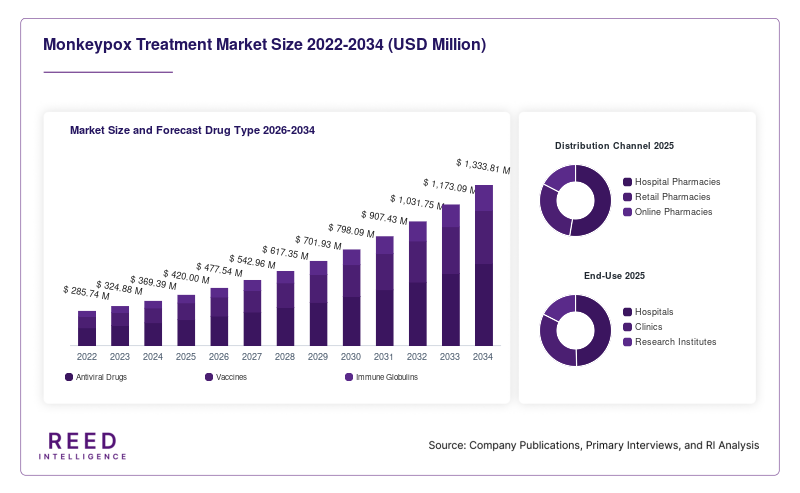
The antiviral drugs segment dominated the Monkeypox Treatment Market in 2024, accounting for approximately 42.6% of the total market share. This dominance is attributed to the widespread use of antiviral medications as the primary line of treatment for monkeypox infections. These drugs are effective in reducing viral replication and alleviating symptoms, making them a preferred choice among healthcare providers. The availability of approved antiviral treatments and ongoing research into new drug formulations are further supporting the growth of this segment. Additionally, government initiatives aimed at stockpiling antiviral drugs for emergency use are contributing to the segment’s expansion.
The vaccines segment is expected to be the fastest-growing subsegment, with a projected CAGR of 15.3% during the forecast period. The increasing emphasis on preventive healthcare and the use of vaccines for post-exposure prophylaxis are driving growth in this segment. Advances in vaccine technology and the development of next-generation vaccines with improved efficacy are also contributing to market expansion. Furthermore, government-led vaccination campaigns and partnerships with pharmaceutical companies are enhancing the availability and accessibility of vaccines, supporting the growth of this segment.
By Distribution Channel
Hospital pharmacies dominated the distribution channel segment in 2024, accounting for approximately 48.2% of the market share. This dominance is due to the high volume of patients receiving treatment in hospital settings, where medications are readily available. Hospital pharmacies play a critical role in ensuring the timely distribution of antiviral drugs and vaccines. The presence of trained healthcare professionals and advanced medical facilities further supports the growth of this segment. Additionally, the integration of hospital pharmacies with healthcare systems enables efficient inventory management and distribution of treatment solutions.
Online pharmacies are expected to be the fastest-growing subsegment, with a CAGR of 16.1% during the forecast period. The increasing adoption of digital healthcare platforms and the growing preference for convenient access to medications are driving growth in this segment. Online pharmacies offer a wide range of products and enable patients to order medications from the comfort of their homes. The expansion of e-commerce and improvements in logistics and delivery systems are further supporting the growth of this segment.
By End-Use
Hospitals were the dominant end-use segment in 2024, accounting for approximately 46.8% of the market share. This is primarily due to the high number of patients seeking treatment in hospital settings, where comprehensive care is available. Hospitals are equipped with advanced diagnostic tools and treatment facilities, enabling effective management of monkeypox cases. The presence of skilled healthcare professionals and the availability of specialized treatment protocols further contribute to the dominance of this segment.
Clinics are expected to be the fastest-growing subsegment, with a projected CAGR of 14.9% during the forecast period. The increasing number of outpatient visits and the growing demand for accessible healthcare services are driving growth in this segment. Clinics offer cost-effective treatment options and are often the first point of contact for patients. The expansion of healthcare infrastructure and the increasing focus on primary care services are supporting the growth of this segment.
Regional Analysis
North America
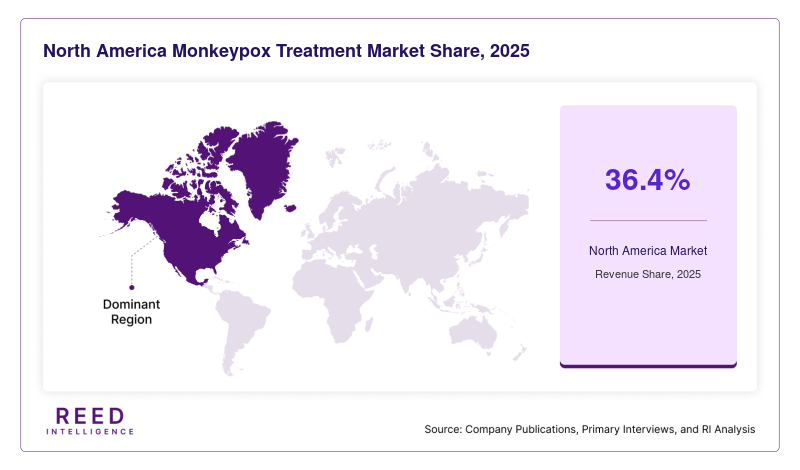
North America accounted for the largest share of the Monkeypox Treatment Market in 2025, contributing approximately 36.4% of the global revenue. The region is expected to maintain its dominance throughout the forecast period, with a projected CAGR of 12.9% from 2026 to 2034. The presence of advanced healthcare infrastructure, strong regulatory frameworks, and high awareness levels are key factors supporting market growth. Additionally, significant investments in research and development activities are driving innovation in treatment solutions.
The United States dominates the regional market due to its robust healthcare system and strong government support. A key growth factor is the presence of established pharmaceutical companies actively engaged in developing antiviral drugs and vaccines. The country’s proactive approach to outbreak management and strategic stockpiling of medical supplies further strengthens its position in the market.
Europe
Europe held a significant share of the global market in 2025, accounting for approximately 27.1%. The region is expected to grow at a CAGR of 13.2% during the forecast period. The increasing focus on public health preparedness and the presence of well-established healthcare systems are driving market growth. Government initiatives aimed at controlling infectious diseases are also contributing to the expansion of the market.
Germany is the leading country in the European market, supported by its advanced healthcare infrastructure and strong research capabilities. A unique growth factor is the region’s emphasis on collaborative research projects and cross-border healthcare initiatives, which facilitate the development and distribution of effective treatment solutions.
Asia Pacific
Asia Pacific is expected to witness the fastest growth, with a projected CAGR of 14.8% from 2026 to 2034. The region accounted for approximately 18.5% of the global market in 2025. Rapid urbanization, increasing healthcare investments, and rising awareness of infectious diseases are key factors driving market growth in this region.
China dominates the Asia Pacific market due to its large population and expanding healthcare infrastructure. A significant growth factor is the government’s focus on strengthening disease surveillance systems and improving access to healthcare services, which is driving demand for monkeypox treatment solutions.
Middle East & Africa
The Middle East & Africa region accounted for around 9.3% of the global market in 2025 and is expected to grow at a CAGR of 13.5% during the forecast period. The increasing prevalence of infectious diseases and improving healthcare infrastructure are supporting market growth in this region.
South Africa is the dominant country in this region, driven by ongoing efforts to enhance healthcare accessibility. A unique growth factor is the increasing involvement of international organizations in funding healthcare initiatives and improving disease management capabilities.
Latin America
Latin America held a market share of approximately 8.7% in 2025 and is projected to grow at a CAGR of 13.1% during the forecast period. The region is witnessing growth due to increasing healthcare expenditure and rising awareness of infectious diseases.
Brazil leads the Latin American market, supported by its expanding healthcare system. A key growth factor is the government’s focus on vaccination programs and public health campaigns aimed at controlling disease outbreaks and improving treatment accessibility.
Competitive Landscape
The Monkeypox Treatment Market is characterized by the presence of several established pharmaceutical companies and emerging players focusing on infectious disease therapeutics. Leading companies are investing heavily in research and development to introduce innovative treatment solutions and strengthen their market positions. Strategic collaborations, mergers, and acquisitions are common strategies adopted by market players to expand their product portfolios and geographic reach.
One of the leading companies in the market is Bavarian Nordic, known for its strong portfolio of vaccines and antiviral solutions. The company has recently expanded its production capacity to meet the growing demand for monkeypox vaccines. Other key players are focusing on developing advanced antiviral drugs and improving distribution networks to enhance accessibility. The competitive landscape is expected to remain dynamic, with companies continuously striving to gain a competitive edge through innovation and strategic partnerships.
Key Players List
- Bavarian Nordic
- SIGA Technologies
- Emergent BioSolutions
- Chimerix Inc.
- Pfizer Inc.
- Moderna Inc.
- GlaxoSmithKline plc
- Johnson & Johnson
- Merck & Co., Inc.
- Sanofi S.A.
- BioNTech SE
- Novavax Inc.
- Takeda Pharmaceutical Company
- AstraZeneca plc
- Bharat Biotech
Recent Developments
- In 2025, a leading pharmaceutical company expanded its antiviral drug production capacity to address rising global demand.
- In 2024, a new-generation monkeypox vaccine received regulatory approval, improving preventive treatment options.
- In 2025, a strategic partnership between two biotech firms accelerated the development of targeted antiviral therapies.
Monkeypox Treatment Market Segments
Drug Type
- Antiviral Drugs
- Vaccines
- Immune Globulins
Distribution Channel
- Hospital Pharmacies
- Retail Pharmacies
- Online Pharmacies
End-Use
- Hospitals
- Clinics
- Research Institutes
By Region
- North America
- Europe
- APAC
- Middle East and Africa
- LATAM