Mycoprotein Products Market Size, Share & Demand Report By Product Type (Frozen Mycoprotein Products, Chilled Mycoprotein Products, Dried Mycoprotein Products), By Application (Food & Beverage, Pharmaceuticals, Nutraceuticals), By End-Use (Retail Consumers, Foodservice Industry), By Distribution Channel (Supermarkets & Hypermarkets, Convenience Stores, Online Retail), By Region & Segment Forecasts, 2025–2034
USD 3950
Market Overview
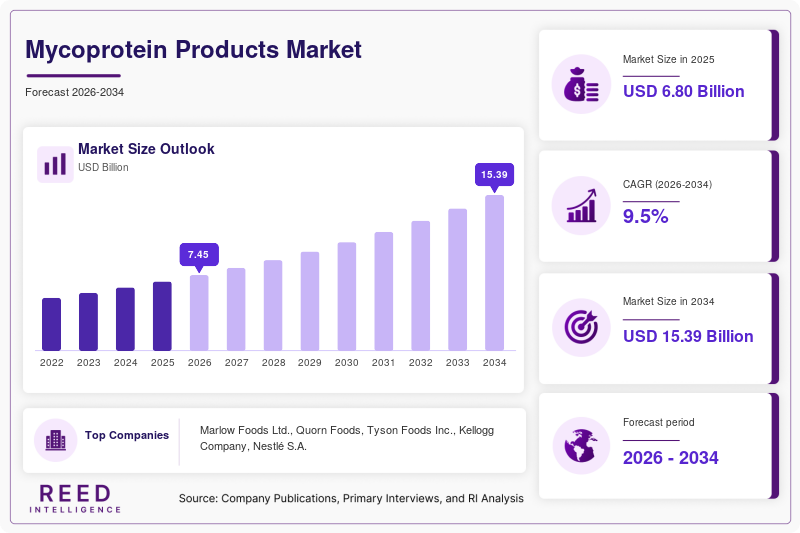
The global Mycoprotein Products Market size was valued at approximately USD 6.8 billionin 2025 and is projected to reach USD 15.4 billion by 2034, expanding at a CAGR of 9.5%during the forecast period (2025–2034). Mycoprotein, derived from filamentous fungi through fermentation processes, has emerged as a viable and scalable alternative protein source. Its balanced amino acid profile, low fat content, and reduced environmental footprint have positioned it as a critical component in the evolving protein ecosystem.
A major global factor supporting market growth has been the increasing shift toward sustainable food systems. Governments, food manufacturers, and consumers are collectively prioritizing protein alternatives that require fewer natural resources compared to conventional livestock production. This transition has significantly accelerated the adoption of mycoprotein across developed and emerging economies.
Key Highlights:
- Europe dominated the market with a share of 38.6% in 2025, while Asia Pacific is expected to register the fastest CAGR of 11.2% during 2025–2034.
- Food & beverage applications led the market with a 62.4% share in 2024, while ready-to-eat products are projected to grow at the fastest CAGR of 10.8%.
- Frozen mycoprotein products held the largest share among product types at 44.7% in 2024, whereas chilled products are anticipated to expand at a CAGR of 10.1%.
- The U.K. remained the dominant country, with market values of USD 1.2 billion in 2024 and USD 1.3 billion in 2025.
Market Trends
Expansion of Hybrid Protein Products
A notable trend in the Mycoprotein Products Market is the rise of hybrid protein formulations that combine mycoprotein with plant-based or cultivated proteins. These blends enhance texture, nutritional value, and cost efficiency, making them suitable for mass-market adoption. Food manufacturers are leveraging hybrid approaches to improve consumer acceptance, especially among flexitarian consumers seeking familiar taste profiles. This trend is expected to reshape product innovation strategies and broaden application scope.
Increasing Penetration in Foodservice Channels
The growing inclusion of mycoprotein-based dishes in quick-service restaurants, cafes, and institutional catering is another significant trend. Foodservice operators are introducing mycoprotein burgers, nuggets, and meat substitutes to cater to changing dietary preferences. This channel expansion is enhancing product visibility and driving trial among new consumers. As restaurants increasingly focus on menu diversification and sustainability, the demand for mycoprotein-based offerings is expected to gain momentum globally.
Market Drivers
Rising Demand for Sustainable Protein Alternatives
The global push toward reducing carbon emissions and resource consumption has significantly influenced protein sourcing. Mycoprotein production requires less land and water compared to traditional meat, making it an attractive solution for environmentally conscious consumers and policymakers. This shift has supported widespread adoption across retail and foodservice sectors.
Increasing Health Awareness and Dietary Shifts
Consumers are increasingly adopting diets focused on health, wellness, and balanced nutrition. Mycoprotein products are rich in fiber and protein while being low in saturated fat, aligning well with modern dietary preferences. The growing popularity of vegetarian, vegan, and flexitarian diets has further accelerated market expansion, as consumers seek protein alternatives that deliver both nutrition and taste.
Market Restraint
Limited Consumer Awareness in Emerging Markets
Despite strong growth potential, the Mycoprotein Products Market faces challenges related to limited consumer awareness, particularly in developing regions. Many consumers are unfamiliar with mycoprotein as a food ingredient and may perceive it as highly processed or unconventional. This lack of awareness can hinder adoption rates and slow market penetration.
Additionally, labeling complexities and regulatory differences across regions can create confusion regarding product positioning. Manufacturers often need to invest significantly in marketing, education campaigns, and product sampling initiatives to build consumer trust. These efforts increase operational costs and may impact profit margins in the short term. Overcoming this restraint will require coordinated efforts from industry stakeholders to improve transparency, educate consumers, and establish mycoprotein as a mainstream protein source.
Expansion into Emerging Economies
Emerging markets present a significant opportunity for the Mycoprotein Products Market due to rising urbanization, increasing disposable income, and evolving dietary habits. As consumers in these regions become more health-conscious and environmentally aware, the demand for alternative proteins is expected to rise. Localized product offerings tailored
Innovation in Functional and Fortified Foods
The development of functional mycoprotein products enriched with vitamins, minerals, and probiotics is gaining traction. These products cater to consumers seeking additional health benefits beyond basic nutrition. Manufacturers are investing in research and development to create innovative formulations that address specific health concerns such as gut health, immunity, and weight management. This trend is expected to open new revenue streams and diversify product portfolios.
Segmental Analysis
By Product Type
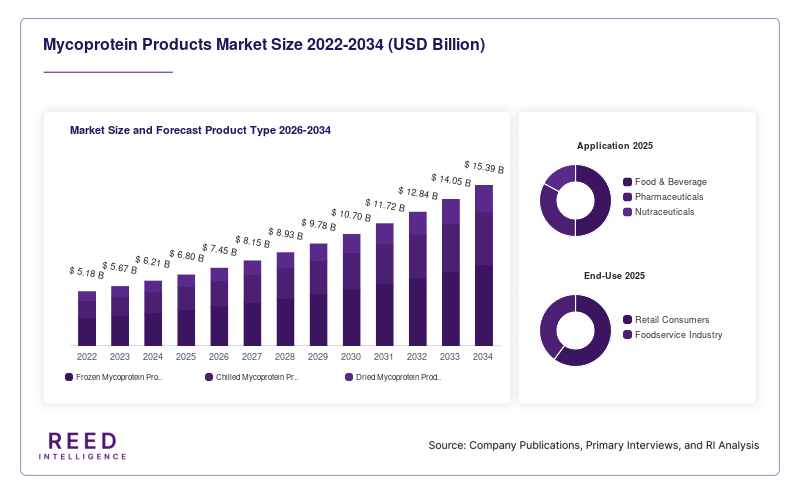
Frozen mycoprotein products dominated the market with a 44.7% share in 2024. These products have gained popularity due to their extended shelf life, convenience, and ease of storage. Frozen formats are widely used in retail and foodservice applications, making them a preferred choice for consumers and businesses alike.
Chilled mycoprotein products are expected to grow at the fastest CAGR of 10.1% during the forecast period. Their fresh taste and minimal processing appeal to health-conscious consumers. The increasing demand for clean-label products will further drive the growth of this segment.
By Application
The food & beverage segment held the largest share of 62.4% in 2024. Mycoprotein is extensively used in meat substitutes, ready meals, and snacks, making it a key ingredient in the food industry. Its versatility and nutritional benefits have supported widespread adoption.
The pharmaceutical and nutraceutical segment is projected to grow at a CAGR of 9.8%. The use of mycoprotein in functional foods and dietary supplements is expected to increase due to its health benefits and bioactive properties.
By End-Use
Retail consumers accounted for the largest share in 2024, driven by increasing availability of mycoprotein products in supermarkets and online platforms. The convenience of ready-to-cook and ready-to-eat options has further boosted demand.
The foodservice segment is expected to grow at the fastest CAGR of 10.6%. Restaurants and catering services are increasingly incorporating mycoprotein-based dishes to cater to changing consumer preferences and dietary trends.
By Distribution Channel
Supermarkets and hypermarkets dominated the market with a significant share in 2024. These channels offer a wide variety of mycoprotein products, enabling consumers to explore different options.
Online retail is anticipated to grow at a CAGR of 11.0%, driven by the increasing adoption of e-commerce platforms and changing shopping behaviors. The convenience of home delivery and access to diverse product offerings are key growth factors.
Regional Analysis
North America
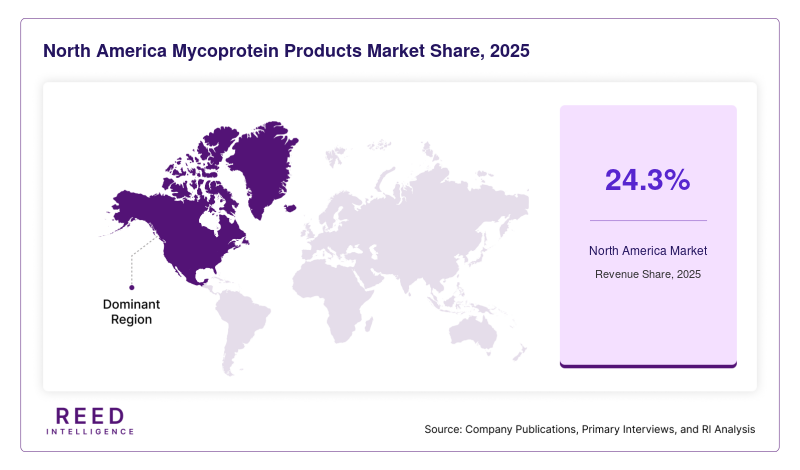
North America accounted for 24.3% of the Mycoprotein Products Market share in 2025 and is projected to grow at a CAGR of 9.1% during the forecast period. The region’s growth trajectory will be supported by increasing consumer inclination toward alternative proteins and evolving retail landscapes.
The United States dominated the regional market due to strong demand for meat substitutes and a well-established plant-based food industry. The presence of advanced food processing technologies and widespread availability of mycoprotein products in supermarkets has contributed to steady growth.
Europe
Europe held the largest share of 38.6% in 2025 and is expected to grow at a CAGR of 8.7% through 2034. The region’s established consumer base and regulatory support for sustainable food systems have driven market expansion.
The United Kingdom led the market, supported by early adoption of mycoprotein products and strong brand presence. Consumer awareness regarding environmental sustainability and ethical food consumption has played a key role in maintaining market dominance.
Asia Pacific
Asia Pacific accounted for 18.5% of the global market in 2025 and is anticipated to grow at the fastest CAGR of 11.2% during the forecast period. Rapid urbanization and changing dietary preferences are expected to drive market growth.
China emerged as the dominant country due to increasing demand for protein-rich diets and growing interest in alternative food sources. Government initiatives promoting food security and sustainable agriculture have further supported market expansion.
Middle East & Africa
The Middle East & Africa region held a 9.4% share in 2025 and is projected to grow at a CAGR of 8.9% through 2034. The region’s growth will be supported by increasing investments in food innovation and alternative protein production.
The United Arab Emirates dominated the regional market, driven by a strong focus on food security and sustainable food solutions. The adoption of advanced food technologies has facilitated the introduction of mycoprotein products in urban markets.
Latin America
Latin America accounted for 9.2% of the global market in 2025 and is expected to grow at a CAGR of 9.3% during the forecast period. Rising health awareness and growing interest in plant-based diets are key growth factors.
Brazil led the market due to its large consumer base and increasing demand for affordable protein alternatives. The expansion of retail distribution channels has further supported market growth in the region.
Competitive Landscape
The Mycoprotein Products Market is moderately consolidated, with key players focusing on product innovation, strategic partnerships, and geographic expansion. The leading company in the market has maintained its position through continuous product development and strong brand recognition.
One prominent market leader has recently introduced new product lines targeting ready-to-eat segments, enhancing its portfolio and strengthening its market presence. Other players are investing in research and development to improve production efficiency and expand application areas.Competitive strategies include mergers, acquisitions, and collaborations aimed at increasing market share and enhancing technological capabilities. Companies are also focusing on sustainability initiatives to align with consumer expectations and regulatory requirements.
Key Players
- Marlow Foods Ltd.
- Quorn Foods
- Tyson Foods Inc.
- Kellogg Company
- Nestlé S.A.
- Unilever PLC
- Impossible Foods Inc.
- Beyond Meat Inc.
- Maple Leaf Foods
- Conagra Brands Inc.
Recent Developments
- Several companies have launched new mycoprotein-based ready meals to cater to increasing demand for convenience foods.
- Strategic partnerships between food manufacturers and biotechnology firms have accelerated innovation in fermentation technologies.
- Expansion of production facilities has been observed to meet growing global demand.
- New product certifications and clean-label initiatives have been introduced to enhance consumer trust.
- Investments in emerging markets have increased to strengthen distribution networks and expand customer reach.
Mycoprotein Products Market Segments
Product Type
- Frozen Mycoprotein Products
- Chilled Mycoprotein Products
- Dried Mycoprotein Products
Application
- Food & Beverage
- Pharmaceuticals
- Nutraceuticals
End-Use
- Retail Consumers
- Foodservice Industry
Distribution Channel
- Supermarkets & Hypermarkets
- Convenience Stores
- Online Retail
By Region
- North America
- Europe
- APAC
- Middle East and Africa
- LATAM