Myelodysplastic Syndrome Drugs Market Size, Share & Demand Report By Drug Class (Hypomethylating Agents, Immunomodulatory Drugs, Targeted Therapies, Others), By Route of Administration (Injectable, Oral), By Distribution Channel (Hospital Pharmacies, Retail Pharmacies, Online Pharmacies) By Region & Segment Forecasts, 2026–2034
USD 3950
Market Overview
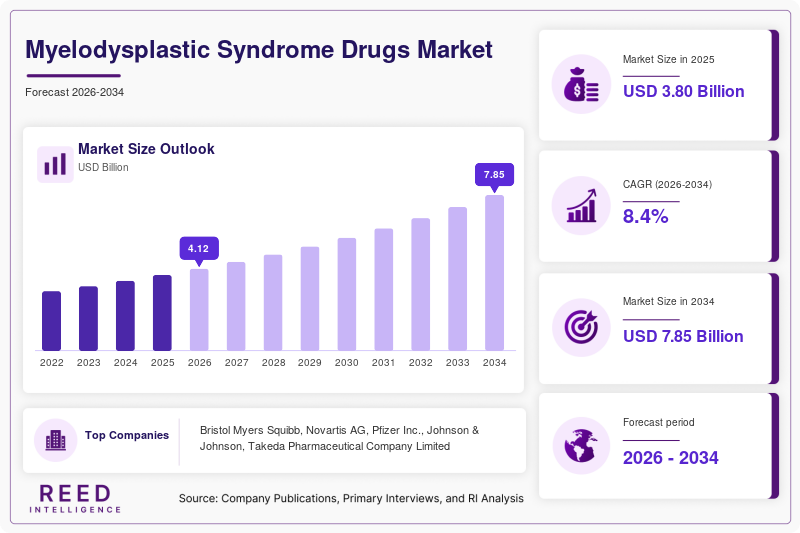
The global Myelodysplastic Syndrome Drugs Market was valued at approximately USD 3.8 billion in 2026 and is projected to reach USD 7.2 billion by 2034, expanding at a compound annual growth rate (CAGR) of 8.4% during 2026–2034. The market is witnessing steady expansion due to increasing prevalence of hematologic malignancies and advancements in targeted therapies. Myelodysplastic syndrome (MDS) represents a group of bone marrow disorders characterized by ineffective hematopoiesis, driving demand for innovative pharmacological interventions.
A key global factor supporting market growth is the rising aging population, as MDS incidence increases significantly with age. Healthcare systems across developed and emerging economies are investing in early diagnosis and treatment pathways, improving patient outcomes and boosting demand for disease-modifying drugs. Additionally, regulatory approvals for novel agents such as hypomethylating agents and immunomodulatory therapies are contributing to broader treatment adoption.
Key Highlights
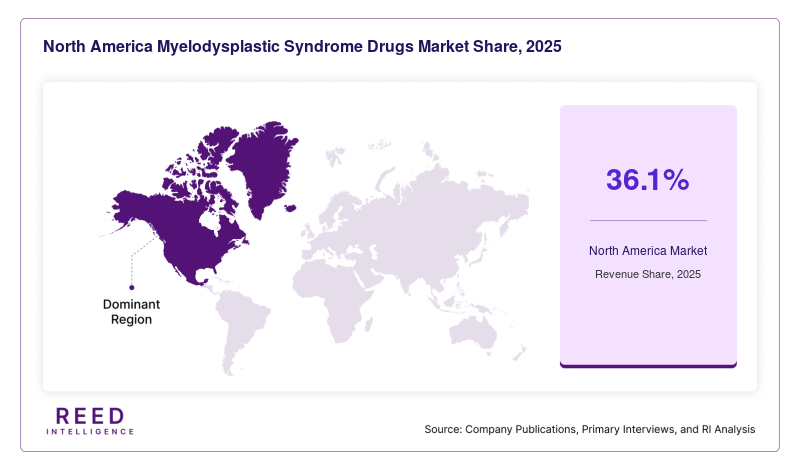
- North America dominated the market with a 36.1% share in 2025.
- Asia Pacific is expected to grow at the fastest CAGR of 9.8% during 2026–2034.
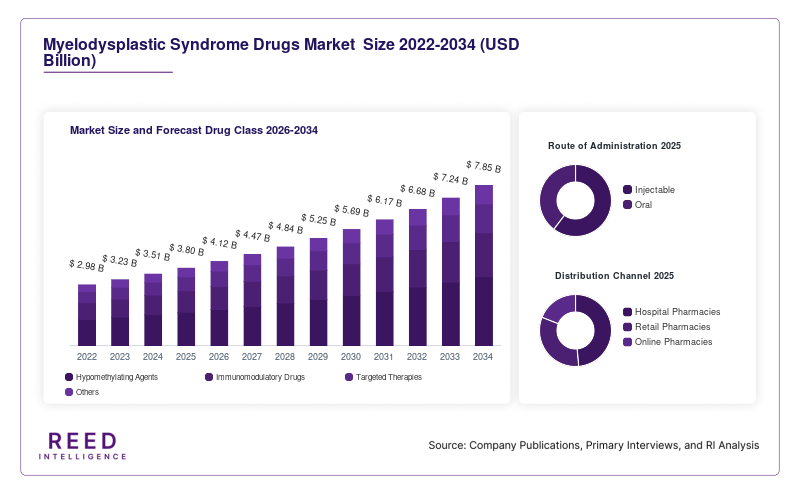
- By drug class, hypomethylating agents accounted for the largest share of 42.7%, while targeted therapies are projected to grow at a CAGR of 10.6%.
- By route of administration, injectable drugs led with a 61.3% share, whereas oral drugs are expected to expand at a CAGR of 9.5%.
- The United States remained the dominant country, with market values of USD 1.1 billion in 2024 and USD 1.2 billion in 2025.
Market Trends
Increasing adoption of targeted and combination therapies
The Myelodysplastic Syndrome Drugs Market is experiencing a shift toward targeted therapies and combination treatment regimens. Traditional therapies such as supportive care and single-agent hypomethylating drugs are being complemented by targeted drugs that address specific genetic mutations. These therapies offer improved efficacy and reduced toxicity profiles, which is critical for elderly patient populations. Combination approaches, including hypomethylating agents paired with immunotherapies or kinase inhibitors, are gaining clinical traction. This trend is supported by ongoing clinical trials and regulatory approvals, which are expanding treatment options. As healthcare providers seek to improve survival rates and delay disease progression, targeted and combination therapies are becoming central to treatment protocols, driving both market growth and innovation.
Growth in oral drug formulations and outpatient care
Another notable trend is the increasing preference for oral drug formulations, which provide convenience and improve patient adherence. Injectable therapies have traditionally dominated the market; however, oral alternatives are gaining popularity due to ease of administration and reduced need for hospital visits. This trend aligns with the broader shift toward outpatient care, particularly in developed healthcare systems. Patients benefit from reduced treatment burden, while healthcare providers optimize resource utilization. Pharmaceutical companies are investing in the development of oral hypomethylating agents and novel small-molecule drugs. As healthcare systems emphasize patient-centric care models, oral therapies are expected to capture a larger market share over the forecast period.
Market Drivers
Rising prevalences and aging population
The increasing prevalence of myelodysplastic syndromes and related hematologic conditions is a primary driver of the market. MDS is more commonly diagnosed in individuals over the age of 60, making the aging global population a critical factor in market expansion. Countries with aging demographics are witnessing higher diagnosis rates, supported by improved diagnostic technologies and awareness programs. Additionally, lifestyle factors and environmental exposures are contributing to the incidence of hematologic malignancies. Healthcare systems are responding by expanding oncology services and investing in specialized treatment centers. This growing patient pool directly increases demand for effective pharmacological treatments, thereby supporting sustained market growth.
Advancements in drug development and regulatory approvals
Significant progress in drug development is accelerating the growth of the Myelodysplastic Syndrome Drugs Market. Pharmaceutical companies are focusing on innovative therapies, including epigenetic modulators, immune checkpoint inhibitors, and targeted agents. Regulatory agencies are providing faster approval pathways for breakthrough therapies, enabling quicker market entry. Clinical trials are increasingly focused on combination therapies and precision medicine, which enhance treatment efficacy. Additionally, collaborations between biotech firms and research institutions are driving innovation. These advancements not only improve patient outcomes but also expand the commercial potential of the market by introducing new treatment options and extending drug lifecycles.
Market Restraint
High treatment costs and limited accessibility in emerging regions
One of the primary restraints in the Myelodysplastic Syndrome Drugs Market is the high cost associated with advanced therapies. Innovative drugs, particularly targeted therapies and biologics, often come with substantial price tags, limiting accessibility for patients in low- and middle-income countries. Even in developed regions, reimbursement challenges and insurance coverage limitations can restrict patient access to newer treatments. The cost burden extends beyond medications to include diagnostic procedures, monitoring, and supportive care.
This financial barrier can delay treatment initiation or lead to suboptimal therapy choices, affecting patient outcomes. For example, patients in emerging economies may rely on older, less effective treatments due to affordability constraints. Pharmaceutical companies are attempting to address this issue through patient assistance programs and pricing strategies; however, disparities persist. The high cost structure also places pressure on healthcare systems, particularly in regions with limited healthcare budgets. As a result, cost-related challenges continue to hinder market penetration and growth, especially in underserved regions.
Market Opportunities
Expansion in emerging markets and improving healthcare infrastructure
Emerging markets present significant growth opportunities for the Myelodysplastic Syndrome Drugs Market. Countries in Asia Pacific, Latin America, and parts of the Middle East are investing in healthcare infrastructure and expanding access to oncology services. Increasing awareness of hematologic disorders and improved diagnostic capabilities are leading to higher detection rates. Governments and private sector stakeholders are focusing on enhancing healthcare accessibility, which supports market growth. Pharmaceutical companies are entering these markets through partnerships and distribution agreements, expanding their global footprint. As healthcare systems continue to develop, demand for advanced therapies is expected to rise, creating new revenue streams.
Development of personalized medicine and biomarker-driven therapies
The growing focus on personalized medicine offers a promising opportunity for the market. Advances in genomics and molecular diagnostics are enabling the identification of specific biomarkers associated with MDS. This allows for tailored treatment approaches that improve efficacy and reduce adverse effects. Pharmaceutical companies are investing in research to develop drugs targeting specific genetic mutations. Personalized therapies not only enhance patient outcomes but also increase treatment adoption rates. Additionally, regulatory support for precision medicine initiatives is accelerating innovation. As biomarker-driven therapies become more widely available, they are expected to transform the treatment landscape and drive market expansion.
Segmental Analysis
By Drug Class
Hypomethylating agents dominate the Myelodysplastic Syndrome Drugs Market, accounting for approximately 42.7% of the total share in 2024. These drugs are widely used as first-line treatments due to their ability to modify disease progression and improve survival rates. Their established clinical efficacy and widespread adoption make them a cornerstone of MDS treatment. Additionally, ongoing research and development efforts are enhancing their therapeutic potential. The availability of multiple formulations and supportive clinical data further strengthens their market position. Healthcare providers prefer these agents due to their proven benefits, which drives consistent demand across regions.
Targeted therapies represent the fastest-growing subsegment, with a projected CAGR of 10.6% during the forecast period. Growth is driven by advancements in molecular diagnostics and the identification of specific genetic mutations associated with MDS. These therapies offer improved efficacy and reduced side effects compared to traditional treatments. Pharmaceutical companies are investing heavily in the development of targeted agents, supported by strong clinical pipelines. Increasing adoption of precision medicine approaches further supports growth. As more targeted therapies receive regulatory approval, this subsegment is expected to gain significant market share.
By Route of Administration
Injectable drugs dominate the market, accounting for approximately 61.3% of the share in 2024. These drugs are widely used due to their rapid onset of action and established clinical efficacy. Hospitals and specialty clinics prefer injectable formulations for severe cases, where immediate therapeutic intervention is required. Additionally, many existing MDS drugs are available in injectable form, which contributes to their dominance. The controlled administration of injectable drugs ensures accurate dosing and monitoring, which is critical for patient safety.
Oral drugs are the fastest-growing subsegment, with a CAGR of 9.5% during the forecast period. Growth is driven by increasing patient preference for convenient treatment options and the shift toward outpatient care. Oral formulations reduce the need for hospital visits, improving patient compliance and quality of life. Pharmaceutical companies are developing new oral therapies to meet this demand. The growing emphasis on patient-centric care models further supports the adoption of oral drugs. As these formulations become more widely available, their market share is expected to increase significantly.
By Distribution Channel
Hospital pharmacies dominate the distribution channel segment, accounting for approximately 48.9% of the market share in 2024. These pharmacies play a critical role in the distribution of MDS drugs, particularly injectable therapies that require professional administration. Hospitals are primary treatment centers for MDS patients, ensuring consistent demand for pharmaceuticals. Additionally, hospital pharmacies provide access to specialized medications and support services, which enhances patient care. The integration of pharmacy services within healthcare facilities ensures efficient drug delivery and monitoring.
Online pharmacies are the fastest-growing subsegment, with a CAGR of 10.2% during the forecast period. Growth is driven by increasing digitalization and the rising adoption of e-commerce platforms in healthcare. Online pharmacies offer convenience, competitive pricing, and home delivery options, which attract patients. The COVID-19 pandemic accelerated the adoption of online healthcare services, and this trend continues to influence market dynamics. Regulatory support for digital health initiatives further supports growth. As internet penetration increases, online pharmacies are expected to capture a larger share of the market.
Regional Analysis
North America
North America held the largest share of the Myelodysplastic Syndrome Drugs Market, accounting for approximately 36.1% in 2025. The region is expected to maintain steady growth with a CAGR of around 7.9% during the forecast period. Strong healthcare infrastructure, high healthcare spending, and widespread adoption of advanced therapies contribute to market dominance. The presence of leading pharmaceutical companies and ongoing clinical trials further supports growth. Additionally, favorable reimbursement policies and early adoption of innovative treatments enhance market penetration.
The United States dominates the regional market due to its well-established healthcare system and high prevalence of hematologic disorders. A key growth factor is the strong focus on research and development, supported by government funding and private investments. The country also benefits from a high level of awareness and early diagnosis rates. This enables timely treatment interventions, driving demand for advanced drugs and supporting overall market expansion.
Europe
Europe represents a significant share of the global market, accounting for approximately 27.4% in 2025, with a projected CAGR of 7.6%. The region benefits from robust healthcare systems and increasing adoption of innovative therapies. Countries across Western Europe are investing in oncology research and expanding access to advanced treatments. Regulatory support for new drug approvals further strengthens market growth. Additionally, collaborative research initiatives contribute to the development of novel therapies.
Germany is the dominant country in the European market, driven by its strong pharmaceutical industry and advanced healthcare infrastructure. A unique growth factor is the emphasis on public healthcare systems, which ensure widespread access to treatment. The country also supports clinical research and innovation, enabling faster adoption of new therapies. This combination of factors positions Germany as a key contributor to regional market growth.
Asia Pacific
Asia Pacific is expected to witness the fastest growth, with a CAGR of 9.8% during the forecast period, and held a share of around 20.3% in 2025. The region’s growth is driven by increasing healthcare investments, rising awareness, and a growing patient population. Emerging economies are improving their healthcare infrastructure and expanding access to oncology treatments. Additionally, pharmaceutical companies are targeting this region for expansion due to its large population base and unmet medical needs.
China dominates the Asia Pacific market due to its large population and increasing prevalence of hematologic disorders. A key growth factor is the rapid expansion of healthcare infrastructure and government initiatives to improve access to medical services. The country is also investing in domestic pharmaceutical manufacturing and research, which enhances availability and affordability of treatments. These factors collectively support strong market growth.
Middle East & Africa
The Middle East & Africa region accounted for approximately 8.2% of the market in 2025 and is projected to grow at a CAGR of 7.2%. Growth in this region is supported by improving healthcare infrastructure and increasing awareness of hematologic disorders. Governments are investing in healthcare development, particularly in urban areas, which enhances access to diagnosis and treatment. However, market growth is somewhat constrained by limited resources and healthcare disparities.
Saudi Arabia leads the regional market due to its relatively advanced healthcare system and government investments. A unique growth factor is the increasing focus on healthcare modernization and expansion of specialized treatment centers. The country is also adopting advanced medical technologies and therapies, which supports market growth. These initiatives contribute to improved patient outcomes and increased demand for MDS drugs.
Latin America
Latin America held a market share of approximately 8.0% in 2025 and is expected to grow at a CAGR of 7.5%. The region is experiencing gradual growth due to improving healthcare systems and increasing awareness of cancer-related conditions. Governments and private organizations are investing in healthcare infrastructure, which supports access to treatment. However, economic challenges and limited healthcare funding can impact market expansion.
Brazil is the dominant country in Latin America, driven by its large population and expanding healthcare sector. A key growth factor is the increasing adoption of oncology treatments and government initiatives to improve healthcare access. The country is also witnessing growth in private healthcare services, which enhances availability of advanced therapies. These factors contribute to steady market growth in the region.
Competitive Landscape
The Myelodysplastic Syndrome Drugs Market is moderately consolidated, with several key players competing based on product innovation, clinical efficacy, and strategic partnerships. Leading companies are focusing on expanding their product portfolios through research and development, as well as mergers and acquisitions. The competitive environment is characterized by strong pipelines and increasing investments in targeted therapies.
Among the top players, Celgene Corporation (now part of Bristol Myers Squibb) is considered a market leader due to its established portfolio of MDS drugs and strong global presence. The company continues to invest in research and clinical trials to enhance its product offerings. Recent developments include the expansion of combination therapy trials and the introduction of new formulations aimed at improving patient outcomes.
Other major companies are also actively engaged in strategic collaborations and product launches to strengthen their market positions. The focus on personalized medicine and biomarker-driven therapies is shaping competitive strategies. As innovation continues, companies are expected to differentiate themselves through advanced treatment options and improved patient care solutions.
Key Players
- Bristol Myers Squibb
- Novartis AG
- Pfizer Inc.
- Johnson & Johnson
- Takeda Pharmaceutical Company Limited
- Amgen Inc.
- AbbVie Inc.
- Astellas Pharma Inc.
- Otsuka Pharmaceutical Co., Ltd.
- Eisai Co., Ltd.
- Roche Holding AG
- Gilead Sciences, Inc.
- Sanofi S.A.
- Merck & Co., Inc.
- GlaxoSmithKline plc
Recent Developments
- In 2025, Bristol Myers Squibb expanded its clinical trial portfolio for combination therapies targeting MDS.
- In 2024, Novartis received regulatory approval for a new targeted therapy aimed at improving treatment outcomes in high-risk MDS patients.
- In 2025, Takeda Pharmaceutical entered a strategic partnership to develop next-generation epigenetic therapies for hematologic disorders.
Myelodysplastic Syndrome Drugs Market Segments
Drug Class
- Hypomethylating Agents
- Immunomodulatory Drugs
- Targeted Therapies
- Others
Route of Administration
- Injectable
- Oral
Distribution Channel
- Hospital Pharmacies
- Retail Pharmacies
- Online Pharmacies
By Region
- North America
- Europe
- APAC
- Middle East and Africa
- LATAM