Myocardial Infarction Therapeutics Market Size, Share & Demand Report By Drug Class (Antiplatelet Agents, Anticoagulants, Beta Blockers, ACE Inhibitors, Thrombolytic Agents, Statins), By Route of Administration (Oral, Injectable), By Distribution Channel (Hospital Pharmacies, Retail Pharmacies, Online Pharmacies), By Region & Segment Forecasts, 2026–2034
USD 3950
Market Overview
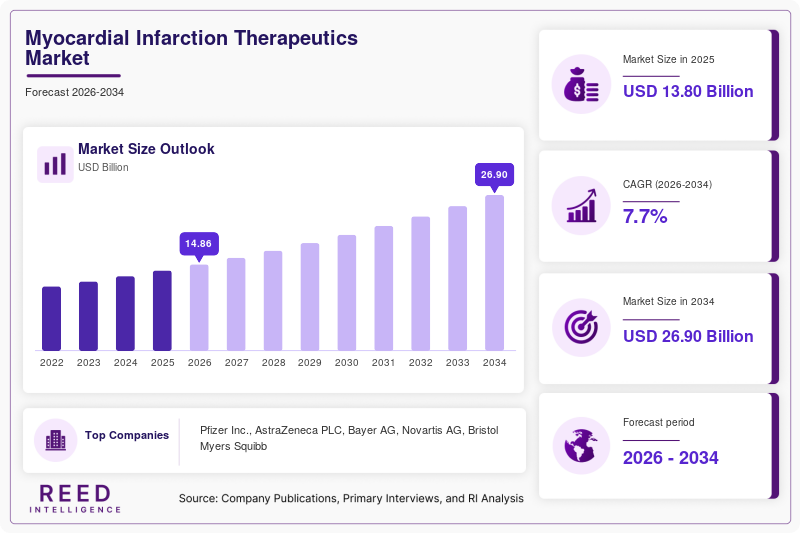
The global Myocardial Infarction Therapeutics Market was valued at USD 13.8 billion in 2026 and is projected to reach USD 24.9 billion by 2034, expanding at a CAGR of 7.7% during the forecast period. The market continues to gain momentum as cardiovascular disorders remain one of the leading causes of mortality across developed and developing economies. Rising healthcare expenditure, improved diagnostic capabilities, and increasing awareness regarding early treatment are contributing to steady demand for myocardial infarction therapeutics worldwide. Pharmaceutical companies are investing in advanced thrombolytic drugs, anticoagulants, beta blockers, and antiplatelet therapies to improve survival rates and reduce long-term cardiac complications among patients.
A major global factor supporting market growth is the rising incidence of sedentary lifestyles and metabolic disorders. Increasing rates of obesity, hypertension, diabetes, and tobacco consumption have significantly elevated the prevalence of acute coronary syndromes. Healthcare systems are therefore focusing on rapid intervention therapies and preventive cardiovascular treatment programs. Technological progress in hospital emergency care and faster patient access to reperfusion therapies are also strengthening market expansion. In addition, favorable reimbursement frameworks in developed countries and growing investments in cardiovascular research are encouraging pharmaceutical innovation.
Key Highlights
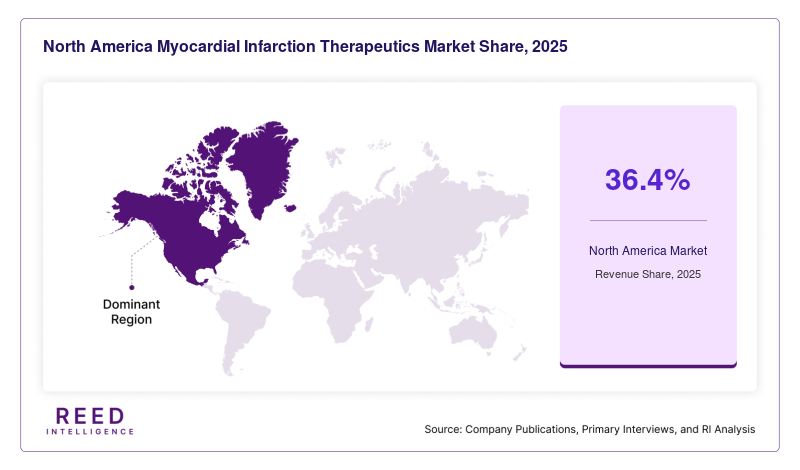
- North America dominated the market with a 36.4% share in 2025.
- Asia Pacific is expected to grow at the fastest CAGR of 9.8% during 2026–2034.
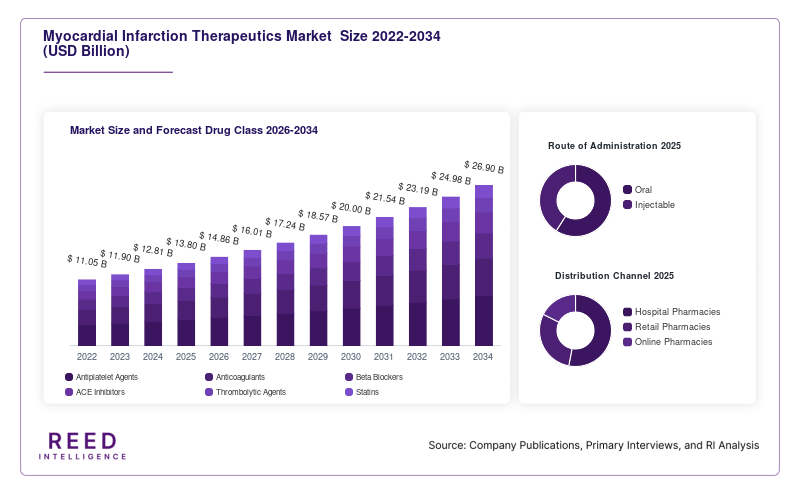
- By drug class, antiplatelet agents accounted for the largest share of 33.7%.
- while thrombolytic agents are projected to grow at a CAGR of 9.6%.
- By route of administration, oral therapeutics led with a 58.9% share, whereas injectable therapeutics are expected to expand at a CAGR of 8.8%.
- By distribution channel, hospital pharmacies held a 49.5% share, while online pharmacies are projected to grow at a CAGR of 10.4%.
- The United States remained the dominant country, with market values of USD 3.9 billion in 2024 and USD 4.2 billion in 2025.
Market Trends
Integration of Precision Cardiology and Biomarker-Based Therapies
The Myocardial Infarction Therapeutics Market is experiencing strong momentum from the adoption of precision cardiology approaches. Healthcare providers are increasingly using biomarker-based assessments and genetic profiling to identify high-risk cardiovascular patients and customize treatment pathways. Personalized antiplatelet regimens and targeted anticoagulant therapies are improving treatment outcomes while reducing adverse drug reactions. Pharmaceutical manufacturers are focusing on therapies that align with patient-specific cardiac conditions, especially among elderly populations with multiple comorbidities. Hospitals are also adopting advanced monitoring technologies that enable rapid therapeutic adjustments during emergency cardiac care. This trend is contributing to higher demand for innovative therapeutics with improved efficacy and lower hospitalization rates.
Expansion of Combination Drug Therapies in Acute Cardiac Care
Combination therapy strategies are becoming increasingly important in the treatment of myocardial infarction. Physicians are combining antiplatelet drugs, statins, anticoagulants, and beta blockers to reduce the risk of secondary cardiac events and improve long-term recovery outcomes. Pharmaceutical companies are developing fixed-dose combination products that simplify treatment adherence and reduce medication burden for patients. The growing use of evidence-based cardiac treatment protocols across hospitals and specialty clinics is further supporting this trend. Emerging markets are also witnessing higher adoption of combination therapeutics due to improving healthcare infrastructure and expanding insurance coverage. These developments are expected to strengthen market growth over the coming years.
Market Drivers
Rising Prevalence of Cardiovascular Diseases and Cardiac Emergencies
The increasing prevalence of cardiovascular disorders remains one of the strongest growth drivers for the Myocardial Infarction Therapeutics Market. Urbanization, unhealthy dietary habits, smoking, and lack of physical activity have significantly increased the number of patients diagnosed with coronary artery disease and acute myocardial infarction. Aging populations across major economies are further contributing to rising hospital admissions related to cardiac emergencies. Healthcare providers are therefore expanding investments in rapid intervention therapies and emergency cardiovascular treatment systems. Growing awareness regarding early symptom recognition and timely treatment is also improving therapeutic adoption. Governments and healthcare organizations are promoting preventive screening programs that encourage earlier diagnosis and long-term management of cardiovascular conditions.
Advancements in Pharmaceutical Research and Emergency Cardiac Care
Continuous advancements in pharmaceutical development are accelerating innovation in myocardial infarction therapeutics. Drug manufacturers are introducing improved anticoagulants and thrombolytic agents with enhanced safety profiles and faster clinical response times. Research activities focused on minimizing bleeding risks and improving post-infarction recovery are creating new treatment opportunities. Hospitals are increasingly integrating advanced emergency cardiac response systems that support rapid drug administration during critical treatment windows. Expansion of specialized cardiac care centers and catheterization laboratories is further increasing the use of therapeutic drugs for acute coronary syndromes. In addition, regulatory approvals for newer cardiovascular medications are enabling broader commercial expansion across international healthcare markets.
Market Restraint
High Treatment Costs and Risk of Drug-Related Complications
The high cost associated with advanced myocardial infarction treatment continues to limit market expansion in several low-income and middle-income countries. Many innovative cardiovascular drugs require long-term administration and continuous clinical monitoring, increasing the overall financial burden on healthcare systems and patients. Hospitalization expenses linked with emergency cardiac care, diagnostic procedures, and post-treatment rehabilitation further contribute to rising healthcare costs. In addition, adverse effects associated with certain anticoagulants and thrombolytic agents remain a significant concern among clinicians. Complications such as internal bleeding, drug interactions, and allergic reactions can restrict the adoption of aggressive therapeutic regimens in high-risk patients.
The challenge becomes more significant in regions with limited reimbursement coverage and unequal healthcare access. Smaller healthcare facilities often lack advanced infrastructure for rapid cardiac intervention and continuous patient monitoring. As a result, treatment delays may reduce therapeutic effectiveness and increase mortality risks. Pharmaceutical companies must therefore balance pricing strategies with clinical value while maintaining compliance with stringent regulatory standards. These cost and safety concerns continue to create barriers for broader adoption of advanced myocardial infarction therapeutics.
Market Opportunities
Increasing Demand for Telecardiology and Remote Patient Monitoring
The expansion of telecardiology services is creating new growth opportunities for the Myocardial Infarction Therapeutics Market. Healthcare providers are increasingly using remote monitoring systems to track cardiac health indicators and manage post-infarction recovery. Wearable cardiovascular monitoring devices are helping physicians detect abnormalities earlier and adjust medication plans more efficiently. Remote patient management also reduces hospital readmission rates and supports better long-term treatment adherence. Pharmaceutical companies are collaborating with digital health providers to integrate therapeutic management with virtual cardiac care platforms. The growing use of connected healthcare technologies in both developed and emerging economies is expected to create favorable conditions for market expansion during the forecast period.
Growth Potential Across Emerging Healthcare Economies
Emerging economies present significant opportunities for manufacturers operating in the myocardial infarction therapeutics industry. Countries across Asia Pacific, Latin America, and the Middle East are increasing healthcare expenditure and expanding access to cardiovascular treatment services. Government-led initiatives aimed at reducing cardiac mortality are supporting the establishment of specialized cardiac centers and public awareness campaigns. The availability of generic cardiovascular medicines is also improving treatment accessibility among larger patient populations. International pharmaceutical companies are expanding distribution partnerships and local manufacturing capabilities to strengthen regional presence. As healthcare infrastructure continues to improve, demand for advanced myocardial infarction therapeutics is expected to increase substantially across underserved markets.
Segmental Analysis
By Drug Class
Antiplatelet agents dominated the Myocardial Infarction Therapeutics Market in 2024 with a market share of 33.7%. These therapies are widely prescribed to prevent clot formation and reduce the risk of recurrent cardiovascular events following myocardial infarction. Aspirin-based therapies and P2Y12 inhibitors remain standard treatment options across hospitals and cardiac specialty clinics. The widespread clinical acceptance of antiplatelet agents is supported by their proven effectiveness in reducing mortality rates and improving long-term patient outcomes. Healthcare professionals continue to rely on these therapies as part of combination treatment strategies for acute coronary syndromes. Strong availability of branded and generic products has also contributed to high utilization across developed and developing healthcare markets.
Thrombolytic agents are expected to register the fastest CAGR of 9.6% during the forecast period due to rising demand for rapid reperfusion therapies in emergency cardiac care. These drugs are increasingly used in situations where immediate percutaneous coronary intervention is not available. Improvements in thrombolytic formulations and administration protocols are supporting better treatment outcomes and shorter response times. Healthcare providers in emerging economies are also adopting these therapies to strengthen emergency cardiovascular treatment capabilities in remote and underserved areas. Increasing investments in ambulance-based emergency care systems and growing awareness regarding early intervention are expected to support continued growth of thrombolytic therapeutics over the coming years.
By Route of Administration
Oral therapeutics held the largest share of the Myocardial Infarction Therapeutics Market in 2024, accounting for 58.9% of total revenue. Oral medications are widely preferred for long-term cardiovascular management because they offer greater convenience, improved patient compliance, and cost-effective treatment options. Antiplatelet drugs, beta blockers, and statins are commonly administered through oral formulations for secondary prevention after myocardial infarction. The availability of fixed-dose combination therapies has further enhanced patient adherence to treatment regimens. Hospitals and outpatient clinics continue to prescribe oral medications extensively due to their accessibility and suitability for chronic cardiovascular disease management. Strong distribution through retail and hospital pharmacies also contributes to segment dominance.
Injectable therapeutics are projected to expand at the fastest CAGR of 8.8% during 2026–2034 owing to increasing use in emergency and intensive care settings. Injectable anticoagulants and thrombolytic agents are essential for rapid stabilization of acute myocardial infarction patients during the critical treatment window. Advances in injectable drug delivery technologies and improved hospital emergency protocols are supporting greater utilization of these therapies. The segment is also benefiting from rising investments in emergency cardiac units and specialized coronary care centers worldwide. Developing economies are increasingly adopting injectable cardiac therapeutics to improve survival rates and strengthen emergency cardiovascular response systems in high-risk populations.
By Distribution Channel
Hospital pharmacies accounted for the largest share of the Myocardial Infarction Therapeutics Market in 2024 with 49.5% of total revenue. The dominance of this segment is primarily linked to the high number of acute myocardial infarction cases requiring immediate hospitalization and supervised treatment. Hospitals maintain comprehensive inventories of antiplatelet drugs, anticoagulants, beta blockers, and thrombolytic agents to ensure rapid patient access during emergencies. Physicians also prefer hospital-based dispensing due to better monitoring of drug administration and patient response. Increasing establishment of specialized cardiac centers and emergency treatment facilities is further strengthening the role of hospital pharmacies in the global market. Strong coordination between hospital departments and pharmacy units also supports efficient therapeutic management.
Online pharmacies are expected to witness the fastest CAGR of 10.4% during the forecast period due to growing digitalization of healthcare services and increasing consumer preference for convenient medicine purchasing platforms. Patients recovering from myocardial infarction are increasingly using online pharmacy channels for repeat prescriptions and long-term cardiovascular medication management. Expanding internet penetration and smartphone adoption are supporting the rapid growth of digital healthcare commerce across emerging economies. Pharmaceutical companies and healthcare providers are also partnering with online pharmacy platforms to improve medication accessibility and treatment continuity. This trend is expected to strengthen significantly as remote healthcare services and digital prescription systems continue to evolve globally.
Regional Analysis
North America
North America accounted for 36.4% of the global Myocardial Infarction Therapeutics Market in 2025 and is expected to maintain a stable growth trajectory with a CAGR of 7.1% through 2034. The region benefits from advanced healthcare infrastructure, high awareness regarding cardiovascular disorders, and strong reimbursement systems supporting cardiac treatment. Hospitals across the United States and Canada continue to invest in emergency cardiovascular care technologies and rapid-response treatment protocols. The presence of leading pharmaceutical manufacturers and strong research funding for cardiovascular drug development further contribute to regional market dominance.
The United States remained the leading country within North America due to its high prevalence of obesity, hypertension, and coronary artery disease. Increasing demand for advanced antiplatelet therapies and innovative anticoagulants continues to support market growth. A unique growth factor in the country is the widespread adoption of integrated cardiac care networks that combine emergency diagnostics, telecardiology, and long-term rehabilitation services. These coordinated healthcare systems are improving treatment outcomes while supporting higher utilization of myocardial infarction therapeutics across hospitals and specialty clinics.
Europe
Europe represented a significant share of the Myocardial Infarction Therapeutics Market in 2025 and is forecast to expand at a CAGR of 6.9% during the assessment period. The regional market is supported by growing elderly populations and increasing incidence of ischemic heart disease across several countries. European healthcare systems emphasize preventive cardiovascular care and rapid clinical intervention, creating consistent demand for advanced therapeutics. Pharmaceutical research collaborations and government-backed cardiovascular awareness campaigns are also encouraging broader adoption of innovative treatment options throughout the region.
Germany emerged as the dominant country in the European market due to its advanced hospital infrastructure and strong cardiovascular research ecosystem. The country continues to invest in modern cardiac emergency units and specialized treatment centers for acute coronary syndromes. One unique growth factor supporting the German market is the increasing use of digital health integration in cardiac monitoring and medication management. Hospitals are adopting data-driven patient management systems that improve therapeutic efficiency and reduce the risk of recurrent myocardial infarction episodes.
Asia Pacific
Asia Pacific is projected to record the fastest CAGR of 9.8% during 2026–2034 in the global Myocardial Infarction Therapeutics Market. Rapid urbanization, changing dietary patterns, and increasing prevalence of diabetes and hypertension are driving regional demand for cardiovascular therapies. Governments across major Asian economies are expanding healthcare infrastructure and improving access to emergency cardiac treatment. Growing investments from international pharmaceutical companies and rising availability of generic therapeutics are also strengthening market penetration across urban and semi-urban healthcare facilities.
China dominated the Asia Pacific market due to its large patient population and expanding cardiovascular healthcare programs. The country continues to witness increasing hospital admissions associated with acute myocardial infarction and related cardiac conditions. A unique factor driving growth in China is the rapid expansion of government-sponsored health insurance coverage for cardiovascular treatments. This development has improved affordability for advanced therapies and increased patient access to specialized cardiac care services across both metropolitan and secondary cities.
Middle East & Africa
The Middle East & Africa region accounted for a moderate share of the Myocardial Infarction Therapeutics Market in 2025 and is expected to grow at a CAGR of 6.5% through 2034. Rising awareness regarding cardiovascular diseases and increasing investments in healthcare modernization are supporting regional demand. Countries across the Gulf Cooperation Council are improving emergency healthcare systems and establishing advanced cardiac treatment facilities. International healthcare providers and pharmaceutical firms are also entering regional markets through strategic partnerships and distribution agreements.
Saudi Arabia remained the dominant country within the Middle East & Africa market due to its growing healthcare expenditure and rising incidence of lifestyle-related cardiovascular disorders. The country is witnessing increased adoption of modern cardiac intervention therapies and preventive cardiovascular screening programs. A unique growth factor in Saudi Arabia is the implementation of national healthcare transformation initiatives focused on improving specialized cardiac care access. These programs are encouraging hospitals to adopt advanced myocardial infarction therapeutic protocols and modern emergency response systems.
Latin America
Latin America is expected to demonstrate steady growth in the Myocardial Infarction Therapeutics Market with a forecast CAGR of 6.8% during the study period. Increasing urbanization and rising prevalence of obesity and diabetes are contributing to higher cardiovascular disease burden across the region. Governments and healthcare organizations are promoting awareness regarding early diagnosis and treatment of cardiac conditions. Expansion of hospital infrastructure and improving access to essential cardiovascular medicines are also supporting market development in several Latin American countries.
Brazil dominated the Latin American market due to its large healthcare network and increasing investments in cardiovascular treatment programs. Public and private hospitals are expanding emergency cardiac care services to address rising patient demand. One unique factor driving the Brazilian market is the increasing presence of local pharmaceutical manufacturing for generic cardiovascular medications. This development is improving affordability and supporting broader access to myocardial infarction therapeutics across urban and rural healthcare settings.
Competitive Landscape
The Myocardial Infarction Therapeutics Market is characterized by strong competition among multinational pharmaceutical companies focused on cardiovascular drug innovation, strategic partnerships, and geographic expansion. Major industry participants are investing in research and development activities to improve therapeutic efficacy and reduce adverse effects associated with cardiac medications. The competitive environment is also shaped by increasing demand for generic cardiovascular drugs, particularly across emerging healthcare markets.
Pfizer Inc. remains one of the leading companies in the market due to its extensive cardiovascular product portfolio and strong global distribution capabilities. The company continues to strengthen its position through strategic clinical collaborations and expansion of advanced cardiovascular therapies. Other important market participants include AstraZeneca, Bayer AG, Novartis AG, and Bristol Myers Squibb, all of which maintain active research pipelines focused on cardiovascular treatment innovation.
A recent industry development involved AstraZeneca expanding clinical studies related to next-generation antithrombotic therapies aimed at improving recovery outcomes among high-risk myocardial infarction patients. Companies are also focusing on digital health integration, patient monitoring technologies, and personalized medicine strategies to strengthen long-term market competitiveness.
Key Players
- Pfizer Inc.
- AstraZeneca PLC
- Bayer AG
- Novartis AG
- Bristol Myers Squibb
- Sanofi S.A.
- Boehringer Ingelheim
- F. Hoffmann-La Roche Ltd.
- Eli Lilly and Company
- Johnson & Johnson
- Amgen Inc.
- Merck & Co., Inc.
- Daiichi Sankyo Company Limited
- Abbott Laboratories
- GlaxoSmithKline plc
- Teva Pharmaceutical Industries Ltd.
- Sun Pharmaceutical Industries Ltd.
- Viatris Inc.
Recent Developments
- Pfizer Inc. announced the expansion of its cardiovascular therapeutic manufacturing capacity in North America to support increasing demand for antiplatelet therapies.
- AstraZeneca initiated a multicenter clinical program focused on evaluating advanced antithrombotic therapies for post-myocardial infarction patient management.
- Bayer AG strengthened its cardiovascular portfolio through a strategic partnership aimed at improving digital cardiac monitoring and medication adherence solutions.
Myocardial Infarction Therapeutics Market Segments
Drug Class
- Antiplatelet Agents
- Anticoagulants
- Beta Blockers
- ACE Inhibitors
- Thrombolytic Agents
- Statins
Route of Administration
- Oral
- Injectable
Distribution Channel
- Hospital Pharmacies
- Retail Pharmacies
- Online Pharmacies
By Region
- North America
- Europe
- APAC
- Middle East and Africa
- LATAM