Myristic Acid Market Size, Share & Demand Report By Source (Palm Kernel Oil, Coconut Oil, Others), By Application (Personal Care, Food Additives, Industrial Chemicals, Others), By End-Use Industry (Cosmetics & Personal Care, Food & Beverage, Chemical Industry, Others), By Region & Segment Forecasts, 2026–2034
USD 3950
Market Overview
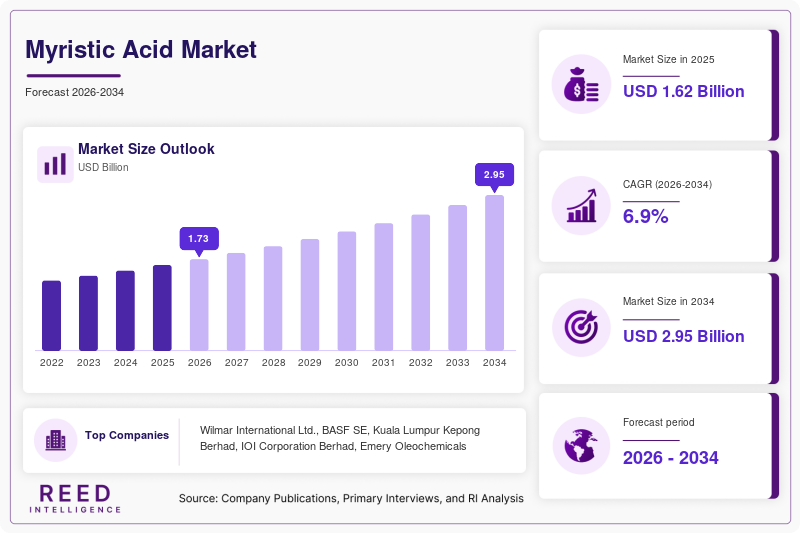
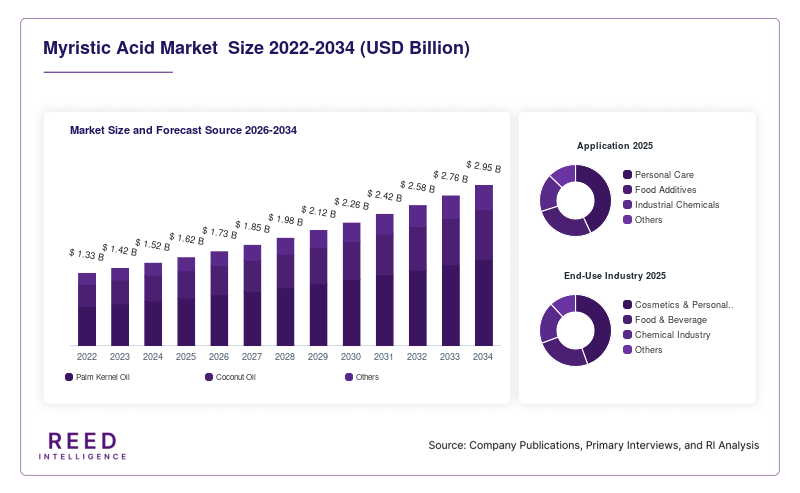
The global Myristic Acid Market size was valued at approximately USD 1.62 billion in 2026 and is projected to reach USD 2.78 billion by 2034, expanding at a compound annual growth rate (CAGR) of 6.9% during the forecast period from 2026 to 2034. The market growth is supported by the increasing utilization of fatty acids in personal care, food processing, and industrial applications. Myristic acid, a saturated fatty acid commonly derived from coconut oil and palm kernel oil, has gained attention due to its emulsifying, surfactant, and stabilizing properties, making it essential in formulations across multiple industries.
One of the key global factors driving the market is the rising demand for natural and bio-based ingredients in cosmetics and personal care products. Consumers are increasingly shifting toward formulations with plant-based components, which has led manufacturers to incorporate myristic acid into soaps, creams, and lotions. This shift is further supported by regulatory encouragement for sustainable and biodegradable raw materials, particularly in developed economies.
Key Highlights
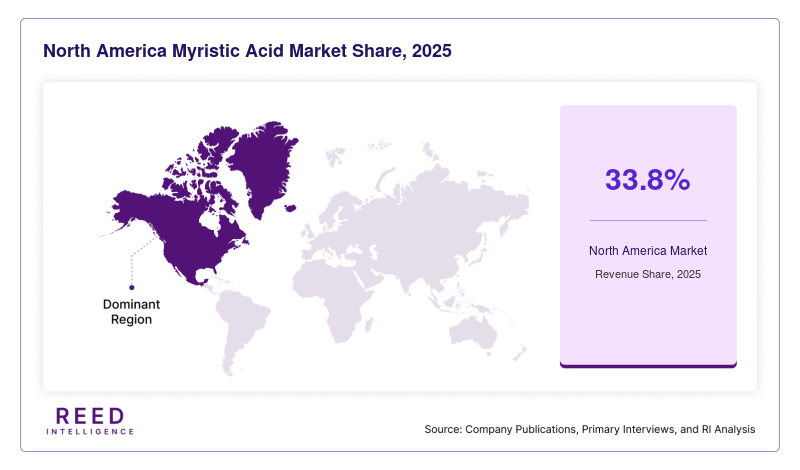
- North America dominated the market with a 33.8% share in 2025.
- Asia Pacific is expected to grow at the fastest CAGR of 7.8% during 2026–2034.
- By source, palm kernel oil accounted for the largest share of 42.6%, while coconut oil-based products are projected to grow at a CAGR of 7.5%.
- By application, personal care led with a 39.4% share, whereas food additives are expected to expand at a CAGR of 7.2%.
- The United States remained the dominant country, with market values of USD 420 million in 2024 and USD 455 million in 2025.
Market Trends
Rising Demand for Natural and Clean-Label Ingredients
The increasing preference for natural and clean-label ingredients has become a defining trend in the Myristic Acid Market. Consumers are more aware of product formulations and are actively seeking transparency in ingredient sourcing. This shift is particularly evident in the cosmetics and personal care industry, where myristic acid derived from plant-based sources such as coconut oil is favored over synthetic alternatives. Manufacturers are reformulating products to align with these preferences, resulting in higher demand for naturally sourced fatty acids. Additionally, regulatory frameworks in regions such as Europe and North America are encouraging the use of biodegradable and non-toxic compounds. This trend is also influencing the food sector, where myristic acid is used in limited quantities as a flavoring agent. The convergence of consumer awareness and regulatory pressure is expected to sustain this trend over the forecast period.
Expansion of Oleochemical Industry Applications
Another significant trend is the expansion of myristic acid usage within the oleochemical industry. Oleochemicals, derived from natural oils and fats, are gaining traction as sustainable alternatives to petrochemicals. Myristic acid serves as a key intermediate in the production of soaps, detergents, lubricants, and surfactants. As industries seek eco-friendly solutions, the adoption of oleochemicals is increasing, thereby boosting demand for myristic acid. Emerging economies are witnessing rapid industrialization, which further supports the expansion of oleochemical applications. Additionally, advancements in processing technologies are improving the efficiency of fatty acid extraction and purification, making myristic acid more accessible and cost-effective. This trend reflects a broader industry shift toward renewable resources and sustainable chemical production.
Market Drivers
Growing Personal Care and Cosmetics Industry
The rapid expansion of the personal care and cosmetics industry is a major driver for the Myristic Acid Market. Myristic acid is widely used as an emulsifier and cleansing agent in products such as facial cleansers, shaving creams, and lotions. The increasing consumer spending on grooming and skincare products, particularly in urban areas, has significantly boosted demand. Additionally, the rise of e-commerce platforms has made personal care products more accessible, further accelerating market growth. Manufacturers are also focusing on premium product lines that incorporate high-quality ingredients, including naturally derived fatty acids. This trend is particularly strong in emerging markets, where rising disposable incomes and changing lifestyles are driving consumption. As the beauty and personal care sector continues to expand, the demand for myristic acid is expected to grow steadily.
Increasing Demand in Food Processing Applications
The food processing industry is another key driver contributing to the growth of the Myristic Acid Market. Myristic acid is used in small quantities as a flavor enhancer and stabilizer in processed foods. With the growing demand for packaged and convenience foods, especially in developing regions, the use of food additives has increased significantly. The expansion of the global food industry, driven by urbanization and changing dietary habits, is supporting the demand for myristic acid. Moreover, advancements in food technology have enabled the development of improved formulations that enhance texture and shelf life. Regulatory approvals for safe usage in food products further support its adoption. As consumer demand for processed and ready-to-eat foods continues to rise, the role of myristic acid in food applications is expected to strengthen.
Market Restraint
Volatility in Raw Material Prices
The Myristic Acid Market faces challenges due to fluctuations in the prices of raw materials such as coconut oil and palm kernel oil. These feedstocks are subject to supply chain disruptions, climatic conditions, and geopolitical factors, which can lead to price instability. For instance, adverse weather conditions in major producing regions can significantly impact crop yields, thereby affecting the availability and cost of raw materials. This volatility creates uncertainty for manufacturers, who may struggle to maintain stable pricing for their products. Additionally, sustainability concerns related to palm oil production have led to stricter regulations and certification requirements, increasing production costs. These factors can limit profit margins and hinder market growth, particularly for small and medium-sized enterprises that lack the resources to absorb cost fluctuations.
Market Opportunities
Growth in Emerging Markets
Emerging markets present significant growth opportunities for the Myristic Acid Market. Rapid urbanization, increasing disposable incomes, and expanding industrial sectors are driving demand for personal care products, processed foods, and chemical intermediates. Countries in Asia Pacific, Latin America, and Africa are witnessing a surge in consumer spending, which is translating into higher demand for products containing myristic acid. Additionally, government initiatives aimed at promoting industrial development and foreign investments are supporting market expansion. Manufacturers are increasingly establishing production facilities in these regions to capitalize on cost advantages and growing demand. This trend is expected to create new revenue streams and enhance market penetration over the forecast period.
Advancements in Sustainable Production Technologies
Technological advancements in sustainable production methods offer promising opportunities for the Myristic Acid Market. Innovations in extraction and refining processes are improving the efficiency and environmental footprint of fatty acid production. Companies are investing in research and development to develop eco-friendly processes that reduce waste and energy consumption. Additionally, the use of biotechnology and enzymatic processes is gaining traction as a means to produce high-purity myristic acid with minimal environmental impact. These advancements not only enhance product quality but also align with regulatory and consumer demands for sustainability. As industries increasingly adopt green technologies, the demand for sustainably produced myristic acid is expected to rise.
Segmental Analysis
By Source
The palm kernel oil segment dominated the Myristic Acid Market in 2024, accounting for a share of 42.6%. This dominance is attributed to the high concentration of myristic acid in palm kernel oil, making it a cost-effective and widely available source. The extensive cultivation of palm trees in regions such as Southeast Asia ensures a steady supply of raw materials. Additionally, the established processing infrastructure supports efficient extraction and production. Industries prefer palm kernel oil-derived myristic acid due to its consistent quality and competitive pricing. The segment also benefits from its versatility, as it is used in various applications, including personal care, food processing, and industrial chemicals.
The coconut oil segment is expected to witness the fastest growth, with a CAGR of 7.5% during the forecast period. This growth is driven by increasing consumer preference for natural and organic products, as coconut oil is perceived as a more sustainable and eco-friendly source. The rising demand for premium personal care products is also contributing to the segment’s expansion. Additionally, advancements in extraction technologies are improving the efficiency and yield of myristic acid from coconut oil. This segment is expected to gain traction as manufacturers focus on high-quality and environmentally friendly ingredients.
By Application
The personal care segment held the largest share of 39.4% in 2024, driven by the widespread use of myristic acid in skincare and cosmetic products. The ingredient’s emulsifying and cleansing properties make it essential in formulations such as soaps, creams, and lotions. The growing demand for grooming products, particularly among younger consumers, is supporting the segment’s dominance. Additionally, the trend toward natural and organic cosmetics is further boosting the use of plant-based fatty acids. Manufacturers are continuously innovating to develop new formulations that enhance product performance, thereby increasing the demand for myristic acid.
The food additives segment is projected to grow at the fastest CAGR of 7.2% during the forecast period. This growth is driven by the increasing consumption of processed and convenience foods. Myristic acid is used in small quantities to improve flavor and texture, making it a valuable component in food formulations. The expansion of the global food industry, coupled with changing dietary habits, is supporting the segment’s growth. Additionally, regulatory approvals for safe usage in food products are encouraging manufacturers to incorporate myristic acid into their formulations.
By End-Use Industry
The cosmetics and personal care industry dominated the Myristic Acid Market in 2024, accounting for a significant share. This dominance is driven by the increasing demand for skincare and grooming products. Myristic acid is widely used as a surfactant and emulsifier, making it a key ingredient in various formulations. The growing awareness of personal hygiene and the rise of premium product lines are further supporting the segment’s growth. Additionally, the expansion of e-commerce platforms has made personal care products more accessible, contributing to increased consumption.
The chemical industry segment is expected to grow at the fastest CAGR of 7.1% during the forecast period. This growth is driven by the increasing use of myristic acid in the production of oleochemicals, lubricants, and surfactants. The shift toward sustainable and bio-based chemicals is supporting the adoption of myristic acid in industrial applications. Additionally, advancements in chemical processing technologies are improving the efficiency and cost-effectiveness of production. This segment is expected to play a crucial role in the future growth of the market.
Regional Analysis
North America
North America held a significant share of 33.8% in the Myristic Acid Market in 2025 and is expected to grow at a CAGR of 6.4% during the forecast period. The region benefits from a well-established personal care and food processing industry, which drives consistent demand for myristic acid. Additionally, the presence of major manufacturers and advanced production technologies supports market growth. The increasing adoption of natural ingredients in product formulations is further contributing to the expansion of the market in this region.
The United States dominates the North American market, driven by strong consumer demand for premium personal care products. A unique growth factor in the country is the increasing focus on clean-label and organic products, which has led to higher adoption of plant-based fatty acids. This trend is supported by regulatory frameworks that encourage the use of sustainable and biodegradable ingredients.
Europe
Europe accounted for a notable share of the Myristic Acid Market in 2025 and is projected to grow at a CAGR of 6.1% through 2034. The region’s growth is driven by stringent regulations promoting the use of eco-friendly and sustainable raw materials. The cosmetics industry in Europe is highly developed, and the demand for natural ingredients continues to rise. Additionally, the food industry’s focus on quality and safety supports the use of approved additives such as myristic acid.
Germany leads the European market due to its strong industrial base and advanced chemical sector. A unique growth factor in the country is the emphasis on sustainable manufacturing practices, which has encouraged the adoption of bio-based chemicals. This focus aligns with broader European Union policies aimed at reducing environmental impact and promoting green technologies.
Asia Pacific
Asia Pacific is the fastest-growing region in the Myristic Acid Market, with a projected CAGR of 7.8% during the forecast period. The region’s growth is fueled by rapid industrialization, urbanization, and increasing consumer spending. Countries such as China and India are major producers of coconut and palm kernel oil, providing a steady supply of raw materials. Additionally, the expanding personal care and food processing industries are driving demand for myristic acid.
China is the dominant country in the region, supported by its large manufacturing base and growing consumer market. A unique growth factor is the increasing investment in the oleochemical industry, which is driving the production and utilization of fatty acids. Government initiatives to promote industrial growth and sustainability further support market expansion.
Middle East & Africa
The Middle East & Africa region is experiencing moderate growth in the Myristic Acid Market, with a projected CAGR of 5.7% during the forecast period. The market is driven by the growing demand for personal care products and the expansion of the food processing industry. Additionally, increasing investments in industrial development are supporting the use of chemical intermediates such as myristic acid.
South Africa is a key market in the region, benefiting from its developing industrial sector. A unique growth factor is the rising demand for affordable personal care products, which is driving the use of cost-effective ingredients like myristic acid. This trend is supported by increasing urbanization and changing consumer preferences.
Latin America
Latin America holds a smaller share of the Myristic Acid Market but is expected to grow at a CAGR of 6.3% during the forecast period. The region’s growth is driven by the expanding food and beverage industry, as well as increasing demand for personal care products. Additionally, the availability of raw materials such as palm oil supports local production.
Brazil is the dominant country in the region, driven by its strong agricultural base and growing consumer market. A unique growth factor is the increasing focus on export-oriented production, which is boosting the demand for high-quality fatty acids. This trend is expected to enhance the region’s position in the global market.
Competitive Landscape
The Myristic Acid Market is characterized by the presence of several global and regional players competing on the basis of product quality, pricing, and distribution networks. Companies are focusing on expanding their production capacities and investing in research and development to enhance product offerings. Strategic collaborations and partnerships are also common, as firms seek to strengthen their market position and expand their geographic reach.
A leading player in the market is Wilmar International Ltd., which has a strong presence in the oleochemical sector and extensive raw material sourcing capabilities. The company has recently expanded its production facilities in Asia to meet the growing demand for fatty acids. Other major players are also investing in sustainable production methods and advanced technologies to improve efficiency and reduce environmental impact. The competitive landscape is expected to remain dynamic, with companies focusing on innovation and sustainability to gain a competitive edge.
Key Players
- Wilmar International Ltd.
- BASF SE
- Kuala Lumpur Kepong Berhad
- IOI Corporation Berhad
- Emery Oleochemicals
- Oleon NV
- Croda International Plc
- Godrej Industries Limited
- VVF LLC
- Musim Mas Holdings
- KLK Oleo
- Pacific Oleochemicals Sdn Bhd
- Ecogreen Oleochemicals
- AAK AB
- Timur Oleochemicals
Recent Developments
- In 2025, Wilmar International Ltd. expanded its oleochemical production capacity in Southeast Asia to meet rising global demand.
- In 2024, BASF SE introduced a new range of sustainable fatty acid derivatives, including myristic acid-based products.
- In 2025, Croda International Plc invested in advanced bio-based processing technologies to enhance the efficiency of fatty acid production.
Myristic Acid Market Segments
Source
- Palm Kernel Oil
- Coconut Oil
- Others
Application
- Personal Care
- Food Additives
- Industrial Chemicals
- Others
End-Use Industry
- Cosmetics & Personal Care
- Food & Beverage
- Chemical Industry
- Others
By Region
- North America
- Europe
- APAC
- Middle East and Africa
- LATAM