Natural Desiccated Thyroid Market Size, Share & Demand Report By Product Type (Tablets, Capsules, Powders, Compounded Formulations), By Application (Hypothyroidism Treatment, Thyroid Hormone Replacement Therapy, Resistant Thyroid Disorder Management, Post-Thyroidectomy Hormonal Support), By End-Use (Hospitals, Retail Pharmacies, Online Pharmacies, Specialty Endocrine Clinics), By Distribution Channel (Hospital Pharmacies, Retail Drug Stores, E-commerce Platforms, Specialty Pharmaceutical Distrib
USD 3950
Market Overview
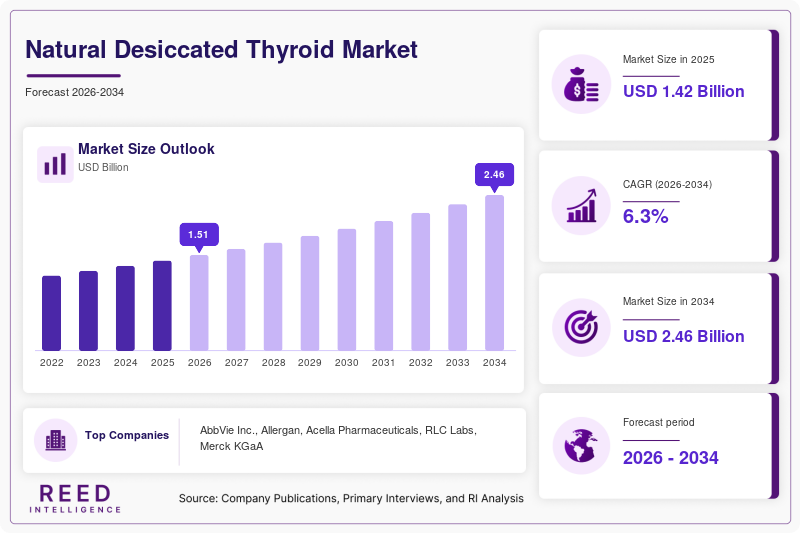
The Natural Desiccated Thyroid Market size is projected to be valued at USD 1.42 billion in 2026 and is anticipated to reach USD 2.31 billion by 2034, expanding at a CAGR of 6.3% during the forecast period (2026–2034). The market is primarily driven by the rising prevalence of hypothyroidism and increasing patient preference for bioidentical hormone therapies derived from porcine thyroid glands. Growing awareness regarding limitations of synthetic levothyroxine monotherapy has further contributed to steady adoption across clinical and retail pharmacy channels.
One major global factor supporting market expansion is the increasing shift toward personalized endocrine treatment approaches. Physicians and endocrinologists are gradually incorporating Natural Desiccated Thyroid formulations for patients who continue to experience symptoms despite conventional synthetic hormone therapy. This shift is reinforced by advancements in diagnostic precision and improved patient monitoring systems, enabling more tailored dosage adjustments and therapeutic outcomes.Technological improvements in pharmaceutical processing and quality standardization of thyroid extract preparations are also improving product safety profiles, thereby strengthening physician confidence. Additionally, expanding online pharmacy distribution channels have improved accessibility in both developed and emerging economies.
Key Highlights
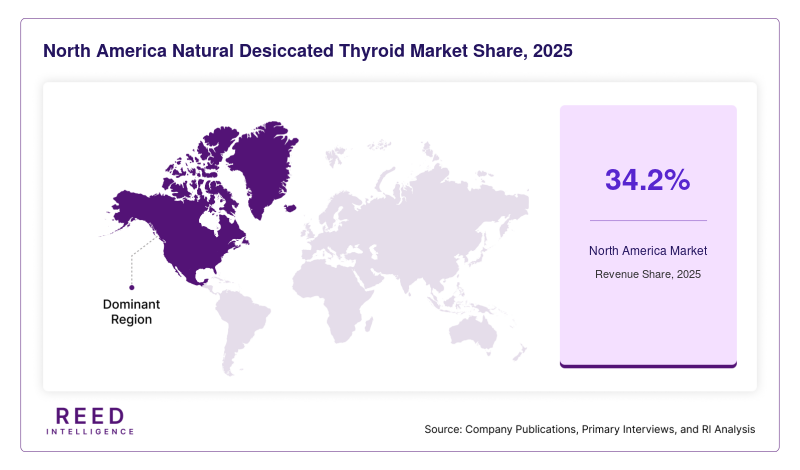
- North America dominated the market with a 34.2% share in 2025, while Asia Pacific is expected to grow at the fastest CAGR of 11.2% during 2026–2034.
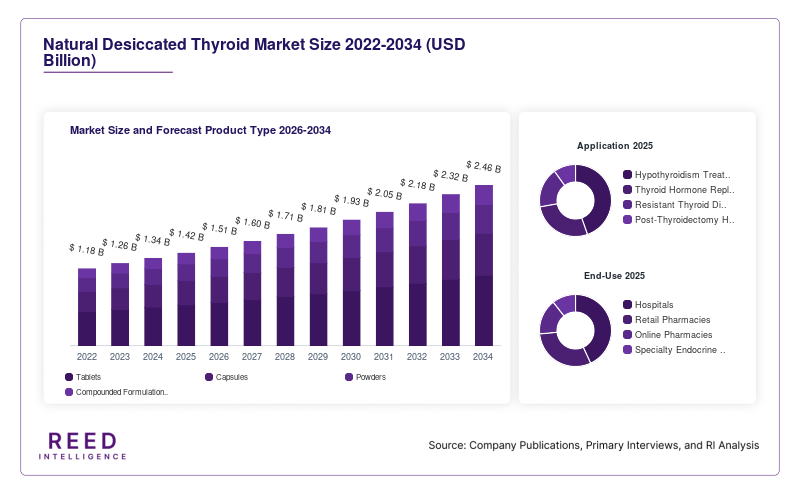
- By product type, tablet formulations accounted for the largest share of 38.5%, while capsule-based formulations are projected to grow at a CAGR of 12.4%.
- By application, hypothyroidism treatment led with a 41.7% share, whereas thyroid hormone replacement therapy in resistant cases is expected to expand at a CAGR of 11.8%.
- The United States remained the dominant country, with market values of USD 510 million in 2024 and USD 560 million in 2025.
Market Trends
Increasing Shift Toward Bioidentical Hormone Therapies
The Natural Desiccated Thyroid Market is witnessing a gradual but steady transition toward bioidentical hormone therapies, particularly among patients dissatisfied with synthetic levothyroxine outcomes. Natural desiccated thyroid formulations contain both T3 and T4 hormones derived from porcine sources, closely resembling endogenous human thyroid hormone composition. This has led to increased patient-driven demand, especially in chronic hypothyroidism cases where fatigue, weight fluctuations, and cognitive symptoms persist despite standard treatment. Healthcare providers are increasingly evaluating combination therapies, integrating natural desiccated products into treatment regimens under controlled endocrinological supervision. Pharmaceutical companies are also investing in standardized extraction and purification technologies to ensure consistent potency and regulatory compliance, which is improving physician acceptance across multiple healthcare systems.
Expansion of Digital Pharmacy and Tele-Endocrinology Services
Another significant trend shaping the Natural Desiccated Thyroid Market is the expansion of digital healthcare ecosystems, including tele-endocrinology consultations and online pharmacy distribution channels. Patients diagnosed with long-term thyroid disorders are increasingly opting for remote consultations, enabling easier prescription renewals and therapy adjustments. This shift has enhanced accessibility to natural desiccated thyroid products, particularly in rural and semi-urban regions where specialist availability is limited. Online pharmacies are also expanding their inventory of prescription hormone therapies, improving supply chain efficiency and reducing geographical disparities in treatment access. The integration of electronic health records with telemedicine platforms is further streamlining patient monitoring, ensuring better dosage adherence and long-term treatment continuity.
Market Drivers
Rising Prevalence of Hypothyroidism and Thyroid Disorders
The increasing global burden of hypothyroidism is a primary driver for the Natural Desiccated Thyroid Market. Lifestyle changes, autoimmune disorders such as Hashimoto’s thyroiditis, and iodine deficiency in certain regions have significantly contributed to rising diagnosis rates. As more patients are identified with chronic thyroid dysfunction, demand for long-term hormone replacement therapy continues to expand. Natural desiccated thyroid is increasingly considered in cases where synthetic therapies fail to fully resolve symptoms, creating a steady demand base. Additionally, improved diagnostic screening programs in developed and emerging economies are enabling earlier detection, thereby increasing the number of patients eligible for hormone replacement therapies. This expanding patient pool continues to reinforce market growth across hospital and retail pharmacy settings.
Growing Patient Preference for Alternative Hormone Replacement Options
Another key driver is the rising preference among patients for alternative and more holistic hormone replacement therapies. Many individuals report incomplete symptom resolution with synthetic levothyroxine, prompting demand for combination T3/T4 formulations found in natural desiccated thyroid products. Patient advocacy groups and online health communities have played a significant role in increasing awareness and influencing treatment preferences. This has encouraged endocrinologists to adopt more flexible prescribing practices in select cases. Pharmaceutical advancements in standardizing desiccated thyroid extract potency have also improved product reliability, strengthening physician trust. As patient-centric care models gain momentum globally, demand for natural and bioidentical hormone therapies is expected to continue rising steadily.
Market Restraint
Regulatory Variability and Standardization Challenges
A key restraint affecting the Natural Desiccated Thyroid Market is the lack of uniform global regulatory standards for animal-derived thyroid hormone products. Since natural desiccated thyroid is derived from porcine glands, variations in hormone concentration between batches can create consistency challenges if not properly standardized. Regulatory agencies in certain regions impose strict controls on biologically derived hormone therapies, limiting market penetration. Additionally, differences in approval pathways across countries result in delayed product launches and restricted availability. Pharmaceutical companies must invest heavily in quality assurance and clinical validation to meet compliance requirements, increasing operational costs. These regulatory complexities create barriers for new entrants and may slow down expansion in highly regulated healthcare markets.
Market Opportunities
Expansion in Emerging Healthcare Markets
Emerging economies present a significant opportunity for the Natural Desiccated Thyroid Market due to improving healthcare infrastructure and rising awareness of endocrine disorders. Countries in Asia Pacific, Latin America, and parts of the Middle East are witnessing increased diagnosis rates of thyroid dysfunction, driven by urbanization and dietary changes. As healthcare access expands, demand for both synthetic and natural hormone replacement therapies is expected to grow. Pharmaceutical distributors are increasingly entering these markets through partnerships with local healthcare providers and digital pharmacy platforms. The relatively low penetration of advanced endocrine therapies in these regions creates substantial room for growth, particularly for cost-effective natural desiccated thyroid formulations.
Advancements in Personalized Endocrine Treatment Protocols
Another major opportunity lies in the increasing adoption of personalized medicine in endocrinology. Healthcare systems are moving toward individualized treatment protocols based on patient response, genetic factors, and metabolic profiles. This approach creates opportunities for natural desiccated thyroid products, particularly for patients who do not respond adequately to standard levothyroxine therapy. Advances in diagnostic technologies, including hormone level monitoring and AI-assisted treatment planning, are enabling more precise dosage customization. Pharmaceutical companies investing in clinical research and real-world evidence generation are likely to benefit from improved physician acceptance. As personalized healthcare continues to expand, demand for flexible and combination thyroid hormone therapies is expected to strengthen.
Segmental Analysis
By Product Type
Tablet formulations dominated the Natural Desiccated Thyroid Market with a 38.5% share in 2024 due to their widespread availability, cost-effectiveness, and ease of administration. Tablets remain the preferred dosage form among healthcare providers because they offer stable hormone delivery and simplified long-term treatment management for hypothyroidism patients. Pharmaceutical manufacturers continue to improve formulation consistency and shelf stability to strengthen physician confidence. Hospitals and retail pharmacies maintain strong inventory levels of tablet-based thyroid products because of high prescription volumes. In addition, patient familiarity with tablet therapies continues to support segment dominance across developed and emerging healthcare markets.
Capsule formulations are projected to register the fastest CAGR of 12.4% during 2026–2034, supported by increasing demand for customized endocrine therapies and improved absorption characteristics. Capsules are becoming increasingly popular among patients seeking more flexible dosage options and better gastrointestinal tolerance. Pharmaceutical companies are investing in advanced encapsulation technologies to improve bioavailability and dosage precision. The segment is also benefiting from growing consumer preference for premium and personalized hormone replacement therapies. Rising adoption of compounded endocrine medications in specialty clinics and telemedicine-driven prescriptions is further contributing to the rapid expansion of capsule-based natural desiccated thyroid products.
By Application
Hypothyroidism treatment accounted for the largest market share of 41.7% in 2024 due to the increasing global prevalence of underactive thyroid conditions. Natural desiccated thyroid therapies are commonly prescribed for patients who continue to experience symptoms despite synthetic hormone treatment. Rising awareness regarding comprehensive thyroid hormone replacement approaches has strengthened product adoption among endocrinologists and chronic care providers. Healthcare systems are also emphasizing earlier diagnosis and long-term management of thyroid disorders, creating consistent prescription demand. Increasing incidence of autoimmune thyroid diseases such as Hashimoto’s thyroiditis continues to support expansion of the hypothyroidism treatment segment globally.
Thyroid hormone replacement therapy in resistant cases is expected to grow at a CAGR of 11.8% during the forecast period. This segment is expanding as more physicians recognize the need for alternative therapies in patients showing limited response to levothyroxine monotherapy. Natural desiccated thyroid products containing both T3 and T4 hormones are increasingly considered for personalized treatment strategies. Advances in hormone monitoring technologies and improved endocrine diagnostics are helping physicians optimize dosage adjustments and improve treatment outcomes. Patient advocacy groups and online thyroid health communities are also contributing to growing awareness regarding combination thyroid hormone therapies.
By End-Use
Hospitals held the dominant share of 36.9% in 2024 due to their strong diagnostic infrastructure and specialized endocrinology departments. Hospitals remain the primary treatment centers for patients with severe hypothyroidism and complex endocrine disorders requiring close medical supervision. Availability of trained endocrinologists and laboratory testing capabilities supports accurate diagnosis and treatment planning. Hospital pharmacies also maintain consistent supplies of thyroid hormone replacement medications, contributing to segment growth. In addition, increasing hospitalization rates associated with chronic metabolic disorders and autoimmune conditions are driving continued demand for advanced endocrine therapies across healthcare institutions globally.
Retail pharmacies are projected to expand at a CAGR of 10.9% during 2026–2034 due to increasing outpatient treatment volumes and rising accessibility of prescription hormone therapies. Patients managing long-term hypothyroidism often rely on retail pharmacy networks for convenient medication refills and chronic care support. Expansion of organized pharmacy chains and digital prescription management systems is further strengthening the segment. Retail pharmacies are also collaborating with telemedicine providers to improve patient access to endocrine medications in remote and semi-urban locations. Growing awareness regarding thyroid disorder management and increasing adoption of home-based treatment approaches continue to support segment growth.
Regional Analysis
North America
North America dominated the Natural Desiccated Thyroid Market with a 34.2% share in 2025 and is projected to maintain stable growth at a CAGR of 5.8% during 2026–2034. The region benefits from advanced healthcare infrastructure, high diagnosis rates of thyroid disorders, and strong adoption of endocrine therapies. Increasing awareness regarding alternative thyroid hormone replacement options has strengthened market penetration across the United States and Canada. The growing preference for personalized treatment approaches and higher healthcare spending continue to support regional demand. Expansion of specialty pharmacies and telemedicine-based endocrinology services has also improved treatment accessibility.
The United States remained the leading country in North America, supported by a strong network of endocrinologists and widespread insurance coverage for thyroid therapies. Rising prevalence of Hashimoto’s thyroiditis and long-term hypothyroidism cases continues to increase prescription volumes for natural desiccated thyroid products. Patients seeking alternatives to synthetic levothyroxine are contributing to sustained product demand. In addition, pharmaceutical manufacturers are investing in standardized formulation technologies to improve consistency and physician confidence. The country’s strong pharmaceutical distribution infrastructure further strengthens market expansion opportunities.
Europe
Europe accounted for 27.6% of the Natural Desiccated Thyroid Market in 2025 and is expected to expand at a CAGR of 5.5% through 2034. The market is supported by rising awareness of thyroid dysfunction and increasing adoption of combination hormone replacement therapies. Healthcare systems across Western Europe continue to improve endocrine treatment accessibility through reimbursement support and chronic disease management programs. Growing patient preference for bioidentical therapies has encouraged pharmaceutical companies to strengthen their endocrine product portfolios. Continuous research activities focused on thyroid health are also supporting market development.
Germany emerged as the dominant country in the European market due to its strong pharmaceutical manufacturing capabilities and established healthcare infrastructure. The country is witnessing increased diagnosis rates of autoimmune thyroid disorders, creating sustained demand for long-term hormone replacement therapy. Expansion of hospital endocrinology departments and specialty clinics is improving treatment access for patients requiring customized thyroid care. Moreover, increasing investments in pharmaceutical research related to hormone standardization are strengthening product quality and physician adoption across the country.
Asia Pacific
Asia Pacific held a 21.4% market share in 2025 and is projected to register the fastest CAGR of 11.2% during the forecast period. Rapid urbanization, changing dietary habits, and increasing healthcare expenditure are contributing to the growing burden of thyroid disorders across the region. Countries such as China, India, and Japan are experiencing significant improvements in diagnostic infrastructure, enabling earlier detection of endocrine conditions. Rising awareness campaigns regarding thyroid health and expanding pharmaceutical retail networks are also supporting market penetration. Increasing disposable income levels continue to improve patient access to advanced hormone therapies.
China dominated the Asia Pacific market owing to its large patient population and rapidly developing healthcare sector. The country is witnessing growing adoption of specialty endocrine treatments as awareness regarding hypothyroidism management improves. Government healthcare reforms and expanding hospital infrastructure are supporting access to thyroid hormone replacement therapies in both urban and semi-urban regions. Furthermore, local pharmaceutical companies are investing in biologically derived hormone formulations to address rising demand for alternative thyroid treatment options. The expansion of online pharmacy platforms is also improving product availability throughout the country.
Middle East & Africa
The Middle East & Africa region accounted for 9.3% of the market in 2025 and is expected to grow at a CAGR of 6.7% during 2026–2034. The region is benefiting from gradual improvements in healthcare infrastructure and increasing investments in chronic disease management programs. Rising awareness regarding thyroid disorders and improving diagnostic capabilities are supporting market development. Governments in Gulf countries are expanding healthcare modernization initiatives, creating favorable conditions for endocrine therapy adoption. In addition, the growing presence of multinational pharmaceutical companies is enhancing treatment availability across the region.
Saudi Arabia remained the dominant country in the regional market due to ongoing healthcare reforms and increasing healthcare expenditure. Rising obesity and autoimmune disorder prevalence are contributing to higher diagnosis rates of thyroid dysfunction. The country’s expanding specialty hospital network is supporting access to advanced endocrine treatments, including natural desiccated thyroid products. Moreover, increased collaboration between healthcare providers and pharmaceutical distributors is improving product availability and prescription adoption. Digital healthcare initiatives are also supporting patient monitoring and long-term treatment management in the country.
Latin America
Latin America represented 7.5% of the Natural Desiccated Thyroid Market in 2025 and is anticipated to grow at a CAGR of 6.1% during the forecast period. The market is driven by improving awareness of endocrine health and increasing healthcare access across major economies. Rising diagnosis rates of hypothyroidism and thyroid-related autoimmune disorders are contributing to higher demand for hormone replacement therapies. Expanding retail pharmacy networks and increasing adoption of online healthcare services are further improving treatment accessibility. Pharmaceutical companies are also strengthening regional distribution channels to support growing market demand.
Brazil emerged as the leading country within Latin America due to its large patient population and improving endocrine care infrastructure. Increasing government focus on chronic disease management and public healthcare expansion has supported earlier diagnosis and treatment of thyroid disorders. The country is also witnessing rising demand for personalized treatment approaches among patients seeking alternatives to conventional synthetic therapies. Additionally, the growing presence of international pharmaceutical companies and local distributors is enhancing product availability across urban healthcare centers and retail pharmacies.
Competitive Landscape
The Natural Desiccated Thyroid Market is moderately consolidated, with key players focusing on product standardization, supply chain efficiency, and regulatory compliance. Leading companies include AbbVie Inc., Allergan, Acella Pharmaceuticals, RLC Labs, and Merck KGaA.
AbbVie Inc. maintains a strong position in hormone therapy portfolios, supported by extensive distribution networks and endocrinology-focused product lines. Recent developments include enhancements in thyroid extract standardization and expanded physician education programs aimed at improving therapeutic outcomes. The competitive environment is shaped by ongoing research into bioidentical hormone therapies and increasing collaboration between pharmaceutical manufacturers and endocrinology associations.
Key Players
- AbbVie Inc.
- Allergan
- Acella Pharmaceuticals
- RLC Labs
- Merck KGaA
- Abbots Endocrine Solutions
- ThyroMed Pharmaceuticals
- Hormone Care Labs
- EndoThera Inc.
- BioThyroid Systems
- NorthStar Pharma
- Global Endocrine Therapeutics
- MedCore Biosciences
- ThyraHealth Inc.
- EndoBalance Pharmaceuticals
Recent Developments
- In February 2026, Acella Pharmaceuticals expanded its standardized natural desiccated thyroid production capacity in the United States to address rising demand for bioidentical hormone replacement therapies in hypothyroidism management.
- In July 2025, RLC Labs introduced an improved potency-controlled natural desiccated thyroid formulation aimed at enhancing dosage consistency and supporting better clinical outcomes in long-term endocrine treatment.
- In November 2025, AbbVie Inc. strengthened its endocrinology portfolio through strategic investments in thyroid disorder research programs focused on improving treatment response rates in patients resistant to synthetic levothyroxine therapy.
- In March 2026, Merck KGaA initiated a clinical collaboration with endocrine research institutes in Europe to evaluate combination therapy approaches integrating natural desiccated thyroid with advanced diagnostic monitoring systems for personalized treatment optimization.
Natural Desiccated Thyroid Market Segments
Product Type
- Tablets
- Capsules
- Powders
- Compounded Formulations
Application
- Hypothyroidism Treatment
- Thyroid Hormone Replacement Therapy
- Resistant Thyroid Disorder Management
- Post-Thyroidectomy Hormonal Support
End-Use
- Hospitals
- Retail Pharmacies
- Online Pharmacies
- Specialty Endocrine Clinics
Distribution Channel
- Hospital Pharmacies
- Retail Drug Stores
- E-commerce Platforms
- Specialty Pharmaceutical Distributors
By Region
- North America
- Europe
- APAC
- Middle East and Africa
- LATAM