Nephrostomy Catheter Market Size, Share & Demand Report By Type (External Nephrostomy Catheters, Internal Nephrostomy Catheters), By Application (Kidney Stones, Cancer, Urinary Tract Obstruction, Others), By End-Use (Hospitals, Ambulatory Surgical Centers, Specialty Clinics), By Region & Segment Forecasts, 2025–2034
USD 3950
Market Overview
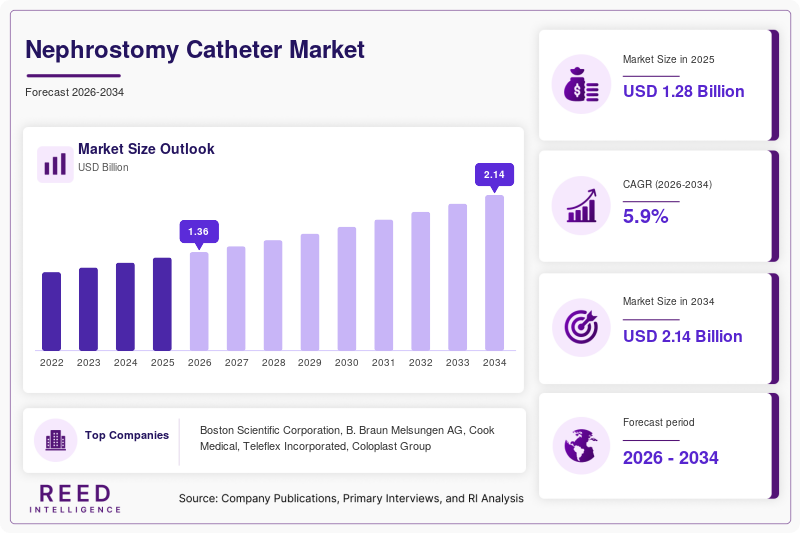
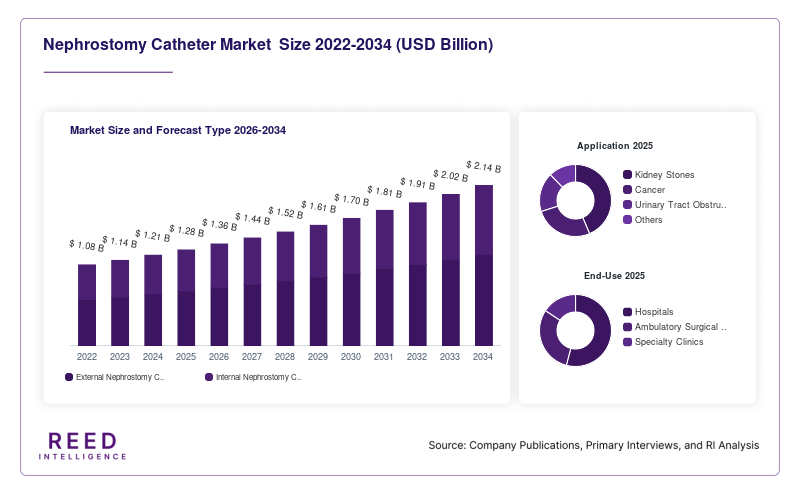
The Nephrostomy Catheter Market size is estimated at USD 1.28 billion, with growth projected to reach USD 1.36 billion in 2026. By 2034, the market is forecasted to attain approximately USD 2.15 billion, expanding at a compound annual growth rate (CAGR) of 5.9% during 2025–2034.
Nephrostomy catheters are essential medical devices used to drain urine directly from the kidney in cases of urinary obstruction, kidney stones, tumors, or post-surgical complications. The increasing incidence of kidney-related disorders, including hydronephrosis and urinary tract obstructions, is a primary factor driving demand. Globally, healthcare systems are witnessing a rise in chronic kidney disease cases, leading to greater reliance on interventional procedures that utilize nephrostomy catheters.
Key Highlights
- Market size valued at USD 1.28 billion in 2025 and projected to reach USD 2.15 billion by 2034, growing at a CAGR of 5.9% (2025–2034)
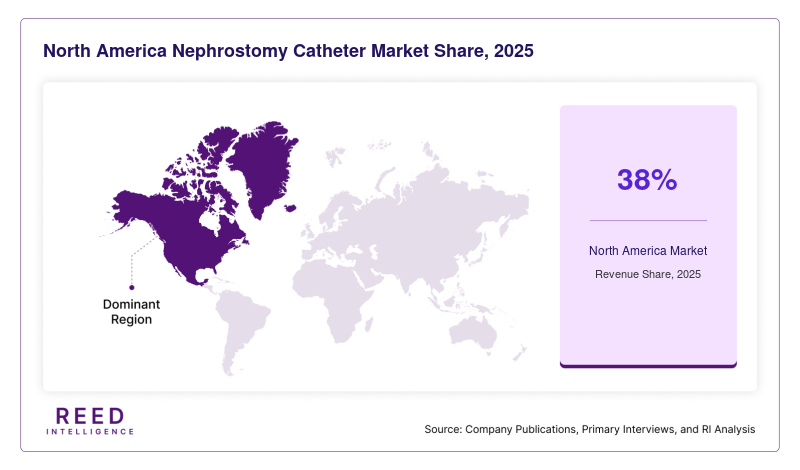
- North America dominated the market with a share of approximately 38% in 2025, supported by advanced healthcare infrastructure and high procedural volumes
- Asia Pacific is the fastest-growing region, expected to expand at a CAGR of 6.8%, driven by improving healthcare access and rising patient population
- By type, external nephrostomy catheters led the market with around 62% share in 2024, due to ease of use and widespread clinical adoption
- By application, kidney stones segment held the largest share of nearly 45% in 2024, reflecting the high global incidence of the condition
- By end-use, hospitals accounted for the largest share (58% in 2024), while ambulatory surgical centers are the fastest-growing segment with a CAGR of 6.9%
Market Trends
Integration of Advanced Materials and Antimicrobial Technologies
Manufacturers in the nephrostomy catheter market are increasingly focusing on incorporating advanced materials such as silicone blends and polyurethane to improve catheter flexibility, durability, and patient comfort. The integration of antimicrobial coatings has become a notable trend, aimed at reducing catheter-associated infections. These coatings help inhibit bacterial growth, which is a critical concern in long-term catheterization procedures. Healthcare providers are prioritizing infection control measures, especially in hospital settings, leading to higher adoption of these advanced products. Additionally, innovations in catheter design, including kink-resistant tubing and enhanced drainage efficiency, are gaining traction. This trend is expected to improve clinical outcomes and reduce healthcare costs associated with complications.
Shift Toward Outpatient and Ambulatory Care Settings
There is a noticeable shift from inpatient hospital procedures to outpatient and ambulatory surgical centers for nephrostomy catheter placements. This trend is driven by the need to reduce healthcare costs and improve patient convenience. Ambulatory care settings offer shorter procedure times and quicker discharge, making them increasingly preferred by both patients and healthcare providers. Technological advancements in imaging and catheter insertion techniques have enabled safer procedures outside traditional hospital environments. Additionally, reimbursement policies in several regions are encouraging outpatient care, further accelerating this trend. As a result, demand for user-friendly and easy-to-insert nephrostomy catheters is increasing, shaping product development strategies.
Market Drivers
Increasing Prevalence of Urological Disorders
The rising incidence of urological conditions such as kidney stones, urinary tract obstructions, and cancers is a major driver of the nephrostomy catheter market. Globally, millions of patients require interventions to manage these conditions, many of which involve nephrostomy procedures. The growing burden of chronic kidney disease is also contributing to the increased demand for drainage solutions. Lifestyle factors such as poor diet, dehydration, and sedentary habits are further exacerbating the prevalence of kidney-related issues. Healthcare providers are increasingly adopting nephrostomy catheters as a reliable solution for managing urinary obstructions, thereby supporting consistent market growth.
Growth in Minimally Invasive Surgical Procedures
The global shift toward minimally invasive procedures is significantly boosting the nephrostomy catheter market. These procedures offer several advantages, including reduced pain, shorter recovery time, and lower risk of complications. Interventional radiology techniques have advanced considerably, enabling precise catheter placement with minimal discomfort to patients. Hospitals and surgical centers are investing in modern imaging equipment and skilled professionals to perform such procedures efficiently. This trend is particularly prominent in developed regions but is also gaining traction in emerging markets. As patient awareness increases, the preference for minimally invasive treatments is expected to drive further market expansion.
Market Restraint
Risk of Complications and Infections Associated with Catheter Use
Despite technological advancements, the risk of complications remains a significant restraint in the nephrostomy catheter market. Patients undergoing catheterization are susceptible to infections, bleeding, and catheter dislodgement. Catheter-associated urinary tract infections (CAUTIs) are a major concern, often leading to prolonged hospital stays and increased healthcare costs. In some cases, improper insertion techniques or lack of skilled professionals can result in adverse outcomes, limiting the widespread adoption of these devices. Additionally, patient discomfort and the need for regular maintenance can affect compliance. For example, in low-resource healthcare settings, inadequate sterilization practices can increase infection risks, discouraging the use of nephrostomy catheters. These challenges highlight the need for continuous innovation and training to ensure safe and effective use.
Market Opportunities
Expansion in Emerging Healthcare Markets
Emerging economies present significant growth opportunities for the nephrostomy catheter market. Countries in Asia Pacific, Latin America, and parts of Africa are investing heavily in healthcare infrastructure, including diagnostic imaging and surgical facilities. Increasing healthcare expenditure and government initiatives to improve access to medical services are driving demand for advanced medical devices. The rising awareness of urological disorders and the availability of treatment options are further supporting market growth. Manufacturers are focusing on expanding their presence in these regions by offering cost-effective products and establishing distribution networks. This expansion is expected to create substantial revenue opportunities over the forecast period.
Development of Patient-Centric and Smart Catheters
The development of patient-centric solutions, including smart catheters with monitoring capabilities, is an emerging opportunity in the market. These advanced devices can provide real-time data on urine flow and detect potential blockages, improving patient management. Integration with digital health platforms allows healthcare providers to monitor patients remotely, reducing the need for frequent hospital visits. Additionally, innovations aimed at improving comfort and ease of use are gaining attention. As healthcare systems increasingly adopt digital technologies, the demand for smart medical devices is expected to rise. This presents a lucrative opportunity for manufacturers to differentiate their products and capture a larger market share.
Segmental Analysis
By Type
External nephrostomy catheters dominated the market in 2024, accounting for approximately 62% of the total share. These catheters are widely used due to their ease of placement and effectiveness in managing urinary obstructions. Healthcare providers prefer external catheters for short-term drainage, as they are relatively simple to monitor and replace. The increasing number of emergency procedures and trauma cases has also contributed to their dominance. Additionally, advancements in catheter design, including improved drainage systems and reduced risk of blockage, have enhanced their adoption. Hospitals and clinics continue to rely on external nephrostomy catheters for their versatility and reliability.
Internal nephrostomy catheters are expected to be the fastest-growing segment, with a projected CAGR of 6.5% during the forecast period. These catheters offer improved patient comfort and reduced risk of external contamination, making them suitable for long-term use. The growing focus on patient-centric care and the increasing adoption of minimally invasive procedures are driving demand for internal catheters. Additionally, technological advancements that enhance durability and reduce complications are supporting growth. As healthcare providers prioritize long-term solutions, the demand for internal nephrostomy catheters is expected to increase significantly.
By Application
Kidney stones represented the largest application segment in 2024, holding a market share of approximately 45%. The high prevalence of kidney stones globally has led to increased demand for nephrostomy procedures. These catheters play a crucial role in relieving obstruction and facilitating urine drainage in affected patients. The rising incidence of kidney stones due to lifestyle factors and dietary habits is further supporting this segment’s growth. Healthcare providers often use nephrostomy catheters as a temporary solution before performing definitive treatments, contributing to their widespread use in this application.
Cancer-related applications are projected to grow at the fastest rate, with a CAGR of 6.7% during the forecast period. Patients with urinary tract cancers often require nephrostomy catheters to manage obstructions caused by tumors. The increasing prevalence of cancers and advancements in oncology treatments are driving demand in this segment. Additionally, the growing use of combination therapies, including surgery and radiation, is increasing the need for supportive care devices such as nephrostomy catheters. This trend is expected to significantly contribute to market growth.
By End-Use
Hospitals dominated the end-use segment in 2024, accounting for approximately 58% of the market share. The availability of advanced medical equipment and skilled professionals makes hospitals the primary setting for nephrostomy procedures. These facilities handle a large volume of patients, including emergency cases and complex surgeries, which require catheterization. Additionally, hospitals offer comprehensive care, including pre- and post-procedure management, making them the preferred choice for patients. The increasing number of hospital admissions for urological conditions is further supporting this segment’s dominance.
Ambulatory surgical centers are expected to be the fastest-growing end-use segment, with a CAGR of 6.9% during the forecast period. These centers offer cost-effective and convenient treatment options, attracting a growing number of patients. The shift toward outpatient procedures and advancements in minimally invasive techniques are driving growth in this segment. Additionally, shorter recovery times and reduced hospital stays make ambulatory centers an attractive option. As healthcare systems continue to focus on efficiency and cost reduction, the demand for nephrostomy procedures in these settings is expected to rise.
Regional Analysis
North America
North America accounted for approximately 38% of the global nephrostomy catheter market share in 2025, making it the leading regional market. The region is expected to grow at a CAGR of around 5.4% during the forecast period. High healthcare expenditure, advanced medical infrastructure, and the presence of key market players contribute to its dominance. Additionally, the increasing prevalence of kidney disorders and strong adoption of minimally invasive procedures are driving demand across the region.
The United States dominates the North American market due to its well-established healthcare system and high patient awareness. A unique growth factor in this region is the widespread adoption of advanced imaging technologies, which facilitate accurate catheter placement. This technological advantage improves procedural outcomes and enhances patient safety, further supporting market growth.
Europe
Europe held a significant share of around 27% in 2025, with a projected CAGR of 5.2% through 2034. The region benefits from a strong healthcare framework and increasing investments in medical technology. Countries across Europe are focusing on improving patient care and reducing hospital stays, which supports the adoption of nephrostomy catheters.
Germany leads the European market, driven by its robust healthcare infrastructure and high number of surgical procedures. A unique growth factor in this region is the emphasis on regulatory standards and quality assurance, which ensures the availability of high-quality medical devices. This focus enhances patient trust and drives market demand.
Asia Pacific
Asia Pacific is expected to witness the fastest growth, with a CAGR of 6.8% during the forecast period, and held a market share of approximately 20% in 2025. Rapid urbanization, increasing healthcare investments, and rising awareness of urological disorders are key factors driving growth in this region.
China dominates the Asia Pacific market due to its large patient population and expanding healthcare infrastructure. A unique growth factor is the increasing number of government initiatives aimed at improving access to medical treatments in rural areas. This expansion is expected to significantly boost demand for nephrostomy catheters.
Middle East & Africa
The Middle East & Africa region accounted for around 8% of the market share in 2025 and is projected to grow at a CAGR of 5.6%. The region is gradually improving its healthcare infrastructure, with increasing investments in hospitals and diagnostic facilities.
Saudi Arabia is a key market in this region, driven by government initiatives to modernize healthcare services. A unique growth factor is the increasing focus on medical tourism, which is attracting patients from neighboring countries. This trend is contributing to higher demand for advanced medical devices, including nephrostomy catheters.
Latin America
Latin America held approximately 7% of the global market share in 2025, with a projected CAGR of 5.7%. The region is experiencing steady growth due to improving healthcare access and rising awareness of kidney-related conditions.
Brazil leads the Latin American market, supported by its large population and expanding healthcare sector. A unique growth factor is the growing number of public healthcare programs aimed at early diagnosis and treatment of urological disorders. These initiatives are expected to drive demand for nephrostomy procedures and associated devices.
Competitive Landscape
The nephrostomy catheter market is moderately competitive, with several global and regional players focusing on product innovation and strategic collaborations. Companies are investing in research and development to introduce advanced catheters with improved safety and performance features. Pricing strategies and distribution networks also play a crucial role in maintaining market position.
A leading player in the market is Boston Scientific Corporation, known for its extensive product portfolio and strong global presence. The company has been actively involved in developing innovative catheter solutions to address evolving clinical needs. A recent development includes the launch of an advanced antimicrobial-coated nephrostomy catheter designed to reduce infection risks and improve patient outcomes.
Other key players are focusing on expanding their geographic reach and strengthening their product offerings through partnerships and acquisitions. The competitive landscape is expected to remain dynamic, with continuous innovation shaping market growth.
Key Players
- Boston Scientific Corporation
- B. Braun Melsungen AG
- Cook Medical
- Teleflex Incorporated
- Coloplast Group
- Medtronic plc
- Cardinal Health
- AngioDynamics, Inc.
- BD (Becton, Dickinson and Company)
- ConvaTec Group Plc
- Smiths Medical
- Merit Medical Systems
- Argon Medical Devices
- Uresil, LLC
- Romsons Group
Recent Developments
- In 2024, a major manufacturer introduced a next-generation nephrostomy catheter with enhanced antimicrobial properties to reduce infection rates.
- In 2023, a leading company expanded its distribution network in Asia Pacific to strengthen its presence in emerging markets.
- In 2025, a strategic collaboration between two medical device firms led to the development of smart catheter technology with real-time monitoring capabilities.
Nephrostomy Catheter Market Segments
Type
- External Nephrostomy Catheters
- Internal Nephrostomy Catheters
Application
- Kidney Stones
- Cancer
- Urinary Tract Obstruction
- Others
End-Use
- Hospitals
- Ambulatory Surgical Centers
- Specialty Clinics
By Region
- North America
- Europe
- APAC
- Middle East and Africa
- LATAM