Netupitant Palonosetron FDC Market Size, Share Demand Report By Drug Formulation (Oral Capsules, Intravenous Formulations), By Application (Chemotherapy-Induced Nausea and Vomiting, Radiation-Induced Nausea and Vomiting), By End-Use (Hospitals, Ambulatory Surgical Centers, Specialty Clinics), By Region & Segment Forecasts, 2026–2034
USD 3950
Market Overview
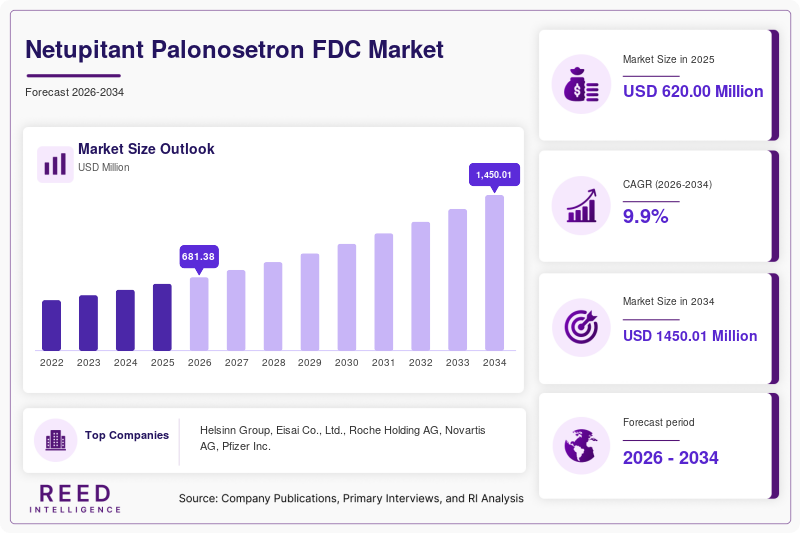
The global Netupitant Palonosetron FDC Market was valued at approximately USD 620 million in 2026 and is projected to reach USD 1320 million by 2034, expanding at a CAGR of 9.9% during 2026–2034. The market growth is primarily supported by the rising prevalence of cancer and the increasing adoption of combination therapies for chemotherapy-induced nausea and vomiting (CINV). Fixed-dose combinations (FDCs) such as netupitant and palonosetron have gained traction due to their improved efficacy, simplified dosing, and enhanced patient compliance compared to monotherapy alternatives.
A key global factor contributing to market expansion is the growing emphasis on supportive oncology care. Healthcare providers are increasingly prioritizing patient quality of life during cancer treatment, which has driven demand for advanced antiemetic therapies. Additionally, the expansion of oncology treatment infrastructure in emerging economies has further strengthened the market outlook.
Key Highlights
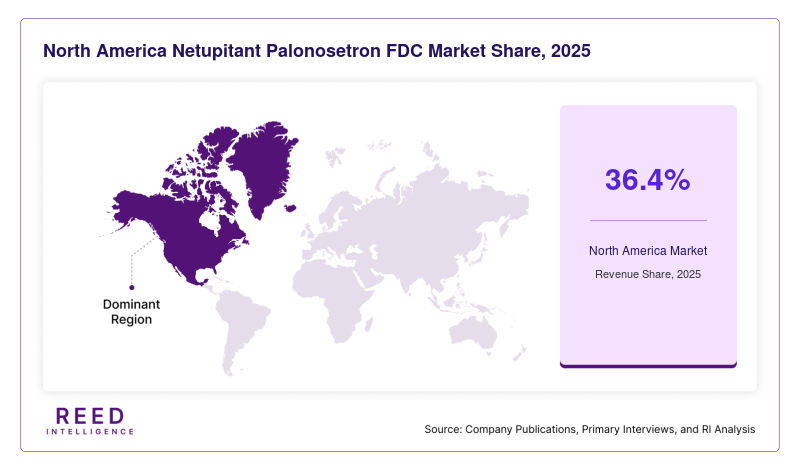
- North America dominated the market with a 36.4% share in 2025.
- Asia Pacific is expected to grow at the fastest CAGR of 11.6% during 2026–2034.
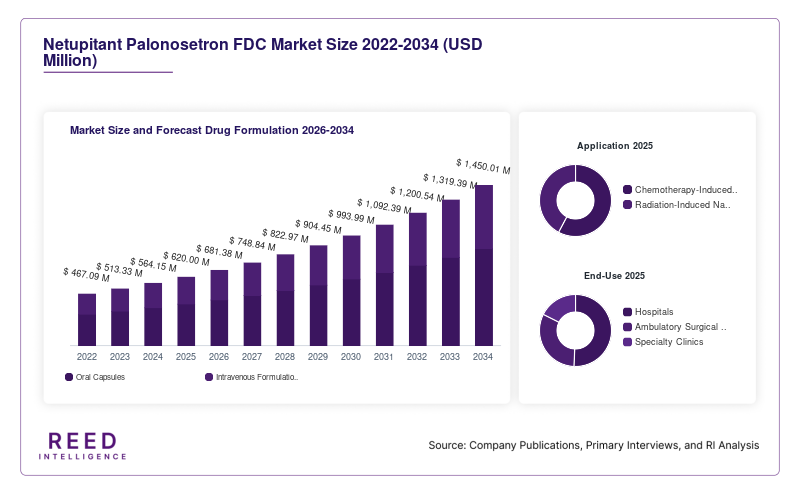
- By drug formulation, oral capsules accounted for the largest share of 61.8%.
- while intravenous formulations are projected to grow at a CAGR of 10.8%.
- By application, chemotherapy-induced nausea and vomiting led with a 72.3% share, whereas radiation-induced nausea is expected to expand at a CAGR of 9.5%.
- The United States remained the dominant country, with market values of USD 210 million in 2024 and USD 235 million in 2025.
Market Trends
Increasing Adoption of Combination Antiemetic Therapies
The Netupitant Palonosetron FDC Market is witnessing a growing preference for combination antiemetic therapies due to their superior clinical outcomes. Healthcare professionals are shifting toward fixed-dose combinations that target multiple pathways involved in nausea and vomiting. Netupitant blocks substance P-mediated NK1 receptors, while palonosetron inhibits serotonin receptors, resulting in comprehensive symptom control. This dual mechanism reduces the need for multiple medications, thereby simplifying treatment protocols. Additionally, clinical guidelines increasingly recommend combination regimens for moderate to highly emetogenic chemotherapy, which is further supporting market expansion. Pharmaceutical companies are also investing in optimizing dosage forms and improving patient adherence, which is contributing to sustained demand.
Expansion of Oncology Treatment Infrastructure in Emerging Markets
Another significant trend is the expansion of oncology care facilities across emerging economies. Countries in Asia Pacific, Latin America, and the Middle East are increasing healthcare investments to address the rising cancer burden. This has led to improved access to chemotherapy and supportive care medications, including antiemetics. As cancer treatment centers expand, the demand for effective nausea management therapies is rising proportionally. Furthermore, government initiatives aimed at enhancing cancer care affordability are encouraging the adoption of cost-effective fixed-dose combinations. This trend is expected to accelerate market penetration, particularly in regions with previously limited access to advanced oncology treatments.
Market Drivers
Rising Global Cancer Incidence and Chemotherapy Utilization
The increasing incidence of cancer worldwide is a primary driver of the Netupitant Palonosetron FDC Market. As the number of cancer patients grows, the demand for chemotherapy treatments continues to rise. Chemotherapy-induced nausea and vomiting remain among the most common side effects, necessitating effective supportive therapies. Fixed-dose combinations like netupitant and palonosetron provide extended protection, making them a preferred choice among clinicians. Additionally, advancements in oncology diagnostics are leading to earlier detection and treatment, further increasing chemotherapy volumes. This trend directly correlates with the growing demand for antiemetic therapies.
Improved Clinical Outcomes and Patient Compliance
Another key driver is the improved clinical efficacy and patient compliance associated with fixed-dose combinations. Traditional antiemetic regimens often require multiple drugs administered at different intervals, which can lead to poor adherence. In contrast, FDCs simplify dosing schedules and reduce pill burden. Netupitant palonosetron combinations offer prolonged action, minimizing the need for repeated dosing. This not only enhances patient convenience but also improves therapeutic outcomes. Healthcare providers are increasingly recommending such treatments to ensure better symptom control and reduce hospital readmissions related to uncontrolled nausea and vomiting.
Market Restraint
High Cost of Combination Therapies and Limited Accessibility
One of the primary restraints affecting the Netupitant Palonosetron FDC Market is the relatively high cost associated with combination therapies. Fixed-dose combinations often involve advanced formulation technologies and extensive clinical validation, which increases their overall price. This cost factor can limit accessibility, particularly in low- and middle-income countries where healthcare budgets are constrained. Patients in these regions may opt for cheaper generic alternatives or traditional multi-drug regimens despite their lower efficacy.
The financial burden is further compounded by limited reimbursement coverage in certain healthcare systems. While developed countries often provide insurance support for advanced oncology treatments, reimbursement policies in emerging markets may not fully cover combination antiemetics. This creates a barrier to widespread adoption. For example, in regions with out-of-pocket healthcare systems, patients may prioritize primary cancer treatment over supportive care medications.
Additionally, the availability of generic substitutes for individual components can impact market growth. Healthcare providers may prescribe separate generic drugs instead of a single FDC to reduce costs. This trend can slow the adoption rate of premium combination products. Addressing pricing challenges and improving reimbursement frameworks will be critical for sustained market expansion.
Market Opportunities
Development of Novel Delivery Systems
The development of innovative drug delivery systems presents a significant opportunity for the Netupitant Palonosetron FDC Market. Pharmaceutical companies are exploring alternative formulations such as extended-release injectables and transdermal patches to enhance patient convenience and therapeutic outcomes. These advanced delivery methods can improve drug absorption, reduce dosing frequency, and minimize side effects. Additionally, such innovations can cater to patients who have difficulty swallowing oral medications, thereby expanding the target population. As research and development activities continue to focus on improving drug delivery, the market is expected to benefit from increased product differentiation and adoption.
Expansion into Emerging Healthcare Markets
Emerging economies offer substantial growth opportunities due to their expanding healthcare infrastructure and rising cancer burden. Governments in countries across Asia Pacific, Latin America, and Africa are investing in cancer care facilities and improving access to essential medications. This creates a favorable environment for the adoption of advanced antiemetic therapies. Additionally, partnerships between pharmaceutical companies and local distributors can enhance product availability in underserved regions. Increasing awareness about supportive cancer care and the benefits of combination therapies is also expected to drive demand. As these markets continue to evolve, they are likely to contribute significantly to overall market growth.
Segmental Analysis
By Drug Formulation
Oral capsules dominated the Netupitant Palonosetron FDC Market in 2024, accounting for approximately 61.8% of the total market share. The dominance of this subsegment is attributed to its ease of administration, patient convenience, and widespread availability. Oral formulations are commonly prescribed in outpatient settings, making them a preferred choice for both healthcare providers and patients. Additionally, oral capsules eliminate the need for hospital visits associated with intravenous administration, reducing overall treatment costs. The growing trend toward home-based cancer care further supports the demand for oral formulations. Pharmaceutical companies are also focusing on improving the stability and bioavailability of oral drugs, enhancing their effectiveness.
Intravenous formulations are expected to be the fastest-growing subsegment, with a projected CAGR of 10.8% during the forecast period. The growth is driven by their use in hospital settings for patients undergoing highly emetogenic chemotherapy. Intravenous administration ensures rapid drug delivery and consistent therapeutic effects, making it suitable for severe cases. Additionally, the increasing number of hospital-based oncology treatments is supporting demand. Healthcare providers often prefer intravenous formulations for patients with difficulty swallowing or those requiring immediate symptom control. Continuous advancements in infusion technologies and the development of ready-to-use formulations are further expected to drive growth in this segment.
By Application
Chemotherapy-induced nausea and vomiting (CINV) accounted for the largest share of the Netupitant Palonosetron FDC Market in 2024, representing approximately 72.3% of total revenue. The high prevalence of chemotherapy treatments globally is a key factor driving this segment. CINV remains a major concern for cancer patients, often impacting treatment adherence and quality of life. Fixed-dose combinations like netupitant palonosetron provide effective management of both acute and delayed symptoms, making them a preferred choice. Additionally, clinical guidelines strongly recommend the use of combination antiemetics for moderate to highly emetogenic chemotherapy, further supporting segment growth.
Radiation-induced nausea and vomiting is expected to be the fastest-growing subsegment, with a CAGR of 9.5% during the forecast period. The increasing use of radiation therapy in cancer treatment is driving demand for effective antiemetic solutions. Although less common than CINV, radiation-induced symptoms can significantly impact patient comfort. The adoption of combination therapies for managing these symptoms is gradually increasing. Healthcare providers are recognizing the benefits of using FDCs to provide comprehensive symptom control. Additionally, ongoing research into optimizing antiemetic regimens for radiation therapy patients is expected to support growth in this segment.
By End-Use
Hospitals dominated the Netupitant Palonosetron FDC Market in 2024, accounting for approximately 54.6% of total market share. Hospitals serve as primary centers for cancer treatment, including chemotherapy and radiation therapy. The availability of advanced medical infrastructure and skilled healthcare professionals supports the use of combination antiemetics. Additionally, hospitals often follow standardized treatment protocols that include the use of fixed-dose combinations for managing nausea and vomiting. The increasing number of oncology departments and specialized cancer centers is further driving demand in this segment.
Ambulatory surgical centers and specialty clinics are projected to be the fastest-growing subsegment, with a CAGR of 10.2% during the forecast period. The shift toward outpatient care and minimally invasive treatments is supporting the growth of this segment. These facilities offer cost-effective treatment options and reduced hospital stays, making them attractive to patients. The increasing adoption of oral formulations and simplified dosing regimens further supports their use in outpatient settings. Additionally, the expansion of specialty clinics focusing on oncology care is expected to drive demand for advanced antiemetic therapies.
Regional Analysis
North America
North America held the largest share of the Netupitant Palonosetron FDC Market in 2025, accounting for approximately 36.4% of global revenue. The region is expected to maintain its dominance, with a projected CAGR of 9.1% during the forecast period. The strong market position is supported by advanced healthcare infrastructure, high adoption of innovative oncology treatments, and well-established reimbursement systems. Additionally, the presence of major pharmaceutical companies and ongoing clinical research activities further contribute to market growth.
The United States is the dominant country in this region, driven by high cancer prevalence and strong healthcare spending. A key growth factor is the widespread adoption of clinical guidelines recommending combination antiemetic therapies for chemotherapy patients. The country’s focus on improving patient outcomes and reducing hospital readmissions has led to increased use of fixed-dose combinations. Furthermore, continuous product approvals and strong distribution networks enhance market accessibility.
Europe
Europe represents a significant share of the Netupitant Palonosetron FDC Market, accounting for around 27.8% in 2025, with a forecast CAGR of 8.7%. The region benefits from well-established healthcare systems and increasing awareness of supportive oncology care. Countries across Western Europe are actively adopting advanced treatment protocols, which include combination antiemetics. Additionally, government initiatives aimed at improving cancer care standards are supporting market growth.
Germany is the leading country in Europe, driven by its robust healthcare infrastructure and strong focus on oncology research. A unique growth factor is the integration of supportive care into national cancer treatment guidelines. This has led to increased utilization of combination therapies like netupitant palonosetron. Moreover, the presence of leading pharmaceutical manufacturers and ongoing clinical trials further strengthen the market outlook.
Asia Pacific
Asia Pacific is expected to be the fastest-growing region in the Netupitant Palonosetron FDC Market, with a CAGR of 11.6% during the forecast period. The region accounted for approximately 21.5% of the market in 2025. Rapid economic development, increasing healthcare investments, and rising cancer incidence are key factors driving growth. Additionally, improving access to advanced medical treatments is supporting the adoption of combination antiemetics.
China dominates the Asia Pacific market due to its large patient population and expanding healthcare infrastructure. A key growth factor is the government’s focus on improving cancer treatment accessibility and affordability. The expansion of oncology centers and increasing availability of advanced medications are driving demand for effective antiemetic therapies. Furthermore, rising awareness among healthcare professionals about the benefits of fixed-dose combinations is contributing to market growth.
Middle East & Africa
The Middle East & Africa region accounted for approximately 7.2% of the Netupitant Palonosetron FDC Market in 2025 and is expected to grow at a CAGR of 8.9%. The market is gradually expanding due to improving healthcare infrastructure and increasing investments in cancer care. Countries in the Middle East are particularly focusing on enhancing their medical facilities to provide advanced oncology treatments.
Saudi Arabia is the dominant country in this region, driven by significant healthcare investments and government initiatives. A unique growth factor is the increasing adoption of private healthcare services, which often provide access to advanced therapies. Additionally, collaborations with international pharmaceutical companies are improving the availability of combination antiemetics. This is expected to support steady market growth in the coming years.
Latin America
Latin America held a share of approximately 7.1% in the Netupitant Palonosetron FDC Market in 2025 and is projected to grow at a CAGR of 9.3%. The region is experiencing gradual improvements in healthcare infrastructure and increasing awareness of cancer treatment options. Governments are focusing on expanding access to oncology care, which is supporting the adoption of supportive therapies.
Brazil is the leading country in Latin America, driven by its large population and expanding healthcare system. A key growth factor is the increasing availability of public healthcare programs that cover cancer treatment. This has improved access to chemotherapy and associated supportive care medications. Additionally, rising awareness about the importance of managing treatment side effects is contributing to market growth.
Competitive Landscape
The Netupitant Palonosetron FDC Market is moderately consolidated, with several key players competing based on product innovation, pricing strategies, and geographic expansion. Leading companies are focusing on enhancing their product portfolios through research and development activities. Strategic collaborations, mergers, and acquisitions are also common as companies aim to strengthen their market presence.
One of the leading players in the market is Helsinn Group, which has established a strong position through its flagship netupitant palonosetron product. The company continues to invest in clinical research to expand the therapeutic applications of its formulations. Recent developments include efforts to improve drug delivery systems and expand market access in emerging regions.
Other major players are actively working on developing generic alternatives and improving affordability. Companies are also focusing on expanding their distribution networks to reach underserved markets. The competitive landscape is expected to remain dynamic, with continuous innovation and strategic initiatives shaping the market.
Key Players List
- Helsinn Group
- Eisai Co., Ltd.
- Roche Holding AG
- Novartis AG
- Pfizer Inc.
- Merck & Co., Inc.
- GlaxoSmithKline plc
- Teva Pharmaceutical Industries Ltd.
- Mylan N.V.
- Dr. Reddy’s Laboratories Ltd.
- Sun Pharmaceutical Industries Ltd.
- Cipla Limited
- Aurobindo Pharma Limited
- Lupin Limited
- Zydus Lifesciences Limited
Recent Developments
- In 2025, Helsinn Group expanded its distribution network in Asia Pacific to improve access to its netupitant palonosetron FDC products.
- In 2024, a leading pharmaceutical company introduced a generic version of the combination therapy in select emerging markets, enhancing affordability.
- In 2025, multiple clinical studies were initiated to evaluate extended applications of netupitant palonosetron in managing nausea beyond chemotherapy settings.
Netupitant Palonosetron FDC Market Segments
Drug Formulation
- Oral Capsules
- Intravenous Formulations
Application
- Chemotherapy-Induced Nausea and Vomiting
- Radiation-Induced Nausea and Vomiting
End-Use
- Hospitals
- Ambulatory Surgical Centers
- Specialty Clinics
By Region
- North America
- Europe
- APAC
- Middle East and Africa
- LATAM