Newcastle Disease Treatment Market Size, Share Demand Report By Treatment Type (Live Attenuated Vaccines, Inactivated Vaccines, Recombinant Vaccines), By Route of Administration (Oral, Injectable, Nasal/Spray), By End-Use (Poultry Farms, Veterinary Clinics, Research Institutes), By Distribution Channel (Veterinary Hospitals & Clinics, Retail Pharmacies, Online Channels), By Region & Segment Forecasts, 2025–2034
USD 3950
Market Overview
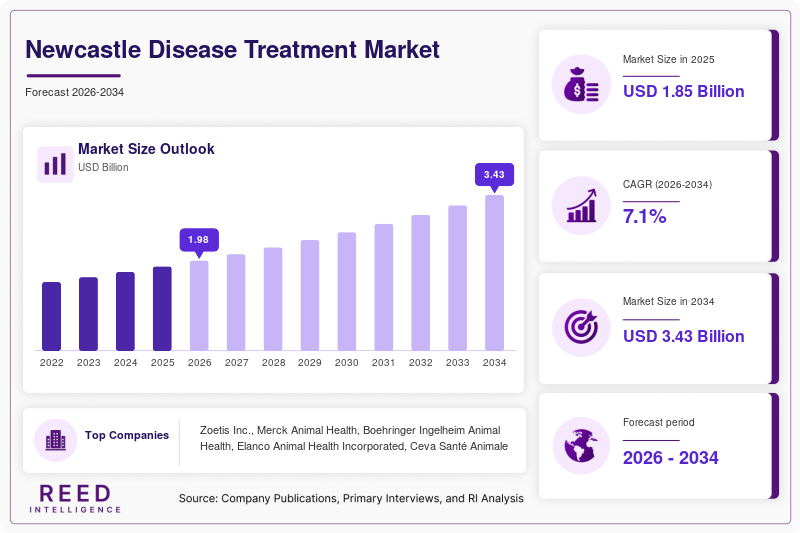
The global Newcastle Disease Treatment Market was valued at approximately USD 1.85 billion in 2025 and is projected to reach USD 3.42 billion by 2034, expanding at a CAGR of 7.1% during the forecast period (2025–2034). The market has demonstrated steady growth due to increasing concerns over poultry health, rising demand for protein-rich food, and expanding commercial poultry farming across emerging economies.
A key global factor supporting market expansion is the increasing incidence of viral outbreaks in poultry populations, which has intensified the need for effective prevention and treatment strategies. Governments and agricultural organizations are investing in vaccination programs and disease surveillance systems, contributing to the adoption of advanced therapeutics and biosecurity measures.
Key Highlights:
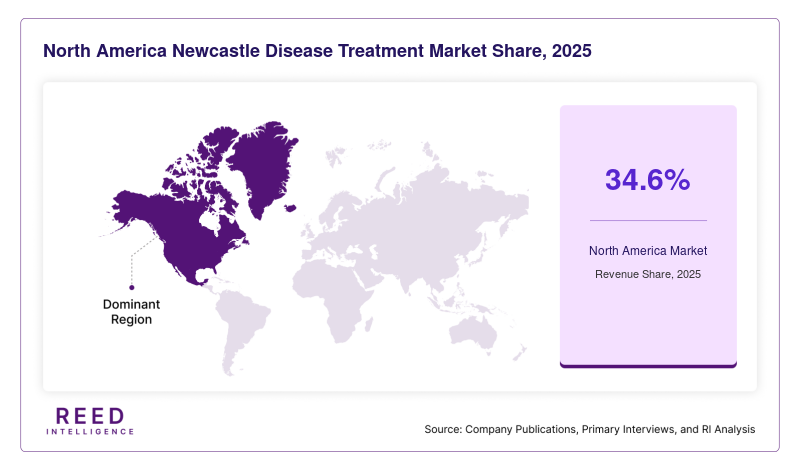
- North America dominated the market with a 34.6% share in 2025, while Asia Pacific is expected to register the fastest CAGR of 8.4% through 2034.
- Live attenuated vaccines emerged as the leading subsegment in the treatment type category, accounting for 48.2% share, while recombinant vaccines are projected to grow at a CAGR of 9.1%.
- Poultry farms represented the dominant end-use segment with a 61.7% share, whereas veterinary clinics are expected to expand at a CAGR of 7.8%.
- The U.S. led globally, with market values of USD 620 million in 2024 and USD 655 million in 2025.
Market Trends
Adoption of Advanced Vaccine Technologies
The Newcastle Disease Treatment Market is witnessing a shift toward advanced vaccine technologies, including recombinant and vector-based vaccines. These innovations provide enhanced immunity, longer protection periods, and reduced risk of viral shedding. Poultry producers are increasingly adopting these vaccines to improve flock health and productivity. Furthermore, the development of thermostable vaccines is enabling effective disease control in regions with inadequate refrigeration infrastructure.
Integration of Biosecurity and Digital Monitoring
Another significant trend shaping the market is the integration of biosecurity practices with digital monitoring systems. Smart farm technologies, including IoT-based sensors and data analytics platforms, are being used to track poultry health and detect early signs of infection. This proactive approach helps reduce disease spread and minimizes economic losses. The growing awareness among farmers regarding preventive healthcare measures is further supporting this trend, contributing to sustained market growth.
Market Drivers
Expansion of Commercial Poultry Farming
The rapid expansion of commercial poultry farming is a primary driver of the Newcastle Disease Treatment Market. Increasing global demand for poultry meat and eggs has led to intensified farming practices, which elevate the risk of disease outbreaks. As a result, poultry producers are investing in vaccination programs and treatment solutions to maintain flock health and ensure consistent production.
Government Initiatives for Disease Control
Government-led initiatives and regulatory frameworks aimed at controlling infectious diseases in livestock are significantly contributing to market growth. Many countries have implemented mandatory vaccination programs and surveillance systems to mitigate the spread of Newcastle disease. Financial support, subsidies, and awareness campaigns are encouraging farmers to adopt preventive measures, thereby boosting demand for treatment solutions.
Market Restraint
Limited Access to Veterinary Healthcare in Rural Areas
A major restraint affecting the Newcastle Disease Treatment Market is the limited access to veterinary healthcare services in rural and underdeveloped regions. Small-scale poultry farmers often lack awareness, resources, and infrastructure required for effective disease management. Inadequate distribution networks for vaccines and therapeutics further hinder timely treatment.
Additionally, the high cost of advanced vaccines and treatment solutions can discourage adoption among low-income farmers. This gap in accessibility and affordability creates challenges in achieving widespread disease control, particularly in developing economies. Addressing these issues requires improved infrastructure, training programs, and affordable treatment options.
Market Opportunities
Growth in Emerging Markets
Emerging economies present significant growth opportunities for the Newcastle Disease Treatment Market. Rapid urbanization, rising disposable incomes, and increasing demand for animal protein are driving the expansion of poultry farming in these regions. Governments and private players are investing in modern farming practices, creating a favorable environment for the adoption of disease treatment solutions.
Development of Thermostable Vaccines
The development of thermostable vaccines offers a promising opportunity for market growth. These vaccines eliminate the need for cold-chain storage, making them ideal for remote and resource-limited areas. Their ease of transportation and longer shelf life enhance accessibility, enabling broader immunization coverage. Continued research and development in this area are expected to unlock new growth avenues for market players.
Segmental Analysis
By Treatment Type
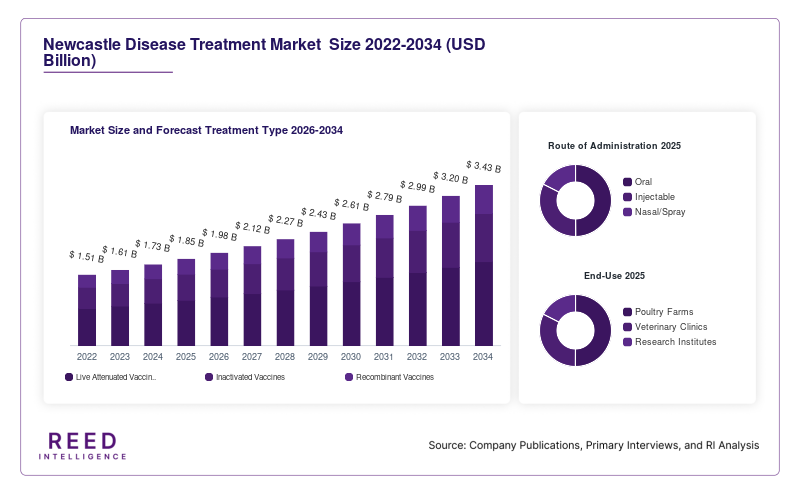
Live attenuated vaccines dominated the Newcastle Disease Treatment Market in 2024, accounting for 48.2% of the total share. Their widespread use is attributed to their effectiveness in inducing strong immune responses and cost-efficiency. These vaccines are commonly used in large-scale poultry farms due to their proven track record in disease prevention.
Recombinant vaccines are expected to be the fastest-growing subsegment, with a projected CAGR of 9.1% during the forecast period. Their ability to provide targeted immunity with reduced side effects makes them increasingly attractive. Advances in biotechnology and growing demand for safer treatment options will drive their adoption.
By Route of Administration
Oral administration emerged as the dominant subsegment in 2024, capturing 44.5% of the market share. This method is preferred due to its ease of application and suitability for mass vaccination in poultry farms. It reduces labor costs and ensures efficient coverage.
Injectable administration is anticipated to grow at the fastest CAGR of 7.9% over the forecast period. Its precision in dosage delivery and higher efficacy in certain cases make it suitable for high-value poultry and specialized farming operations.
By End-Use
Poultry farms accounted for the largest share of 61.7% in 2024, driven by the increasing scale of commercial farming operations. These facilities require regular vaccination and treatment programs to prevent disease outbreaks and maintain productivity.
Veterinary clinics are projected to grow at a CAGR of 7.8%, supported by rising awareness among small and medium-scale farmers. The availability of professional healthcare services and diagnostic facilities is expected to boost this segment.
By Distribution Channel
Veterinary hospitals and clinics dominated the distribution channel segment with a 39.6% share in 2024. Their role in providing specialized treatment and consultation services has made them a primary source for disease management solutions.
Online distribution channels are expected to grow at a CAGR of 8.6%, driven by increasing digitalization and the convenience of purchasing veterinary products online. This trend is particularly strong in urban and semi-urban areas.
Regional Analysis
North America
North America accounted for 34.6% of the Newcastle Disease Treatment Market share in 2025 and maintained a dominant position due to advanced veterinary healthcare infrastructure. The region is expected to grow at a CAGR of 6.5% through 2034, supported by technological advancements and high adoption of vaccination programs.
The United States dominated the regional market due to its well-established poultry industry and strong regulatory framework. The presence of leading pharmaceutical companies and continuous investment in research and development have contributed to the widespread adoption of innovative treatment solutions.
Europe
Europe held a 27.2% share of the market in 2025 and is anticipated to grow at a CAGR of 6.8% during the forecast period. Strict animal health regulations and a strong focus on food safety have driven the adoption of Newcastle disease treatments across the region.
Germany emerged as the dominant country, supported by its advanced livestock management practices and robust veterinary services. The country’s emphasis on preventive healthcare and sustainable farming has encouraged the use of effective vaccination strategies.
Asia Pacific
Asia Pacific captured 22.8% of the Newcastle Disease Treatment Market in 2025 and is projected to register the fastest CAGR of 8.4% through 2034. Rapid expansion of poultry farming and increasing awareness about disease prevention are key factors driving growth.
China led the regional market due to its large poultry population and government initiatives aimed at controlling infectious diseases. Investments in modern farming techniques and improved access to veterinary services have significantly boosted market demand.
Middle East & Africa
The Middle East & Africa region accounted for 8.1% of the market share in 2025 and is expected to grow at a CAGR of 7.2% over the forecast period. The region is witnessing gradual improvements in livestock management and healthcare infrastructure.
South Africa dominated the market due to its relatively advanced poultry sector and increasing focus on disease control measures. Government support and international collaborations have facilitated the adoption of vaccination programs.
Latin America
Latin America held a 7.3% share of the Newcastle Disease Treatment Market in 2025 and is projected to grow at a CAGR of 7.0% through 2034. The region’s growing poultry industry and rising demand for protein-rich food are key growth drivers.
Brazil emerged as the leading country, supported by its large-scale poultry production and export-oriented industry. The adoption of biosecurity measures and vaccination programs has significantly contributed to market growth.
Competitive Landscape
The Newcastle Disease Treatment Market is moderately competitive, with several global and regional players focusing on product innovation and strategic collaborations. Leading companies are investing in research and development to introduce advanced vaccines and improve treatment efficacy.
Zoetis Inc. emerged as a market leader, leveraging its strong product portfolio and global presence. The company recently introduced an advanced recombinant vaccine aimed at enhancing immunity and reducing disease transmission in poultry.
Other key players are also focusing on expanding their distribution networks and strengthening their presence in emerging markets. Partnerships with local distributors and government agencies are common strategies adopted to increase market penetration.
Key Players
- Zoetis Inc.
- Merck Animal Health
- Boehringer Ingelheim Animal Health
- Elanco Animal Health Incorporated
- Ceva Santé Animale
- Virbac
- Phibro Animal Health Corporation
- Vetoquinol S.A.
- HIPRA
- Indian Immunologicals Ltd.
Recent Developments
- Zoetis Inc. launched a new recombinant vaccine designed for improved disease resistance in poultry.
- Boehringer Ingelheim expanded its vaccine production capacity to meet growing global demand.
- Ceva Santé Animale introduced a thermostable vaccine targeting rural poultry farmers.
- Hester Biosciences partnered with regional distributors to strengthen its presence in Asia.
- HIPRA invested in research for next-generation vaccines with enhanced efficacy.
Newcastle Disease Treatment Market Segments
Treatment Type
- Live Attenuated Vaccines
- Inactivated Vaccines
- Recombinant Vaccines
Route of Administration
- Oral
- Injectable
- Nasal/Spray
End-Use
- Poultry Farms
- Veterinary Clinics
- Research Institutes
Distribution Channel
- Veterinary Hospitals & Clinics
- Retail Pharmacies
- Online Channels
By Region
- North America
- Europe
- APAC
- Middle East and Africa
- LATAM