Nocardiosis Treatment Market Size, Share & Demand Report By Drug Class (Sulfonamide-Based Antibiotics, Carbapenems, Combination Therapies), By Route of Administration (Oral, Injectable), By Indication (Pulmonary Nocardiosis, Cutaneous Nocardiosis, Disseminated Nocardiosis), By Distribution Channel (Hospital Pharmacies, Retail Pharmacies, Online Pharmacies), By Region & Segment Forecasts, 2025–2034
USD 3950
Market Overview
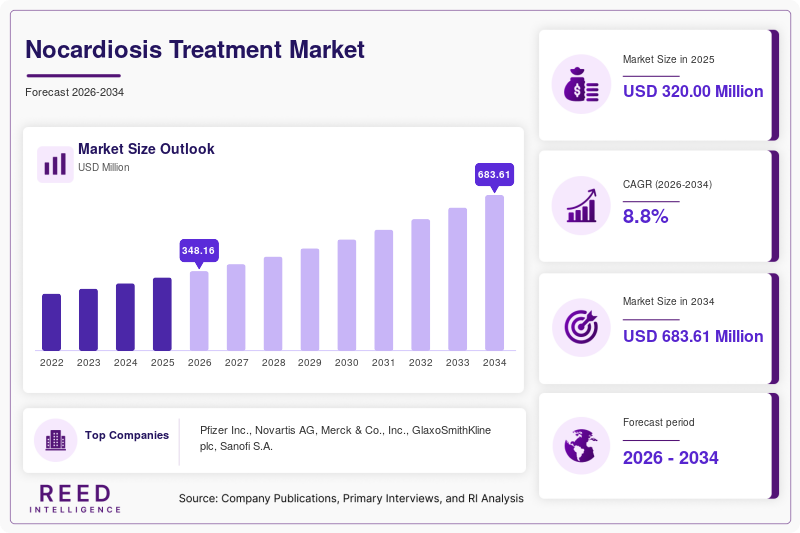
The Nocardiosis Treatment Market size was valued at approximately USD 320 million in 2025 and is projected to reach USD 685 million by 2034, expanding at a compound annual growth rate (CAGR) of 8.8% from 2025 to 2034. The market is witnessing steady growth due to the increasing incidence of opportunistic infections, particularly among immunocompromised patients, and the rising awareness of rare bacterial diseases.
A key global factor supporting the growth of the Nocardiosis Treatment Market is the growing prevalence of immunosuppressive conditions such as organ transplantation, cancer therapies, and HIV infections. These conditions increase susceptibility to nocardiosis, a rare but serious bacterial infection caused by Nocardia species. As a result, healthcare systems are focusing on early diagnosis and effective antimicrobial treatment, driving demand for specialized therapeutic solutions.
Key Highlights:
- North America dominated the market with a 38% share in 2025, while Asia Pacific is expected to register the fastest CAGR of 10.2% during the forecast period.
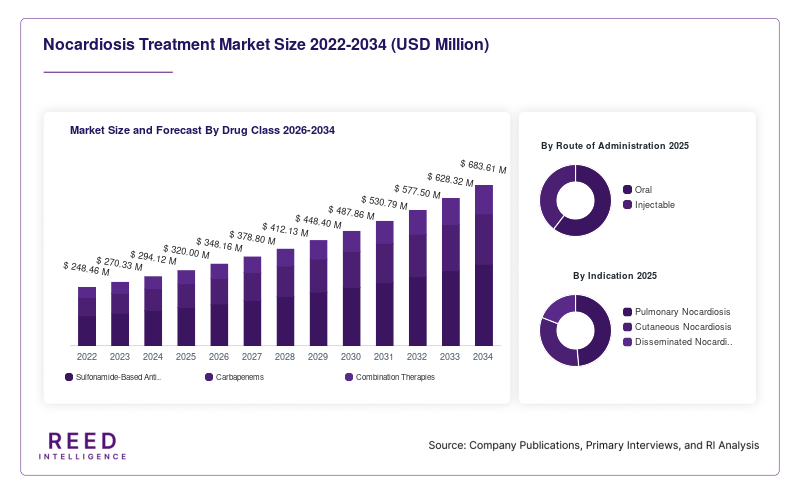
- Sulfonamide-based antibiotics led the drug class segment with a 52% share, while combination antibiotic therapies are projected to grow at a CAGR of 9.6%.
- By route of administration, oral therapies accounted for 60% share, while injectable therapies are expected to grow at a CAGR of 9.3%.
- The United States remained the dominant country, with market values of USD 115 million in 2025 and USD 123 million in 2026.
Market Trends
Increasing Use of Combination Antibiotic Therapies
A significant trend in the Nocardiosis Treatment Market is the growing use of combination antibiotic therapies. Due to the complex nature of nocardiosis and varying antibiotic resistance patterns, clinicians are increasingly prescribing multi-drug regimens to improve treatment outcomes. This approach enhances efficacy and reduces the risk of relapse, especially in severe or disseminated infections.
Advancements in Diagnostic Technologies
Another key trend shaping the market is the advancement of diagnostic technologies. Improved molecular diagnostic tools, including PCR-based assays and next-generation sequencing, are enabling faster and more accurate identification of Nocardia species. Early diagnosis allows timely initiation of appropriate therapy, which is critical for improving patient outcomes and reducing mortality rates.
Market Drivers
Rising Incidence of Immunocompromised Conditions
The increasing prevalence of immunocompromised conditions is a major driver of the Nocardiosis Treatment Market. Patients undergoing organ transplants, chemotherapy, or long-term corticosteroid therapy are at higher risk of developing nocardiosis. This has led to increased demand for effective antimicrobial treatments and supportive care.
Growing Awareness of Rare Infectious Diseases
Rising awareness among healthcare professionals and patients about rare infectious diseases has contributed to market growth. Educational initiatives and improved clinical guidelines have enhanced the recognition and management of nocardiosis. This has resulted in earlier diagnosis and increased treatment rates, supporting market expansion.
Market Restraint
Limited Awareness and Misdiagnosis in Developing Regions
A major restraint in the Nocardiosis Treatment Market is the limited awareness and frequent misdiagnosis of the disease, particularly in developing regions. Nocardiosis symptoms often mimic other respiratory or systemic infections, leading to delays in accurate diagnosis.
Inadequate access to advanced diagnostic tools further complicates disease identification, resulting in delayed or inappropriate treatment. Additionally, the rarity of the disease means that many healthcare providers may not be familiar with its management protocols. These challenges can negatively impact patient outcomes and hinder market growth, especially in low-resource settings.
Market Opportunities
Development of Targeted Antimicrobial Therapies
The development of targeted antimicrobial therapies presents a significant opportunity for the Nocardiosis Treatment Market. Research efforts are focused on identifying new drug candidates that are effective against resistant Nocardia strains. These innovations have the potential to improve treatment outcomes and reduce the duration of therapy.
Expansion of Healthcare Infrastructure in Emerging Markets
Emerging economies are investing in healthcare infrastructure and improving access to advanced diagnostic and treatment facilities. This expansion creates opportunities for increased diagnosis and management of nocardiosis. As awareness and healthcare capabilities improve, the demand for effective treatment options is expected to grow.
Segmental Analysis
By Drug Class
Sulfonamide-based antibiotics dominated the Nocardiosis Treatment Market with a 52% share in 2025. These drugs are considered the first-line treatment for nocardiosis due to their proven efficacy and availability.
Combination antibiotic therapies are expected to grow at the fastest CAGR of 9.6%. The increasing complexity of infections and resistance patterns will drive the adoption of multi-drug regimens.
By Route of Administration
Oral therapies accounted for the largest share of 60% in 2025, as they are convenient for long-term treatment and outpatient care.
Injectable therapies are projected to grow at a CAGR of 9.3%, driven by their use in severe or disseminated infections requiring immediate intervention.
By Indication
Pulmonary nocardiosis held the largest share of 55% in 2025, as it is the most common form of the disease. The high incidence of respiratory infections has supported this segment.
Disseminated nocardiosis is expected to grow at a CAGR of 9.1%, due to increasing cases among immunocompromised patients.
By Distribution Channel
Hospital pharmacies dominated the market with a 62% share in 2025, as most treatments are initiated in clinical settings.
Online pharmacies are expected to grow at a CAGR of 9.0%, supported by increasing digitalization and access to medications.
Regional Analysis
North America
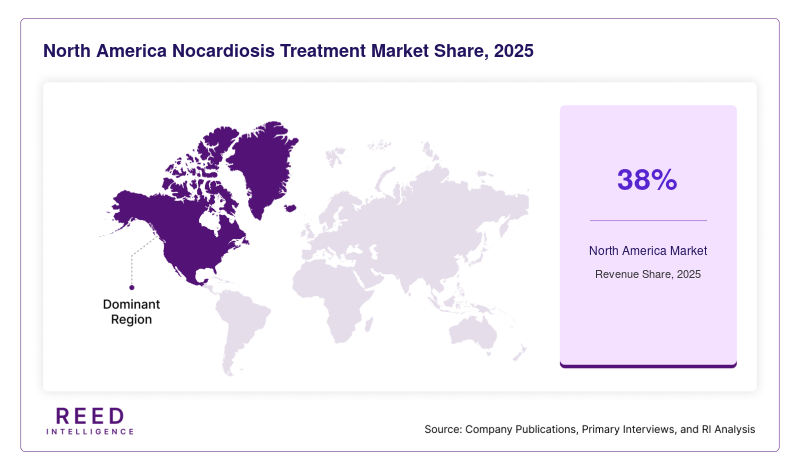
North America accounted for 38% of the Nocardiosis Treatment Market share in 2025 and will grow at a CAGR of 8.3% through 2034. The region benefits from advanced healthcare systems and strong diagnostic capabilities.
The United States dominated the regional market due to its high prevalence of immunocompromised patients and access to advanced medical technologies. The presence of specialized healthcare facilities has supported effective disease management.
Europe
Europe held approximately 26% of the market share in 2025 and is expected to expand at a CAGR of 8.5% during the forecast period. The region has a well-established healthcare infrastructure and focus on infectious disease management.
Germany emerged as the leading country due to its strong research capabilities and availability of advanced treatment options. Government support for healthcare innovation has contributed to market growth.
Asia Pacific
Asia Pacific represented 20% of the market share in 2025 and will register the fastest CAGR of 10.2% through 2034. Increasing healthcare investments and rising awareness are driving growth.
China led the regional market due to its large population and improving healthcare infrastructure. Efforts to enhance diagnostic capabilities and disease management have supported market expansion.
Middle East & Africa
The Middle East & Africa accounted for 8% of the market share in 2025 and is projected to grow at a CAGR of 8.9%. The region is gradually improving its healthcare systems.
Saudi Arabia dominated the market due to investments in healthcare infrastructure and focus on infectious disease control. The development of specialized medical centers has supported market growth.
Latin America
Latin America held around 8% of the market share in 2025 and is expected to grow at a CAGR of 8.7% during the forecast period. The region is experiencing improvements in healthcare access.
Brazil emerged as the leading country due to increasing healthcare expenditure and focus on infectious disease management. Enhanced access to diagnostic and treatment services is driving market growth.
Competitive Landscape
The Nocardiosis Treatment Market is moderately competitive, with several pharmaceutical companies focusing on antimicrobial drug development and expanding their infectious disease portfolios. Companies are investing in research and development to address antibiotic resistance and improve treatment efficacy.
Pfizer Inc. is recognized as a leading player in the market, known for its broad portfolio of antibiotics. The company recently expanded its research initiatives targeting resistant bacterial infections, including rare pathogens such as Nocardia, strengthening its position in the market.
Other key players are focusing on strategic collaborations and partnerships to enhance their product offerings and expand their global reach. Continuous innovation in antimicrobial therapies remains a key strategy for maintaining competitiveness in this market.
Key Players List
- Pfizer Inc.
- Novartis AG
- Merck & Co., Inc.
- GlaxoSmithKline plc
- Sanofi S.A.
- Teva Pharmaceutical Industries Ltd.
- Cipla Limited
- Sun Pharmaceutical Industries Ltd.
- Dr. Reddy’s Laboratories
- Lupin Limited
- Aurobindo Pharma
- Zydus Lifesciences
- Hikma Pharmaceuticals
- Bayer AG
- Johnson & Johnson
Recent Developments
- In 2025, pharmaceutical companies increased investments in research targeting rare bacterial infections, including nocardiosis.
- New combination antibiotic regimens were introduced to address resistance challenges.
- Strategic collaborations between research institutions and pharmaceutical firms accelerated drug development.
- Advances in diagnostic technologies improved early detection and treatment outcomes.
- Expansion of healthcare infrastructure in emerging markets supported increased access to treatment.
Nocardiosis Treatment Market Segments
By Drug Class
- Sulfonamide-Based Antibiotics
- Carbapenems
- Combination Therapies
By Route of Administration
- Oral
- Injectable
By Indication
- Pulmonary Nocardiosis
- Cutaneous Nocardiosis
- Disseminated Nocardiosis
By Distribution Channel
- Hospital Pharmacies
- Retail Pharmacies
- Online Pharmacies
By Region
- North America
- Europe
- APAC
- Middle East and Africa
- LATAM