Non laboratory based Cannabis Testing Market Size, Share & Demand Report By Product Type (Portable Analyzers, Biosensor Devices, Immunoassay Test Kits, Software and Data Platforms), By Application (Potency Testing, Contamination Screening, Terpene Profiling, Moisture Analysis), By End Use (Cannabis Cultivators, Cannabis Processors, Dispensaries and Retailers, Research Organizations), By Region & Segment Forecasts, 2026–2034
USD 3950
Market Overview
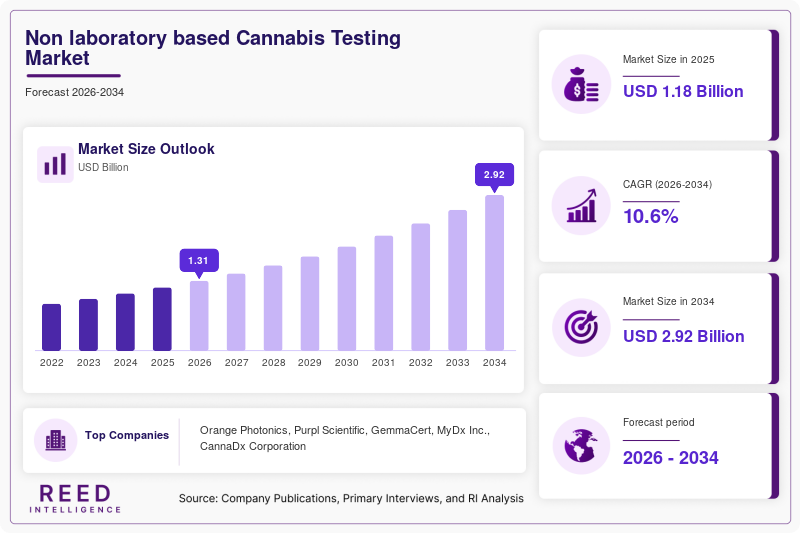
The global Non laboratory based Cannabis Testing Market size was valued at approximately USD 1.18 billion in 2026 and is projected to reach nearly USD 2.64 billion by 2034, expanding at a CAGR of 10.6% during the forecast period. The market is gaining momentum as cannabis legalization expands across medical and recreational applications in several countries. Producers, distributors, dispensaries, and regulatory agencies are increasingly adopting rapid testing technologies that can deliver results outside centralized laboratories. These solutions support quality assurance, contamination detection, potency analysis, and compliance monitoring while reducing operational delays and transportation costs associated with traditional laboratory testing.
A major factor supporting market growth is the increasing commercialization of regulated cannabis products. Governments and healthcare authorities are implementing stricter standards for cannabinoid content verification and contaminant screening. This shift has increased the need for portable and cost-effective testing systems that can be deployed directly at cultivation sites, processing facilities, dispensaries, and retail outlets. Non laboratory testing devices are becoming more accurate and user friendly, enabling operators to conduct immediate analysis without relying entirely on specialized laboratory infrastructure.
Key Highlights
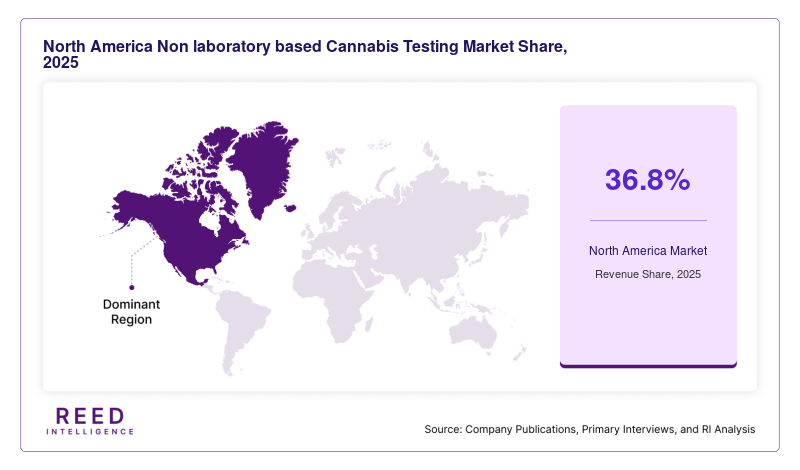
- North America dominated the market with a 36.8% share in 2025.
- Asia Pacific is expected to grow at the fastest CAGR of 12.1% during 2026–2034.
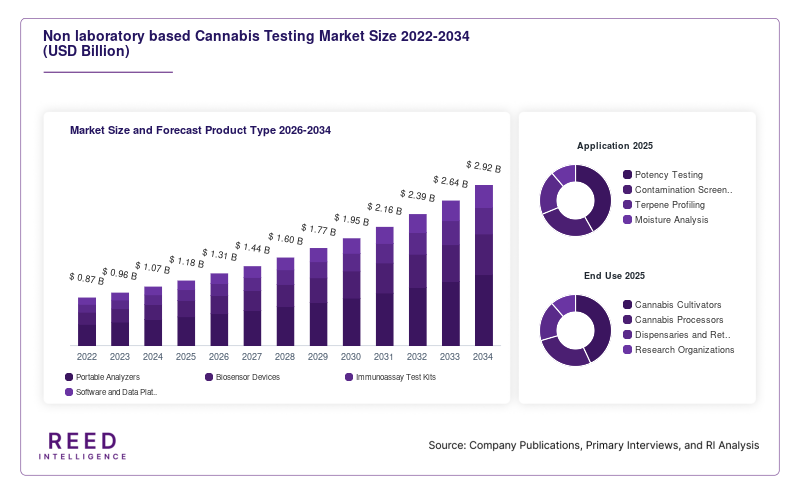
- By product type, portable analyzers accounted for the largest share of 39.6%, while biosensor devices are projected to grow at a CAGR of 13.4%.
- By application, potency testing led with a 43.1% share, whereas contamination screening is expected to expand at a CAGR of 12.7%.
- The United States remained the dominant country, with market values of USD 470 million in 2024 and USD 528 million in 2025.
Market Trends
Expansion of AI-Integrated Portable Testing Platforms
Artificial intelligence integration within portable cannabis testing systems is emerging as a significant trend across the global market. Manufacturers are developing smart handheld analyzers that combine spectroscopy technologies with AI-based interpretation software to improve testing accuracy and reduce human error. These systems can identify cannabinoid profiles, terpene composition, and contamination levels within minutes while generating automated compliance reports. Cannabis cultivators and dispensary operators are increasingly adopting such platforms because they reduce dependency on trained laboratory technicians and support real-time decision-making. Cloud connectivity features are also enabling remote monitoring and centralized data management for multi-location cannabis businesses. The growing use of AI-enhanced analytics is expected to improve consistency in cannabis quality testing and accelerate adoption among commercial operators seeking scalable and cost-efficient testing solutions.
Rising Adoption of Rapid Contamination Screening Kits
The market is witnessing increasing demand for rapid contamination screening kits designed to detect pesticides, heavy metals, microbial contaminants, and residual solvents. Regulatory authorities in legal cannabis markets are strengthening product safety standards, encouraging producers to implement routine contamination checks throughout the cultivation and distribution process. Portable contamination testing kits are gaining traction because they provide immediate screening results without requiring expensive laboratory equipment or long waiting periods. Small-scale growers and independent dispensaries are increasingly investing in these kits to ensure compliance and reduce the risk of product recalls. In addition, improvements in immunoassay sensitivity and disposable sensor technology are making contamination screening more affordable and accessible. This trend is expected to expand significantly as cannabis products enter pharmaceutical, wellness, and food-related applications that require higher quality assurance standards.
Market Drivers
Expansion of Legal Cannabis Cultivation and Retail Networks
The increasing legalization of medical and recreational cannabis across multiple countries is driving strong demand for non laboratory based cannabis testing solutions. Licensed growers and dispensaries must comply with evolving safety and potency regulations, creating a need for rapid testing technologies that can operate directly at production and retail locations. Portable testing systems help businesses monitor cannabinoid concentration, identify contaminants, and maintain product consistency without waiting for centralized laboratory results. As cannabis retail networks expand, operators are prioritizing testing tools that reduce delays in product approval and inventory management. The growth of regulated cannabis cultivation facilities in North America, Europe, and parts of Asia Pacific is further strengthening market demand. Companies are also adopting decentralized testing models to improve operational efficiency and support higher production volumes.
Growing Demand for Cost-Effective and Time-Efficient Testing Solutions
Cannabis businesses are increasingly focused on reducing operational expenses while maintaining regulatory compliance. Traditional laboratory testing methods often involve high transportation costs, extended turnaround times, and dependence on specialized personnel. Non laboratory based testing systems address these challenges by offering rapid on-site analysis at lower costs. Portable analyzers and disposable testing kits allow growers and distributors to evaluate product quality within minutes, improving workflow efficiency and reducing the likelihood of production delays. These advantages are particularly important for small and medium-sized cannabis companies that operate with limited budgets. Technological improvements in biosensors, chromatography alternatives, and digital analysis software are also increasing testing reliability, encouraging wider adoption across the cannabis supply chain. The demand for scalable and affordable testing solutions is expected to remain a key market growth driver throughout the forecast period.
Market Restraint
Limited Standardization and Accuracy Concerns Across Testing Devices
Despite rapid technological advancements, the market continues to face challenges related to testing consistency and regulatory standardization. Many portable cannabis testing devices produce results that vary depending on environmental conditions, calibration quality, and operator handling. Differences in testing methodologies across manufacturers can create discrepancies in potency analysis and contamination detection, reducing confidence among large-scale cannabis producers and regulatory agencies. Some dispensaries and cultivators still rely on certified laboratory testing to verify final product quality because laboratory systems are considered more reliable for highly sensitive analysis.
The absence of globally standardized regulations for non laboratory cannabis testing also creates operational barriers for manufacturers entering international markets. In some regions, authorities require additional laboratory confirmation before products can be commercially distributed, limiting the standalone use of portable testing systems. Smaller cannabis operators may hesitate to invest in advanced field-testing equipment if results cannot fully replace laboratory certification. These limitations could slow adoption rates in highly regulated pharmaceutical cannabis applications where testing precision remains a critical requirement.
Market Opportunities
Emerging Demand from Pharmaceutical and Wellness Cannabis Products
The expanding use of cannabis in pharmaceutical and wellness applications is creating substantial opportunities for non laboratory testing providers. Medical cannabis manufacturers require regular monitoring of cannabinoid concentration, purity levels, and product consistency during cultivation and processing stages. Portable testing systems can support faster quality checks before products move into clinical or consumer markets. Wellness-focused cannabis products such as oils, edibles, beverages, and skincare items are also increasing the need for decentralized testing solutions that can maintain production efficiency while meeting quality standards.
As consumer awareness regarding cannabis safety grows, companies are investing in rapid verification tools that can improve transparency and brand credibility. Portable analyzers with digital reporting features are becoming attractive for wellness brands seeking to demonstrate quality compliance to retailers and end users. The integration of mobile applications and cloud-based tracking platforms may further strengthen adoption in pharmaceutical-grade cannabis manufacturing and premium wellness product development.
Growth Potential in Developing Legal Cannabis Markets
Developing cannabis markets across Asia Pacific, Latin America, and parts of Europe present significant growth opportunities for non laboratory testing technology providers. Several countries are gradually introducing medical cannabis legalization frameworks, creating demand for cost-effective compliance infrastructure. Many emerging markets lack large-scale laboratory networks, making portable and decentralized testing systems a practical alternative for cultivators and distributors.
Manufacturers that provide affordable handheld analyzers and rapid screening kits are expected to gain strong traction among new cannabis operators entering regulated markets. Partnerships with local distributors and government agencies may further accelerate adoption. In addition, international cannabis exporters are seeking field-based testing technologies that can support faster product certification and cross-border trade compliance. The combination of regulatory expansion, rising cannabis cultivation investment, and infrastructure limitations in developing regions is expected to create long-term market growth potential for non laboratory cannabis testing companies.
Segmental Analysis
By Product Type
Portable analyzers accounted for the dominant share of the Non laboratory based Cannabis Testing Market in 2024, representing approximately 39.6% of total revenue. These systems are widely used across cannabis cultivation facilities, dispensaries, and processing units because they provide rapid potency and contamination analysis without requiring laboratory infrastructure. Portable spectroscopy devices and handheld analyzers are increasingly preferred for their ease of use, fast turnaround times, and ability to generate digital compliance reports. Commercial cannabis operators are adopting these technologies to improve workflow efficiency and reduce product release delays. The growing need for decentralized quality assurance across expanding cannabis supply chains is further strengthening the adoption of portable analyzers in regulated markets.
Biosensor devices are projected to register the fastest CAGR of 13.4% during the forecast period due to advancements in miniaturized sensing technologies and improved analytical precision. Biosensors are gaining popularity because they can detect cannabinoids, pesticides, microbial contaminants, and residual solvents through compact and cost-effective platforms. The increasing focus on real-time testing and automation is encouraging cannabis producers to integrate biosensor technologies into routine quality monitoring processes. Startups and technology companies are investing heavily in biosensor research to improve sensitivity and reduce operational complexity. Growing demand for disposable testing systems and smartphone-connected diagnostic tools is also expected to accelerate adoption among small and medium cannabis businesses seeking affordable and scalable testing solutions.
By Application
Potency testing held the largest share of the global market in 2024, accounting for nearly 43.1% of overall revenue. Cannabis producers and dispensaries rely heavily on potency testing to measure cannabinoid concentrations such as THC and CBD in flowers, oils, concentrates, and edible products. Accurate potency analysis supports product labeling compliance, dosage consistency, and consumer transparency. Portable potency analyzers are increasingly replacing time-consuming laboratory procedures in routine operational settings. The growth of premium cannabis products and medical cannabis formulations is also increasing the importance of rapid potency verification across cultivation and manufacturing processes. Regulatory authorities in legalized markets are further encouraging standardized potency reporting, supporting long-term segment expansion.
Contamination screening is expected to emerge as the fastest-growing application segment, expanding at a CAGR of 12.7% during the forecast period. The segment is benefiting from stricter safety regulations related to pesticides, heavy metals, mold, and residual solvents in cannabis products. Portable contamination testing kits are becoming essential for growers and distributors seeking immediate screening results before product distribution. The increasing frequency of cannabis product recalls has intensified demand for preventive quality control measures. Technology providers are introducing advanced immunoassay kits and sensor-based detection systems capable of identifying contaminants with greater sensitivity. Growing consumer awareness regarding product safety and quality assurance is expected to further support adoption of rapid contamination testing technologies across the cannabis industry.
By End Use
Cannabis cultivators represented the largest end-use segment in 2024, capturing approximately 41.8% of the global market share. Cultivation facilities are increasingly implementing non laboratory testing systems to monitor crop quality, cannabinoid concentration, and contamination levels during different growth stages. Rapid field-based testing enables cultivators to optimize harvest timing, improve strain consistency, and reduce the risk of non-compliant products entering the supply chain. Large-scale commercial growers are particularly investing in portable analyzers and cloud-enabled testing platforms to streamline quality management across multiple cultivation sites. Rising legalization and expansion of commercial cannabis farming operations are expected to sustain strong demand from cultivators throughout the forecast period.
Dispensaries and retail operators are anticipated to witness the fastest CAGR of 11.9% during the forecast period due to increasing consumer demand for transparent product information and quality verification. Retail cannabis businesses are adopting portable testing systems to confirm potency levels and contamination status before products reach end consumers. The growing competition within cannabis retail markets is encouraging dispensaries to differentiate themselves through verified quality assurance practices. Portable analyzers with digital reporting capabilities are helping retailers build customer trust while improving compliance documentation. Additionally, the emergence of on-site consumer testing demonstrations and educational programs is creating new opportunities for rapid testing technology adoption within dispensary environments.
Regional Analysis
North America
North America accounted for the largest share of the global Non laboratory based Cannabis Testing Market in 2025, representing approximately 36.8% of total revenue. The region is projected to maintain stable growth at a CAGR of 10.4% during the forecast period due to the widespread legalization of medical and recreational cannabis products across the United States and Canada. Cannabis cultivators and dispensaries are increasingly investing in portable testing systems to improve operational efficiency and maintain compliance with evolving state-level regulations. The presence of advanced cannabis technology companies and established distribution networks is also supporting market expansion.
The United States remained the dominant country within North America due to its large-scale cannabis production and expanding retail ecosystem. The country continues to witness rising demand for rapid potency analysis and contamination screening tools across licensed cultivation facilities and dispensaries. One unique growth factor driving the U.S. market is the increasing use of mobile cannabis testing services that provide on-site compliance verification for independent growers and distributors. These services are helping smaller operators reduce testing delays and improve inventory management while meeting state regulatory requirements.
Europe
Europe represented a notable share of the global market in 2025 and is expected to expand at a CAGR of 9.8% through 2034. The region is experiencing increasing adoption of non laboratory cannabis testing solutions as governments gradually relax restrictions on medical cannabis usage. Countries such as Germany, the United Kingdom, and the Netherlands are strengthening quality standards for cannabis products used in healthcare applications. This regulatory environment is encouraging cannabis producers to implement portable testing systems for faster monitoring of cannabinoid content and contamination levels throughout the production process.
Germany emerged as the dominant country in the European market because of its expanding medical cannabis industry and strong pharmaceutical infrastructure. The country has seen growing investments in cannabis cultivation facilities and product standardization initiatives. A unique growth factor supporting the German market is the integration of cannabis quality testing into pharmaceutical-grade supply chain management systems. Producers are increasingly using portable analyzers and digital testing software to improve batch traceability and maintain compliance with strict healthcare quality standards.
Asia Pacific
Asia Pacific is projected to register the fastest CAGR of 12.1% during the forecast period due to increasing medical cannabis research activities and regulatory reforms in selected countries. The region is gradually emerging as a strategic market for cannabis cultivation and processing investments. Rising awareness regarding cannabis-derived therapeutic products is encouraging companies to adopt rapid testing technologies for quality assurance. Portable testing systems are gaining popularity among cannabis startups and agricultural operators seeking affordable alternatives to centralized laboratory testing.
Australia dominated the Asia Pacific market because of its well-established medical cannabis framework and rising cultivation investments. The country is witnessing increased adoption of portable analyzers and biosensor technologies among licensed cannabis growers. One unique growth factor supporting the Australian market is the growing export-oriented cannabis production sector. Exporters are using non laboratory testing systems to accelerate product verification and improve compliance with international quality standards before shipment to overseas markets.
Middle East & Africa
The Middle East & Africa region accounted for a smaller but steadily growing share of the global market in 2025. The market is expected to expand at a CAGR of 8.7% during the forecast period as selected countries explore cannabis cultivation for medical and industrial applications. Although regulatory frameworks remain limited in several nations, investments in agricultural cannabis projects are gradually increasing. Portable cannabis testing systems are attracting attention because they provide cost-efficient quality monitoring in regions where advanced laboratory infrastructure is still underdeveloped.
South Africa emerged as the dominant market within the region due to its evolving cannabis cultivation sector and favorable agricultural conditions. Local cannabis producers are increasingly adopting rapid testing kits and portable analyzers to monitor crop quality and cannabinoid consistency. A unique growth factor in South Africa is the expansion of small-scale cannabis farming cooperatives that require affordable testing technologies to improve product quality and support export opportunities. This trend is creating additional demand for simplified and user-friendly testing solutions.
Latin America
Latin America is expected to witness stable growth in the Non laboratory based Cannabis Testing Market during the forecast period, supported by increasing legalization initiatives and rising cannabis cultivation investments. The region accounted for a moderate market share in 2025 and is projected to grow at a CAGR of 9.3% through 2034. Countries across Latin America are gradually establishing regulatory frameworks for medical cannabis production, encouraging demand for portable testing technologies that can support quality control and compliance monitoring.
Brazil remained the dominant country within the Latin American market due to rising medical cannabis imports, expanding patient awareness, and growing regulatory acceptance. The country is witnessing increased demand for portable testing devices among pharmaceutical distributors and cannabis processors. One unique growth factor supporting the Brazilian market is the increasing collaboration between healthcare companies and agricultural producers to establish localized cannabis supply chains. These partnerships are creating demand for rapid testing solutions that can ensure product consistency across cultivation and processing operations.
Competitive Landscape
The Non laboratory based Cannabis Testing Market is characterized by the presence of established analytical technology providers, emerging cannabis testing startups, and specialized biosensor developers. Companies are focusing on product innovation, software integration, and strategic collaborations to strengthen their market positions. Competitive intensity is increasing as cannabis legalization expands and quality assurance standards become more stringent across medical and recreational markets.
Leading companies are investing in portable spectroscopy systems, AI-enabled testing software, and disposable contamination screening kits to improve testing speed and analytical accuracy. Several manufacturers are also expanding their distribution partnerships to strengthen market penetration in emerging cannabis regions. Product affordability and regulatory compliance capabilities remain important competitive factors, particularly for small and medium cannabis operators.
Key Players
- Orange Photonics
- Purpl Scientific
- GemmaCert
- MyDx Inc.
- CannaDx Corporation
- LightLab Cannabis Testing
- tCheck
- SpexAI
- Sage Analytics
- MB Labs
- Trichome Analytical
- Cannalysis
- Alpha-CAT
- Digipath Labs
- Steep Hill Inc.
Recent Developments
- In 2025, GemmaCert launched a next-generation portable cannabis analyzer with enhanced terpene profiling capabilities for commercial cultivation facilities.
- In 2024, Purpl Scientific expanded its distribution network across Europe to support growing demand for rapid cannabis potency testing solutions.
- In 2025, Orange Photonics introduced AI-enabled compliance reporting software integrated with its handheld cannabis testing platform.
- In 2024, Sage Analytics partnered with regional cannabis producers to deploy portable testing systems for contamination monitoring at cultivation sites.
- In 2025, MyDx Inc. announced the development of smartphone-connected biosensor technology designed for real-time cannabis quality analysis.
Non laboratory based Cannabis Testing Market Segments
Product Type
- Portable Analyzers
- Biosensor Devices
- Immunoassay Test Kits
- Software and Data Platforms
Application
- Potency Testing
- Contamination Screening
- Terpene Profiling
- Moisture Analysis
End Use
- Cannabis Cultivators
- Cannabis Processors
- Dispensaries and Retailers
- Research Organizations
By Region
- North America
- Europe
- APAC
- Middle East and Africa
- LATAM