Noonan Syndrome Market Size, Share & Demand Report By Treatment Type (Growth Hormone Therapy, Targeted Molecular Therapy, Cardiovascular Treatment, Supportive Care), By Diagnosis Method (Genetic Testing, Clinical Examination, Biomarker-Based Screening), By End-User (Hospitals, Specialty Clinics, Research Institutes), By Distribution Channel (Hospital Pharmacies, Retail Pharmacies, Online Pharmacies), By Region & Segment Forecasts, 2026–2034
USD 3950
Market Overview
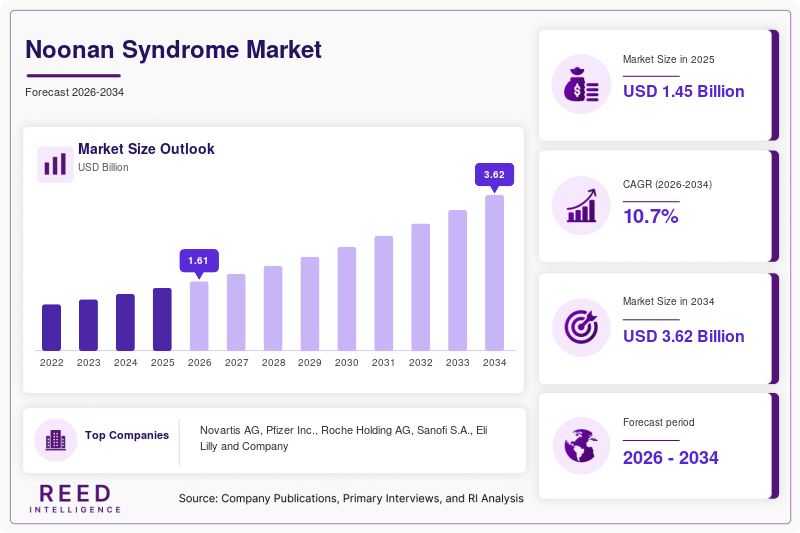
The Noonan Syndrome Market was valued at approximately USD 1.45 billion in 2026 and is projected to reach USD 3.28 billion by 2034, expanding at a CAGR of 10.7% during the forecast period (2026–2034). The market reflects steady expansion driven by advancements in genetic diagnostics, improved awareness of rare diseases, and the growing availability of targeted therapies for managing complex symptoms associated with Noonan syndrome.
A key global factor supporting market growth is the increasing integration of precision medicine and genomic testing technologies across healthcare systems. Early diagnosis through next-generation sequencing has significantly improved patient outcomes, enabling tailored treatment plans that address cardiovascular, developmental, and endocrine manifestations of the disorder. Additionally, healthcare policies supporting orphan drug development have encouraged pharmaceutical companies to invest in innovative therapies for rare genetic conditions.
Key Highlights:
- North America dominated the market with a 38.6% share in 2025, while Asia Pacific is expected to register the fastest CAGR of 12.4% through 2034.
- By treatment type, growth hormone therapy led with a 34.2% share, while targeted molecular therapies are projected to grow fastest at a 13.1% CAGR.
- By diagnosis method, genetic testing dominated with 46.8% share, while biomarker-based screening is expected to expand at 12.9% CAGR.
- The United States remained the dominant country, with market values of USD 520 million in 2024 and USD 575 million in 2025.
Market Trends
Rising Adoption of Genetic Sequencing Technologies
The increasing adoption of advanced genetic sequencing technologies is reshaping the Noonan Syndrome Market. Whole exome and genome sequencing are being widely used for early and accurate diagnosis, replacing traditional clinical diagnostic approaches. This shift has enabled healthcare providers to identify specific gene mutations such as PTPN11, SOS1, and RAF1, which are commonly associated with Noonan syndrome. As diagnostic precision improves, treatment pathways become more targeted, reducing complications and enhancing patient outcomes. Additionally, the decreasing cost of sequencing technologies has expanded accessibility across emerging markets, contributing to broader adoption.
Expansion of Orphan Drug Development Programs
Another notable trend is the growing focus on orphan drug development. Pharmaceutical companies are increasingly investing in therapies that address rare genetic disorders, supported by regulatory incentives such as tax credits, expedited approvals, and extended market exclusivity. This has led to a robust pipeline of investigational therapies targeting specific molecular pathways involved in Noonan syndrome. Biopharmaceutical firms are also collaborating with research institutions to accelerate clinical trials and bring innovative treatments to market. The expansion of orphan drug programs is expected to enhance treatment availability and drive long-term growth in the Noonan Syndrome Market.
Market Drivers
Increasing Awareness and Early Diagnosis Initiatives
Growing awareness of rare genetic disorders has significantly contributed to the expansion of the Noonan Syndrome Market. Governments, healthcare organizations, and patient advocacy groups are actively promoting early diagnosis through awareness campaigns and screening programs. Early detection is critical for managing complications such as congenital heart defects and developmental delays. Improved awareness among healthcare professionals has led to higher diagnosis rates, particularly in pediatric populations. This has increased demand for diagnostic services and therapeutic interventions, thereby driving market growth.
Advancements in Targeted Therapeutics
Technological advancements in drug development have enabled the creation of targeted therapies that address the underlying genetic causes of Noonan syndrome. These therapies focus on modulating signaling pathways such as the RAS-MAPK pathway, which plays a central role in the disorder. The development of precision medicines has improved treatment efficacy and reduced side effects compared to conventional therapies. As research continues to uncover new molecular targets, the pipeline of innovative treatments is expected to expand, further supporting market growth.
Market Restraint
Restraint: High Cost of Treatment and Limited Accessibility
One of the primary challenges facing the Noonan Syndrome Market is the high cost associated with diagnosis and treatment. Genetic testing, specialized therapies, and long-term management of symptoms can be financially burdensome for patients and healthcare systems. In many developing regions, limited access to advanced diagnostic tools and specialized healthcare services further restricts market growth. Additionally, reimbursement policies for rare disease treatments vary significantly across countries, creating disparities in access to care. These factors collectively hinder the widespread adoption of advanced therapies and limit the overall expansion of the market.
Market Opportunities
Emerging Markets and Healthcare Infrastructure Development
Emerging economies present significant growth opportunities for the Noonan Syndrome Market. Improvements in healthcare infrastructure, increasing investments in diagnostic capabilities, and rising awareness of rare diseases are driving demand in regions such as Asia Pacific and Latin America. Governments in these regions are implementing policies to support early diagnosis and treatment, creating a favorable environment for market expansion. As healthcare systems continue to modernize, the adoption of advanced diagnostic and therapeutic solutions is expected to increase.
Integration of Digital Health and Telemedicine
The integration of digital health technologies and telemedicine offers new opportunities for market growth. Telemedicine platforms enable remote diagnosis and consultation, particularly in underserved areas where access to specialists is limited. Digital tools also facilitate patient monitoring and data collection, improving disease management and treatment outcomes. The adoption of these technologies is expected to enhance patient access to care and support the expansion of the Noonan Syndrome Market.
Segmental Analysis
By Treatment Type
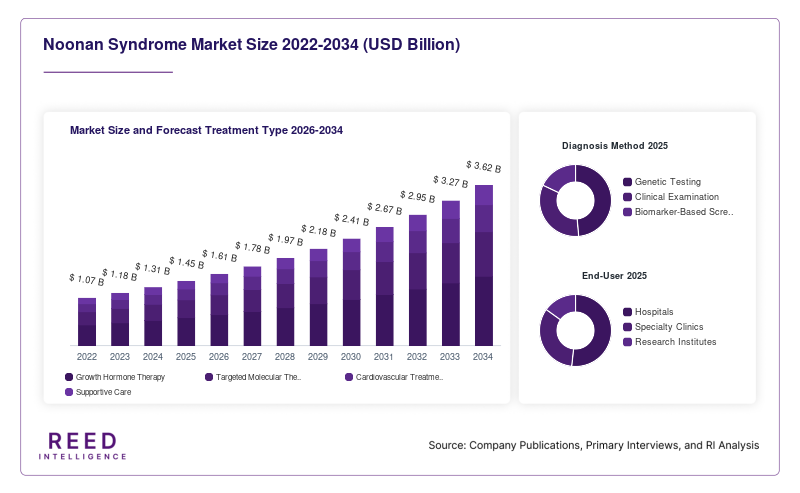
Growth hormone therapy dominated the Noonan Syndrome Market in 2025, accounting for 34.2% of the total share. This dominance is attributed to its effectiveness in addressing short stature, a common symptom of the condition. The widespread use of growth hormone therapy and its established clinical benefits have contributed to its leading position.
Targeted molecular therapies are expected to be the fastest-growing subsegment, with a projected CAGR of 13.1% during the forecast period. These therapies focus on specific genetic pathways, offering improved efficacy and personalized treatment options. The increasing availability of targeted treatments and ongoing research into molecular mechanisms are expected to drive growth.
By Diagnosis Method
Genetic testing held the largest share of 46.8% in 2025, driven by its accuracy and ability to identify specific gene mutations associated with Noonan syndrome. The adoption of advanced sequencing technologies has significantly improved diagnostic capabilities.
Biomarker-based screening is projected to grow at a CAGR of 12.9%, supported by advancements in diagnostic research. The development of novel biomarkers enables earlier detection and improved disease monitoring, contributing to market expansion.
By End-User
Hospitals dominated the market with a 52.5% share in 2025, owing to their comprehensive healthcare services and access to advanced diagnostic tools. Hospitals play a central role in the diagnosis and management of complex genetic disorders.
Specialty clinics are expected to grow at a CAGR of 11.8%, driven by increasing demand for specialized care. These clinics offer focused treatment and personalized care, making them an attractive option for patients.
By Distribution Channel
Hospital pharmacies accounted for 41.7% of the market share in 2025, supported by their direct access to patients and integration with healthcare facilities. The availability of specialized medications in hospital settings has contributed to their dominance.
Online pharmacies are anticipated to grow at a CAGR of 12.3%, driven by the increasing adoption of digital healthcare platforms. The convenience of online purchasing and expanding access to medications are key factors supporting growth.
Regional Analysis
North America
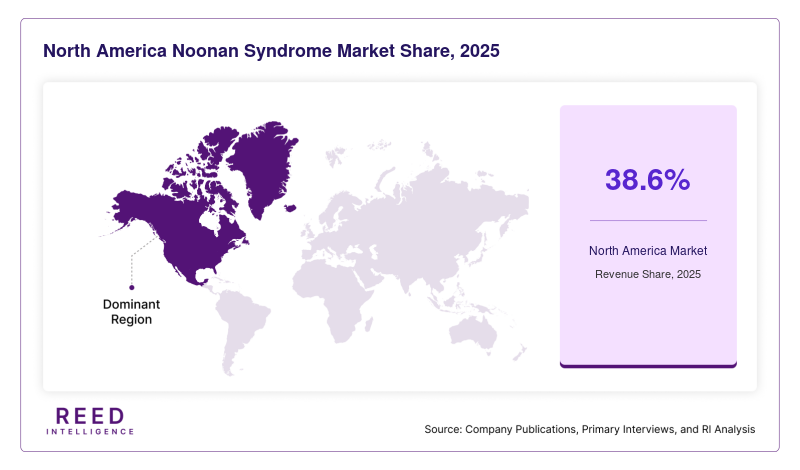
North America accounted for 38.6% of the Noonan Syndrome Market share in 2025 and is expected to grow at a CAGR of 10.2% from 2026 to 2034. The region has a well-established healthcare infrastructure, high awareness of rare diseases, and strong adoption of advanced diagnostic technologies. The presence of leading pharmaceutical companies and ongoing research initiatives further supports market growth.
The United States dominated the regional market due to its advanced healthcare system and strong focus on rare disease research. Government support for orphan drug development and widespread access to genetic testing have significantly contributed to market expansion. Additionally, collaborations between research institutions and pharmaceutical companies have accelerated the development of innovative therapies.
Europe
Europe held a 27.4% share of the Noonan Syndrome Market in 2025 and is projected to expand at a CAGR of 9.8% during the forecast period. The region benefits from supportive regulatory frameworks and increasing investment in rare disease research. Countries such as Germany, France, and the United Kingdom have established robust healthcare systems that facilitate early diagnosis and treatment.
Germany emerged as the dominant country in the region, driven by strong healthcare infrastructure and increasing adoption of genetic testing. The country’s emphasis on research and development has led to the introduction of advanced diagnostic tools and therapies, supporting market growth.
Asia Pacific
Asia Pacific captured 18.9% of the market share in 2025 and is anticipated to grow at the fastest CAGR of 12.4% through 2034. The region is experiencing rapid improvements in healthcare infrastructure and increasing awareness of rare diseases. Rising healthcare expenditure and expanding access to diagnostic services are key factors driving market growth.
China led the regional market due to its large population base and increasing focus on healthcare modernization. Government initiatives to improve diagnostic capabilities and expand access to specialized treatments have significantly contributed to market expansion.
Middle East & Africa
The Middle East & Africa region accounted for 8.1% of the Noonan Syndrome Market share in 2025 and is expected to grow at a CAGR of 9.1% during the forecast period. The market is driven by improving healthcare infrastructure and increasing awareness of rare diseases. However, limited access to advanced diagnostic tools remains a challenge.
Saudi Arabia dominated the regional market, supported by government investments in healthcare and the development of specialized medical centers. The country’s focus on improving healthcare access has contributed to the growth of the market.
Latin America
Latin America held a 7.0% share of the Noonan Syndrome Market in 2025 and is projected to grow at a CAGR of 9.5% from 2026 to 2034. The region is witnessing gradual improvements in healthcare systems and increasing awareness of genetic disorders.
Brazil emerged as the leading country in the region, driven by expanding healthcare infrastructure and growing adoption of diagnostic technologies. Government initiatives to improve access to healthcare services have supported market growth.
Competitive Landscape
The Noonan Syndrome Market is characterized by the presence of established pharmaceutical companies and emerging biotechnology firms. The market leader, Novartis AG, has maintained its position through continuous investment in research and development and a strong portfolio of targeted therapies. The company recently advanced a novel RAS-pathway inhibitor into late-stage clinical trials, reflecting its commitment to innovation.
Other key players are focusing on strategic collaborations, mergers, and product launches to strengthen their market presence. Companies are also investing in orphan drug development programs to capitalize on regulatory incentives and expand their product pipelines. The competitive landscape remains dynamic, with ongoing advancements in precision medicine shaping the future of the market.
Key Players List
- Novartis AG
- Pfizer Inc.
- Roche Holding AG
- Sanofi S.A.
- Eli Lilly and Company
- Bristol-Myers Squibb Company
- AstraZeneca plc
- Takeda Pharmaceutical Company Limited
- Merck & Co., Inc.
- Johnson & Johnson
- Amgen Inc.
- BioMarin Pharmaceutical Inc.
- Ipsen S.A.
- Vertex Pharmaceuticals Incorporated
- Regeneron Pharmaceuticals, Inc.
Recent Developments
- In 2025, a leading pharmaceutical company initiated a Phase III clinical trial for a targeted therapy addressing RAS pathway mutations.
- A biotechnology firm announced a collaboration with a research institute to develop next-generation diagnostic tools.
- Regulatory authorities approved a new growth hormone formulation for pediatric use.
- Several companies expanded their rare disease portfolios through strategic acquisitions.
- Advances in telemedicine platforms improved patient access to specialized care globally.
Noonan Syndrome Market Segments
Treatment Type
- Growth Hormone Therapy
- Targeted Molecular Therapy
- Cardiovascular Treatment
- Supportive Care
Diagnosis Method
- Genetic Testing
- Clinical Examination
- Biomarker-Based Screening
End-User
- Hospitals
- Specialty Clinics
- Research Institutes
Distribution Channel
- Hospital Pharmacies
- Retail Pharmacies
- Online Pharmacies
By Region
- North America
- Europe
- APAC
- Middle East and Africa
- LATAM