Normothermic Machine Perfusion Market Size, Share & Demand Report By Organ Type (Kidney Perfusion Systems, Liver Perfusion Systems, Heart Perfusion Systems, Lung Perfusion Systems, Others), By Application (Transplantation Procedures, Organ Preservation, Organ Assessment), By End Use (Hospitals and Transplant Centers, Research Institutes), By Region & Segment Forecasts, 2026–2034
USD 3950
Market Overview
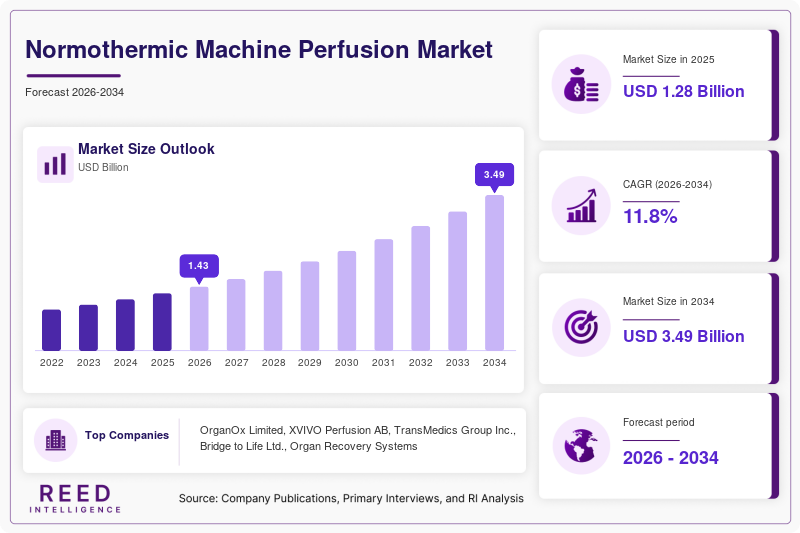
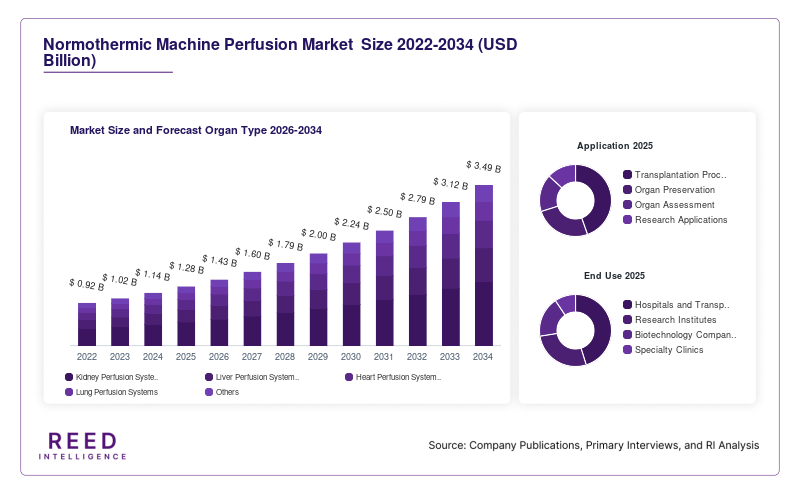
The global Normothermic Machine Perfusion Market size was valued at USD 1.28 billion in 2026 and is projected to reach USD 3.12 billion by 2034, expanding at a CAGR of 11.8% during the forecast period from 2026 to 2034. The market is gaining momentum as healthcare systems focus on improving organ preservation efficiency and increasing the success rate of transplantation procedures. Normothermic machine perfusion technology maintains donor organs at near-physiological temperatures, which helps preserve tissue viability, reduce ischemic injury, and improve post-transplant recovery outcomes. The growing burden of chronic diseases such as kidney failure, liver cirrhosis, and heart disease has significantly increased global demand for organ transplantation procedures, thereby supporting market expansion.
One major factor supporting market growth is the rising gap between organ demand and donor organ availability across developed and emerging healthcare systems. Healthcare providers are increasingly adopting advanced perfusion technologies to extend preservation times and improve utilization rates of marginal donor organs. Several transplant centers are integrating automated monitoring systems, portable perfusion devices, and real-time biomarker analysis into organ preservation workflows. In addition, government healthcare funding for transplantation infrastructure and clinical research has encouraged hospitals to invest in advanced organ transport and preservation technologies.
Key Highlights
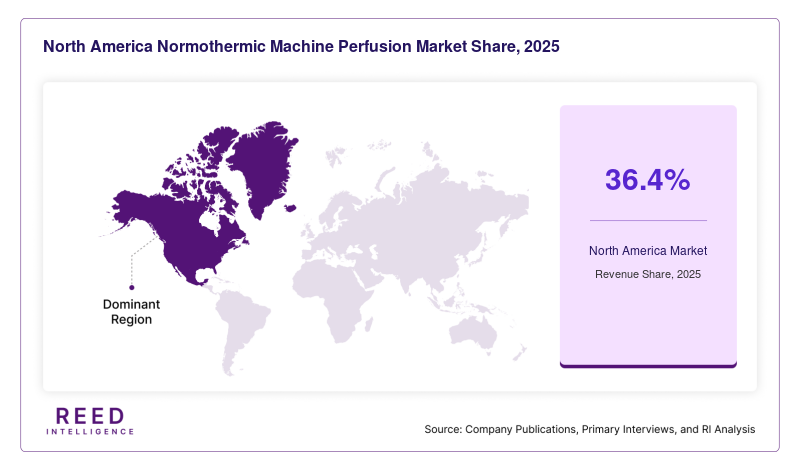
- North America dominated the market with a 36.4% share in 2025.
- Asia Pacific is expected to grow at the fastest CAGR of 12.6% during 2026–2034.
- By organ type, kidney perfusion systems accounted for the largest share of 39.1%.
- while lung perfusion systems are projected to grow at a CAGR of 13.4%.
- By application, transplantation procedures led with a 58.7% share.
- whereas organ assessment applications are expected to expand at a CAGR of 12.9%.
- The United States remained the dominant country, with market values of USD 420 million in 2024 and USD 468 million in 2025.
Market Trends
Integration of Digital Monitoring and Artificial Intelligence in Perfusion Systems
The Normothermic Machine Perfusion Market is witnessing increasing integration of digital monitoring platforms and artificial intelligence-enabled analytics into perfusion systems. Manufacturers are introducing smart preservation devices capable of tracking oxygen saturation, metabolic activity, vascular resistance, and organ temperature in real time. These capabilities help transplant surgeons and clinicians evaluate organ viability more accurately before transplantation. Hospitals and transplant centers are adopting predictive analytics software to reduce organ rejection risks and improve patient outcomes. Cloud-connected monitoring systems also support remote clinical evaluation, which is becoming valuable for long-distance organ transportation. The incorporation of machine learning algorithms into perfusion workflows is expected to improve operational efficiency while reducing procedural uncertainty. As healthcare institutions prioritize data-driven transplantation procedures, digital integration is likely to remain a significant trend across advanced organ preservation systems.
Rising Adoption of Portable and Transportable Perfusion Devices
Another significant trend in the market is the growing demand for portable and transportable normothermic perfusion systems. Traditional cold storage methods often limit transportation time and increase risks related to organ deterioration during transit. Portable perfusion technologies enable continuous oxygenated blood circulation and metabolic support while organs are transported between donor and recipient locations. This trend is particularly strong in countries with geographically dispersed healthcare networks and limited transplant center availability. Medical device companies are focusing on compact system design, lightweight components, and battery-powered operational capabilities to improve mobility and ease of use. Transportable devices are helping healthcare providers increase the utilization of organs from distant donor locations, including marginal and extended-criteria donors. This development is expected to support broader adoption of advanced organ preservation technologies across regional and international transplant networks.
Market Drivers
Growing Global Burden of Organ Failure and Transplant Demand
The increasing prevalence of chronic diseases leading to organ failure is a major factor driving the Normothermic Machine Perfusion Market. Rising cases of chronic kidney disease, liver disorders, cardiovascular diseases, and respiratory conditions have increased the number of patients requiring transplantation procedures. Healthcare systems are under pressure to improve organ preservation quality and maximize donor organ utilization rates. Normothermic machine perfusion systems provide improved preservation conditions compared to static cold storage methods by maintaining organ metabolism and circulation. This technology helps reduce ischemic damage and enables better functional assessment before transplantation. Aging populations in developed economies are also contributing to rising transplant demand. As transplantation waiting lists continue to expand globally, healthcare institutions are investing in advanced organ preservation technologies to improve survival rates and increase the success of transplant procedures.
Expanding Clinical Research and Government Support for Organ Preservation
Increasing investment in clinical trials and transplantation research is accelerating market growth. Governments and healthcare organizations across North America, Europe, and Asia Pacific are allocating funds toward improving transplant infrastructure and preservation technologies. Research institutions are conducting studies on liver, kidney, heart, and lung perfusion to evaluate long-term transplant outcomes associated with normothermic preservation techniques. Favorable clinical findings have encouraged hospitals and transplant centers to adopt advanced machine perfusion systems. Several regulatory authorities are also supporting innovation through accelerated approval pathways for organ preservation devices. Public-private partnerships between biotechnology companies and healthcare institutions are contributing to technological advancements in perfusion solutions. Growing awareness among clinicians regarding the limitations of cold storage preservation methods is expected to further increase the adoption of normothermic machine perfusion technologies during the forecast period.
Market Restraint
High Equipment Costs and Operational Complexity Limiting Adoption
The high cost associated with normothermic machine perfusion systems remains a major challenge for broader market penetration. Advanced perfusion devices require specialized monitoring components, disposable consumables, oxygenation modules, and temperature regulation systems, which significantly increase overall procedural expenses. Small and mid-sized healthcare facilities in developing economies often face budget limitations that restrict investments in sophisticated organ preservation infrastructure. In addition, operating these systems requires trained transplant specialists and technical staff capable of managing perfusion parameters and interpreting organ viability data. Limited reimbursement policies in some healthcare markets further slow adoption rates.
Operational complexity also creates challenges related to workflow integration and staff training. Hospitals transitioning from conventional cold storage methods to normothermic perfusion systems must invest in clinical education programs and procedural standardization. In some cases, transplant centers hesitate to adopt new technologies due to concerns regarding maintenance requirements, device calibration, and extended procedural timelines. For example, smaller regional transplant centers may continue relying on low-cost static cold storage because of resource limitations, despite the clinical benefits associated with advanced perfusion technologies. These factors may restrain market growth in cost-sensitive healthcare environments.
Market Opportunities
Expansion of Transplant Infrastructure in Emerging Economies
Emerging economies are creating significant growth opportunities for the Normothermic Machine Perfusion Market as healthcare infrastructure improves and transplantation programs expand. Countries across Asia Pacific, Latin America, and the Middle East are increasing investments in specialized transplant centers, intensive care facilities, and advanced surgical capabilities. Rising healthcare expenditure and growing public awareness regarding organ donation are encouraging governments to modernize transplantation systems. Normothermic perfusion technologies are gaining attention because they improve donor organ preservation and increase transplant success rates. International medical collaborations and training programs are helping healthcare professionals in emerging markets adopt advanced preservation methods. The expansion of transplant registries and organ-sharing networks is expected to further support demand for reliable organ preservation systems. As healthcare systems prioritize improved patient outcomes, emerging markets are likely to become important revenue contributors for industry participants.
Increasing Utilization of Marginal and Extended-Criteria Donor Organs
The growing use of marginal and extended-criteria donor organs presents another important opportunity for market expansion. Many transplant centers are facing shortages of suitable donor organs, which has increased interest in technologies capable of improving the viability of organs previously considered unsuitable for transplantation. Normothermic machine perfusion allows clinicians to assess organ functionality under physiological conditions before implantation. This capability improves confidence in using higher-risk donor organs and helps reduce organ discard rates. Healthcare providers are increasingly adopting perfusion systems for liver, lung, and heart preservation from older donors or donors with pre-existing health complications. Companies are developing advanced biomarkers and metabolic monitoring tools to support real-time organ evaluation during perfusion procedures. As the demand for donor organs continues to exceed supply, technologies that improve utilization rates are expected to create substantial market opportunities.
Segmental Analysis
By Organ Type
Kidney perfusion systems accounted for the largest share of the Normothermic Machine Perfusion Market in 2024, representing approximately 39.1% of global revenue. The dominance of this subsegment is primarily linked to the high global prevalence of chronic kidney disease and increasing demand for kidney transplantation procedures. Kidney transplantation remains one of the most commonly performed organ transplant procedures worldwide, which has increased the need for effective preservation technologies. Normothermic perfusion systems help maintain organ viability by supplying oxygen and nutrients under near-physiological conditions, reducing the risks associated with ischemic injury. Hospitals and transplant centers are increasingly adopting these systems to improve graft survival rates and enhance post-transplant recovery outcomes. The availability of clinical evidence supporting improved kidney preservation outcomes compared to traditional cold storage methods has also contributed to strong market adoption.
Lung perfusion systems are expected to register the fastest CAGR of 13.4% during 2026–2034. The rising incidence of chronic respiratory diseases, pulmonary fibrosis, and advanced lung disorders has increased demand for lung transplantation procedures globally. Lung preservation presents unique clinical challenges because donor lungs are highly sensitive to ischemic damage and infection risks. Normothermic perfusion enables clinicians to assess lung functionality before transplantation, thereby improving confidence in utilizing marginal donor organs. Increasing research activities focused on ex vivo lung perfusion technologies are further supporting subsegment growth. Several medical device companies are developing advanced portable lung perfusion systems capable of extending preservation times and improving organ transport efficiency. Growing investments in respiratory transplant research and increasing healthcare awareness regarding advanced preservation technologies are expected to accelerate adoption over the forecast period.
By Application
Transplantation procedures represented the largest application segment in 2024, accounting for approximately 58.7% of the global market share. The increasing volume of kidney, liver, heart, and lung transplant surgeries across developed and emerging economies continues to support segment dominance. Normothermic machine perfusion technologies are increasingly used during transplantation procedures to improve organ viability and reduce post-transplant complications. Healthcare providers are recognizing the advantages of physiological preservation methods in improving graft function and reducing delayed organ failure risks. The growing shortage of donor organs has also encouraged hospitals to adopt preservation technologies capable of extending organ usability. In addition, improved reimbursement frameworks and rising investment in transplantation infrastructure have strengthened the use of advanced perfusion systems in surgical workflows. Continuous improvements in oxygenation systems, metabolic monitoring, and automated control functions are further supporting segment growth.
Organ assessment applications are anticipated to grow at the fastest CAGR of 12.9% during the forecast period. Healthcare providers are increasingly utilizing normothermic perfusion systems not only for preservation but also for evaluating donor organ quality before transplantation. This capability is becoming particularly valuable for marginal and extended-criteria donor organs that require functional testing before clinical use. Perfusion systems allow clinicians to monitor metabolic markers, vascular resistance, bile production, and oxygen consumption in real time, supporting more accurate organ assessment decisions. Rising pressure to reduce organ discard rates is encouraging transplant centers to invest in advanced evaluation technologies. Research institutions are also developing biomarker-based assessment protocols integrated with machine perfusion platforms. As healthcare systems focus on maximizing donor organ utilization and improving transplantation efficiency, the organ assessment segment is expected to witness substantial growth.
By End Use
Hospitals and transplant centers held the dominant share of the Normothermic Machine Perfusion Market in 2024, accounting for nearly 64.5% of total revenue. These healthcare facilities perform the majority of organ transplantation procedures and therefore represent the primary end users of advanced organ preservation technologies. Large hospitals are increasingly integrating normothermic perfusion systems into transplant workflows to improve surgical outcomes and reduce organ rejection risks. The availability of specialized surgical teams, intensive care infrastructure, and organ monitoring capabilities supports higher adoption rates within this segment. Academic medical centers are also conducting clinical studies focused on optimizing perfusion protocols for different organ types. Increasing healthcare expenditure and growing patient demand for advanced transplantation procedures continue to support strong market penetration among hospitals and transplant centers. Furthermore, ongoing investments in digital monitoring and automated perfusion systems are enhancing operational efficiency in clinical environments.
Research institutes and biotechnology companies are projected to expand at the fastest CAGR of 12.1% during 2026–2034. Growing interest in organ regeneration, preservation science, and transplantation innovation is encouraging research organizations to adopt advanced machine perfusion platforms for experimental and clinical applications. Biotechnology firms are utilizing these systems to study organ metabolism, therapeutic interventions, and regenerative medicine approaches under controlled physiological conditions. Rising collaboration between academic institutions and medical device manufacturers is accelerating product development and validation activities. Government grants supporting transplant innovation research are also contributing to segment growth. In addition, the increasing use of machine perfusion in preclinical testing and drug evaluation studies is expected to create new opportunities for research-focused applications. Expanding scientific interest in organ viability enhancement technologies is likely to strengthen long-term growth within this segment.
Regional Analysis
North America
North America accounted for 36.4% of the global Normothermic Machine Perfusion Market in 2025 and is expected to maintain a stable growth trajectory with a forecast CAGR of 10.9% during 2026–2034. The region benefits from advanced healthcare infrastructure, high transplantation procedure volumes, and strong adoption of innovative medical technologies. Hospitals and academic medical centers in the United States and Canada are increasingly implementing machine perfusion systems to improve transplant outcomes and reduce organ wastage. Growing clinical evidence supporting perfusion-based organ preservation is also contributing to higher adoption rates among transplant specialists.
The United States remains the dominant country in the regional market due to its extensive transplant network and significant healthcare expenditure. One major growth factor is the presence of large-scale organ donation programs supported by federal healthcare initiatives and research funding. Several American transplant centers are conducting clinical trials focused on liver, heart, and lung perfusion technologies. Medical device manufacturers are also collaborating with healthcare institutions to commercialize portable perfusion systems and expand product accessibility across the country.
Europe
Europe represented 28.1% of the global Normothermic Machine Perfusion Market in 2025 and is projected to grow at a CAGR of 10.7% through 2034. The region has established regulatory frameworks supporting organ donation and transplantation procedures, which has accelerated the adoption of advanced preservation technologies. Countries such as Germany, the United Kingdom, France, and the Netherlands are investing in perfusion research programs to improve transplant success rates and organ utilization efficiency. Increasing healthcare modernization and public awareness regarding organ donation are also supporting market growth.
Germany continues to lead the European market due to its advanced transplant infrastructure and strong clinical research environment. A unique growth factor in the country is the increasing collaboration between university hospitals and biotechnology firms developing next-generation organ preservation devices. German healthcare providers are actively exploring machine perfusion for marginal donor organs, particularly in liver and kidney transplantation. Rising funding for precision healthcare technologies and transplant innovation programs is expected to support further market expansion across the country.
Asia Pacific
Asia Pacific held 21.3% of the global Normothermic Machine Perfusion Market in 2025 and is expected to register the fastest CAGR of 12.6% during the forecast period. Rapid healthcare infrastructure development, growing transplant awareness, and increasing healthcare expenditure are supporting market expansion throughout the region. Countries including China, Japan, South Korea, India, and Australia are investing in advanced transplantation technologies to address rising incidences of chronic organ failure. Growing medical tourism and expanding organ donation campaigns are also contributing to regional demand for modern preservation systems.
China dominates the Asia Pacific market owing to its large patient population and expanding healthcare modernization initiatives. One major growth factor is the country’s increasing investment in specialized transplantation hospitals and surgical innovation centers. Government-backed healthcare reforms focused on improving transplant accessibility are encouraging adoption of advanced perfusion technologies. Chinese medical device manufacturers are also entering partnerships with international companies to strengthen local production capabilities and improve access to organ preservation systems.
Middle East & Africa
The Middle East & Africa accounted for 7.2% of the global Normothermic Machine Perfusion Market in 2025 and is expected to grow at a CAGR of 9.8% through 2034. Although the regional market remains smaller than developed economies, rising healthcare investments and increasing transplantation awareness are creating favorable conditions for growth. Countries within the Gulf Cooperation Council are improving healthcare infrastructure and establishing specialized transplant centers to reduce dependence on overseas medical treatment. Increasing prevalence of diabetes and kidney disorders is also contributing to growing demand for transplantation procedures.
Saudi Arabia remains the dominant market within the region due to its expanding healthcare modernization programs and increasing investments in transplant care facilities. A unique growth factor is the country’s focus on strengthening domestic organ donation systems through national healthcare transformation initiatives. Hospitals in Saudi Arabia are increasingly adopting advanced medical technologies to improve transplant outcomes and attract specialized healthcare professionals. Regional partnerships with international healthcare institutions are expected to further support adoption of normothermic machine perfusion technologies.
Latin America
Latin America captured 7.0% of the global Normothermic Machine Perfusion Market in 2025 and is projected to grow at a CAGR of 9.9% during the forecast period. The region is witnessing gradual improvements in healthcare access, transplantation infrastructure, and organ donation awareness. Countries such as Brazil, Mexico, and Argentina are increasing healthcare investments aimed at reducing transplant waiting times and improving patient survival rates. Public healthcare systems are also evaluating advanced preservation technologies to improve donor organ utilization and reduce post-transplant complications.
Brazil dominates the Latin American market due to its large healthcare network and growing transplantation capabilities. One important growth factor is the expansion of public organ donation campaigns supported by healthcare authorities and nonprofit organizations. Brazilian hospitals are increasingly adopting advanced preservation methods to improve kidney and liver transplantation outcomes. In addition, rising collaboration between international medical device companies and regional healthcare providers is improving access to modern perfusion systems across major urban healthcare centers.
Competitive Landscape
The Normothermic Machine Perfusion Market is characterized by increasing competition among medical device manufacturers, biotechnology companies, and specialized organ preservation technology providers. Market participants are focusing on product innovation, clinical research collaborations, and geographic expansion to strengthen their competitive positioning. Companies are investing in portable perfusion systems, automated monitoring capabilities, and AI-enabled organ assessment technologies to improve transplantation outcomes and operational efficiency. Strategic partnerships between hospitals, research institutes, and technology developers are accelerating commercialization efforts across multiple organ preservation applications.
OrganOx remains one of the leading companies in the market due to its strong product portfolio and established presence in liver perfusion technologies. The company recently expanded its clinical collaboration network across Europe and North America to support broader adoption of advanced organ preservation systems. Other major participants are emphasizing regulatory approvals, acquisition strategies, and research investments to strengthen market penetration. Increasing competition is expected to encourage innovation in device portability, digital integration, and multi-organ perfusion capabilities over the forecast period.
Key Players
- OrganOx Limited
- XVIVO Perfusion AB
- TransMedics Group Inc.
- Bridge to Life Ltd.
- Organ Recovery Systems
- Paragonix Technologies Inc.
- Organ Assist B.V.
- Waters Medical Systems LLC
- Preservation Solutions Inc.
- Vivoline Medical AB
- Perfusix Canada
- Carnamedica
- Cleveland Clinic Innovations
- Lung Bioengineering Inc.
- EGenesis Inc.
Recent Developments
- In February 2026, XVIVO Perfusion AB introduced an upgraded portable lung perfusion platform featuring advanced oxygenation monitoring and extended transport functionality for transplant procedures.
- In September 2025, OrganOx Limited announced a strategic partnership with multiple transplant hospitals in the United States to expand clinical adoption of liver perfusion technologies.
- In April 2026, TransMedics Group Inc. expanded its organ logistics and transportation network to support integrated heart and lung transplantation services across North America.
- In November 2025, Paragonix Technologies Inc. launched a next-generation donor organ preservation device designed to improve temperature regulation during long-distance transport.
Normothermic Machine Perfusion Market Segments
Organ Type
- Kidney Perfusion Systems
- Liver Perfusion Systems
- Heart Perfusion Systems
- Lung Perfusion Systems
- Others
Application
- Transplantation Procedures
- Organ Preservation
- Organ Assessment
- Research Applications
End Use
- Hospitals and Transplant Centers
- Research Institutes
- Biotechnology Companies
- Specialty Clinics
By Region
- North America
- Europe
- APAC
- Middle East and Africa
- LATAM