Norovirus Treatment Market Size, Share & Demand Report By Treatment Type (Oral Rehydration Solutions, Antiviral Drugs, Antiemetics, Others), By Route of Administration (Oral, Injectable), By End-Use (Hospitals, Clinics, Home Care Settings) & Segment Forecasts, 2026–2034
USD 3950
Market Overview
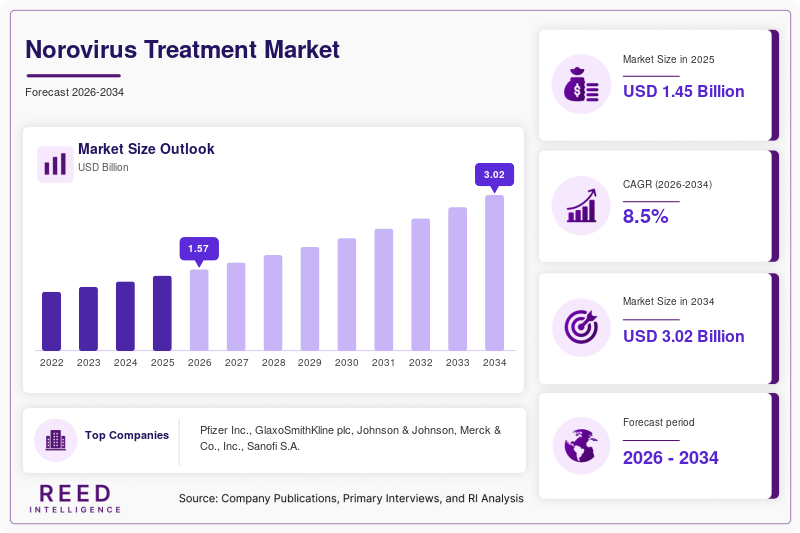
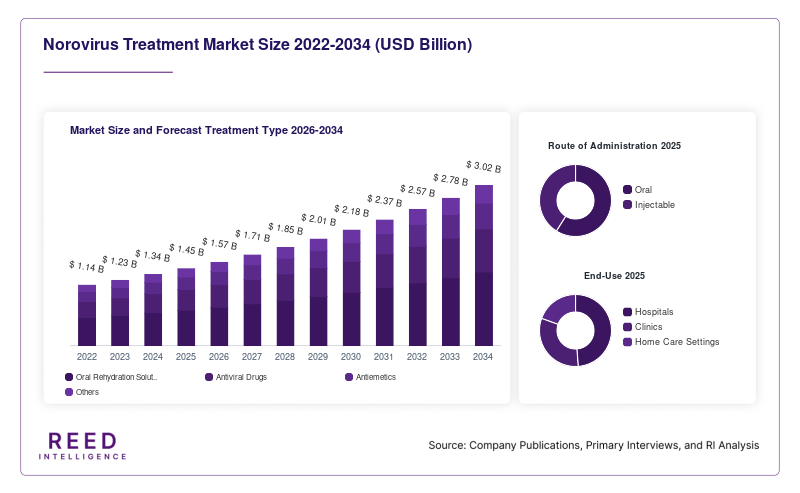
The Norovirus Treatment Market size was valued at approximately USD 1.45 billion in 2026 and is projected to reach USD 2.78 billion by 2034, expanding at a CAGR of 8.5% during the forecast period (2026–2034). The market growth is primarily driven by the increasing incidence of acute gastroenteritis caused by norovirus outbreaks across both developed and emerging economies. Rising awareness regarding hygiene, improved diagnostic capabilities, and expanding access to healthcare infrastructure have collectively supported market expansion.
A major global factor contributing to market growth is the rising frequency of viral outbreaks in densely populated urban environments and institutional settings such as hospitals, schools, and cruise ships. Norovirus infections are highly contagious, and their rapid transmission has increased the demand for effective symptomatic treatments, rehydration therapies, and emerging antiviral interventions. Furthermore, the healthcare sector’s focus on reducing hospital-acquired infections has led to greater investment in preventive and therapeutic solutions.
Key Highlights
- North America dominated the market with a 36.4% share in 2025.
- Asia Pacific is expected to grow at the fastest CAGR of 10.9% during 2026–2034.
- By treatment type, oral rehydration solutions accounted for the largest share of 42.8%, while antiviral drugs are projected to grow at a CAGR of 11.6%.
- By end-use, hospitals led with a 47.2% share, whereas home care settings are expected to expand at a CAGR of 10.8%.
- The United States remained the dominant country, with market values of USD 520 million in 2024 and USD 575 million in 2025.
Market Trends
Rising focus on antiviral drug development
The Norovirus Treatment Market is witnessing a growing focus on the development of targeted antiviral therapies. Traditionally, treatment has been limited to supportive care such as hydration and electrolyte balance. However, pharmaceutical companies and research institutions are investing in drug discovery programs aimed at identifying compounds that directly inhibit norovirus replication. Advances in molecular biology and virology have enabled better understanding of viral mechanisms, facilitating the development of novel therapeutics. Clinical trials for antiviral agents are increasing, and collaborations between biotech firms and academic institutions are accelerating innovation. This trend is expected to reshape the treatment landscape by introducing more effective and targeted solutions over the forecast period.
Increasing adoption of home-based care solutions
Another notable trend in the market is the rising adoption of home-based treatment approaches. Norovirus infections are generally self-limiting, and many patients prefer managing symptoms at home using oral rehydration solutions and over-the-counter medications. The availability of user-friendly healthcare products, coupled with the growth of e-commerce platforms, has made treatment more accessible. Telehealth services have further supported this shift by enabling remote consultations and monitoring. This trend reduces the burden on healthcare facilities while offering cost-effective treatment options for patients. As healthcare systems continue to emphasize outpatient care, the demand for home-based treatment solutions is expected to increase steadily.
Market Drivers
Increasing prevalence of norovirus infections globally
The rising incidence of norovirus infections is a major driver for the Norovirus Treatment Market. Norovirus is one of the leading causes of acute gastroenteritis worldwide, affecting millions of individuals each year. Outbreaks are particularly common in crowded environments such as schools, hospitals, and cruise ships. The high transmissibility of the virus has led to frequent outbreaks, creating sustained demand for treatment solutions. Governments and healthcare organizations are investing in surveillance systems and public health initiatives to control the spread of infections. This has increased awareness and improved diagnosis rates, further contributing to market growth. The continuous occurrence of outbreaks ensures a steady demand for both preventive and therapeutic solutions.
Growth in healthcare infrastructure and accessibility
The expansion of healthcare infrastructure, particularly in emerging economies, is another key factor driving market growth. Improved access to medical facilities, diagnostic tools, and treatment options has enhanced the management of norovirus infections. Governments are investing in healthcare systems to address infectious diseases more effectively, leading to increased availability of treatment products. Additionally, the rise of private healthcare providers and insurance coverage has made treatment more accessible to a larger population. Technological advancements in diagnostics and patient care have also improved treatment outcomes. As healthcare systems continue to evolve, the demand for norovirus treatment solutions is expected to grow significantly.
Market Restraint
Limited availability of targeted therapeutic options
One of the major restraints in the Norovirus Treatment Market is the limited availability of specific antiviral therapies. Currently, most treatments focus on symptom management rather than targeting the virus itself. This limits the effectiveness of treatment, particularly in severe cases or among vulnerable populations such as children and the elderly. The lack of approved antiviral drugs and vaccines presents a significant challenge for healthcare providers. Additionally, the complexity of norovirus biology makes drug development difficult and time-consuming. This has slowed the introduction of new treatment options into the market. The reliance on supportive care also reduces the potential for high-value pharmaceutical products, impacting overall market growth.
Market Opportunities
Development of vaccines for norovirus prevention
The development of vaccines represents a significant opportunity for the Norovirus Treatment Market. Researchers are actively working on vaccine candidates that can provide long-term protection against norovirus infections. Successful vaccine development could reduce the incidence of outbreaks and significantly impact public health. Pharmaceutical companies are investing in clinical trials and collaborations to accelerate vaccine development. The introduction of an effective vaccine would not only enhance disease prevention but also create new revenue streams for market players. Governments and global health organizations are also supporting vaccine research, further boosting opportunities in this segment.
Expansion in emerging markets
Emerging economies present substantial growth opportunities for the Norovirus Treatment Market. Regions such as Asia Pacific, Latin America, and parts of Africa are experiencing improvements in healthcare infrastructure and rising awareness of infectious diseases. Increasing population density and urbanization in these regions contribute to the spread of norovirus infections, creating demand for treatment solutions. Pharmaceutical companies are expanding their presence in these markets through partnerships and distribution networks. The growing middle-class population and increasing healthcare spending further support market expansion. As these regions continue to develop, they are expected to become key contributors to global market growth.
Segmental Analysis
By Treatment Type
The oral rehydration solutions segment dominated the Norovirus Treatment Market in 2024, accounting for approximately 42.8% of the total market share. These solutions are widely used as the first line of treatment for norovirus infections, as they effectively address dehydration caused by vomiting and diarrhea. The accessibility and affordability of oral rehydration products make them a preferred choice among patients and healthcare providers. Additionally, these solutions are available over the counter, further increasing their adoption. Governments and healthcare organizations promote the use of oral rehydration therapy as a cost-effective method for managing gastrointestinal infections, contributing to the segment’s dominance.
The antiviral drugs segment is expected to be the fastest-growing, with a projected CAGR of 11.6% during the forecast period. This growth is driven by ongoing research and development efforts aimed at introducing targeted therapies for norovirus infections. Pharmaceutical companies are investing in clinical trials to develop effective antiviral agents. The increasing focus on precision medicine and advancements in drug discovery technologies are also supporting this growth. As new antiviral drugs receive regulatory approval, their adoption is expected to increase, significantly contributing to market expansion.
By Route of Administration
The oral administration segment held the largest share of the market in 2024, accounting for approximately 55.3% of the total market. Oral medications are widely preferred due to their ease of use and convenience. Patients can administer these treatments at home, reducing the need for hospital visits. The availability of various oral formulations, including tablets, capsules, and liquid solutions, further supports their adoption. Healthcare providers often recommend oral treatments for mild to moderate cases, contributing to the segment’s dominance.
The injectable segment is expected to grow at the fastest CAGR of 10.5% during the forecast period. This growth is driven by the increasing use of intravenous therapies in severe cases of norovirus infection. Hospitalized patients often require rapid rehydration and electrolyte balance, which is effectively achieved through injectable treatments. Advancements in healthcare infrastructure and the availability of skilled medical professionals are also supporting the growth of this segment. As the number of severe cases increases, the demand for injectable treatments is expected to rise.
By End-Use
The hospitals segment dominated the market in 2024, accounting for approximately 47.2% of the total share. Hospitals are the primary centers for diagnosing and treating norovirus infections, particularly severe cases. The availability of advanced medical equipment and skilled healthcare professionals enables effective patient management. Hospitals also play a crucial role in controlling outbreaks through infection prevention measures. The increasing number of hospital admissions due to gastrointestinal infections further supports the growth of this segment.
The home care settings segment is projected to grow at the fastest CAGR of 10.8% during the forecast period. This growth is driven by the increasing preference for home-based treatment, particularly for mild cases. Patients are opting for home care solutions due to their convenience and cost-effectiveness. The availability of over-the-counter medications and telehealth services has further facilitated this shift. As healthcare systems continue to emphasize outpatient care, the demand for home-based treatment solutions is expected to increase significantly.
Regional Analysis
North America
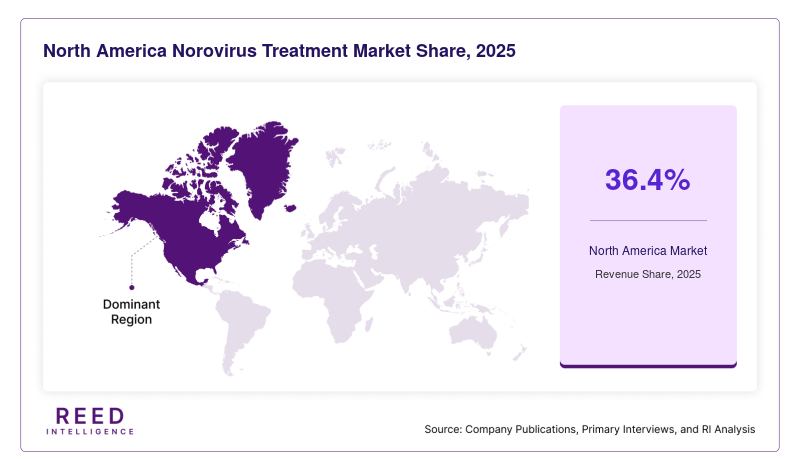
North America held the largest share of the Norovirus Treatment Market in 2025, accounting for approximately 36.4% of the global market. The region is expected to maintain steady growth with a CAGR of 7.8% during the forecast period. The high prevalence of norovirus outbreaks, particularly in healthcare facilities and educational institutions, drives demand for treatment solutions. Advanced healthcare infrastructure and strong government initiatives aimed at infection control further support market growth. The presence of leading pharmaceutical companies also contributes to the region’s dominance.
The United States remains the dominant country in North America, driven by its well-established healthcare system and high awareness levels. A key growth factor in the country is the increasing adoption of advanced diagnostic technologies, which enable early detection and treatment of infections. Additionally, public health campaigns focusing on hygiene and disease prevention have significantly improved patient outcomes and supported market expansion.
Europe
Europe accounted for a significant share of the global market in 2025, with steady growth expected at a CAGR of 7.5% during the forecast period. The region benefits from strong healthcare systems and widespread awareness of infectious diseases. Government regulations and initiatives aimed at controlling hospital-acquired infections have increased the adoption of treatment solutions. Countries in Europe also emphasize preventive healthcare, contributing to market stability.
Germany is the dominant country in the European market, supported by its advanced healthcare infrastructure and strong research capabilities. A unique growth factor in Germany is the increasing investment in pharmaceutical research and development, particularly in antiviral therapies. This has led to the introduction of innovative treatment options and strengthened the country’s position in the market.
Asia Pacific
Asia Pacific is expected to be the fastest-growing region, with a CAGR of 10.9% during the forecast period. The region accounted for a growing share of the global market in 2025 due to increasing population density and rising incidence of infectious diseases. Rapid urbanization and improving healthcare infrastructure are key factors driving market growth. Governments are also investing in healthcare systems to address public health challenges.
China dominates the Asia Pacific market, driven by its large population and expanding healthcare sector. A significant growth factor in the country is the increasing focus on improving sanitation and hygiene standards. Government initiatives aimed at controlling infectious diseases have enhanced awareness and boosted demand for treatment solutions, contributing to market expansion.
Middle East & Africa
The Middle East & Africa region held a smaller share of the global market in 2025 but is expected to grow at a CAGR of 8.2% during the forecast period. The region faces challenges such as limited healthcare infrastructure and lower awareness levels. However, increasing investments in healthcare and rising government initiatives are supporting market growth. The growing burden of infectious diseases has also increased the demand for treatment solutions.
Saudi Arabia is the leading country in this region, driven by its improving healthcare system and government support. A unique growth factor is the increasing focus on healthcare modernization and infrastructure development. The country’s efforts to enhance healthcare accessibility and quality are expected to drive demand for norovirus treatment solutions.
Latin America
Latin America accounted for a moderate share of the global market in 2025 and is expected to grow at a CAGR of 8.0% during the forecast period. The region is characterized by improving healthcare systems and increasing awareness of infectious diseases. Government initiatives aimed at enhancing public health have supported market growth. The rising incidence of gastrointestinal infections also contributes to demand.
Brazil is the dominant country in Latin America, supported by its large population and expanding healthcare sector. A key growth factor is the increasing investment in public healthcare programs. These initiatives aim to improve disease prevention and treatment, driving demand for norovirus treatment solutions and supporting overall market growth.
Competitive Landscape
The Norovirus Treatment Market is moderately fragmented, with several global and regional players competing to expand their market presence. Leading companies are focusing on research and development to introduce innovative treatment solutions, particularly in the area of antiviral drugs and vaccines. Strategic collaborations, partnerships, and mergers are common strategies adopted by market participants to strengthen their portfolios.
One of the leading players in the market is Pfizer Inc., which has been actively involved in research initiatives aimed at developing antiviral therapies. The company recently announced progress in clinical trials for a novel antiviral candidate targeting norovirus infections. Other major players are also investing in expanding their product offerings and geographic presence. The competitive landscape is characterized by continuous innovation and efforts to address the unmet need for effective treatment options.
Key Players
- Pfizer Inc.
- GlaxoSmithKline plc
- Johnson & Johnson
- Merck & Co., Inc.
- Sanofi S.A.
- Bayer AG
- Abbott Laboratories
- Takeda Pharmaceutical Company Limited
- Novartis AG
- AstraZeneca plc
- F. Hoffmann-La Roche Ltd
- Gilead Sciences, Inc.
- Teva Pharmaceutical Industries Ltd
- Sun Pharmaceutical Industries Ltd
- Cipla Limited
Recent Developments
- Pfizer Inc. announced positive early-stage clinical trial results for a new antiviral candidate targeting norovirus infections, indicating potential for future commercialization.
- Takeda Pharmaceutical Company expanded its research collaboration with a biotechnology firm to accelerate vaccine development for norovirus prevention.
- GlaxoSmithKline plc invested in advanced diagnostic technologies to improve early detection and management of viral gastroenteritis, including norovirus infections.
Norovirus Treatment Market Segments
Treatment Type
- Oral Rehydration Solutions
- Antiviral Drugs
- Antiemetics
- Others
Route of Administration
- Oral
- Injectable
End-Use
- Hospitals
- Clinics
- Home Care Settings
By Region
- North America
- Europe
- APAC
- Middle East and Africa
- LATAM