Nrw Smart Leak Management Market Size, Share Demand Report By Component (Hardware, Software, Services), By Technology (Acoustic Leak Detection, Pressure Management, Satellite-Based Detection, Smart Metering), By End-Use (Municipal, Industrial, Commercial) By Region & Segment Forecasts, 2025–2034
USD 3950
Market Overview
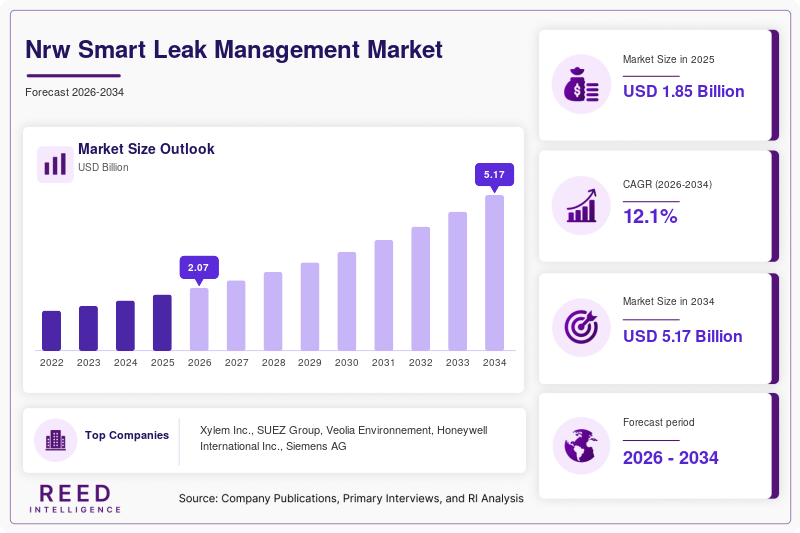
The Nrw Smart Leak Management Market size was valued at approximately USD 1.85 billion in 2025 and is estimated to reach USD 2.12 billion in 2026. With increasing investments in water infrastructure modernization, the market is projected to grow significantly, reaching around USD 5.96 billion by 2034, registering a compound annual growth rate (CAGR) of 12.1% during the forecast period from 2025 to 2034.
One of the primary growth factors is the rising global concern over water scarcity, particularly in urban areas with aging pipeline infrastructure. Governments and municipal utilities are adopting smart leak detection systems to reduce water losses and improve operational efficiency. Another key factor driving growth is the integration of Internet of Things (IoT) technologies, which enable real-time monitoring of pipeline systems, allowing early detection of leaks and reducing repair costs. Additionally, regulatory pressure to reduce water wastage and enhance sustainability practices is encouraging utilities to deploy smart leak management solutions.
Key Highlights
- The Nrw Smart Leak Management Market reached an estimated valuation of USD 1.85 billion in 2025, reflecting steady adoption across municipal and industrial water systems. Increasing investments in infrastructure monitoring and digital water solutions supported this growth trajectory.
- The market is projected to expand significantly, reaching approximately USD 5.96 billion by 2034. This growth is driven by rising demand for efficient water management and continuous technological advancements in leak detection systems.
- The market is expected to grow at a CAGR of 12.1% from 2025 to 2034, indicating strong long-term expansion. Consistent adoption across both developed and emerging economies is contributing to this sustained growth rate.
- The increasing adoption of IoT-enabled leak detection systems is transforming water management practices. These solutions enable real-time monitoring, early leak identification, and improved operational efficiency for utilities.
Market Trends
Integration of AI and Predictive Analytics in Leak Detection
The increasing adoption of artificial intelligence and predictive analytics is shaping the Nrw Smart Leak Management Market. Utilities are transitioning from reactive to proactive leak detection methods by leveraging advanced data analytics platforms. These systems analyze historical and real-time data to identify patterns that indicate potential leaks before they become severe. This trend is improving operational efficiency and reducing water losses significantly. Furthermore, predictive analytics helps utilities prioritize maintenance activities and allocate resources more effectively, resulting in cost savings. As digital transformation accelerates, the integration of AI-driven solutions is expected to become a standard practice across both developed and emerging markets.
Expansion of Smart Water Networks in Urban Infrastructure
The development of smart cities is driving the deployment of smart water networks, which include advanced leak management systems. Urban infrastructure projects are increasingly incorporating sensors, communication networks, and centralized control systems to monitor water distribution in real time. This trend is particularly evident in rapidly urbanizing regions where efficient water management is critical. Smart leak management systems are becoming a core component of these networks, enabling continuous monitoring and quick response to leaks. The growing adoption of cloud-based platforms and remote monitoring capabilities is further enhancing the scalability and effectiveness of these systems, making them suitable for large-scale urban deployments.
Market Drivers
Increasing Water Scarcity and Demand for Efficient Resource Management
The rising global water scarcity is a major driver for the Nrw Smart Leak Management Market. Rapid urbanization, population growth, and climate change are putting pressure on existing water resources. Utilities are facing challenges in maintaining supply-demand balance, making efficient water management essential. Smart leak management systems help reduce non-revenue water losses, which can account for a significant portion of total water supply in many regions. By detecting and addressing leaks promptly, these systems enhance water conservation efforts. Governments and regulatory bodies are also introducing policies to promote efficient water usage, further driving the adoption of smart leak detection technologies across municipalities and industries.
Aging Infrastructure and Need for Modernization
Aging water infrastructure is another critical factor driving market growth. Many regions, particularly in developed economies, rely on decades-old pipeline systems that are prone to leaks and failures. Replacing entire infrastructure networks is often costly and time-consuming, leading utilities to adopt smart leak management solutions as a cost-effective alternative. These technologies enable continuous monitoring and early detection of pipeline issues, reducing maintenance costs and preventing major disruptions. The increasing focus on infrastructure modernization, supported by government funding and investments, is expected to boost the adoption of smart leak management systems in the coming years.
Market Restraint
High Initial Investment and Implementation Complexity
One of the primary restraints in the Nrw Smart Leak Management Market is the high initial investment required for deploying advanced leak detection systems. The implementation of IoT sensors, communication networks, and data analytics platforms involves significant capital expenditure, which can be a barrier for small and medium-sized utilities. Additionally, integrating these systems with existing infrastructure can be complex and may require technical expertise and operational changes. In developing regions, budget constraints and lack of technical awareness further limit adoption. For example, municipalities with limited funding may prioritize basic water supply improvements over advanced leak management solutions, slowing market penetration. Despite long-term cost savings, the upfront investment and complexity remain key challenges for widespread adoption.
Market Opportunities
Growth in Smart City Initiatives
The increasing number of smart city projects worldwide presents a significant opportunity for the Nrw Smart Leak Management Market. Governments are investing heavily in digital infrastructure to improve urban living standards, and water management is a critical component of these initiatives. Smart leak detection systems are being integrated into broader smart water networks, enabling efficient monitoring and management of water resources. These projects often involve large-scale deployments, providing substantial growth opportunities for solution providers. Additionally, the use of cloud-based platforms and centralized control systems enhances the scalability of leak management solutions, making them suitable for expanding urban environments.
Expansion in Emerging Markets
Emerging markets offer strong growth potential due to increasing investments in water infrastructure and rising awareness about water conservation. Countries in Asia Pacific, Latin America, and Africa are facing significant challenges related to water loss and inefficient distribution systems. Governments and international organizations are funding projects to improve water management, creating opportunities for smart leak management solutions. The adoption of cost-effective and scalable technologies is expected to drive market growth in these regions. Furthermore, partnerships between technology providers and local utilities are facilitating knowledge transfer and accelerating the deployment of advanced leak detection systems.
Segmental Analysis
By Component
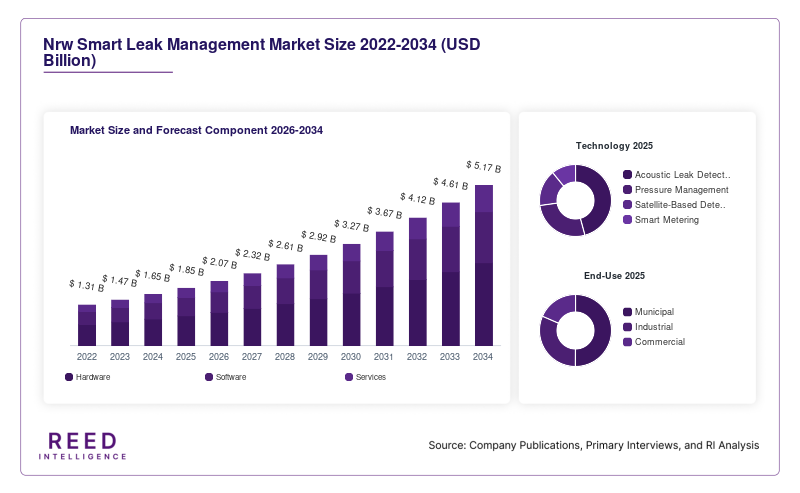
The hardware segment dominated the Nrw Smart Leak Management Market in 2024, accounting for approximately 45% of the total share. This segment includes sensors, meters, and monitoring devices that form the backbone of leak detection systems. The widespread deployment of IoT-enabled sensors across water distribution networks has driven the growth of this segment. Utilities rely on these devices for real-time data collection, enabling early detection of leaks and reducing water losses. The increasing demand for accurate and reliable monitoring solutions is expected to sustain the dominance of the hardware segment in the coming years.
The software segment is expected to be the fastest-growing, with a projected CAGR of 14.6% during the forecast period. Advanced analytics platforms and cloud-based solutions are gaining traction as utilities seek to enhance data-driven decision-making. These solutions provide actionable insights by analyzing large volumes of data collected from sensors. The growing adoption of artificial intelligence and machine learning technologies is further driving the demand for software solutions, enabling predictive maintenance and improving overall system efficiency.
By Technology
Acoustic leak detection technology held the largest market share in 2024, accounting for around 40%. This technology uses sound waves to detect leaks in pipelines, making it highly effective for identifying small and hidden leaks. Its reliability and cost-effectiveness have made it a preferred choice for utilities worldwide. The increasing deployment of acoustic sensors in urban water networks is contributing to the growth of this segment.
Satellite-based leak detection is expected to be the fastest-growing technology segment, with a CAGR of 15.2%. This technology uses remote sensing to identify leaks over large areas, making it suitable for extensive pipeline networks. The ability to detect leaks without physical access to pipelines is a key advantage, particularly in remote or difficult-to-access locations. The growing demand for efficient and scalable solutions is driving the adoption of satellite-based technologies in the market.
By End-Use
The municipal segment dominated the market in 2024, accounting for approximately 55% of the total share. Municipal utilities are the primary users of smart leak management systems, as they manage large water distribution networks. The increasing focus on reducing non-revenue water losses and improving operational efficiency is driving the adoption of these solutions in the municipal sector. Government initiatives and funding programs are further supporting the growth of this segment.
The industrial segment is expected to grow at the fastest rate, with a CAGR of 13.8% during the forecast period. Industries are increasingly adopting smart leak management solutions to optimize water usage and reduce operational costs. The growing emphasis on sustainability and regulatory compliance is encouraging industrial users to invest in advanced leak detection technologies. The integration of IoT and analytics solutions is enhancing the efficiency of water management in industrial applications.
Regional Analysis
North America
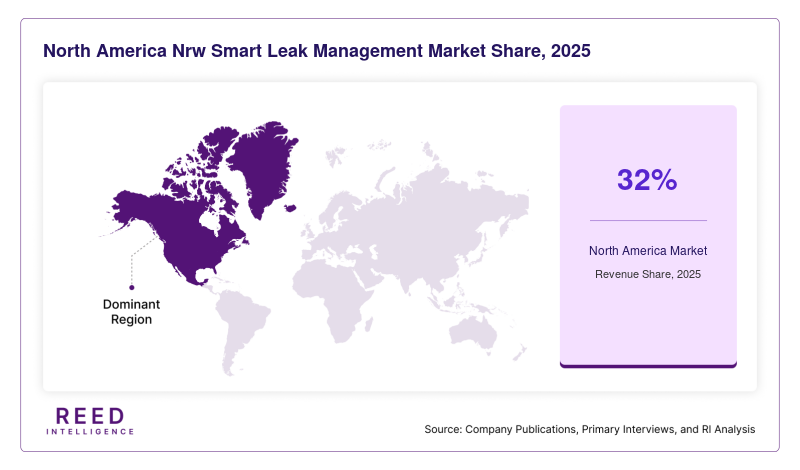
North America accounted for a significant share of the Nrw Smart Leak Management Market in 2025, contributing approximately 32% of the global revenue. The region is expected to maintain steady growth with a CAGR of around 10.8% during the forecast period. The presence of advanced infrastructure and early adoption of digital technologies are key factors supporting market growth. Utilities in the region are increasingly investing in smart leak detection systems to reduce operational costs and improve efficiency.
The United States dominates the regional market due to its extensive water distribution networks and focus on infrastructure modernization. A key growth factor is the increasing investment in upgrading aging pipelines, which are prone to leaks and failures. Government initiatives and funding programs aimed at improving water management are further driving the adoption of smart leak management solutions across the country.
Europe
Europe held approximately 27% of the market share in 2025 and is projected to grow at a CAGR of 11.2% over the forecast period. The region’s strong regulatory framework and focus on sustainability are key drivers of market growth. European countries are actively implementing measures to reduce water wastage and improve efficiency in water distribution systems.
Germany is a leading market in Europe, driven by its advanced industrial base and commitment to environmental sustainability. A unique growth factor in the region is the strict regulatory requirements for water conservation, which encourage utilities to adopt advanced leak detection technologies. The increasing focus on smart city development also contributes to market expansion.
Asia Pacific
Asia Pacific accounted for around 22% of the market share in 2025 and is expected to witness the fastest growth with a CAGR of 14.3%. Rapid urbanization and increasing population are driving the demand for efficient water management solutions in the region. Governments are investing heavily in infrastructure development, creating opportunities for smart leak management systems.
China dominates the regional market due to its large population and extensive urban infrastructure projects. A key growth factor is the government’s focus on reducing water losses and improving distribution efficiency. The adoption of smart technologies in water management is increasing, supported by initiatives aimed at developing sustainable urban environments.
Middle East & Africa
The Middle East & Africa region held approximately 11% of the market share in 2025 and is expected to grow at a CAGR of 12.7%. Water scarcity is a major challenge in the region, driving the adoption of advanced leak management solutions. Governments are investing in technologies that help conserve water and improve distribution efficiency.
Saudi Arabia is a dominant market due to its focus on water conservation and infrastructure development. A unique growth factor is the region’s reliance on desalination, which makes efficient water management critical. Smart leak detection systems help minimize losses and optimize the use of available resources, supporting market growth.
Latin America
Latin America accounted for about 8% of the market share in 2025 and is projected to grow at a CAGR of 11.5%. The region is gradually adopting smart water management solutions to address challenges related to water loss and infrastructure inefficiencies. Increasing investments in water infrastructure are supporting market growth.
Brazil is the leading country in the region, driven by its large urban population and need for efficient water distribution systems. A key growth factor is the increasing focus on reducing non-revenue water losses, which remain high in many parts of the country. Government initiatives and partnerships with technology providers are facilitating the adoption of smart leak management solutions.
Competitive Landscape
The Nrw Smart Leak Management Market is moderately competitive, with several global and regional players offering a wide range of solutions. Companies are focusing on innovation, strategic partnerships, and mergers to strengthen their market position. The competitive landscape is characterized by the presence of technology providers, infrastructure companies, and specialized solution vendors.
One of the leading players in the market is Xylem Inc., which has established a strong presence through its comprehensive portfolio of water management solutions. The company recently introduced an advanced AI-based leak detection platform to enhance predictive capabilities. Other major players are also investing in research and development to introduce innovative products and expand their market reach. Collaborations with municipal utilities and participation in smart city projects are common strategies adopted by market participants.
Key Players
- Xylem Inc.
- SUEZ Group
- Veolia Environnement
- Honeywell International Inc.
- Siemens AG
- Schneider Electric
- ABB Ltd.
- IBM Corporation
- Oracle Corporation
- Itron Inc.
- Badger Meter Inc.
- Mueller Water Products
- Trimble Inc.
- NEC Corporation
- Huawei Technologies
Recent Developments
- In 2024, a leading market player launched an AI-powered leak detection platform to improve predictive maintenance capabilities.
- In 2023, a major utility company partnered with a technology provider to deploy smart leak management systems across urban water networks.
- In 2024, a global firm expanded its product portfolio by introducing satellite-based leak detection solutions for large-scale pipeline monitoring.
Nrw Smart Leak Management Market Segments
Component
- Hardware
- Software
- Services
Technology
- Acoustic Leak Detection
- Pressure Management
- Satellite-Based Detection
- Smart Metering
End-Use
- Municipal
- Industrial
- Commercial
By Region
- North America
- Europe
- APAC
- Middle East and Africa
- LATAM