Nursery Planters Pot Market Size, Share, Demand Report By Material Type (Plastic Planters, Ceramic Planters, Metal Planters, Fiberglass Planters, Biodegradable Planters, Wooden Planters), By Application (Commercial Nurseries, Indoor Gardening, Outdoor Landscaping, Greenhouse Cultivation, Residential Gardening), By Distribution Channel (Offline Retail, Online Retail) By Region & Segment Forecasts, 2026–2034
USD 3950
Market Overview
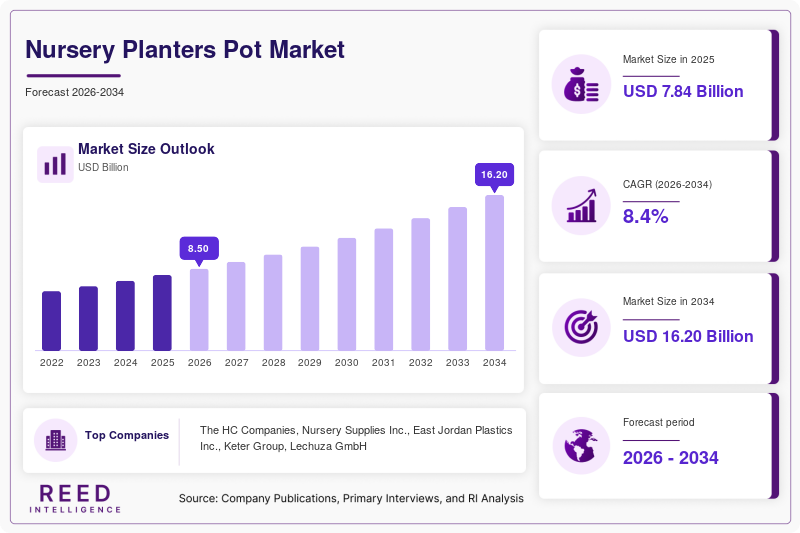
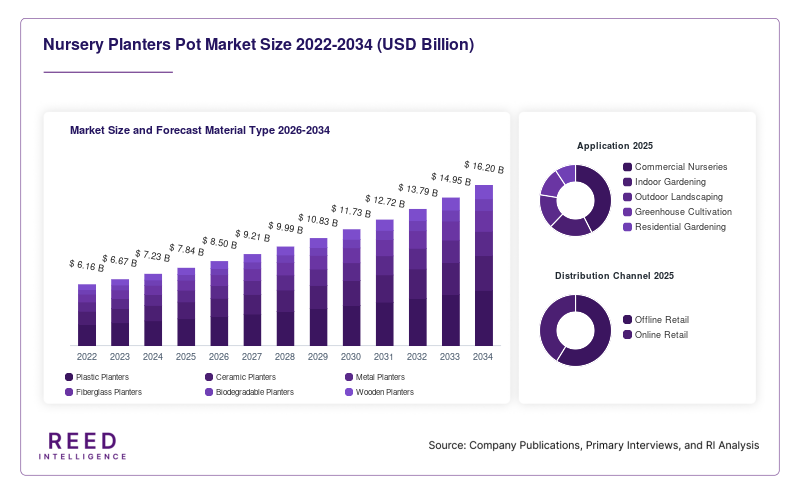
The global Nursery Planters Pot Market size was valued at USD 7.84 billion in 2026 and is projected to reach USD 14.92 billion by 2034, expanding at a CAGR of 8.4% during the forecast period from 2026 to 2034. The market continues to witness stable expansion due to increasing consumer interest in home gardening, indoor landscaping, commercial nurseries, and decorative horticulture products. Rapid urbanization and rising residential construction activity have encouraged consumers to adopt compact gardening solutions, thereby increasing demand for nursery planters and decorative planting containers across residential and commercial sectors.
A major factor supporting market growth is the global rise in sustainable gardening practices. Consumers are increasingly purchasing reusable plastic pots, biodegradable planters, ceramic containers, and lightweight fiber pots to support eco-conscious landscaping activities. Governments and urban municipalities are also investing in green infrastructure programs, rooftop gardens, and smart city landscaping projects, which continue to generate demand for large-volume nursery containers. In addition, online retail platforms have improved product accessibility by offering customizable planter designs, premium aesthetics, and bulk purchasing options for commercial users.
Key Highlights
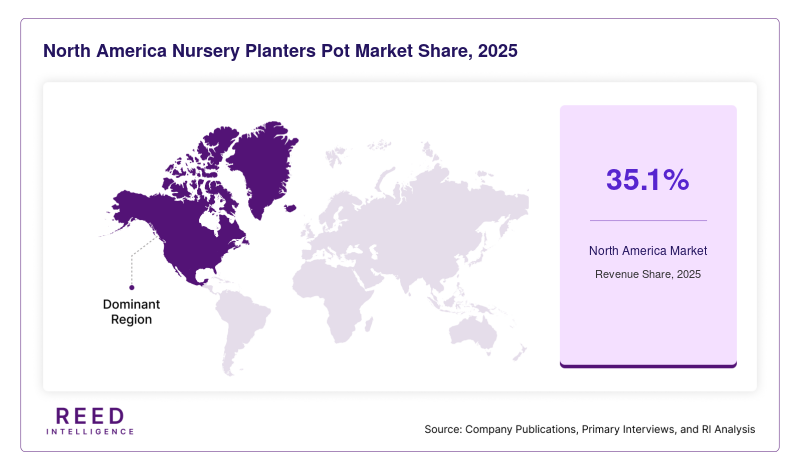
- North America dominated the market with a 35.1% share in 2025.
- Asia Pacific is expected to grow at the fastest CAGR of 10.8% during 2026–2034.
- By material type, plastic planters accounted for the largest share of 42.6%.
- while biodegradable pots are projected to grow at a CAGR of 11.7%.
- By application, commercial nurseries led with a 46.3% share.
- whereas indoor gardening is expected to expand at a CAGR of 10.9%.
- The United States remained the dominant country, with market values of USD 1.42 billion in 2024 and USD 1.55 billion in 2025.
Market Trends
Growing Adoption of Sustainable and Biodegradable Planters
The Nursery Planters Pot Market is experiencing a notable transition toward sustainable and biodegradable planter products. Consumers are increasingly selecting eco-friendly pots manufactured from coconut fiber, bamboo, recycled paper pulp, rice husk, and biodegradable polymers. Environmental concerns associated with plastic waste disposal have encouraged manufacturers to invest in compostable materials and recyclable production technologies. Retail garden centers and commercial nurseries are also promoting environmentally responsible product lines to align with consumer preferences for sustainable gardening solutions. This trend is particularly visible in urban residential markets where indoor gardening and balcony plantations are becoming common. Several companies are introducing reusable and lightweight planter designs that improve durability while reducing environmental impact. Growing awareness regarding carbon reduction and green living practices is expected to continue accelerating demand for sustainable nursery planter products across developed and emerging economies.
Expansion of Smart Gardening and Decorative Indoor Landscaping
The increasing popularity of smart gardening and decorative indoor landscaping is significantly influencing the Nursery Planters Pot Market. Consumers are integrating plants into residential interiors, office spaces, restaurants, and hospitality environments to improve aesthetics and indoor air quality. This has increased demand for premium ceramic pots, self-watering planters, modular vertical gardening containers, and technologically integrated planter systems. Manufacturers are launching products equipped with moisture sensors, automated irrigation systems, and lightweight indoor designs to meet changing consumer expectations. The growth of social media home décor trends and online gardening communities has further stimulated interest in visually appealing planters. In addition, rising disposable income in urban populations has encouraged spending on premium decorative gardening accessories. The trend is creating opportunities for customized planter designs and innovative materials that combine functionality with modern interior styling requirements.
Market Drivers
Rising Urban Gardening and Residential Landscaping Activities
Rapid urbanization and shrinking outdoor spaces are driving demand for compact gardening solutions, directly supporting growth in the Nursery Planters Pot Market. Consumers living in apartments and urban residential complexes increasingly rely on planters for balcony gardens, terrace landscaping, and indoor decorative planting. The growing popularity of home gardening as a recreational activity has encouraged purchases of lightweight, aesthetically appealing, and easy-to-maintain nursery pots. Residential landscaping projects are also increasing across suburban housing developments, supporting demand for decorative containers and large outdoor planters. Furthermore, rising awareness regarding the mental health benefits associated with gardening activities has strengthened consumer engagement in horticulture practices. Manufacturers are responding by expanding product portfolios that include stackable pots, hanging planters, and space-efficient gardening systems. The continued expansion of urban gardening culture is expected to remain a major growth driver during the forecast period.
Increasing Commercial Nursery and Greenhouse Production
Commercial nurseries and greenhouse cultivation facilities are significantly contributing to market expansion. Large-scale plant production operations require durable and cost-efficient planter pots for seed propagation, plant transportation, and retail display purposes. Growing global demand for ornamental plants, fruit saplings, flowering shrubs, and landscaping plants has encouraged nursery operators to increase production capacity. As a result, purchases of plastic nursery containers, propagation trays, and biodegradable pots have accelerated across commercial horticulture facilities. Government support for agricultural diversification and greenhouse farming in several countries is further supporting industry demand. In addition, the rise of export-oriented floriculture industries has created steady requirements for standardized planter products that improve plant handling efficiency and reduce transportation damage. This ongoing commercialization of horticulture production is expected to sustain demand for nursery planter pots across multiple regional markets.
Market Restraint
Volatility in Raw Material Prices and Environmental Regulations
Fluctuating raw material prices remain a major challenge for companies operating in the Nursery Planters Pot Market. Plastic resins, ceramics, fiberglass, metal components, and biodegradable raw materials are subject to frequent price volatility due to supply chain disruptions, energy cost fluctuations, and changing trade policies. Manufacturers often face pressure on profit margins when production costs increase rapidly while retail pricing remains competitive. In addition, several countries are implementing strict environmental regulations related to single-use plastics and non-recyclable packaging materials. Compliance with sustainability standards requires substantial investments in product redesign, recycling infrastructure, and eco-friendly manufacturing technologies. Small and medium-sized manufacturers may struggle to adapt to these regulatory transitions because of limited financial resources. For example, restrictions on conventional plastic products in European countries have compelled regional manufacturers to accelerate adoption of biodegradable alternatives, increasing operational costs and creating temporary supply imbalances. These factors can slow production expansion and limit market growth in price-sensitive regions.
Market Opportunities
Expansion of E-Commerce Distribution Channels
The rapid growth of e-commerce platforms presents strong opportunities for the Nursery Planters Pot Market. Consumers increasingly prefer online purchasing channels because they provide wider product selection, convenient home delivery, and competitive pricing options. Online retailers are offering customized planters, premium decorative collections, and bundled gardening kits that appeal to both residential and commercial customers. Digital marketing strategies and social media promotions are helping manufacturers strengthen brand visibility and consumer engagement. In addition, online platforms enable smaller regional manufacturers to access international markets without extensive physical distribution infrastructure. The increasing popularity of direct-to-consumer sales models is also improving profit margins and customer retention. As internet penetration and digital payment adoption continue to rise globally, online sales channels are expected to create substantial long-term growth opportunities for planter manufacturers and gardening product suppliers.
Growing Demand from Hospitality and Commercial Infrastructure Projects
Commercial infrastructure development is generating favorable growth opportunities for the Nursery Planters Pot Market. Hotels, shopping centers, restaurants, corporate offices, airports, and public recreational facilities are increasingly integrating decorative plants into architectural designs and landscaping projects. This trend has accelerated demand for premium large-sized planters, decorative ceramic pots, and weather-resistant outdoor containers. Hospitality businesses are investing in visually appealing indoor greenery solutions to improve customer experiences and enhance brand identity. In addition, governments are promoting urban beautification programs and public green infrastructure projects, further increasing procurement of commercial-grade planters. Manufacturers that offer customized designs, lightweight materials, and durable outdoor products are expected to benefit from rising institutional demand. The growing integration of sustainable landscaping into commercial construction projects is likely to create additional revenue opportunities throughout the forecast period.
Segmental Analysis
By Material Type
Plastic planters accounted for the largest share of the Nursery Planters Pot Market in 2024 due to their affordability, lightweight construction, and durability. These products are widely used across commercial nurseries, greenhouse operations, residential gardening, and retail plant distribution channels. Plastic nursery pots are available in multiple sizes, colors, and shapes, making them suitable for diverse horticultural applications. Commercial growers prefer plastic containers because they are resistant to moisture damage and easy to transport in bulk quantities. In addition, advancements in recyclable plastic manufacturing technologies have improved product sustainability and extended usage life. Strong availability through online and offline retail channels further supports segment dominance. The combination of low production costs and operational convenience continues to maintain the leading position of plastic planters within the global market.
Biodegradable pots are projected to register the fastest CAGR of 11.7% during the forecast period due to increasing environmental awareness and regulatory pressure on conventional plastic products. Consumers and commercial nursery operators are increasingly adopting sustainable alternatives manufactured from coconut coir, bamboo fiber, rice husk, and recycled paper materials. These products reduce transplant shock and naturally decompose into the soil, making them highly suitable for environmentally conscious horticulture practices. Government initiatives promoting sustainable agriculture and waste reduction are further accelerating product adoption. Manufacturers are investing in research and development activities to improve the durability and moisture resistance of biodegradable materials. Rising demand for eco-friendly gardening solutions across Europe, North America, and Asia Pacific is expected to significantly strengthen segment growth throughout the forecast period.
By Application
Commercial nurseries represented the dominant application segment in 2024 with a substantial share of the global Nursery Planters Pot Market. Large-scale plant cultivation operations require extensive use of nursery containers for propagation, transportation, retail display, and greenhouse management purposes. The expansion of floriculture industries, ornamental plant cultivation, and landscaping services continues to increase procurement of durable planter products. Commercial nursery operators prefer stackable and reusable pots that improve operational efficiency while minimizing transportation costs. Demand for standardized planter sizes is also rising because of automation trends in greenhouse production systems. In addition, increasing exports of flowers, decorative plants, and fruit saplings are supporting stable consumption of nursery planter containers across international horticulture supply chains. The segment is expected to maintain strong market presence due to continued expansion of commercial plant production activities worldwide.
Indoor gardening is anticipated to witness the fastest CAGR of 10.9% during the forecast period due to rising consumer interest in home décor and wellness-oriented lifestyles. Urban consumers increasingly integrate plants into living rooms, kitchens, office spaces, and balconies to improve aesthetics and indoor air quality. This trend has accelerated demand for decorative ceramic planters, hanging pots, self-watering containers, and compact indoor gardening systems. Social media influence and online home improvement content are encouraging consumers to experiment with decorative planting arrangements and personalized interior landscaping concepts. Manufacturers are responding by introducing premium designs with modern textures, lightweight materials, and multifunctional features. Increasing disposable income and growing awareness regarding the psychological benefits of indoor plants are expected to continue driving growth in the indoor gardening application segment.
By Distribution Channel
Offline retail channels held the dominant share of the Nursery Planters Pot Market in 2024 due to strong consumer preference for physical product inspection before purchase. Garden centers, home improvement stores, supermarkets, and specialized horticulture retailers continue to generate substantial sales volumes for nursery planters and gardening accessories. Consumers often prefer visiting retail stores to compare planter sizes, textures, colors, and material quality directly before making purchasing decisions. Commercial nursery operators also rely heavily on bulk procurement through offline distributors because of immediate product availability and logistical convenience. In addition, retail stores frequently provide gardening consultation services and customized landscaping recommendations that support customer engagement. The extensive presence of established retail chains across North America and Europe continues to strengthen the dominance of offline distribution channels in the global market.
Online distribution channels are expected to expand at the fastest CAGR of 12.1% during the forecast period owing to increasing digital commerce adoption and changing consumer shopping behavior. E-commerce platforms offer broad product selections, competitive pricing, and convenient home delivery options that attract both residential and commercial buyers. Online channels are particularly beneficial for premium decorative planters and customized gardening products that may not be widely available in physical stores. Digital marketing campaigns, influencer promotions, and gardening tutorial content are also contributing to rising online product visibility. Manufacturers are increasingly establishing direct-to-consumer sales platforms to strengthen customer relationships and improve profit margins. The growing integration of mobile commerce, digital payment systems, and personalized online shopping experiences is expected to significantly accelerate growth within the online distribution segment.
Regional Analysis
North America
North America accounted for 35.1% of the global Nursery Planters Pot Market share in 2025 and continues to maintain a significant position due to widespread consumer participation in residential gardening activities. The region is projected to expand at a CAGR of 7.9% during the forecast period. High consumer spending on home décor products, landscaping projects, and premium gardening accessories supports market growth across the United States and Canada. The presence of established horticulture suppliers and advanced retail distribution networks further contributes to consistent product demand.
The United States remains the dominant country in the regional market due to strong demand for indoor plants and decorative landscaping products. A unique growth factor supporting the country is the increasing adoption of smart home gardening systems integrated with self-watering planter technologies. Consumers are investing in technologically enhanced gardening products that reduce maintenance requirements while improving aesthetic appeal. The expansion of commercial greenhouse operations and large-scale retail garden centers also supports continuous demand for nursery planter products throughout the country.
Europe
Europe represented a considerable share of the Nursery Planters Pot Market in 2025 and is anticipated to grow at a CAGR of 7.4% during 2026–2034. Strong environmental awareness and sustainable gardening practices continue to influence regional demand patterns. Consumers increasingly prefer recyclable and biodegradable planter materials due to strict environmental policies related to plastic usage. The region also benefits from a well-established ornamental horticulture industry that supports stable purchases of nursery containers across residential and commercial applications.
Germany remains the dominant country within the European market because of its advanced horticulture sector and strong consumer interest in urban gardening activities. A unique factor supporting growth is the increasing adoption of green building concepts across commercial and residential construction projects. Landscape architects and developers are integrating decorative planters into sustainable infrastructure designs, increasing demand for aesthetically appealing and environmentally friendly planter products. Rising participation in balcony gardening and indoor plant decoration is also strengthening market expansion.
Asia Pacific
Asia Pacific is projected to register the fastest CAGR of 10.8% during the forecast period due to rapid urbanization, rising disposable income, and expanding residential construction activities. The regional Nursery Planters Pot Market is benefiting from increasing consumer interest in indoor gardening and decorative landscaping products. Growing awareness regarding environmental sustainability and healthy living practices is encouraging urban households to adopt home gardening solutions. Expanding e-commerce penetration has also improved accessibility to affordable and premium planter products across emerging economies.
China dominates the Asia Pacific market owing to its large manufacturing base and growing horticulture industry. A major growth factor in the country is the increasing development of smart cities and urban green infrastructure projects. Municipal authorities and commercial developers are investing heavily in landscaping and decorative plantation programs to improve environmental quality and urban aesthetics. In addition, rising exports of ornamental plants and gardening accessories are encouraging local manufacturers to expand planter production capacity across domestic and international markets.
Middle East & Africa
The Middle East & Africa Nursery Planters Pot Market is witnessing gradual expansion and is expected to grow at a CAGR of 6.8% through 2034. Increasing investments in tourism infrastructure, luxury hospitality projects, and urban beautification initiatives are supporting regional demand for decorative planter products. Countries within the Gulf region are increasingly integrating greenery into commercial spaces, shopping centers, and public recreational facilities to improve urban sustainability. Demand for weather-resistant and lightweight outdoor planters is particularly strong in arid climatic conditions.
The United Arab Emirates remains the leading country in the regional market due to extensive landscaping projects and commercial infrastructure development. A unique growth factor supporting the country is the government’s emphasis on urban sustainability and smart city initiatives. Large-scale real estate projects and tourism-oriented infrastructure developments frequently incorporate decorative greenery and outdoor plantation systems. This trend is increasing procurement of premium nursery planters designed for both functional and decorative landscaping purposes.
Latin America
Latin America continues to demonstrate steady growth in the Nursery Planters Pot Market and is forecast to expand at a CAGR of 7.1% during the study period. Growing consumer awareness regarding home gardening, increasing residential construction activity, and expansion of commercial horticulture operations are contributing to regional market development. Demand for affordable plastic nursery containers and decorative ceramic pots remains strong across urban residential sectors. Local manufacturers are also benefiting from improving retail distribution networks and expanding online gardening product sales.
Brazil dominates the Latin American market because of its large agricultural sector and favorable climatic conditions for ornamental plant cultivation. A unique growth factor driving the country is the increasing popularity of urban landscaping and residential garden renovation projects. Consumers are investing in decorative gardening products to improve outdoor living spaces and apartment balconies. The expansion of commercial flower cultivation and landscaping services is also contributing to rising demand for nursery planter pots throughout the country.
Competitive Landscape
The Nursery Planters Pot Market remains moderately fragmented with the presence of international manufacturers, regional suppliers, and specialized decorative planter producers. Companies are focusing on product innovation, sustainable material development, lightweight construction, and premium aesthetics to strengthen competitive positioning. Strategic partnerships with retail garden centers, commercial nurseries, and online distribution platforms are becoming increasingly important for expanding market reach.
The HC Companies continues to maintain a leading position in the market due to its broad product portfolio, strong distribution network, and consistent investment in recyclable planter technologies. The company recently expanded its eco-friendly product range by introducing recycled resin nursery containers designed for commercial greenhouse operations. Other major participants are also emphasizing biodegradable product development and automated manufacturing processes to improve production efficiency and sustainability performance.
Manufacturers are increasingly adopting digital marketing strategies and customized product offerings to attract residential consumers seeking decorative gardening solutions. Competitive intensity is expected to increase further as companies invest in sustainable materials, modern planter designs, and smart gardening technologies to address changing consumer preferences and environmental regulations.
Key Players
- The HC Companies
- Nursery Supplies Inc.
- East Jordan Plastics Inc.
- Keter Group
- Lechuza GmbH
- Scheurich GmbH
- Landmark Plastic Corporation
- Elho Group
- Planters Unlimited
- Pacific Home and Garden
- Crescent Garden
- Southern Patio
- Bloem LLC
- Pennington Pottery
- T.O. Plastics Inc.
Recent Developments
- The HC Companies introduced a recycled resin nursery planter collection in 2025 aimed at reducing industrial plastic waste within commercial horticulture operations.
- Elho Group expanded its sustainable planter manufacturing facility in Europe to increase production capacity for biodegradable and recycled gardening products in 2024.
- Keter Group launched a modular self-watering planter series designed for smart indoor gardening applications across residential and commercial markets in 2025.
Nursery Planters Pot Market Segments
Material Type
- Plastic Planters
- Ceramic Planters
- Metal Planters
- Fiberglass Planters
- Biodegradable Planters
- Wooden Planters
Application
- Commercial Nurseries
- Indoor Gardening
- Outdoor Landscaping
- Greenhouse Cultivation
- Residential Gardening
Distribution Channel
- Offline Retail
- Online Retail
By Region
- North America
- Europe
- APAC
- Middle East and Africa
- LATAM