Obliterative Bronchiolitis Market Size, Share Demand Report By Treatment Type (Immunosuppressive Therapy, Corticosteroids, Biologics, Others), By Diagnosis (Imaging, Pulmonary Function Tests, Biopsy), By End User (Hospitals, Specialty Clinics, Research Institutes), By Distribution Channel (Hospital Pharmacies, Retail Pharmacies, Online Pharmacies), By Region & Segment Forecasts, 2026–2034
USD 3950
Market Overview
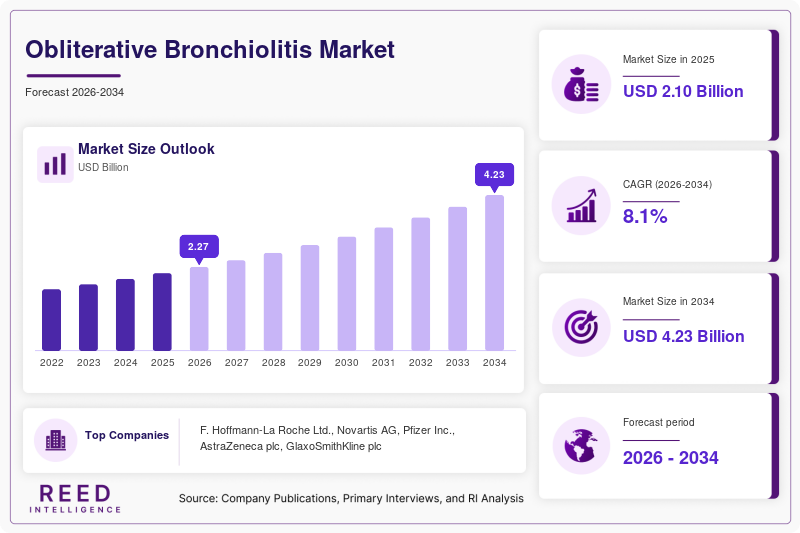
The global Obliterative Bronchiolitis Market size was valued at approximately USD 2.1 billion in 2026 and is projected to reach USD 3.9 billion by 2034, expanding at a CAGR of 8.1% during the forecast period (2026–2034). Obliterative bronchiolitis, a rare but severe chronic lung condition characterized by inflammation and fibrosis of the small airways, has gained increasing clinical attention due to its association with lung transplants, autoimmune diseases, and environmental exposure to toxic fumes.
A key global factor supporting the growth of the Obliterative Bronchiolitis Market is the rising prevalence of respiratory complications linked to industrial pollution and occupational hazards. Increased awareness among healthcare professionals and improved diagnostic protocols have also contributed to early detection, thereby driving treatment demand.
Key Highlights:
- North America dominated the market with a 38.5% share in 2025, while Asia Pacific is expected to register the fastest CAGR of 9.6% during the forecast period.
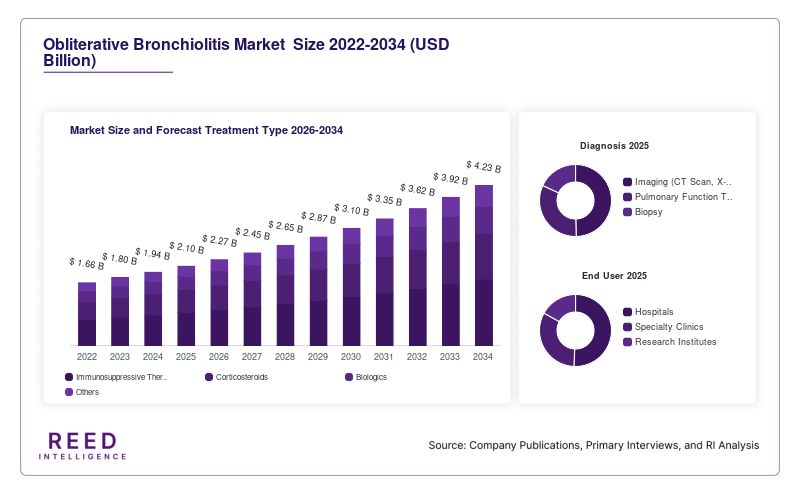
- By treatment type, immunosuppressive therapy accounted for the largest share (41.2%) in 2025, whereas biologics are projected to grow at the fastest CAGR of 10.4%.
- Among end users, hospitals led with a 52.6% share in 2025, while specialty clinics are expected to grow at a CAGR of 9.1%.
- The U.S. remained the dominant country, with market values estimated at USD 680 million in 2024 and USD 720 million in 2025.
Market Trends
Increasing Adoption of Targeted Biologic Therapies
The Obliterative Bronchiolitis Market is witnessing a gradual shift toward targeted biologic therapies. These therapies are designed to modulate specific immune pathways involved in airway inflammation and fibrosis. With growing clinical evidence supporting their efficacy, biologics are becoming an important treatment alternative for patients unresponsive to conventional therapies. Pharmaceutical companies are investing in pipeline development, focusing on monoclonal antibodies and cytokine inhibitors that offer improved safety profiles and reduced systemic side effects.
Advancements in Diagnostic Technologies
Another prominent trend shaping the Obliterative Bronchiolitis Market is the advancement in diagnostic tools, including high-resolution computed tomography (HRCT) and pulmonary function testing innovations. These technologies allow clinicians to detect early-stage disease progression with greater accuracy. Integration of artificial intelligence in imaging analysis is also enhancing diagnostic precision, enabling timely interventions. Improved diagnostics are playing a key role in expanding the patient pool and facilitating personalized treatment strategies.
Market Drivers
Rising Incidence of Post-Transplant Complications
The increasing number of lung and hematopoietic stem cell transplants globally has significantly contributed to the growth of the Obliterative Bronchiolitis Market. Obliterative bronchiolitis is a common complication following such procedures, particularly in chronic graft-versus-host disease (GVHD). As transplant success rates improve and patient survival increases, the demand for long-term management of associated complications is also rising, thereby driving the market.
Growing Awareness and Early Diagnosis
Enhanced awareness among healthcare providers and patients regarding chronic respiratory conditions has led to earlier diagnosis and intervention. Medical education programs and clinical guidelines are emphasizing the importance of recognizing symptoms such as persistent cough and breathlessness. Early diagnosis improves treatment outcomes and increases the demand for therapeutic solutions, positively influencing the Obliterative Bronchiolitis Market growth.
Market Restraint
High Cost of Treatment and Limited Accessibility
One of the major challenges in the Obliterative Bronchiolitis Market is the high cost associated with advanced therapies, including biologics and lung transplantation procedures. These treatments require significant financial resources and are often not accessible in low- and middle-income regions. Additionally, long-term management involves continuous medication, monitoring, and supportive care, further increasing the financial burden on patients. Limited reimbursement policies and lack of specialized healthcare infrastructure in developing regions also restrict market growth. This disparity in access to treatment continues to pose a barrier to widespread adoption of advanced therapeutic options.
Market Opportunities
Expansion of Clinical Research and Drug Development
The growing focus on research and development presents significant opportunities in the Obliterative Bronchiolitis Market. Pharmaceutical companies are increasingly investing in clinical trials to explore new therapeutic pathways. Emerging treatments targeting fibrotic mechanisms and immune modulation are expected to create new revenue streams. Collaborations between academic institutions and industry players are further accelerating innovation.
Growth in Emerging Markets
Developing regions, particularly in Asia Pacific and Latin America, offer substantial growth opportunities due to improving healthcare infrastructure and rising healthcare expenditure. Governments are investing in advanced medical facilities and promoting early diagnosis of chronic diseases. As awareness increases and access to healthcare improves, these regions are expected to contribute significantly to the expansion of the Obliterative Bronchiolitis Market.
Segmental Analysis
By Treatment Type
Immunosuppressive therapy dominated the Obliterative Bronchiolitis Market in 2025, accounting for approximately 41.2% of the total share. These therapies are widely used as first-line treatment options due to their effectiveness in controlling immune-mediated airway inflammation.
Biologics are expected to be the fastest-growing subsegment, with a projected CAGR of 10.4% during the forecast period. Their targeted mechanism of action and improved safety profile will drive adoption, particularly among patients with severe or refractory conditions.
By Diagnosis
Imaging techniques, particularly high-resolution CT scans, held the largest share of 45.7% in 2025. These methods are essential for identifying structural changes in the lungs and confirming diagnosis.
Pulmonary function tests are anticipated to grow at the fastest CAGR of 9.3%, driven by their non-invasive nature and ability to monitor disease progression over time.
By End User
Hospitals accounted for the largest share of 52.6% in 2025, owing to the availability of specialized equipment and multidisciplinary care teams required for managing complex cases.
Specialty clinics are projected to grow at a CAGR of 9.1%, supported by increasing demand for outpatient care and personalized treatment approaches.
By Distribution Channel
Hospital pharmacies dominated the market with a share of 48.3% in 2025 due to the high volume of prescriptions generated within hospital settings.
Online pharmacies are expected to register the fastest CAGR of 10.2%, driven by convenience and increasing digital adoption in healthcare.
Regional Analysis
North America
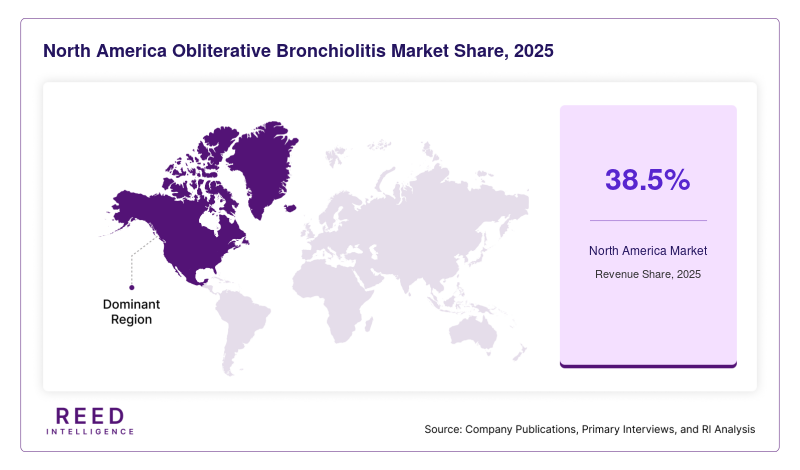
North America accounted for approximately 38.5% of the Obliterative Bronchiolitis Market share in 2025 and is expected to grow at a CAGR of 7.8% during the forecast period. The region’s growth will be driven by well-established healthcare infrastructure, availability of advanced treatment options, and a strong presence of key pharmaceutical companies.
The United States dominated the regional market due to a high number of lung transplant procedures and advanced diagnostic capabilities. The presence of specialized pulmonary care centers and continuous research initiatives are supporting market expansion. Favorable reimbursement policies and strong clinical research networks further enhance growth prospects.
Europe
Europe held a 26.2% share of the Obliterative Bronchiolitis Market in 2025 and is projected to grow at a CAGR of 7.5% through 2034. The region benefits from robust healthcare systems and increasing awareness of rare pulmonary disorders.
Germany emerged as the dominant country, supported by its advanced healthcare infrastructure and strong focus on medical research. The country’s emphasis on early diagnosis and treatment of chronic respiratory diseases has contributed to increased demand for therapeutic solutions.
Asia Pacific
Asia Pacific represented 18.4% of the Obliterative Bronchiolitis Market share in 2025 and is anticipated to grow at the fastest CAGR of 9.6% during the forecast period. Rapid urbanization and increasing exposure to air pollution are key factors driving regional growth.
China led the market in this region due to its large patient population and rising healthcare investments. Government initiatives aimed at improving healthcare accessibility and increasing awareness of respiratory diseases are further supporting market expansion.
Middle East & Africa
The Middle East & Africa accounted for 9.1% of the Obliterative Bronchiolitis Market in 2025 and is expected to grow at a CAGR of 6.9%. The region is gradually improving its healthcare infrastructure, which is contributing to market growth.
Saudi Arabia dominated the regional market, driven by increasing healthcare investments and the establishment of advanced medical facilities. Government initiatives to enhance healthcare quality and accessibility are also playing a role in market development.
Latin America
Latin America held a 7.8% share of the Obliterative Bronchiolitis Market in 2025 and is projected to grow at a CAGR of 7.2%. The region is witnessing gradual improvements in healthcare access and disease awareness.
Brazil emerged as the leading country due to its expanding healthcare infrastructure and increasing focus on respiratory disease management. Efforts to improve diagnostic capabilities and treatment accessibility are supporting market growth.
Competitive Landscape
The Obliterative Bronchiolitis Market is moderately competitive, with several global and regional players focusing on research, product development, and strategic collaborations. Leading companies are investing in innovative therapies and expanding their product portfolios to strengthen market presence.
A major market leader is F. Hoffmann-La Roche Ltd., which continues to focus on developing targeted therapies for respiratory diseases. The company recently advanced its biologics pipeline aimed at improving treatment outcomes for chronic lung conditions.
Other players are also emphasizing partnerships and acquisitions to enhance their capabilities and expand into emerging markets. Continuous innovation and a strong focus on unmet medical needs are shaping the competitive landscape.
Key Players List
- F. Hoffmann-La Roche Ltd.
- Novartis AG
- Pfizer Inc.
- AstraZeneca plc
- GlaxoSmithKline plc
- Boehringer Ingelheim International GmbH
- Sanofi S.A.
- Teva Pharmaceutical Industries Ltd.
- Merck & Co., Inc.
- Bristol-Myers Squibb Company
- Amgen Inc.
- Regeneron Pharmaceuticals, Inc.
- AbbVie Inc.
- Takeda Pharmaceutical Company Limited
- Eli Lilly and Company
Recent Developments
- In 2025, Roche expanded its respiratory biologics research program focusing on rare pulmonary diseases.
- Novartis initiated a clinical trial targeting immune-mediated lung disorders.
- AstraZeneca strengthened its respiratory portfolio through strategic collaborations.
- Pfizer increased investment in pulmonary fibrosis-related drug development.
- Boehringer Ingelheim advanced its pipeline for chronic respiratory conditions.
Obliterative Bronchiolitis Market Segments
Treatment Type
- Immunosuppressive Therapy
- Corticosteroids
- Biologics
- Others
Diagnosis
- Imaging (CT Scan, X-ray)
- Pulmonary Function Tests
- Biopsy
End User
- Hospitals
- Specialty Clinics
- Research Institutes
Distribution Channel
- Hospital Pharmacies
- Retail Pharmacies
- Online Pharmacies
By Region
- North America
- Europe
- APAC
- Middle East and Africa
- LATAM