One Way Degassing Valve Market Size, Share, Demand Report By Material Type (Polyethylene-Based Valves, Polypropylene-Based Valves, Silicone-Based Valves, Biodegradable Valve Materials), By Application (Food Packaging, Pharmaceutical Packaging, Pet Food Packaging, Specialty Chemical Packaging), By End Use (Pharmaceutical Companies, Specialty Chemical Producers, Consumer Goods Companies), By Region & Segment Forecasts, 2026–2034
USD 3950
Market Overview
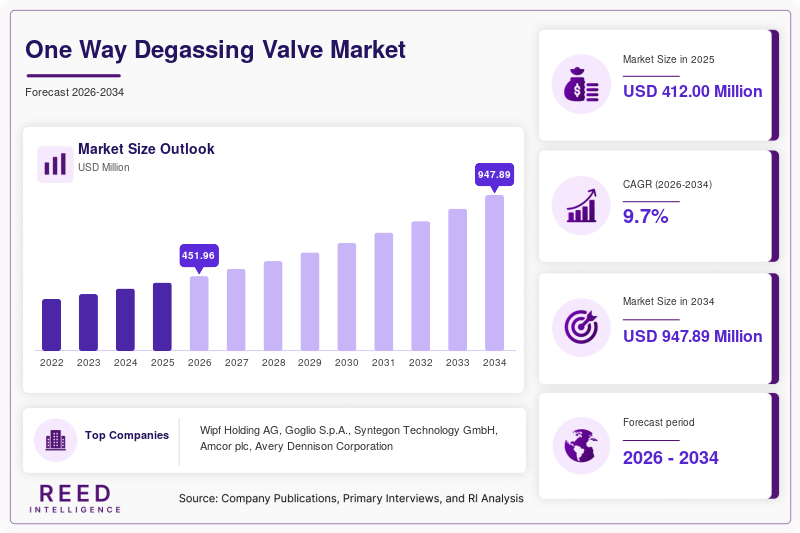
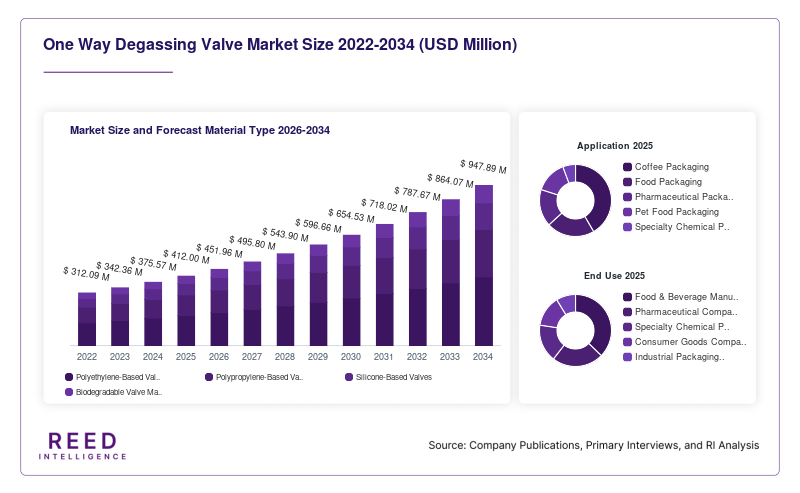
The global One Way Degassing Valve Market size was valued at approximately USD 412 million in 2026 and is projected to reach nearly USD 865 million by 2034, expanding at a CAGR of 9.7% during the forecast period from 2026 to 2034. One way degassing valves are widely used in flexible packaging solutions to release excess gas while preventing external air from entering packaged products. These valves are increasingly adopted in food packaging, coffee packaging, pharmaceutical pouches, pet food bags, and specialty chemical packaging due to their ability to preserve freshness, improve shelf life, and maintain product integrity during storage and transportation.
The rising demand for advanced flexible packaging solutions across developed and emerging economies has created strong momentum for the market. Global growth in packaged coffee consumption remains one of the most important contributors to market expansion, as roasted coffee beans release carbon dioxide after processing and require controlled degassing. Manufacturers are increasingly integrating high-performance one way valves into multilayer pouches to support premium packaging standards and reduce spoilage risks. In addition, the expansion of e-commerce grocery platforms and growing consumer preference for sustainable packaging materials have encouraged packaging companies to adopt lightweight valve-integrated pouch designs.
Key Highlights
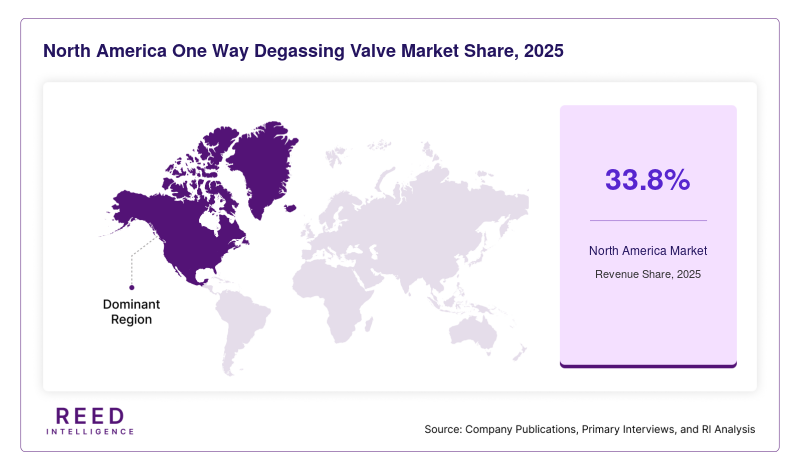
- North America dominated the market with a 33.8% share in 2025.
- Asia Pacific is expected to grow at the fastest CAGR of 11.4% during 2026–2034.
- By material type, polyethylene-based valves accounted for the largest share of 39.6%.
- while biodegradable valve materials are projected to grow at a CAGR of 12.6%.
- By application, coffee packaging led with a 44.1% share.
- whereas pharmaceutical packaging is expected to expand at a CAGR of 11.8%.
- By end use, food and beverage manufacturers represented the largest share of 48.3%.
- while specialty chemical packaging is forecast to grow at a CAGR of 10.9%.
- The United States remained the dominant country, with market values of USD 118 million in 2024 and USD 128 million in 2025.
Market Trends
Integration of Sustainable and Recyclable Packaging Components
Sustainability has become a major trend influencing the One Way Degassing Valve Market. Packaging manufacturers are under increasing pressure from food brands, retailers, and regulatory authorities to reduce plastic waste and improve recyclability. Traditional valves often contain mixed polymer structures that complicate recycling processes. As a result, manufacturers are developing mono-material valves and biodegradable alternatives that can be integrated into recyclable flexible packaging systems. This transition is particularly visible in premium coffee packaging, where consumers increasingly prefer environmentally responsible products.
Companies are also investing in thinner valve membranes and lightweight packaging formats to reduce material consumption without affecting performance. The trend is encouraging partnerships between valve producers and sustainable packaging suppliers to create fully recyclable pouch solutions. Demand from European countries is especially strong because of evolving packaging waste regulations and circular economy initiatives. The growing focus on environmentally conscious branding is expected to support continued innovation in recyclable degassing valve technologies.
Rising Automation in Flexible Packaging Production Lines
Automation across packaging production facilities is transforming the operational landscape of the One Way Degassing Valve Market. Large packaging manufacturers are implementing high-speed filling, sealing, and valve application systems to improve productivity and reduce labor dependency. This shift has increased the demand for one way degassing valves that are compatible with automated insertion equipment and high-volume manufacturing environments.
Advanced valve systems with precise airflow control and heat-resistant structures are becoming increasingly common in automated packaging operations. Coffee producers and food processing companies are adopting intelligent packaging machinery capable of applying valves consistently across large production batches. Automation also supports quality control improvements by minimizing leakage defects and reducing packaging inconsistencies. Emerging economies in Asia Pacific and Latin America are rapidly modernizing packaging infrastructure, creating additional demand for automated valve application technologies. The trend is expected to improve manufacturing efficiency while enabling packaging companies to scale operations more effectively.
Market Drivers
Expansion of Global Coffee Consumption and Premium Packaging Demand
The growing popularity of specialty coffee and premium roasted coffee products continues to support strong demand for one way degassing valves worldwide. Roasted coffee beans naturally emit carbon dioxide after roasting, making controlled gas release essential for maintaining freshness and flavor quality. One way degassing valves allow gas to escape while preventing oxygen from entering the package, which helps preserve aroma and extend shelf life.
Coffee brands are increasingly investing in premium packaging designs to strengthen product differentiation in competitive retail markets. Flexible pouches with integrated valves are becoming standard across specialty coffee categories, particularly in North America, Europe, and parts of Asia Pacific. Rising café culture, increasing disposable income, and the expansion of online coffee sales platforms are further contributing to packaging demand. Small and medium coffee roasters are also adopting valve-integrated packaging to improve product quality and customer satisfaction.
Growth of Flexible Packaging Across Food and Pharmaceutical Industries
The rapid expansion of flexible packaging applications across food, pharmaceutical, and nutraceutical sectors is another major factor driving the One Way Degassing Valve Market. Flexible packaging offers advantages such as lightweight transportation, lower storage costs, and improved product protection compared with rigid packaging alternatives. One way degassing valves enhance these benefits by allowing safe gas release without exposing products to contamination.
Pharmaceutical and nutraceutical manufacturers are increasingly using advanced pouch packaging for moisture-sensitive and gas-sensitive products. Demand for longer shelf life and higher packaging efficiency has encouraged companies to adopt valve-equipped packaging systems. In addition, growing urbanization and changing consumer lifestyles have accelerated demand for packaged convenience foods and ready-to-consume products. The increasing presence of organized retail chains and e-commerce grocery platforms is further strengthening the use of advanced flexible packaging solutions worldwide.
Market Restraint
Volatility in Raw Material Prices and Complex Recycling Challenges
Fluctuations in polymer prices and ongoing recycling challenges continue to limit the growth potential of the One Way Degassing Valve Market. Most one way degassing valves are manufactured using plastic-based materials such as polyethylene, polypropylene, and silicone components. Variations in crude oil prices directly influence production costs, making it difficult for manufacturers to maintain stable pricing strategies. Smaller packaging companies often face profitability pressure when raw material costs increase sharply.
Recycling limitations also remain a major concern across the packaging industry. Traditional valves may contain multiple material layers that are difficult to separate during recycling processes. This issue creates compliance challenges in countries implementing strict packaging waste regulations. Food and beverage brands are increasingly expected to use recyclable or compostable packaging materials, forcing valve manufacturers to invest heavily in research and product redesign. The transition toward sustainable packaging solutions can increase production expenses and extend product development timelines. In emerging markets, limited recycling infrastructure further complicates adoption of advanced eco-friendly valve technologies. These factors collectively create operational and financial challenges for market participants.
Market Opportunities
Increasing Demand for Pharmaceutical and Nutraceutical Packaging
The growing pharmaceutical and nutraceutical industries present strong opportunities for the One Way Degassing Valve Market. Manufacturers of sensitive healthcare products require packaging systems capable of maintaining product stability, controlling internal pressure, and protecting contents from external contamination. One way degassing valves are increasingly used in specialty pharmaceutical packaging applications where gas release management is essential for product preservation.
The rising global demand for dietary supplements, herbal products, protein powders, and functional nutrition products is creating additional packaging requirements. Consumers are becoming more health conscious, leading to higher sales of packaged nutraceutical products across developed and developing economies. Packaging suppliers are responding by introducing customized valve-integrated pouches with improved barrier protection and extended shelf-life performance. Regulatory focus on product quality and safety is also encouraging healthcare manufacturers to adopt more advanced packaging technologies.
Expansion of Emerging Markets and Regional Coffee Production
Emerging economies across Asia Pacific, Latin America, and parts of Africa are creating favorable opportunities for market expansion. Rapid urbanization, changing dietary preferences, and increasing consumer spending on packaged food and beverages are strengthening the demand for flexible packaging solutions. Local coffee production and consumption are also increasing in several emerging countries, supporting the adoption of one way degassing valves in domestic coffee packaging operations.
Regional coffee brands are expanding rapidly through supermarkets, specialty stores, and online retail channels. Many local manufacturers are modernizing packaging infrastructure to compete with international brands, resulting in greater demand for advanced degassing valve systems. In addition, government support for food processing industries and packaging manufacturing investments is encouraging industrial growth in emerging regions. International packaging companies are establishing regional production facilities to capture rising demand and reduce supply chain costs.
Segmental Analysis
By Material Type
Polyethylene-based valves accounted for the largest share of the One Way Degassing Valve Market in 2024, representing nearly 39.6% of total revenue. These valves are widely preferred because of their flexibility, durability, and compatibility with multiple flexible packaging formats. Polyethylene materials also offer strong sealing performance and cost efficiency, making them suitable for large-scale food and beverage packaging applications. Coffee packaging manufacturers extensively use polyethylene-based valve systems due to their reliable gas release properties and ability to maintain freshness during storage and transportation.
The broad availability of polyethylene raw materials and established manufacturing infrastructure have further strengthened segment dominance. Packaging producers prefer polyethylene valve components because they can be integrated into automated pouch manufacturing lines with minimal operational challenges. In addition, the material provides adequate moisture resistance and structural stability, supporting its adoption across consumer packaged goods applications. Large food companies continue to favor polyethylene-based packaging because it offers balanced performance and production efficiency.
By Application
Coffee packaging remained the dominant application segment in the One Way Degassing Valve Market in 2024, accounting for approximately 44.1% of overall revenue. Roasted coffee beans continue to release carbon dioxide after processing, making degassing valves essential for maintaining freshness and aroma quality. Flexible coffee pouches equipped with one way valves have become standard packaging solutions across specialty coffee and premium retail categories.
The expansion of global coffee consumption and specialty café culture has significantly increased demand for advanced coffee packaging technologies. Coffee producers increasingly prefer valve-integrated packaging because it extends shelf life while preventing oxygen exposure. Retail competition among coffee brands has also encouraged investment in visually appealing and high-performance packaging formats. The rise of e-commerce coffee sales and subscription-based coffee delivery services further supports the demand for durable packaging with effective degassing systems.
By End Use
Food and beverage manufacturers represented the largest end-use segment in the One Way Degassing Valve Market in 2024, capturing nearly 48.3% of total market revenue. The widespread use of flexible packaging across coffee, snacks, pet food, and specialty food categories continues to drive demand for degassing valve solutions. Food manufacturers prefer valve-integrated packaging because it helps preserve freshness, maintain product texture, and extend shelf life without compromising packaging efficiency.
The growing popularity of packaged convenience foods and ready-to-consume products has accelerated the adoption of advanced flexible packaging technologies. Companies are increasingly focusing on packaging quality to strengthen product appeal and improve transportation reliability. Large food processing companies also benefit from automated valve insertion systems that support high-volume manufacturing operations. The increasing penetration of organized retail chains and online grocery platforms continues to encourage demand for durable and high-performance food packaging solutions.
Regional Analysis
North America
North America accounted for approximately 33.8% of the global One Way Degassing Valve Market in 2025 and is expected to maintain stable growth at a CAGR of 8.9% through 2034. The region benefits from high consumption of packaged coffee, widespread adoption of premium food packaging, and strong demand for sustainable flexible packaging solutions. The presence of established coffee roasting companies and advanced packaging manufacturers continues to support regional market leadership. Companies are also investing in recyclable packaging technologies to align with environmental regulations and consumer expectations.
The United States remained the dominant country within North America due to its large specialty coffee industry and advanced food packaging infrastructure. Demand for valve-integrated coffee pouches continues to increase among independent coffee roasters and large commercial brands. A major growth factor in the country is the expansion of online grocery and direct-to-consumer coffee subscription services, which require durable packaging capable of preserving freshness during extended transportation and storage periods.
Europe
Europe represented nearly 27.1% of the global One Way Degassing Valve Market in 2025 and is projected to expand at a CAGR of 8.5% during the forecast period. The region has a mature coffee culture and a well-developed flexible packaging industry, supporting consistent market demand. European packaging manufacturers are strongly focused on sustainability, leading to higher adoption of recyclable and biodegradable valve materials. Regulatory initiatives aimed at reducing packaging waste are encouraging innovation in environmentally responsible valve technologies.
Germany emerged as the leading country in the European market because of its strong packaging manufacturing sector and large coffee consumption base. The country has witnessed growing investments in automated packaging equipment and high-performance pouch production systems. One important growth factor is the increasing demand for premium organic coffee products, which often use advanced packaging formats with integrated degassing valves to maintain freshness and support brand positioning.
Asia Pacific
Asia Pacific held around 23.9% of the global One Way Degassing Valve Market in 2025 and is forecast to register the fastest CAGR of 11.4% through 2034. Rapid urbanization, rising disposable income, and expanding food processing industries are driving market growth across the region. Flexible packaging adoption has increased significantly in countries with growing middle-class populations and rising packaged food consumption. Coffee culture is also expanding rapidly in urban areas, creating new demand for valve-equipped coffee packaging.
China dominated the regional market due to its large packaging manufacturing industry and increasing demand for packaged consumer goods. Domestic coffee chains and specialty beverage companies are investing heavily in premium packaging formats. A unique growth factor in China is the rapid expansion of automated packaging production facilities, which has improved manufacturing capacity and encouraged large-scale adoption of high-speed valve insertion technologies.
Middle East & Africa
The Middle East & Africa region accounted for nearly 7.2% of the global One Way Degassing Valve Market in 2025 and is expected to grow at a CAGR of 9.3% over the forecast period. Demand for packaged food, coffee products, and specialty consumer goods is increasing steadily across several countries in the region. Growing tourism activity and the expansion of modern retail infrastructure are also supporting the use of flexible packaging solutions with integrated degassing valves.
The United Arab Emirates remained the leading country within the regional market due to its strong retail sector and expanding premium food import industry. International coffee brands and specialty cafés are rapidly increasing their presence in urban areas. One important growth factor is the region’s rising demand for imported premium coffee products, which require high-quality packaging capable of preserving flavor and freshness under varying climatic conditions.
Latin America
Latin America captured approximately 8.0% of the global One Way Degassing Valve Market in 2025 and is projected to grow at a CAGR of 9.8% through 2034. The region has a strong coffee production base and a growing packaged food industry, creating favorable conditions for market development. Packaging companies are increasingly introducing advanced pouch solutions for export-oriented coffee businesses seeking improved freshness retention and transportation efficiency.
Brazil dominated the Latin American market due to its position as one of the world’s largest coffee producers and exporters. Domestic coffee roasting activities and premium packaged coffee sales continue to increase steadily. A unique growth factor in Brazil is the modernization of agricultural export packaging systems, which has encouraged coffee producers to adopt higher-quality degassing valve technologies to support international shipping requirements.
Competitive Landscape
The One Way Degassing Valve Market is moderately consolidated, with global and regional packaging component manufacturers competing through product innovation, sustainability initiatives, and strategic partnerships. Leading companies are investing in recyclable valve technologies, automated production systems, and customized packaging solutions to strengthen market positioning. Manufacturers are also expanding regional production capacity to support growing demand from coffee packaging and flexible food packaging industries.
Wipf Holding AG remains one of the leading participants in the market because of its strong presence in coffee packaging applications and advanced valve manufacturing capabilities. The company continues to focus on sustainable packaging innovations and automated production efficiency. Recent developments across the market include the launch of recyclable valve-integrated pouches, expansion of manufacturing facilities in Asia Pacific, and collaborative projects between valve manufacturers and specialty coffee brands.
Other major companies are emphasizing lightweight valve designs, improved sealing performance, and compatibility with high-speed packaging lines. Strategic acquisitions and regional distribution partnerships are also becoming common as companies attempt to strengthen global reach and enhance customer service capabilities.
Key Players
- Wipf Holding AG
- Goglio S.p.A.
- Syntegon Technology GmbH
- Amcor plc
- Avery Dennison Corporation
- C-P Flexible Packaging
- Fres-co System USA Inc.
- Plitek LLC
- TedPack Company Limited
- TricorBraun Flex
- Dongguan WeFlat Packaging
- Swiss Pac Pvt. Ltd.
- PBFY Flexible Packaging
- Qingdao Tongle Packaging
Recent Developments
- In February 2026, a major flexible packaging manufacturer introduced a recyclable one way degassing valve designed for mono-material coffee pouches to support circular packaging initiatives.
- In September 2025, a global packaging solutions provider expanded its automated valve application facility in Southeast Asia to meet rising regional demand from coffee and food packaging companies.
- In June 2025, a leading valve technology company partnered with specialty coffee brands to develop lightweight high-barrier packaging solutions with improved freshness retention.
- In January 2026, a packaging component manufacturer launched a biodegradable degassing valve series aimed at premium organic food and coffee packaging applications.
One Way Degassing Valve Market Segments
Material Type
- Polyethylene-Based Valves
- Polypropylene-Based Valves
- Silicone-Based Valves
- Biodegradable Valve Materials
Application
- Coffee Packaging
- Food Packaging
- Pharmaceutical Packaging
- Pet Food Packaging
- Specialty Chemical Packaging
End Use
- Food & Beverage Manufacturers
- Pharmaceutical Companies
- Specialty Chemical Producers
- Consumer Goods Companies
- Industrial Packaging Providers
By Region
- North America
- Europe
- APAC
- Middle East and Africa
- LATAM