Organic Dyes Market Size, Share Demand Report By Type (Solvent Dyes, Reactive Dyes, Acid Dyes, Direct Dyes), By Application (Textiles, Printing Inks, Plastics, Paper & Packaging), By End-Use Industry (Textile Industry, Packaging Industry, Healthcare & Pharmaceuticals, Cosmetics & Personal Care) By Region & Segment Forecasts, 2025–2034
USD 3950
Market Overview
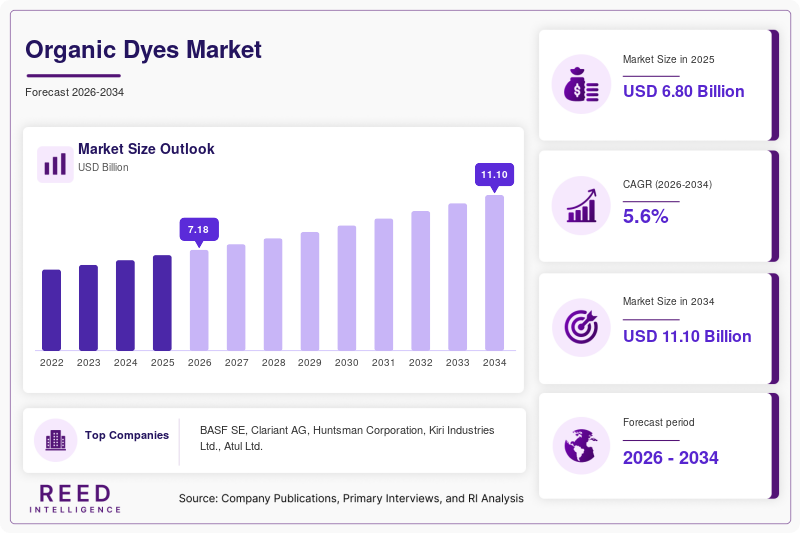
The Organic Dyes Market size is estimated at USD 6.8 billion, and it is projected to reach USD 7.3 billion in 2026. Over the forecast period from 2025 to 2034, the market is expected to grow at a compound annual growth rate (CAGR) of 5.6%, reaching approximately USD 11.9 billion by 2034. This growth reflects increasing industrial applications, shifting consumer preferences toward eco-friendly products, and advancements in dye chemistry.
One of the primary growth factors is the increasing demand from the textile industry, particularly in emerging economies. Rapid urbanization and changing fashion trends are driving consumption of dyed fabrics, which directly fuels demand for organic dyes. Additionally, the growing awareness regarding environmental sustainability is encouraging manufacturers to adopt organic dyes over synthetic alternatives that may contain hazardous chemicals. This shift is especially visible in regions with strict environmental regulations.
Key Highlights
- Market size projected to grow from USD 6.8 billion (2025) to USD 11.9 billion (2034)
This expansion is supported by rising industrial consumption and increasing applications across textiles, packaging, and specialty sectors worldwide. - CAGR of 5.6% during the forecast period (2025–2034)
The steady growth rate reflects balanced demand across mature regions and emerging economies with ongoing product innovations. - Asia Pacific dominated the market with a 38% share in 2025
The region’s leadership is driven by large-scale textile production, cost advantages, and strong export-oriented manufacturing. - Asia Pacific is the fastest-growing region with a CAGR of 6.8%
Growth is fueled by rapid industrialization, expanding middle-class population, and increasing demand for consumer goods. - Strong demand from textile, packaging, and cosmetics industries
These sectors collectively account for the majority of dye consumption, with textiles leading due to high-volume usage.
Market Trends
Shift Toward Eco-Friendly and Sustainable Dye Solutions
A major trend shaping the Organic Dyes Market is the increasing shift toward eco-friendly and sustainable dyeing solutions. Manufacturers are focusing on reducing environmental impact by developing dyes derived from natural and renewable sources. Regulatory bodies in several regions are imposing stricter guidelines on chemical usage in dye production, prompting companies to innovate cleaner alternatives. Consumers are also becoming more conscious about sustainability, influencing brands to adopt environmentally responsible practices. This trend is particularly evident in the textile and apparel industry, where eco-label certifications are gaining importance. As a result, companies investing in green chemistry and biodegradable dye formulations are gaining a competitive advantage.
Technological Advancements in Dye Formulation and Application
Technological innovation is another key trend influencing the market. Advances in dye formulation are improving color consistency, durability, and application efficiency. Digital printing technologies, for instance, require specialized organic dyes that offer high precision and compatibility with modern printing systems. Additionally, nanotechnology is being explored to enhance dye performance, enabling better penetration and fixation on various materials. These innovations are expanding the scope of organic dyes beyond traditional applications into high-performance sectors such as electronics and biomedical research. As industries seek improved efficiency and reduced waste, the adoption of advanced dye technologies is expected to increase steadily.
Market Drivers
Growing Demand from Textile and Apparel Industry
The textile and apparel sector remains a major driver of the Organic Dyes Market. Increasing global population, rising disposable income, and evolving fashion trends are contributing to higher consumption of textiles. Organic dyes are widely used due to their ability to produce a wide range of colors with good fastness properties. Emerging economies in Asia Pacific are witnessing rapid industrialization, leading to increased textile production. Additionally, the rise of fast fashion and online retail platforms is accelerating demand for dyed fabrics. Manufacturers are also focusing on sustainable dyeing practices to meet consumer expectations and regulatory requirements, further supporting the growth of organic dyes in this sector.
Expansion of Packaging and Printing Industries
The growth of packaging and printing industries is significantly driving demand for organic dyes. With the expansion of e-commerce, there is an increased need for printed packaging materials, labels, and branding solutions. Organic dyes are preferred in printing inks due to their vibrant colors and compatibility with different printing technologies. The food and beverage sector also relies heavily on attractive packaging, which requires high-quality dyes. Additionally, the shift toward digital printing is creating new opportunities for dye manufacturers to develop specialized products. As global trade and logistics continue to expand, the demand for printed materials and packaging is expected to remain strong, supporting market growth.
Market Restraint
Environmental and Regulatory Challenges
Despite positive growth prospects, the Organic Dyes Market faces challenges related to environmental regulations and compliance requirements. The production of certain organic dyes involves chemical processes that can generate waste and emissions, raising concerns about environmental impact. Regulatory authorities in regions such as Europe and North America have implemented strict guidelines to control the use of hazardous substances in dye manufacturing. Compliance with these regulations often requires significant investment in cleaner technologies and waste management systems, increasing operational costs for manufacturers.
This restraint has a direct impact on small and medium-sized enterprises, which may struggle to meet stringent standards due to limited resources. For example, companies exporting dyes to regulated markets must ensure their products meet specific environmental certifications, which can be time-consuming and costly. Additionally, fluctuations in raw material prices and availability can further complicate compliance efforts. As a result, some manufacturers may face barriers to entry or reduced profitability, limiting overall market growth. However, companies that successfully adapt to regulatory requirements can benefit from improved market positioning and long-term sustainability.
Market Opportunities
Rising Adoption in Cosmetics and Personal Care Products
The increasing use of organic dyes in cosmetics and personal care products presents a significant growth opportunity. Consumers are becoming more aware of the ingredients used in beauty products, leading to a preference for safer and more natural alternatives. Organic dyes are used in products such as lipsticks, hair dyes, and skincare formulations due to their compatibility with human skin and reduced risk of adverse reactions. The global cosmetics industry is expanding rapidly, particularly in emerging markets, creating new demand for high-quality dyes. Manufacturers that develop innovative and safe dye formulations tailored for cosmetic applications are likely to gain a competitive edge.
Growth in Biomedical and Research Applications
Another promising opportunity lies in the biomedical and research sectors. Organic dyes are widely used in diagnostic imaging, biological staining, and laboratory research. Advances in medical technology and increasing investment in healthcare infrastructure are driving demand for specialized dyes with precise chemical properties. These dyes play a crucial role in disease detection and research, making them essential for modern healthcare systems. Additionally, the rise of biotechnology and pharmaceutical research is creating new avenues for dye applications. Companies focusing on high-purity and application-specific dyes can tap into this growing segment and expand their market presence.
Segmental Analysis
By Type
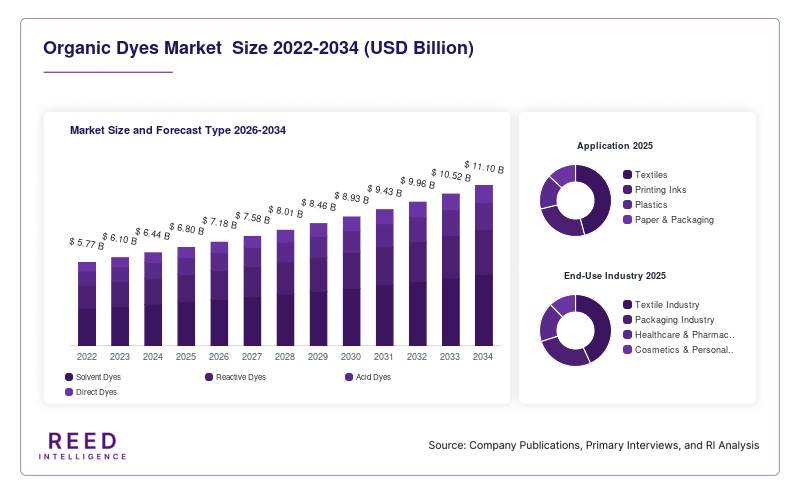
The solvent dyes segment dominated the market in 2024, accounting for approximately 42% of the total share. These dyes are widely used in applications such as plastics, inks, and coatings due to their excellent solubility in organic solvents and strong color intensity. Their ability to provide uniform coloration and compatibility with various materials makes them a preferred choice in industrial applications. Additionally, solvent dyes offer good resistance to heat and light, which enhances their durability in end-use products. The increasing demand for high-performance dyes in automotive and packaging industries is further supporting the growth of this segment.
The reactive dyes segment is expected to be the fastest-growing, with a projected CAGR of 6.5% during the forecast period. These dyes are gaining popularity due to their strong bonding with fibers, resulting in high color fastness and durability. The growth of this segment is driven by increasing demand from the textile industry, particularly for cotton and other natural fibers. Additionally, advancements in dyeing technologies are improving the efficiency and environmental performance of reactive dyes, making them more attractive to manufacturers seeking sustainable solutions.
By Application
The textile application segment held the largest share in 2024, accounting for around 48% of the market. Organic dyes are extensively used in fabric dyeing processes due to their ability to produce vibrant and long-lasting colors. The growth of the fashion industry and increasing consumer demand for colored garments are driving the demand for dyes in this segment. Furthermore, the rise of online retail platforms has increased the need for diverse and visually appealing textile products, further boosting demand.
The printing inks segment is expected to grow at the fastest CAGR of 6.2%. The expansion of digital printing technologies and increasing demand for high-quality printed materials are key growth factors. Organic dyes are widely used in inks due to their compatibility with various printing methods and ability to deliver consistent color quality. As industries continue to adopt digital printing solutions, the demand for specialized dyes is expected to increase significantly.
By End-Use Industry
The textile industry dominated the market in 2024, contributing approximately 45% of the total share. This dominance is attributed to the extensive use of dyes in fabric production and finishing processes. The industry’s growth is supported by increasing global demand for apparel and home textiles. Additionally, manufacturers are focusing on sustainable dyeing practices, which is driving the adoption of organic dyes.
The healthcare and pharmaceuticals segment is projected to be the fastest-growing, with a CAGR of 6.7%. The increasing use of dyes in diagnostic applications, laboratory research, and medical imaging is driving growth in this segment. Advances in biotechnology and rising healthcare investments are further supporting demand. Organic dyes play a critical role in medical research, making this segment a key area of opportunity for market participants.
Regional Analysis
North America
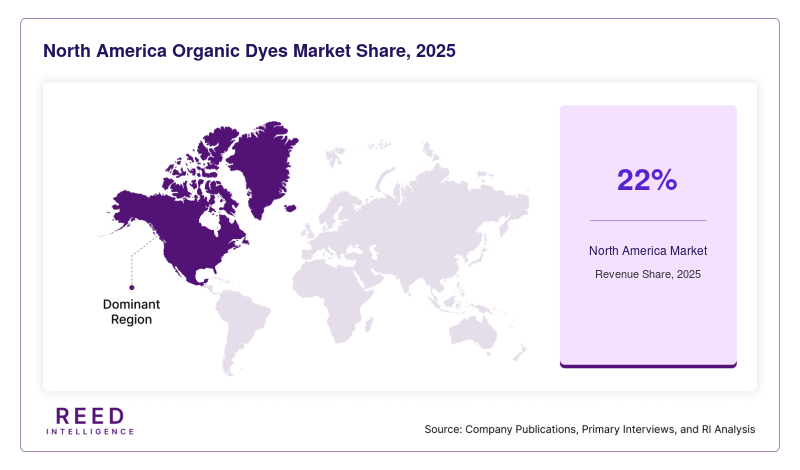
North America accounted for approximately 22% of the Organic Dyes Market share in 2025, with a projected CAGR of 4.8% during the forecast period. The region’s growth is supported by well-established textile, packaging, and pharmaceutical industries. Increasing demand for eco-friendly dyes and strict environmental regulations are encouraging innovation and adoption of sustainable dyeing solutions across industries.
The United States dominates the regional market due to its advanced manufacturing infrastructure and strong research capabilities. A unique growth factor in this region is the increasing investment in sustainable manufacturing technologies. Companies are focusing on reducing environmental impact, which is driving the adoption of organic dyes in various applications, including printing and biomedical sectors.
Europe
Europe held around 20% market share in 2025 and is expected to grow at a CAGR of 4.5%. The region is characterized by stringent environmental regulations that promote the use of safer and sustainable dye solutions. The presence of established textile and automotive industries also contributes to steady demand for organic dyes.
Germany leads the European market, driven by its strong industrial base and emphasis on innovation. A unique growth factor in this region is the widespread adoption of circular economy practices. Manufacturers are increasingly focusing on recycling and sustainable production methods, which is boosting demand for environmentally friendly organic dyes.
Asia Pacific
Asia Pacific dominated the market with a 38% share in 2025 and is projected to grow at the fastest CAGR of 6.8%. Rapid industrialization, urbanization, and population growth are driving demand across textiles, packaging, and consumer goods industries. The region is also a major hub for dye manufacturing and exports.
China is the leading country in this region, supported by its large-scale production capabilities and strong supply chain network. A unique growth factor is the expansion of the textile manufacturing sector, which continues to attract investments due to cost advantages and increasing global demand for apparel and fabrics.
Middle East & Africa
The Middle East & Africa region accounted for approximately 8% of the market share in 2025, with a CAGR of 5.1%. Growth in this region is driven by increasing industrial activities and expanding construction and packaging sectors. Governments are also investing in infrastructure development, which supports market expansion.
Saudi Arabia leads the regional market due to its growing industrial base and economic diversification efforts. A unique growth factor is the increasing demand for packaging solutions in the food and beverage industry, which is driving the use of organic dyes in printing and labeling applications.
Latin America
Latin America held about 12% market share in 2025 and is expected to grow at a CAGR of 5.0%. The region’s growth is supported by expanding textile and agriculture-based industries. Increasing consumer demand for colored fabrics and packaging materials is contributing to market development.
Brazil dominates the market in Latin America due to its strong textile and manufacturing sectors. A unique growth factor is the rising demand for sustainable agricultural packaging, which requires eco-friendly dyes for labeling and branding, thereby boosting the adoption of organic dyes.
Competitive Landscape
The Organic Dyes Market is moderately fragmented, with several global and regional players competing based on product quality, innovation, and pricing strategies. Leading companies are focusing on research and development to introduce advanced dye formulations that meet evolving industry requirements. Strategic partnerships, mergers, and acquisitions are also common as companies aim to expand their market presence and enhance their product portfolios.
A leading player in the market is BASF SE, known for its strong global presence and extensive product range. The company has recently focused on developing sustainable dye solutions to align with environmental regulations and customer preferences. Other major companies are also investing in eco-friendly technologies and expanding their production capacities to meet growing demand. Competitive intensity is expected to increase as new entrants explore opportunities in emerging markets and niche applications.
Key Players List
- BASF SE
- Clariant AG
- Huntsman Corporation
- Kiri Industries Ltd.
- Atul Ltd.
- Archroma
- Sudarshan Chemical Industries Limited
- DyStar Group
- LANXESS AG
- Zhejiang Longsheng Group
- Nippon Kayaku Co., Ltd.
- Sumitomo Chemical Co., Ltd.
- Cabot Corporation
- Everlight Chemical Industrial Corporation
- Jiangsu Yabang Dye Co., Ltd.
Recent Developments
- In 2024, BASF SE introduced a new range of eco-efficient organic dyes designed to reduce water consumption during textile processing.
- In 2023, Archroma expanded its production facility in Asia Pacific to meet increasing demand for sustainable dyes in the textile sector.
- In 2024, Clariant AG launched advanced dye solutions for digital printing applications, focusing on improved color consistency and environmental performance.
Organic Dyes Market Segments
Type
- Solvent Dyes
- Reactive Dyes
- Acid Dyes
- Direct Dyes
Application
- Textiles
- Printing Inks
- Plastics
- Paper & Packaging
End-Use Industry
- Textile Industry
- Packaging Industry
- Healthcare & Pharmaceuticals
- Cosmetics & Personal Care
By Region
- North America
- Europe
- APAC
- Middle East and Africa
- LATAM