Oscillating Positive Expiratory Pressure Device Market Size, Share & Demand Report By Type (Handheld OPEP Devices, PEP Mask Devices), By Application (COPD, Cystic Fibrosis, Bronchiectasis, Others), By End-Use (Home Care Settings, Hospitals and Clinics, Rehabilitation Centers) By Region & Segment Forecasts, 2025–2034
USD 3950
Market Overview
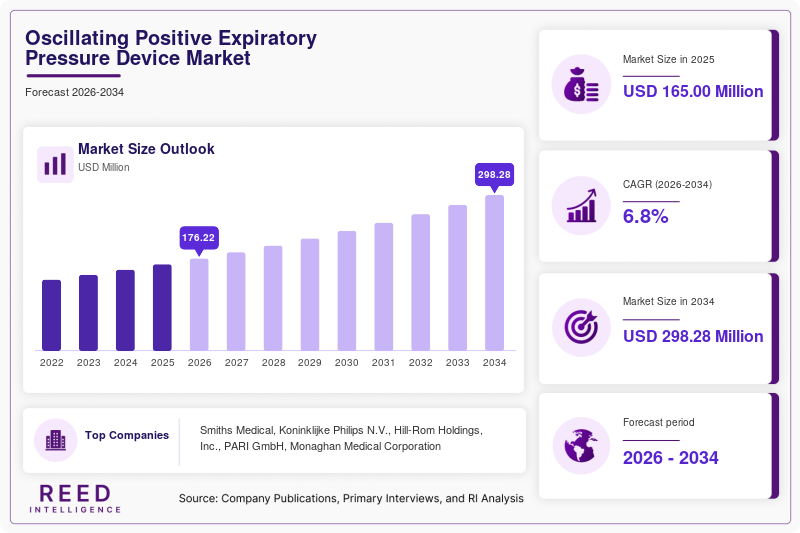
The Oscillating Positive Expiratory Pressure Device Market size is experiencing steady expansion, driven by the rising prevalence of chronic respiratory disorders and increasing awareness of non-invasive airway clearance therapies. In 2025, the global market size is estimated at USD 165 million, and it is projected to reach approximately USD 178 million in 2026. Over the forecast period from 2025 to 2034, the market is expected to grow at a compound annual growth rate (CAGR) of 6.8%, reaching a projected value of USD 310 million by 2034.
Oscillating positive expiratory pressure (OPEP) devices are widely used in managing conditions such as chronic obstructive pulmonary disease (COPD), cystic fibrosis, and bronchiectasis. These devices help improve airway clearance by generating oscillations during exhalation, thereby loosening mucus and enhancing lung function. Increasing adoption of home healthcare solutions is contributing significantly to the growth of the market, as patients seek convenient and cost-effective treatment options outside hospital settings.
Key Highlights
- Market size estimated at USD 165 million in 2025
- Expected to reach USD 310 million by 2034
- CAGR of 6.8% from 2025 to 2034
- Growing demand for home-based respiratory care solutions
- Increasing prevalence of chronic respiratory diseases
Market Trends
Rising Adoption of Home-Based Respiratory Care Devices
A notable trend in the Oscillating Positive Expiratory Pressure Device Market is the increasing shift toward home-based respiratory care. Patients with chronic respiratory conditions are opting for treatments that can be administered outside hospital settings, reducing the need for frequent clinical visits. OPEP devices offer portability, ease of use, and cost efficiency, making them suitable for home care. This trend is further supported by advancements in telehealth, allowing healthcare providers to monitor patients remotely. As healthcare systems aim to reduce hospitalization costs, the adoption of home-use medical devices is gaining traction, thereby strengthening market growth.
Technological Advancements and Product Innovation
Continuous innovation in device design is another significant trend shaping the market. Manufacturers are focusing on developing compact, lightweight, and user-friendly devices to enhance patient compliance. Modern OPEP devices incorporate improved airflow mechanisms, adjustable resistance settings, and ergonomic designs. Some products are also being integrated with digital monitoring features, enabling better tracking of patient usage and outcomes. These innovations are particularly beneficial for pediatric and elderly patients. As companies invest in research and development, the introduction of advanced products is expected to create new growth opportunities and improve overall treatment effectiveness.
Market Drivers
Increasing Prevalence of Chronic Respiratory Diseases
The rising global burden of chronic respiratory diseases is a primary driver of the Oscillating Positive Expiratory Pressure Device Market. Conditions such as COPD, asthma, and cystic fibrosis are becoming more common due to factors like smoking, air pollution, and aging populations. These diseases often require long-term airway clearance therapy, making OPEP devices an essential component of treatment. Healthcare providers are increasingly recommending these devices as part of routine care. As the number of diagnosed cases continues to grow, the demand for effective and non-invasive treatment solutions is expected to rise significantly.
Growing Preference for Non-Invasive Treatment Options
Patients and healthcare providers are increasingly favoring non-invasive treatment methods, which is driving demand for OPEP devices. These devices offer a safe and effective alternative to invasive procedures, reducing the risk of complications and improving patient comfort. They are easy to use and can be incorporated into daily routines without significant disruption. Additionally, non-invasive therapies are often more cost-effective, making them accessible to a wider patient population. This growing preference is encouraging healthcare systems to integrate OPEP devices into standard treatment protocols, thereby boosting market growth.
Market Restraints
Limited Awareness and Improper Usage in Developing Regions
One of the key challenges facing the Oscillating Positive Expiratory Pressure Device Market is the limited awareness and improper usage of these devices in developing regions. Many patients and even some healthcare providers lack sufficient knowledge about the benefits and correct use of OPEP devices. This results in underutilization and reduced treatment effectiveness. Additionally, inadequate training and lack of standardized guidelines can lead to improper usage, affecting patient outcomes. In rural and underserved areas, access to healthcare infrastructure is also limited, further restricting adoption. For example, patients with COPD in low-income regions may rely on traditional treatments due to lack of awareness, thereby slowing market growth. Addressing this issue requires targeted educational initiatives and improved healthcare accessibility.
Market Opportunities
Expansion in Emerging Markets
Emerging economies present significant growth opportunities for the Oscillating Positive Expiratory Pressure Device Market. Countries in Asia Pacific, Latin America, and Africa are witnessing increasing healthcare investments and improving infrastructure. Rising awareness about respiratory health and growing middle-class populations are contributing to higher demand for advanced medical devices. Manufacturers can tap into these markets by offering cost-effective products and establishing local distribution networks. Government initiatives aimed at improving healthcare access are also creating favorable conditions for market expansion. As these regions continue to develop, they are expected to become key contributors to global market growth.
Integration with Digital Health Technologies
The integration of OPEP devices with digital health technologies offers a promising opportunity for market growth. Devices equipped with sensors and connectivity features can provide real-time data on patient usage and treatment outcomes. This enables healthcare providers to monitor adherence and adjust treatment plans accordingly. Digital integration also supports telemedicine, allowing remote consultations and improving patient engagement. As healthcare systems increasingly adopt digital solutions, the demand for smart medical devices is expected to rise. Companies that invest in digital innovation can gain a competitive edge and expand their market presence.
Segmental Analysis
By Type
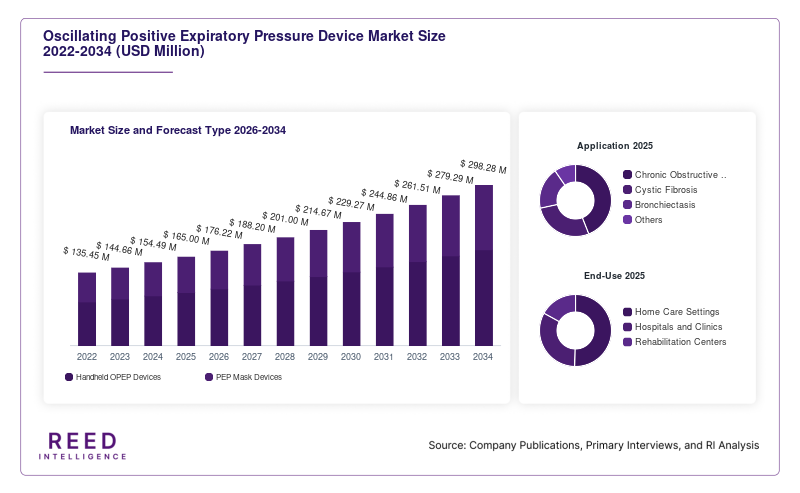
The handheld OPEP devices segment dominated the market in 2024, accounting for approximately 62% of the total share. These devices are widely preferred due to their portability, ease of use, and cost-effectiveness. Patients can conveniently use handheld devices at home without requiring professional assistance, which significantly improves adherence to treatment. Additionally, these devices are available in various designs and resistance levels, allowing customization based on patient needs. The increasing focus on home-based care further strengthens the dominance of this segment.
The positive expiratory pressure mask devices segment is expected to be the fastest-growing, with a CAGR of 7.4% during the forecast period. Growth is driven by their effectiveness in delivering consistent pressure and improving mucus clearance. These devices are particularly useful in clinical settings and for patients requiring higher therapeutic support. Advancements in mask design and improved comfort are also contributing to their adoption. As healthcare providers emphasize effective treatment outcomes, the demand for advanced PEP mask devices is expected to increase.
By Application
Chronic obstructive pulmonary disease (COPD) accounted for the largest share of the market in 2024, representing around 48% of total revenue. The high prevalence of COPD globally and the need for long-term management make it a key application area for OPEP devices. These devices help improve lung function and reduce symptoms, enhancing the quality of life for patients. Increasing diagnosis rates and awareness about COPD are further driving demand in this segment.
Cystic fibrosis is projected to be the fastest-growing application segment, with a CAGR of 7.8% during the forecast period. The growth is driven by the increasing focus on early diagnosis and advanced treatment options. OPEP devices play a crucial role in managing cystic fibrosis by aiding mucus clearance. Technological advancements and improved patient education are also contributing to the growth of this segment. As healthcare systems prioritize specialized care, the demand for OPEP devices in cystic fibrosis treatment is expected to rise.
By End-Use
The home care settings segment dominated the market in 2024, accounting for approximately 55% of the total share. The growing preference for home-based treatment and the convenience offered by OPEP devices are key factors driving this segment. Patients can use these devices independently, reducing the need for frequent hospital visits. The increasing availability of user-friendly devices and supportive healthcare policies further enhance the adoption of home care solutions.
Hospitals and clinics are expected to be the fastest-growing end-use segment, with a CAGR of 7.1% during the forecast period. Growth is driven by the increasing number of patients seeking professional care for respiratory conditions. Healthcare providers are incorporating OPEP devices into treatment protocols to improve patient outcomes. Additionally, the availability of advanced devices in clinical settings and the presence of trained professionals contribute to the growth of this segment.
Regional Analysis
North America
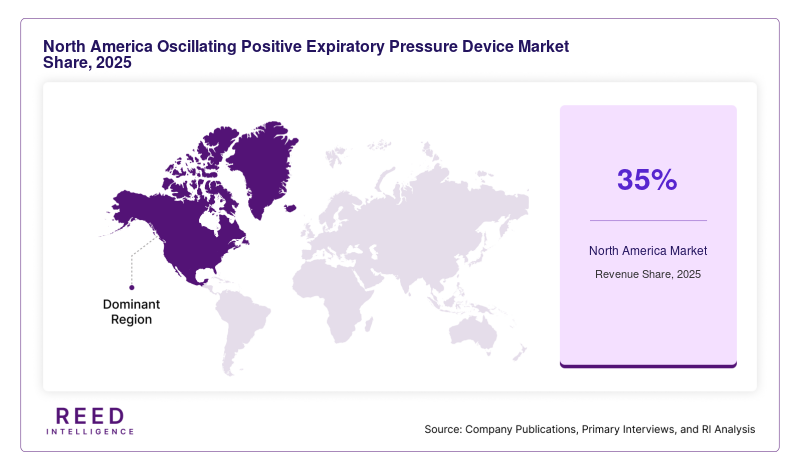
North America held the largest share of the Oscillating Positive Expiratory Pressure Device Market in 2025, accounting for approximately 35% of global revenue. The region is expected to maintain steady growth with a CAGR of around 6.5% during the forecast period. High healthcare expenditure, advanced medical infrastructure, and widespread awareness of respiratory therapies contribute to the region’s dominance. Additionally, favorable reimbursement policies support the adoption of OPEP devices across hospitals and home care settings.
The United States dominates the regional market due to its high prevalence of respiratory diseases and strong healthcare system. A unique growth factor in this region is the increasing adoption of home healthcare solutions, driven by the need to reduce hospitalization costs. Patients are increasingly using OPEP devices at home, supported by telehealth services and remote monitoring technologies.
Europe
Europe accounted for nearly 28% of the global market share in 2025 and is projected to grow at a CAGR of 6.2% through 2034. The region benefits from well-established healthcare systems and strong government support for respiratory disease management. Increasing awareness about airway clearance therapies is also contributing to market growth across European countries.
Germany leads the European market, supported by its advanced healthcare infrastructure and high adoption of innovative medical devices. A unique growth factor in Europe is the presence of strong regulatory frameworks that ensure product quality and safety. This encourages patient trust and drives the adoption of OPEP devices in clinical and home settings.
Asia Pacific
Asia Pacific is expected to witness the fastest growth, with a CAGR of 7.5% during the forecast period, and held around 20% market share in 2025. Rapid urbanization, increasing pollution levels, and rising healthcare expenditure are key factors driving market growth. The growing burden of respiratory diseases in densely populated countries is also contributing to increased demand.
China dominates the Asia Pacific market due to its large population and rising healthcare investments. A unique growth factor in this region is the increasing government focus on improving healthcare accessibility in rural areas. Initiatives to expand healthcare coverage are enabling more patients to access advanced respiratory therapies, including OPEP devices.
Middle East & Africa
The Middle East & Africa region accounted for approximately 9% of the market share in 2025 and is expected to grow at a CAGR of 6.0%. The market is driven by improving healthcare infrastructure and increasing awareness of respiratory health. However, growth is relatively moderate due to limited access to advanced medical technologies in certain areas.
Saudi Arabia leads the regional market, supported by significant healthcare investments and modernization initiatives. A unique growth factor is the increasing prevalence of lifestyle-related respiratory conditions, which is driving demand for effective treatment options. Government efforts to enhance healthcare services are also contributing to market expansion.
Latin America
Latin America held around 8% of the global market share in 2025 and is projected to grow at a CAGR of 6.3% during the forecast period. The region is witnessing gradual improvements in healthcare infrastructure and increasing awareness about respiratory therapies. Economic development and urbanization are also supporting market growth.
Brazil dominates the Latin American market due to its large population and expanding healthcare sector. A unique growth factor in this region is the rising adoption of affordable medical devices. Manufacturers are introducing cost-effective OPEP devices to cater to price-sensitive consumers, thereby driving market penetration.
Competitive Landscape
The Oscillating Positive Expiratory Pressure Device Market is moderately competitive, with several established players focusing on product innovation and strategic collaborations. Leading companies are investing in research and development to introduce advanced and user-friendly devices. The market is characterized by the presence of both global and regional players, creating a competitive environment.
A key leader in the market is a prominent medical device manufacturer known for its strong product portfolio and global presence. The company recently introduced an upgraded OPEP device with enhanced airflow control and improved patient comfort. Other companies are also focusing on expanding their distribution networks and strengthening their market position through partnerships and acquisitions. Continuous innovation and competitive pricing strategies are expected to shape the market landscape in the coming years.
Key Players
- Smiths Medical
- Koninklijke Philips N.V.
- Hill-Rom Holdings, Inc.
- PARI GmbH
- Monaghan Medical Corporation
- Trudell Medical International
- Vyaire Medical, Inc.
- Teleflex Incorporated
- AirPhysio
- D R Burton Healthcare
- Medin Medical Innovations
- Besmed Health Business Corp.
- Drive DeVilbiss Healthcare
- GaleMed Corporation
- Flexicare Medical Limited
Recent Developments
- A leading manufacturer launched a next-generation OPEP device featuring adjustable resistance settings and improved ergonomic design for enhanced patient comfort.
- A major healthcare company expanded its distribution network in Asia Pacific to strengthen its presence in emerging markets.
- A strategic partnership between two medical device firms aimed to develop digitally integrated OPEP devices with remote monitoring capabilities.
Oscillating Positive Expiratory Pressure Device Market Segments
Type
- Handheld OPEP Devices
- PEP Mask Devices
Application
- Chronic Obstructive Pulmonary Disease (COPD)
- Cystic Fibrosis
- Bronchiectasis
- Others
End-Use
- Home Care Settings
- Hospitals and Clinics
- Rehabilitation Centers
By Region
- North America
- Europe
- APAC
- Middle East and Africa
- LATAM