Osmolarity Testing Device Market Size, Share, Demand Report By Product Type (Freezing Point Osmometers, Membrane Osmometers, Portable Osmolarity Devices), By Application (Clinical Diagnostics, Pharmaceutical Manufacturing, Biotechnology Research, Food & Beverage Testing), By End Use (Hospitals & Diagnostic Labs, Pharmaceutical & Biotechnology Companies) By Region & Segment Forecasts, 2026–2034
USD 3950
Market Overview
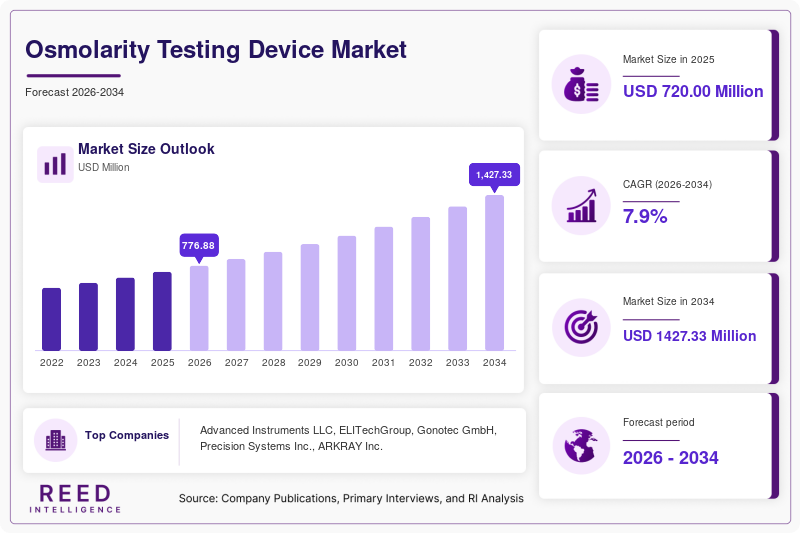
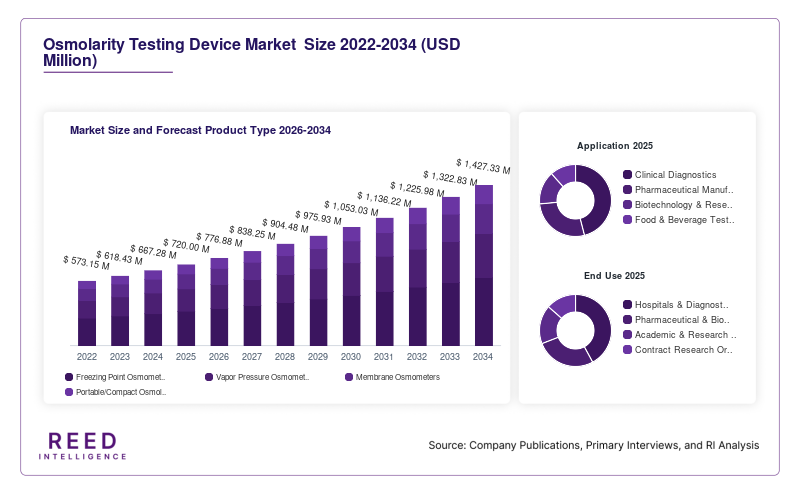
The Osmolarity Testing Device Market size was valued at approximately USD 720 million in 2026 and is projected to reach USD 1320 million by 2034, expanding at a CAGR of 7.9% during the forecast period from 2026 to 2034. The market growth is supported by increasing demand for precise analytical instruments in clinical diagnostics, pharmaceuticals, and biotechnology sectors. Osmolarity testing devices are critical for measuring solute concentration in biological and chemical samples, which is essential for ensuring product safety and patient care accuracy.
A key global factor supporting market growth is the rising emphasis on quality control in pharmaceutical manufacturing and biologics development. Regulatory authorities worldwide are tightening standards related to drug formulation and stability testing, driving the adoption of advanced osmolarity testing solutions. Additionally, the expansion of contract research organizations (CROs) and laboratory automation is accelerating the deployment of high-throughput osmolarity analyzers.
Key Highlights
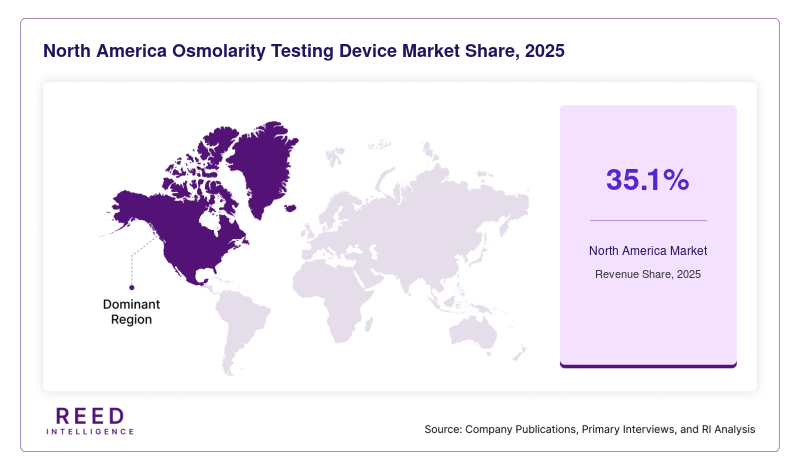
- North America dominated the market with a 35.1% share in 2025.
- Asia Pacific is expected to grow at the fastest CAGR of 9.8% during 2026–2034.
- By product type, freezing point osmometers accounted for the largest share of 42.3%, while vapor pressure osmometers are projected to grow at a CAGR of 8.7%.
- By application, clinical diagnostics led with a 46.5% share, whereas pharmaceutical manufacturing is expected to expand at a CAGR of 9.1%.
- The United States remained the dominant country, with market values of USD 265 million in 2024 and USD 290 million in 2025.
Market Trends
Increasing integration of automation and digital technologies
Automation is reshaping the Osmolarity Testing Device Market, particularly in high-volume laboratory environments. Modern osmolarity analyzers are increasingly integrated with laboratory information management systems (LIMS), allowing seamless data transfer and improved workflow efficiency. Automated calibration, sample handling, and real-time reporting features are reducing human error and enhancing reproducibility. This trend is particularly prominent in pharmaceutical and biotechnology laboratories where large datasets must be processed quickly and accurately. Furthermore, the integration of artificial intelligence and predictive analytics is enabling proactive maintenance and performance optimization, thereby extending device lifespan and reducing downtime. As laboratories aim to improve operational efficiency, demand for fully automated osmolarity testing systems is expected to rise steadily.
Growing demand for point-of-care and compact testing devices
The demand for portable and compact osmolarity testing devices is increasing due to the expansion of point-of-care testing. Healthcare providers are seeking rapid diagnostic solutions that can deliver immediate results without relying on centralized laboratory infrastructure. This trend is particularly significant in emergency care, neonatal units, and remote healthcare settings where timely decision-making is critical. Manufacturers are responding by developing lightweight, user-friendly devices with minimal sample requirements. These compact systems often feature touchscreen interfaces and simplified workflows, making them suitable for use by non-specialized personnel. The shift toward decentralized healthcare delivery is expected to create sustained demand for portable osmolarity testing devices across emerging and developed markets alike.
Market Drivers
Rising prevalence of chronic diseases and need for accurate diagnostics
The increasing burden of chronic diseases such as diabetes, kidney disorders, and electrolyte imbalances is driving the demand for osmolarity testing devices. Accurate measurement of osmolarity is essential for diagnosing and managing these conditions, as it helps assess fluid balance and metabolic status. Hospitals and diagnostic laboratories are expanding their testing capabilities to accommodate growing patient volumes, leading to higher adoption of advanced osmolarity analyzers. Additionally, the aging population is contributing to increased healthcare utilization, further boosting demand. The need for precise and reliable diagnostic tools is encouraging healthcare providers to invest in technologically advanced devices that offer faster turnaround times and improved accuracy.
Expansion of pharmaceutical and biotechnology industries
The rapid growth of the pharmaceutical and biotechnology sectors is another major driver of the Osmolarity Testing Device Market. Osmolarity testing is a critical component of drug development and manufacturing processes, particularly for biologics and injectable formulations. Companies are investing heavily in research and development to bring new therapies to market, which requires stringent quality control measures. Osmolarity analyzers are used to ensure the stability and safety of formulations, making them indispensable in production environments. The increasing number of clinical trials and the rise of personalized medicine are further contributing to market growth, as these applications require precise analytical testing.
Market Restraint
High cost of advanced osmolarity testing devices and maintenance
The high cost associated with advanced osmolarity testing devices remains a significant restraint for market growth. Sophisticated analyzers equipped with automation and digital integration features require substantial initial investment, which can be a barrier for small and medium-sized laboratories. In addition to acquisition costs, ongoing maintenance, calibration, and consumable expenses add to the total cost of ownership. This financial burden may limit adoption, particularly in developing regions with constrained healthcare budgets. For example, smaller diagnostic centers may continue using older or manual methods instead of upgrading to modern systems. The cost factor also affects research institutions with limited funding, potentially slowing the pace of technological adoption. As a result, manufacturers are under pressure to develop cost-effective solutions without compromising performance.
Market Opportunities
Emerging markets and healthcare infrastructure development
Emerging economies present significant growth opportunities for the Osmolarity Testing Device Market. Countries in Asia Pacific, Latin America, and the Middle East are investing heavily in healthcare infrastructure to improve access and quality of care. This includes the establishment of new hospitals, diagnostic centers, and research facilities, all of which require advanced laboratory equipment. Government initiatives aimed at strengthening healthcare systems are also supporting the adoption of modern diagnostic technologies. As awareness of the importance of accurate testing increases, demand for osmolarity testing devices is expected to grow. Manufacturers can capitalize on this opportunity by offering affordable and scalable solutions tailored to the needs of these markets.
Technological advancements and product innovation
Continuous innovation in osmolarity testing technologies is creating new opportunities for market expansion. Advances in sensor technology, microfluidics, and data analytics are enabling the development of more accurate and efficient devices. For instance, next-generation osmometers are capable of handling smaller sample volumes while delivering faster results. Integration with cloud-based platforms is also allowing remote monitoring and data sharing, which is particularly useful for multi-site operations. These innovations are enhancing the value proposition of osmolarity testing devices, making them more attractive to end users. Companies that invest in research and development to introduce differentiated products are likely to gain a competitive edge in the market.
Segmental Analysis
By Product Type
Freezing point osmometers dominated the market in 2024, accounting for a share of 42.3%. These devices are widely used due to their high accuracy and ability to measure a broad range of sample types. They are particularly favored in clinical diagnostics and pharmaceutical applications where precision is critical. The reliability and reproducibility of freezing point methods make them a standard choice in many laboratories. Additionally, advancements in automation and digital interfaces have enhanced their usability, further driving adoption. The strong presence of established manufacturers offering a wide range of freezing point osmometers has also contributed to their dominance in the market.
Vapor pressure osmometers are expected to be the fastest-growing subsegment, with a projected CAGR of 8.7% during the forecast period. These devices are gaining popularity due to their suitability for small sample volumes and specific applications such as protein and polymer analysis. The increasing focus on biopharmaceutical research is driving demand for vapor pressure osmometers, as they provide precise measurements for sensitive samples. Technological advancements are improving their performance and ease of use, making them more accessible to a wider range of users. As research activities continue to expand, this subsegment is likely to experience significant growth.
By Application
Clinical diagnostics emerged as the dominant application segment in 2024, holding a market share of 46.5%. Osmolarity testing plays a crucial role in diagnosing and monitoring various medical conditions, including dehydration, kidney disorders, and electrolyte imbalances. Hospitals and diagnostic laboratories rely on accurate osmolarity measurements to guide treatment decisions. The increasing prevalence of chronic diseases and the growing demand for routine diagnostic testing are driving the expansion of this segment. Additionally, advancements in diagnostic technologies are enabling faster and more reliable testing, further supporting market growth.
Pharmaceutical manufacturing is expected to be the fastest-growing application segment, with a CAGR of 9.1% during the forecast period. The need for stringent quality control and regulatory compliance is driving the adoption of osmolarity testing devices in drug production. These devices are used to ensure the stability and consistency of formulations, particularly for injectable and biologic drugs. The increasing number of drug development projects and clinical trials is further boosting demand. As the pharmaceutical industry continues to evolve, the importance of accurate analytical testing is expected to increase.
By End-Use
Hospitals and diagnostic laboratories dominated the end-use segment in 2024, accounting for a significant share of the market. These facilities are the primary users of osmolarity testing devices due to the high volume of diagnostic tests performed daily. The need for accurate and timely results is driving the adoption of advanced analyzers. Hospitals are increasingly investing in automated systems to improve efficiency and reduce turnaround times. The growing patient population and rising healthcare demand are further supporting the expansion of this segment.
Pharmaceutical and biotechnology companies are projected to be the fastest-growing end-use segment, with a strong CAGR over the forecast period. The increasing focus on research and development, along with the need for stringent quality control, is driving demand for osmolarity testing devices in these industries. Companies are investing in advanced analytical instruments to support drug development and manufacturing processes. The rise of biologics and personalized medicine is further contributing to growth, as these applications require precise and reliable testing methods.
Regional Analysis
North America
North America held a dominant share of 35.1% in 2025 and is expected to maintain steady growth with a CAGR of 7.2% through 2034. The region benefits from a well-established healthcare infrastructure and high adoption of advanced diagnostic technologies. The presence of leading pharmaceutical and biotechnology companies further supports market expansion. Additionally, strong regulatory frameworks ensure consistent demand for high-quality testing equipment, driving continuous upgrades and replacements.
The United States leads the regional market due to its extensive healthcare network and robust research ecosystem. A key growth factor is the increasing investment in precision medicine and biologics development, which requires accurate osmolarity testing. The country’s focus on innovation and technological advancement continues to drive demand for sophisticated laboratory instruments.
Europe
Europe accounted for approximately 27.4% of the market share in 2025 and is projected to grow at a CAGR of 7.0% during the forecast period. The region’s growth is supported by strong regulatory standards and a high level of awareness regarding quality control in pharmaceutical manufacturing. Countries across Europe are adopting advanced laboratory technologies to comply with stringent guidelines.
Germany dominates the European market, driven by its strong pharmaceutical and industrial base. A unique growth factor is the country’s emphasis on research and development, supported by government funding and collaboration between academia and industry. This fosters continuous demand for advanced analytical instruments, including osmolarity testing devices.
Asia Pacific
Asia Pacific is the fastest-growing region, with a projected CAGR of 9.8% from 2026 to 2034 and a market share of 22.6% in 2025. Rapid urbanization, increasing healthcare expenditure, and expanding pharmaceutical industries are key drivers of growth. The region is witnessing a surge in diagnostic laboratory setups and contract research organizations.
China leads the Asia Pacific market due to its large population and growing healthcare infrastructure. A significant growth factor is the government’s focus on improving healthcare access and promoting domestic pharmaceutical production. This has led to increased adoption of advanced diagnostic equipment, including osmolarity testing devices.
Middle East & Africa
The Middle East & Africa region held a smaller share of 7.3% in 2025 but is expected to grow at a CAGR of 7.5% over the forecast period. The market is gradually expanding due to improving healthcare infrastructure and rising awareness of diagnostic testing. Investments in healthcare facilities are contributing to increased demand for laboratory equipment.
Saudi Arabia dominates the regional market, driven by government initiatives to modernize healthcare systems. A key growth factor is the country’s investment in advanced medical technologies as part of its long-term development plans. This is encouraging the adoption of high-quality diagnostic devices across hospitals and laboratories.
Latin America
Latin America accounted for 7.6% of the market share in 2025 and is expected to grow at a CAGR of 7.3% through 2034. The region is experiencing gradual improvements in healthcare infrastructure and increasing adoption of diagnostic technologies. Economic development and healthcare reforms are supporting market growth.
Brazil leads the Latin American market due to its large healthcare sector and growing pharmaceutical industry. A unique growth factor is the increasing number of diagnostic laboratories and research institutions, which are driving demand for advanced analytical equipment. This trend is expected to continue as healthcare access improves.
Competitive Landscape
The Osmolarity Testing Device Market is characterized by the presence of several established players and emerging companies competing on the basis of technology, product quality, and pricing. Leading companies are focusing on innovation and strategic partnerships to strengthen their market position. The market is moderately consolidated, with a few key players holding significant shares.
Advanced Instruments LLC is recognized as a leading player in the market, known for its comprehensive portfolio of osmolarity analyzers. The company recently introduced a next-generation automated osmometer with enhanced connectivity features, aimed at improving laboratory efficiency. Other major players are also investing in research and development to introduce innovative products and expand their global presence. Competitive strategies include mergers and acquisitions, product launches, and collaborations with research institutions.
Key Players List
- Advanced Instruments LLC
- ELITechGroup
- Gonotec GmbH
- Precision Systems Inc.
- ARKRAY Inc.
- Fiske Associates
- Biobase Group
- Sino-Sci Company
- Nova Biomedical
- A.KRÜSS Optronic
- Xylem Inc.
- Thermo Fisher Scientific
- Randox Laboratories
- Shenzhen Mindray Bio-Medical Electronics
- Horiba Ltd.
Recent Developments
- Advanced Instruments LLC launched an automated osmometer with cloud-based data management capabilities in 2025, enhancing laboratory connectivity.
- ELITechGroup expanded its product portfolio by introducing a compact osmolarity testing device designed for point-of-care applications in 2024.
- Gonotec GmbH entered a strategic partnership with a biotechnology firm in 2025 to develop customized osmolarity solutions for biopharmaceutical research.
Osmolarity Testing Device Market Segments
Product Type
- Freezing Point Osmometers
- Vapor Pressure Osmometers
- Membrane Osmometers
- Portable/Compact Osmolarity Testing Devices
Application
- Clinical Diagnostics
- Pharmaceutical Manufacturing
- Biotechnology & Research
- Food & Beverage Testing
End Use
- Hospitals & Diagnostic Laboratories
- Pharmaceutical & Biotechnology Companies
- Academic & Research Institutes
- Contract Research Organizations (CROs)
By Region
- North America
- Europe
- APAC
- Middle East and Africa
- LATAM