Otorhinolaryngology Device Market Size, Share & Demand Report By Product Type (Diagnostic Devices, Surgical Devices, Hearing Implants), By Application (Hearing Loss Treatment, Sinusitis Treatment, Throat Disorders, Ear Disorders), By End-Use (Hospitals, Ambulatory Surgical Centers, ENT Clinics) By Region & Segment Forecasts, 2025–2034
USD 3950
Market Overview
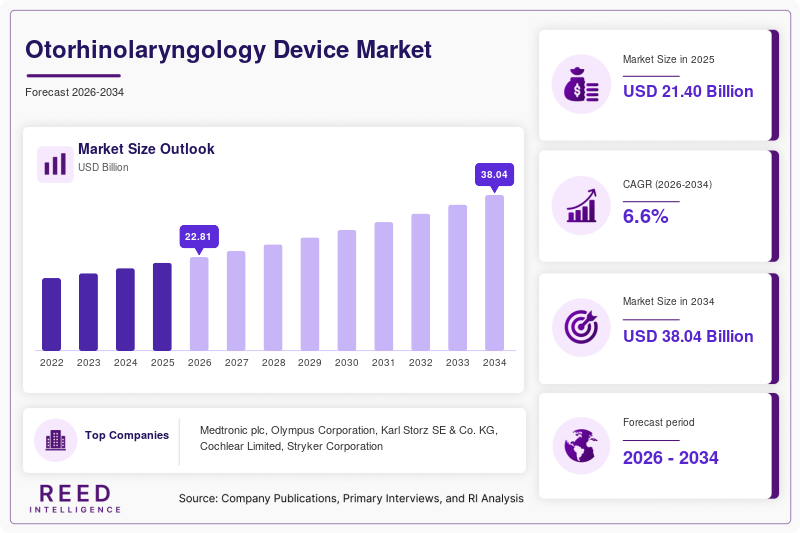
The global Otorhinolaryngology Device Market size was valued at USD 21.4 billion in 2025 and is projected to reach USD 37.9 billion by 2034, expanding at a CAGR of 6.6% from 2025 to 2034. The market encompasses medical devices used for the diagnosis, monitoring, and treatment of ear, nose, and throat (ENT) disorders. These devices include diagnostic systems, surgical tools, hearing implants, and endoscopic equipment used across hospitals, ambulatory surgical centers, and specialty ENT clinics.
Growth in the Otorhinolaryngology Device Market has been supported by the global expansion of healthcare infrastructure and broader access to specialty surgical care. Many countries have increased investment in outpatient surgical centers and diagnostic clinics, enabling wider adoption of ENT diagnostic and therapeutic equipment. This structural shift has encouraged the use of minimally invasive ENT procedures, creating consistent demand for modern diagnostic and surgical devices.
Key Highlights
- Dominant region: North America held 38.4% share in 2025; Asia Pacific will record the fastest CAGR of 7.9% through 2034.
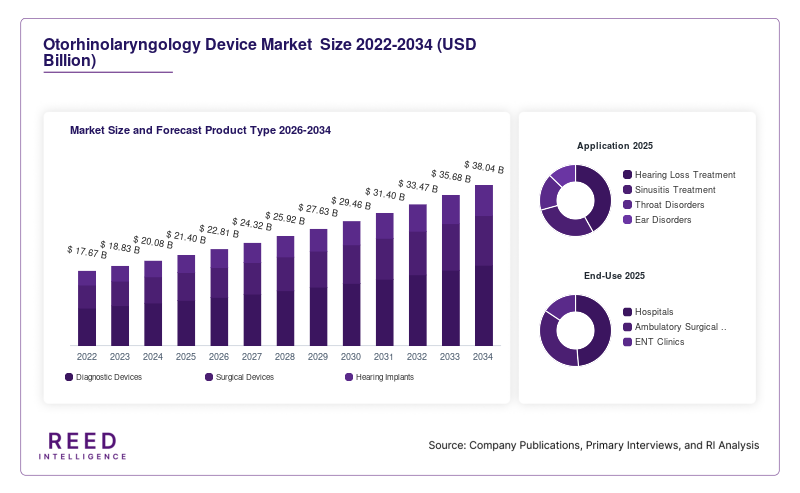
- By Product Type: Diagnostic devices led with 41.2% share, while hearing implants will grow fastest at 7.8% CAGR.
- By End-Use: Hospitals dominated with 55.6% share, whereas ambulatory surgical centers will grow fastest at 7.5% CAGR.
- Dominant country: The United States generated USD 7.6 billion in 2025 and reached USD 8.1 billion in 2026 in the Otorhinolaryngology Device Market.
Market Trends
Integration of Digital Imaging and Visualization Systems
The integration of advanced imaging technologies into ENT devices is shaping the evolution of the Otorhinolaryngology Device Market. Modern ENT diagnostic and surgical tools increasingly incorporate high-definition visualization, digital endoscopy systems, and image-guided navigation technologies. These solutions improve precision during procedures such as sinus surgery, cochlear implantation, and laryngeal examinations.
Digital visualization systems also support real-time monitoring and documentation of procedures, improving clinical workflow efficiency. Hospitals are investing in integrated ENT surgical suites equipped with imaging platforms and digital record systems. As a result, device manufacturers are focusing on developing compact, connected diagnostic tools that integrate with hospital information systems.
Growing Preference for Minimally Invasive ENT Procedures
Minimally invasive treatment approaches are becoming increasingly common across ENT specialties, influencing product development in the Otorhinolaryngology Device Market. Procedures such as endoscopic sinus surgery, balloon sinuplasty, and minimally invasive ear surgeries are gaining acceptance due to shorter recovery times and reduced hospital stays.
To support these procedures, manufacturers are introducing specialized endoscopes, micro-surgical instruments, and navigation systems. Ambulatory surgical centers are also adopting these technologies to perform ENT procedures outside traditional hospital environments. As healthcare systems focus on cost efficiency and patient convenience, minimally invasive technologies will continue shaping device innovation and demand across the global ENT device industry.
Market Drivers
Rising Burden of ENT Disorders Worldwide
The growing prevalence of ear, nose, and throat conditions is a major factor supporting expansion of the Otorhinolaryngology Device Market. Disorders such as hearing impairment, chronic sinusitis, and throat infections affect millions of individuals globally. Increasing urbanization, environmental pollution, and aging populations contribute to higher incidence rates of ENT disorders.
Healthcare providers are therefore investing in diagnostic systems and surgical tools that enable earlier detection and effective treatment. Hearing restoration procedures and sinus surgeries are particularly increasing in volume, creating steady demand for ENT devices across hospitals and specialty clinics.
Increasing Surgical Procedure Volumes
The expansion of surgical procedures within the ENT specialty has also supported the growth of the Otorhinolaryngology Device Market. Hospitals and ambulatory surgical centers are performing a rising number of procedures including septoplasty, tonsillectomy, and cochlear implant surgeries.
This increase in procedure volumes has encouraged healthcare providers to upgrade surgical instruments and visualization technologies. Additionally, ENT surgeons are adopting specialized devices designed for precision and improved procedural outcomes. As surgical capabilities expand globally, demand for modern ENT surgical equipment will continue to support steady market growth.
Market Restraint
High Cost of Advanced ENT Devices
One of the primary limitations affecting the Otorhinolaryngology Device Market is the relatively high cost of advanced diagnostic and surgical equipment. Technologies such as image-guided navigation systems, robotic surgical tools, and cochlear implants require significant capital investment from healthcare facilities.
Hospitals in developing regions often face budget constraints that limit the adoption of high-end ENT systems. In addition to acquisition costs, these devices may require specialized maintenance, training programs, and technical support. These additional expenses increase the overall operational cost for healthcare providers.
Small clinics and outpatient centers may therefore continue using conventional diagnostic instruments rather than investing in advanced imaging or surgical technologies. Limited reimbursement for certain ENT procedures in some healthcare systems also affects purchasing decisions for high-value equipment.
As a result, the cost barrier may slow adoption rates in price-sensitive markets. Although technological advancements continue improving device capabilities, affordability remains a key challenge influencing procurement decisions within the global ENT device industry.
Market Opportunities
Expansion of ENT Specialty Clinics
The increasing number of dedicated ENT specialty clinics presents an emerging opportunity for the Otorhinolaryngology Device Market. Healthcare systems in many countries are encouraging specialized outpatient centers to improve treatment efficiency and reduce hospital workloads.
ENT clinics require compact diagnostic systems, portable endoscopes, and minimally invasive surgical equipment to manage patient procedures efficiently. Manufacturers that develop cost-effective and clinic-friendly devices can benefit from this expanding healthcare infrastructure.
Technological Development in Hearing Restoration Devices
Technological progress in hearing restoration solutions is also creating growth opportunities in the Otorhinolaryngology Device Market. Cochlear implants, bone-anchored hearing systems, and implantable hearing aids continue to evolve with improved sound processing and connectivity features.
Manufacturers are investing in research to enhance device performance, patient comfort, and surgical outcomes. These advancements are expanding the range of patients eligible for hearing restoration procedures. As awareness of hearing health increases globally, demand for innovative hearing devices is expected to strengthen market opportunities for ENT device manufacturers.
Segmental Analysis
By Product Type
Diagnostic devices accounted for the largest share of the Otorhinolaryngology Device Market, holding 41.2% of revenue in 2025. These devices include otoscopes, rhinoscopes, laryngoscopes, and audiology diagnostic systems used for clinical examination and patient evaluation. Hospitals and specialty clinics frequently utilize these tools for routine ENT assessments, supporting their dominant market share.
Hearing implants will represent the fastest-growing product segment in the Otorhinolaryngology Device Market, expanding at a CAGR of 7.8% through 2034. Increasing technological advancements in cochlear implants and bone-anchored hearing systems will support growth. Manufacturers will continue developing advanced implantable hearing devices with improved sound quality and wireless connectivity, contributing to higher adoption rates.
By End-Use
Hospitals dominated the Otorhinolaryngology Device Market in 2025, accounting for 55.6% of the total share. Hospitals maintain comprehensive ENT departments with specialized surgical facilities and advanced diagnostic systems. These institutions perform a wide range of ENT procedures including sinus surgery, hearing restoration procedures, and laryngeal examinations, supporting high demand for ENT devices.
Ambulatory surgical centers will emerge as the fastest-growing end-use segment, expanding at a CAGR of 7.5% through 2034. The growth of outpatient surgical facilities will encourage adoption of compact surgical equipment and minimally invasive ENT devices. Healthcare systems will increasingly shift certain ENT procedures to ambulatory centers due to shorter recovery times and improved operational efficiency.
By Application
Hearing loss treatment represented the dominant application segment in the Otorhinolaryngology Device Market, capturing 36.4% share in 2025. Audiology diagnostic systems, cochlear implants, and hearing aids are widely used for patient management in hospitals and specialized hearing centers.
Sinusitis treatment will record the fastest growth in the Otorhinolaryngology Device Market, expanding at a CAGR of 7.3% during the forecast period. Endoscopic sinus surgery devices and balloon sinuplasty systems will experience increasing adoption due to advancements in minimally invasive procedures. Medical providers will increasingly utilize these technologies to treat chronic sinus conditions with improved procedural outcomes.
Regional Analysis
North America
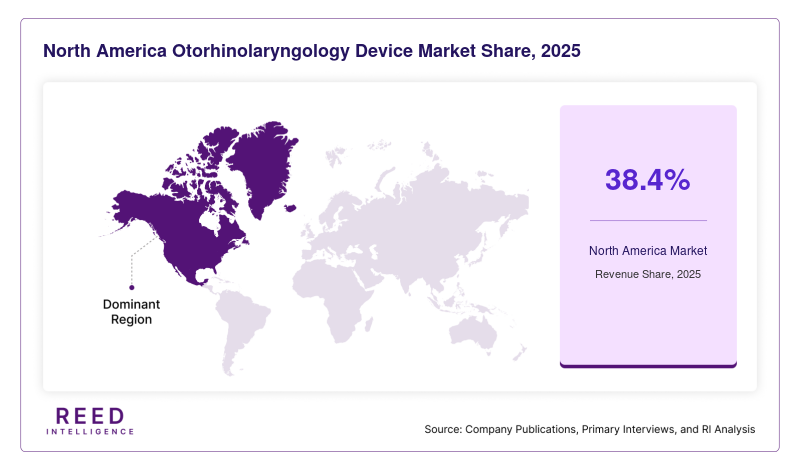
North America accounted for 38.4% of the global Otorhinolaryngology Device Market in 2025. The region will expand at a CAGR of 5.8% from 2025 to 2034. Growth in this region has been supported by the presence of advanced healthcare facilities and strong adoption of modern ENT technologies.
The United States dominated the regional market due to a large network of ENT specialists and well-established surgical infrastructure. The country has seen increasing adoption of integrated surgical visualization systems and advanced endoscopic equipment in hospitals and ambulatory centers. Continuous investment in healthcare technology and medical device innovation has strengthened demand for ENT diagnostic and surgical devices.
Europe
Europe held 27.6% share of the Otorhinolaryngology Device Market in 2025 and will grow at a CAGR of 6.1% during the forecast period. Growth across the region has been supported by increasing healthcare modernization initiatives and improved diagnostic capabilities.
Germany represented the dominant country in the European ENT device market. The country’s strong medical device manufacturing sector and advanced hospital infrastructure supported adoption of ENT diagnostic systems and surgical tools. German healthcare providers have also integrated high-definition imaging systems into ENT surgical practices, strengthening demand for specialized medical devices.
Asia Pacific
Asia Pacific represented 21.9% of the Otorhinolaryngology Device Market in 2025 and will register the fastest CAGR of 7.9% through 2034. Expanding healthcare infrastructure and improving access to specialized medical care are supporting growth in this region.
China dominated the regional market due to the rapid expansion of hospital networks and increasing investments in advanced medical equipment. Healthcare providers across major Chinese cities have adopted modern ENT diagnostic and surgical technologies to manage growing patient volumes. The development of domestic medical device manufacturing capabilities has also supported greater device availability within the country.
Middle East & Africa
The Middle East & Africa region accounted for 6.2% of the Otorhinolaryngology Device Market in 2025 and will grow at a CAGR of 6.5% during the forecast period. Governments in several countries have been investing in healthcare modernization to strengthen diagnostic and surgical capabilities.
Saudi Arabia led the regional market due to healthcare infrastructure expansion and increasing investments in specialty medical services. The country has introduced several healthcare modernization initiatives to enhance hospital facilities and improve access to advanced surgical technologies, supporting adoption of ENT devices.
Latin America
Latin America held 5.9% share of the Otorhinolaryngology Device Market in 2025 and will expand at a CAGR of 6.3% through 2034. The region has experienced steady development of healthcare systems and growing availability of specialized medical services.
Brazil represented the dominant country in the regional market. Large hospital networks and expanding medical technology adoption have supported the use of ENT diagnostic equipment and surgical tools. Public and private healthcare providers in Brazil continue expanding specialized treatment facilities, contributing to sustained demand for ENT devices.
Competitive Landscape
The Otorhinolaryngology Device Market is characterized by the presence of global medical device manufacturers focusing on technological innovation and strategic collaborations. Companies compete through product development, distribution partnerships, and expansion into emerging markets.
Medtronic plc represents a leading participant in the market due to its extensive ENT device portfolio and global distribution network. The company continues investing in advanced surgical systems and hearing restoration technologies.
Other prominent manufacturers include Karl Storz, Olympus Corporation, and Cochlear Limited, which offer specialized endoscopy systems, surgical instruments, and implantable hearing solutions. Companies are also focusing on developing integrated ENT diagnostic platforms to support hospital workflows.
Recent product launches and technology upgrades have strengthened competition among manufacturers as healthcare providers seek advanced ENT solutions with improved precision and operational efficiency.
Key Players
- Medtronic plc
- Olympus Corporation
- Karl Storz SE & Co. KG
- Cochlear Limited
- Stryker Corporation
- Smith & Nephew plc
- GN Hearing A/S
- Sonova Holding AG
- Starkey Laboratories Inc.
- William Demant Holding A/S
- Entellus Medical Inc.
- Acclarent Inc.
- Interacoustics A/S
- Natus Medical Incorporated
- Pentax Medical
Recent Developments
- 2024: Medtronic introduced an upgraded ENT surgical navigation system designed for improved procedural accuracy.
- 2024: Olympus expanded its ENT endoscopy product portfolio with enhanced high-definition visualization systems.
- 2023: Cochlear Limited launched a new generation cochlear implant processor with improved wireless connectivity features.
- 2023: Karl Storz introduced advanced endoscopic instruments for minimally invasive sinus surgery procedures.
- 2023: Sonova expanded hearing technology development through investment in advanced digital audiology solutions.
Otorhinolaryngology Device Market Segments
Product Type
- Diagnostic Devices
- Surgical Devices
- Hearing Implants
Application
- Hearing Loss Treatment
- Sinusitis Treatment
- Throat Disorders
- Ear Disorders
End-Use
- Hospitals
- Ambulatory Surgical Centers
- ENT Clinics
By Region
- North America
- Europe
- APAC
- Middle East and Africa
- LATAM