Ozone Therapy Devices in Dermatology Market Size, Share & Demand Report By Type (Ozone Generators, Portable Ozone Devices), By Application (Acne Treatment, Psoriasis & Eczema, Wound Healing, Skin Rejuvenation), By End-Use (Dermatology Clinics, Hospitals, Home Care Settings), By Distribution Channel (Direct Sales, Distributors, Online Sales), By Region & Segment Forecasts, 2025–2034
USD 3950
Market Overview
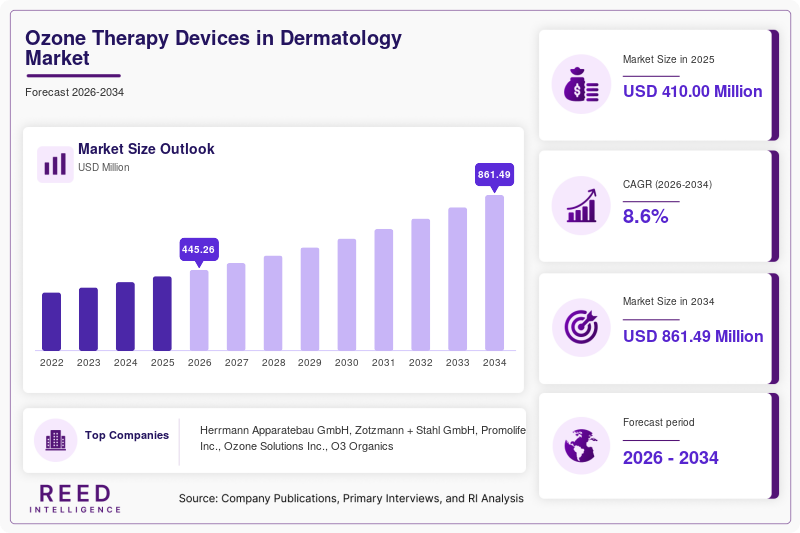
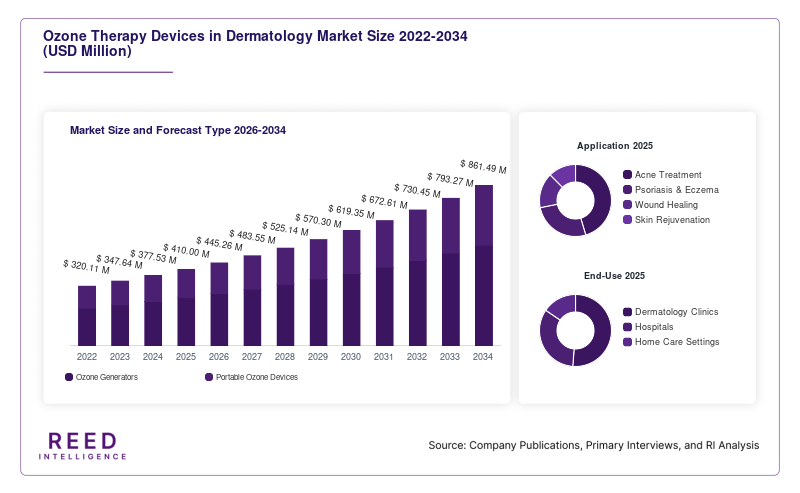
The Ozone Therapy Devices in Dermatology Market size was valued at approximately USD 410 million in 2025 and is projected to reach USD 865 million by 2034, expanding at a CAGR of 8.6% from 2025 to 2034. The market growth is primarily supported by the increasing global demand for non-invasive and adjunct dermatological treatments that enhance wound healing, skin rejuvenation, and infection control. Ozone therapy, known for its antimicrobial and oxygenation properties, has gained attention in dermatology for managing acne, psoriasis, eczema, and chronic wounds.
A significant global factor contributing to market expansion is the rising prevalence of skin disorders linked to environmental pollution and lifestyle changes. Increasing awareness among dermatologists regarding alternative therapies has also driven adoption, particularly in aesthetic clinics and specialized dermatology centers.
Technological advancements in ozone delivery systems—such as precise dosage control and portable devices—have improved treatment outcomes and patient safety, further accelerating market growth. Additionally, integration of ozone therapy with other dermatological procedures is expanding its clinical application.
Key Highlights
- North America dominated the market with a 36.2% share in 2025, while Asia Pacific is projected to grow at the fastest CAGR of 10.1%.
- By type, ozone generators led with a 58.4% share, while portable ozone devices are expected to grow at a CAGR of 9.8%.
- By application, acne treatment dominated at 34.6% share, while wound healing applications are projected to grow at 9.5% CAGR.
- The U.S. market was valued at USD 132 million in 2025 and is estimated to reach USD 141 million in 2026.
Market Trends
Integration with Aesthetic Dermatology Procedures
The Ozone Therapy Devices in Dermatology Market is witnessing increased integration of ozone therapy with aesthetic procedures such as chemical peels, laser treatments, and microdermabrasion. Clinics are combining ozone therapy with conventional treatments to enhance skin oxygenation and accelerate recovery time. This trend is improving patient satisfaction and expanding the role of ozone therapy beyond therapeutic applications into cosmetic dermatology.
Rise of Portable and Home-Use Devices
There is a growing trend toward compact, portable ozone therapy devices designed for home-based dermatological care. These devices cater to patients seeking convenient, cost-effective treatment options for chronic skin conditions. Manufacturers are focusing on user-friendly designs and safety features, enabling broader adoption among non-clinical users. This trend is particularly prominent in emerging markets where access to dermatology clinics may be limited.
Market Drivers
Increasing Prevalence of Chronic Skin Conditions
The rising incidence of acne, eczema, psoriasis, and fungal infections is a key driver of the Ozone Therapy Devices in Dermatology Market. Urbanization, pollution, and changing lifestyles have contributed to a higher burden of dermatological conditions. Ozone therapy’s antimicrobial and anti-inflammatory properties make it a viable adjunct treatment, supporting its growing adoption in dermatology practices.
Growing Preference for Non-Invasive Therapies
Patients and healthcare providers are increasingly opting for non-invasive treatment options that minimize side effects and recovery time. Ozone therapy devices offer a non-surgical approach with fewer complications compared to conventional procedures. This shift toward minimally invasive dermatological solutions is driving demand across both developed and developing regions.
Market Restraint
Limited Standardization and Regulatory Challenges
A major restraint in the Ozone Therapy Devices in Dermatology Market is the lack of standardized treatment protocols and varying regulatory frameworks across regions. Inconsistent guidelines regarding ozone concentration, dosage, and application methods create uncertainty among healthcare providers. Additionally, regulatory approvals for ozone-based devices can be complex, delaying product launches and limiting market penetration.
The absence of large-scale clinical trials validating long-term efficacy further restricts widespread adoption. Healthcare professionals often rely on anecdotal evidence or small studies, which may not provide sufficient confidence for routine use. These challenges can slow the integration of ozone therapy into mainstream dermatological practice.
Market Opportunities
Expansion in Emerging Economies
Emerging markets present significant growth opportunities for the Ozone Therapy Devices in Dermatology Market. Increasing healthcare investments, rising disposable income, and growing awareness of advanced dermatological treatments are driving demand. Local manufacturers are also entering the market with cost-effective devices, improving accessibility.
Technological Advancements in Ozone Delivery Systems
Innovations in ozone delivery technologies are creating new opportunities for market expansion. Advanced devices with precise control over ozone concentration and improved safety features are enhancing treatment effectiveness. Integration with digital monitoring systems and AI-based controls is expected to further improve clinical outcomes and drive adoption among dermatologists.
Segmental Analysis
By Type
Ozone generators dominated the Ozone Therapy Devices in Dermatology Market with a 58.4% share in 2025, driven by their widespread use in clinical settings and ability to deliver controlled ozone concentrations. These devices are preferred by dermatologists for treating various skin conditions due to their precision and reliability.
Portable ozone devices are expected to witness the fastest growth at a CAGR of 9.8%, supported by increasing demand for home-based treatments. Their compact design and ease of use make them suitable for patients seeking convenient therapy options.
By Application
Acne treatment accounted for the largest share of 34.6% in 2025, as ozone therapy effectively reduces bacterial load and inflammation associated with acne. Dermatologists commonly use ozone therapy as an adjunct to conventional treatments.
Wound healing applications are projected to grow at a CAGR of 9.5%, driven by the therapy’s ability to enhance oxygen supply and accelerate tissue repair. This segment is gaining traction in managing chronic wounds and ulcers.
By End-Use
Dermatology clinics held the dominant share of 49.2% in 2025, owing to the availability of specialized equipment and trained professionals. These clinics serve as primary centers for ozone therapy treatments.
Home care settings are expected to grow at a CAGR of 9.2%, fueled by the increasing availability of portable devices and rising patient preference for self-administered treatments.
By Distribution Channel
Direct sales accounted for 55.1% of the market in 2025, as manufacturers often supply devices directly to healthcare providers. This channel ensures better product support and customization.
Online sales are anticipated to grow at a CAGR of 10.4%, driven by the expansion of e-commerce platforms and increased consumer awareness. Online channels offer convenience and access to a wider range of products.
Regional Analysis
North America
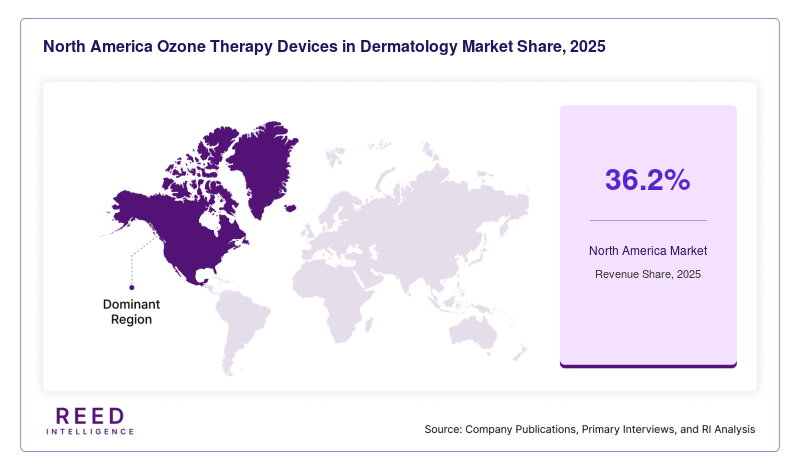
North America accounted for 36.2% of the Ozone Therapy Devices in Dermatology Market in 2025 and is expected to grow at a CAGR of 7.9% through 2034. The region benefits from advanced healthcare infrastructure and high awareness of innovative dermatological treatments.
The United States dominated the regional market due to strong adoption of non-invasive therapies and the presence of specialized dermatology clinics. The increasing use of adjunct therapies in aesthetic dermatology has further supported growth.
Europe
Europe held a 27.5% market share in 2025 and is projected to expand at a CAGR of 8.1%. The region has a well-established regulatory framework supporting medical device innovation.
Germany emerged as the leading country due to its strong focus on alternative medicine and integrative dermatological practices. The country’s emphasis on clinical research has contributed to the adoption of ozone therapy.
Asia Pacific
Asia Pacific captured 20.8% of the market in 2025 and is anticipated to grow at the fastest CAGR of 10.1%. Rapid urbanization and increasing skin-related disorders are driving demand.
China led the region due to expanding healthcare infrastructure and rising demand for cost-effective dermatological treatments. Growing awareness among dermatologists is further boosting adoption.
Middle East & Africa
The Middle East & Africa region accounted for 8.1% of the market in 2025 and is expected to grow at a CAGR of 8.7%. Increasing investments in healthcare facilities are supporting market expansion.
The UAE dominated the region due to the rising popularity of aesthetic dermatology and medical tourism. Advanced clinics are adopting ozone therapy as part of comprehensive treatment offerings.
Latin America
Latin America held a 7.4% share in 2025 and is projected to grow at a CAGR of 8.3%. The region is experiencing growing demand for affordable dermatological treatments.
Brazil led the market due to increasing awareness of non-invasive therapies and expanding dermatology clinics. The country’s focus on cosmetic procedures is contributing to market growth.
Competitive Landscape
The Ozone Therapy Devices in Dermatology Market is moderately fragmented, with several regional and global players competing based on product innovation and pricing strategies. Companies are focusing on developing advanced ozone delivery systems and expanding their product portfolios.
A leading player in the market is Herrmann Apparatebau GmbH, known for its advanced ozone therapy systems and strong presence in Europe. The company has recently introduced upgraded devices with enhanced safety features and digital controls, strengthening its market position.
Other key players are investing in research and development to improve device efficiency and expand their geographic reach. Strategic collaborations and partnerships are also common, enabling companies to enhance their distribution networks and market presence.
Key Players List
- Herrmann Apparatebau GmbH
- Zotzmann + Stahl GmbH
- Promolife Inc.
- Ozone Solutions Inc.
- O3 Organics
- Dr. J. Hänsler GmbH
- APOZA Enterprise Co., Ltd.
- Kastner-Praxisbedarf GmbH
- SEDECAL
- Medozons Ltd.
- Biozonix
- Longevity Resources Inc.
- Ozone Therapy Global
- Aesthetic Medical Systems
- Pure O3
Recent Developments
- In 2024, leading manufacturers introduced next-generation ozone therapy devices with improved safety controls and digital interfaces.
- Several companies expanded their distribution networks in Asia Pacific to tap into emerging market demand.
- New product launches focused on portable devices for home-based dermatological treatments.
- Strategic partnerships between device manufacturers and dermatology clinics increased adoption rates.
Ozone Therapy Devices in Dermatology Market Segments
Type
- Ozone Generators
- Portable Ozone Devices
Application
- Acne Treatment
- Psoriasis & Eczema
- Wound Healing
- Skin Rejuvenation
End-Use
- Dermatology Clinics
- Hospitals
- Home Care Settings
Distribution Channel
- Direct Sales
- Distributors
- Online Sales
By Region
- North America
- Europe
- APAC
- Middle East and Africa
- LATAM