Paclobutrazol Market Size, Share & Demand Report By Type (Liquid, Granular), By Application (Fruit Crops, Vegetables, Ornamental Plants, Others), By End-Use (Agriculture, Greenhouse & Nurseries, Landscaping), By Region & Segment Forecasts, 2025–2034
USD 3950
Market Overview
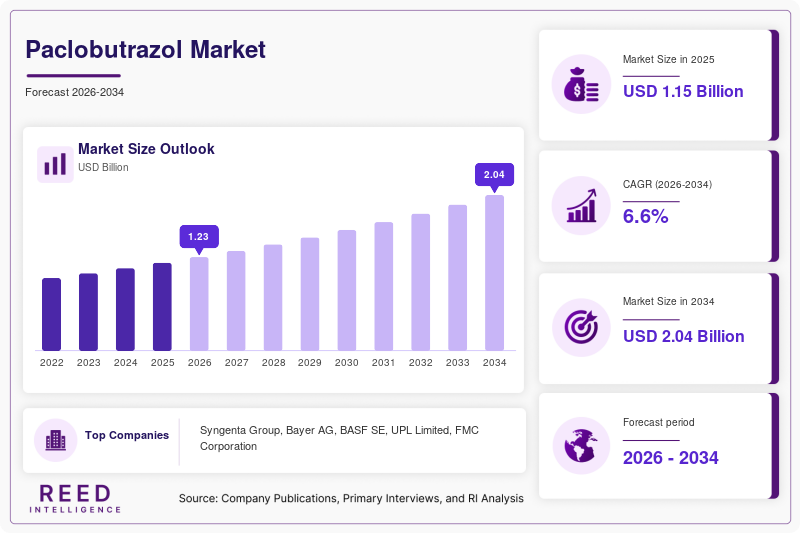
The Paclobutrazol Market size is estimated at USD 1.15 billion, increasing to approximately USD 1.23 billion in 2026. The market is projected to reach USD 2.05 billion by 2034, growing at a compound annual growth rate (CAGR) of 6.6% from 2025 to 2034.
The growth trajectory of this market is influenced by several key factors. First, the increasing adoption of precision farming techniques is encouraging the use of plant growth regulators such as paclobutrazol to optimize crop performance. Farmers are focusing on improving yield per hectare due to limited arable land, which is driving demand for efficient agrochemicals. Second, the rising demand for high-quality fruits and ornamental plants is supporting market expansion. Paclobutrazol is extensively used in horticulture to regulate plant growth and improve aesthetic appeal, especially in greenhouse and nursery settings.
Key Highlights
- Market size is projected to grow from USD 1.15 billion in 2025 to USD 2.05 billion by 2034, reflecting steady expansion. This growth highlights increasing adoption across both developed and emerging agricultural economies.
- The market is expected to register a CAGR of 6.6% during the forecast period. This consistent growth rate indicates stable demand driven by technological advancements and evolving farming practices.
- Strong demand from horticulture and fruit cultivation sectors continues to support market expansion. Growers rely on paclobutrazol to enhance flowering, improve fruit quality, and maintain crop uniformity.
- The increasing adoption of precision agriculture practices is driving efficient use of growth regulators. Farmers are leveraging data-driven tools to optimize application and maximize yield outcomes.
Market Trends
Rising Integration of Paclobutrazol in Precision Agriculture
The integration of paclobutrazol into precision agriculture systems is becoming a defining trend in the market. Farmers are increasingly adopting data-driven approaches to optimize crop inputs and improve yield outcomes. Paclobutrazol plays a key role in regulating plant growth, making it suitable for controlled agricultural environments. The use of drones, sensors, and smart irrigation systems allows precise application of growth regulators, reducing wastage and enhancing efficiency. This trend is particularly visible in developed regions where digital farming solutions are widely implemented. As precision agriculture continues to expand globally, the demand for paclobutrazol is expected to grow in tandem.
Growing Demand from Horticulture and High-Value Crops
The increasing cultivation of high-value crops such as fruits, vegetables, and ornamental plants is driving demand for paclobutrazol. Growers are focusing on improving crop quality, uniformity, and market appeal, which are critical factors in competitive agricultural markets. Paclobutrazol is widely used to control plant size, enhance flowering, and improve fruit set, making it an essential tool in horticulture. The expansion of greenhouse farming and urban agriculture is further supporting this trend. As consumer demand for visually appealing and high-quality produce increases, the use of paclobutrazol in specialized crop segments is expected to rise steadily.
Market Drivers
Increasing Need for Yield Optimization in Limited Farmland
The growing global population and shrinking arable land are driving the need for efficient agricultural practices. Farmers are under pressure to maximize output from limited resources, leading to increased adoption of plant growth regulators such as paclobutrazol. By controlling excessive vegetative growth, paclobutrazol helps redirect plant energy toward reproductive development, resulting in improved yield and quality. This is particularly important in regions with high population density where food security is a concern. The ability of paclobutrazol to enhance crop productivity without requiring additional land is a key factor supporting market growth.
Expansion of Commercial Horticulture and Floriculture
The rapid expansion of commercial horticulture and floriculture industries is another significant driver of the paclobutrazol market. These sectors require precise control over plant growth to meet market standards and consumer preferences. Paclobutrazol is widely used in nurseries and greenhouses to produce compact, uniform plants with enhanced flowering characteristics. The increasing demand for ornamental plants, landscaping services, and decorative greenery is contributing to the growth of this segment. Additionally, export-oriented fruit production is boosting the use of growth regulators to ensure consistent quality and shelf life.
Market Restraint
Environmental and Regulatory Concerns
One of the primary restraints affecting the paclobutrazol market is the growing concern over environmental impact and regulatory restrictions. Paclobutrazol is a synthetic chemical, and its prolonged use can lead to soil residue accumulation, potentially affecting soil health and microbial activity. Regulatory authorities in several regions have imposed strict guidelines on the use of agrochemicals, including growth regulators, to minimize environmental risks.
For instance, certain countries have introduced limitations on the concentration and frequency of paclobutrazol application, which can restrict its widespread use. Farmers are also becoming more cautious about chemical inputs due to increasing awareness of sustainable farming practices. This shift toward organic and eco-friendly agriculture may reduce the adoption of synthetic growth regulators.
Additionally, compliance with regulatory standards can increase production costs for manufacturers, impacting market dynamics. Companies need to invest in research and development to create safer formulations and meet evolving regulatory requirements. While paclobutrazol remains an effective tool for crop management, these environmental and regulatory challenges may hinder market growth to some extent.
Market Opportunities
Development of Eco-Friendly and Controlled-Release Formulations
The development of eco-friendly and controlled-release formulations presents a significant opportunity for the paclobutrazol market. Manufacturers are increasingly focusing on reducing the environmental impact of agrochemicals by introducing innovative formulations that minimize residue buildup and enhance efficiency. Controlled-release technologies allow gradual release of the active ingredient, ensuring sustained effectiveness while reducing the need for repeated applications. This not only improves crop performance but also aligns with sustainable farming practices. As regulatory pressures increase, the demand for environmentally compatible solutions is expected to grow, creating new avenues for market expansion.
Rising Adoption in Emerging Agricultural Economies
Emerging economies in Asia, Africa, and Latin America offer substantial growth opportunities for the paclobutrazol market. These regions are experiencing rapid agricultural modernization, supported by government initiatives and increasing investment in farming infrastructure. Farmers are becoming more aware of advanced crop management techniques, including the use of growth regulators. The expansion of commercial farming and export-oriented agriculture is further driving demand for paclobutrazol. Additionally, the increasing availability of affordable agrochemical products is making it easier for small and medium-scale farmers to adopt these solutions, contributing to market growth.
Segmental Analysis
By Type
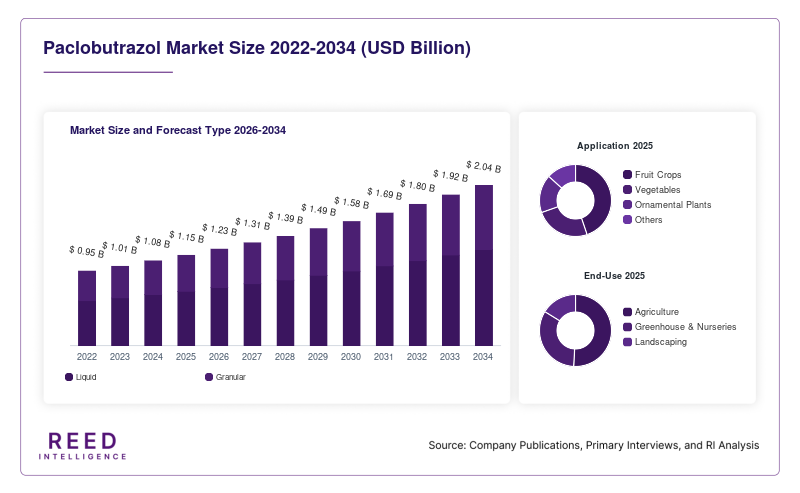
The liquid formulation segment dominated the market in 2024, accounting for approximately 62% of the total share. Liquid paclobutrazol is widely preferred due to its ease of application and uniform distribution across crops. Farmers can apply it through foliar sprays or soil drenching, making it versatile for different agricultural practices. The high solubility and rapid absorption of liquid formulations enhance their effectiveness, contributing to their widespread adoption. Additionally, liquid products are compatible with modern irrigation systems, further supporting their dominance in the market.
The granular formulation segment is expected to be the fastest-growing, with a projected CAGR of 7.2% during the forecast period. This growth is driven by the increasing demand for controlled-release solutions that provide long-term effectiveness. Granular paclobutrazol is particularly useful in large-scale farming where precise application is required. The reduced risk of over-application and improved safety profile make it an attractive option for farmers. As the focus on sustainable agriculture increases, the demand for granular formulations is expected to rise.
By Application
The fruit crops segment held the largest market share in 2024, accounting for approximately 48%. Paclobutrazol is extensively used in fruit cultivation to control plant growth, enhance flowering, and improve fruit quality. Crops such as mango, apple, and citrus benefit significantly from the use of growth regulators. The increasing demand for high-quality fruits in both domestic and international markets is driving the adoption of paclobutrazol in this segment. Farmers are focusing on improving yield consistency and shelf life, further supporting market growth.
The ornamental plants segment is expected to register the fastest growth, with a CAGR of 7.8%. The rising demand for decorative plants in residential and commercial spaces is driving this segment. Paclobutrazol is used to produce compact, aesthetically appealing plants with enhanced flowering characteristics. The expansion of urban landscaping and indoor gardening trends is contributing to the growth of this segment.
By End-Use
The agriculture sector dominated the market in 2024, accounting for approximately 70% of the total share. Paclobutrazol is widely used in field crops and horticulture to improve productivity and manage plant growth. The increasing adoption of advanced farming techniques and the need for efficient crop management solutions are driving the use of paclobutrazol in agriculture. The ability to enhance yield and reduce crop losses makes it a valuable tool for farmers.
The greenhouse and nursery segment is expected to be the fastest-growing, with a CAGR of 8.1%. The growth of controlled environment agriculture is driving demand in this segment. Greenhouses and nurseries require precise control over plant growth to meet market standards. Paclobutrazol helps achieve uniform plant size and improved flowering, making it an essential component of modern horticulture practices.
Regional Analysis
North America
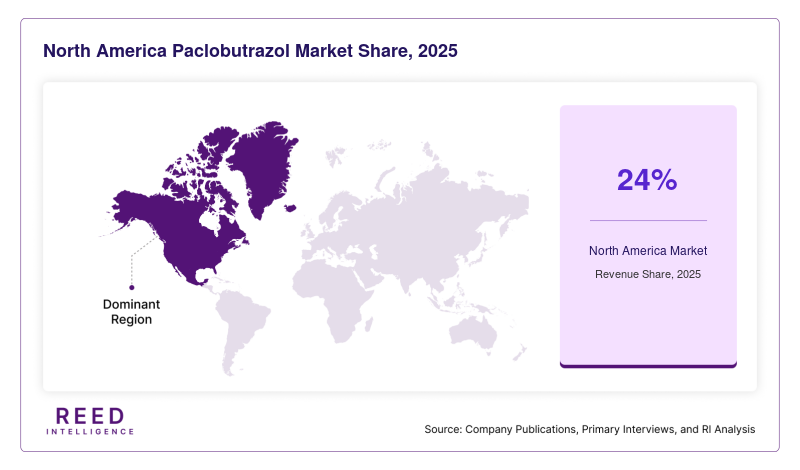
North America accounted for approximately 24% of the paclobutrazol market share in 2025, with a projected CAGR of around 5.8% during the forecast period. The region’s growth is driven by the widespread adoption of advanced agricultural practices and high awareness of plant growth regulators. The presence of well-established agrochemical companies and strong research infrastructure further supports market development. Farmers in the region are increasingly using paclobutrazol to enhance crop yield and quality, particularly in horticulture and specialty crops.
The United States dominates the North American market due to its large-scale commercial farming sector. A key growth factor in the country is the increasing adoption of precision agriculture technologies. Farmers are integrating data analytics and automation into crop management, which enhances the efficiency of growth regulator application. This trend is expected to sustain demand for paclobutrazol in the region.
Europe
Europe held a market share of about 20% in 2025, with an anticipated CAGR of 5.5% through 2034. The region’s market is influenced by strict regulatory frameworks and a strong focus on sustainable agriculture. Despite regulatory challenges, the demand for paclobutrazol remains steady due to its effectiveness in crop management. The growing horticulture sector and increasing demand for high-quality produce are key factors supporting market growth.
Germany leads the European market, supported by its advanced agricultural practices and strong emphasis on research and innovation. A unique growth factor in the country is the increasing use of greenhouse farming. Controlled environment agriculture requires precise growth regulation, which drives the adoption of paclobutrazol in the region.
Asia Pacific
Asia Pacific is the largest and fastest-growing region, accounting for 34% of the market share in 2025 and expected to grow at a CAGR of 7.5%. The region’s growth is driven by increasing agricultural activities, rising population, and growing demand for food security. Countries in this region are adopting modern farming techniques to improve productivity, which is boosting the use of plant growth regulators.
China dominates the Asia Pacific market due to its extensive agricultural sector. A key growth factor is the increasing focus on high-value crop production, including fruits and vegetables. The government’s support for agricultural modernization and the availability of cost-effective agrochemicals further contribute to market expansion.
Middle East & Africa
The Middle East & Africa region accounted for approximately 10% of the market share in 2025, with a projected CAGR of 6.2%. The market is driven by the need to improve agricultural productivity in arid and semi-arid regions. Paclobutrazol is used to enhance crop resilience and manage growth under challenging climatic conditions.
South Africa is the leading market in this region. A unique growth factor is the increasing adoption of irrigation-based farming systems. Farmers are using growth regulators to optimize water usage and improve crop yield, which supports the demand for paclobutrazol.
Latin America
Latin America held a market share of around 12% in 2025, with a forecast CAGR of 6.8%. The region’s agricultural sector is expanding rapidly, driven by increasing exports of agricultural products. The demand for high-quality produce is encouraging the use of growth regulators.
Brazil dominates the Latin American market due to its large agricultural base. A key growth factor is the expansion of fruit cultivation for export markets. Paclobutrazol is widely used to enhance fruit quality and ensure consistent production, supporting market growth in the region.
Competitive Landscape
The paclobutrazol market is moderately competitive, with several global and regional players operating in the industry. Key companies are focusing on product innovation, strategic partnerships, and expansion into emerging markets to strengthen their market position. The presence of established agrochemical manufacturers ensures a steady supply of high-quality products, while smaller players contribute to market diversity through localized offerings.
A leading company in the market is Syngenta Group, which holds a significant share due to its strong product portfolio and global distribution network. The company has recently focused on developing advanced formulations that improve efficiency and reduce environmental impact. Other major players are investing in research and development to introduce innovative solutions and comply with evolving regulatory standards.
The competitive landscape is also characterized by increasing mergers and acquisitions, as companies aim to expand their geographic presence and enhance their product offerings. This trend is expected to continue as the market evolves.
Key Players
- Syngenta Group
- Bayer AG
- BASF SE
- UPL Limited
- FMC Corporation
- ADAMA Agricultural Solutions
- Nufarm Limited
- Sumitomo Chemical Co., Ltd.
- Corteva Agriscience
- Jiangsu Fengshan Group
- Shandong Weifang Rainbow Chemical
- Tata Chemicals Ltd.
- Rallis India Limited
- Crystal Crop Protection
- Zhejiang Sega Science and Technology
Recent Developments
- In 2024, a major agrochemical company introduced a controlled-release paclobutrazol formulation aimed at reducing environmental impact and improving efficiency.
- In 2023, a leading manufacturer expanded its production capacity in Asia Pacific to meet growing regional demand.
- In 2024, a strategic partnership was formed between two agrochemical firms to develop sustainable crop management solutions incorporating paclobutrazol.
Paclobutrazol Market Segments
Type
- Liquid
- Granular
Application
- Fruit Crops
- Vegetables
- Ornamental Plants
- Others
End-Use
- Agriculture
- Greenhouse & Nurseries
- Landscaping
By Region
- North America
- Europe
- APAC
- Middle East and Africa
- LATAM