Padlock Seal Market Size, Share & Demand Report By Material Type (Plastic Padlock Seals, Metal Padlock Seals, Hybrid Composite Padlock Seals), By Application (Logistics and Transportation, Food and Beverage Distribution, Utilities and Energy, Healthcare and Pharmaceuticals, Retail and Warehousing, Industrial Manufacturing), By End-Use Industry (Logistics Service Providers, Government and Customs Authorities, Healthcare and Pharmaceutical Companies, Food Processing Companies, Utility Providers, I
USD 3950
Market Overview
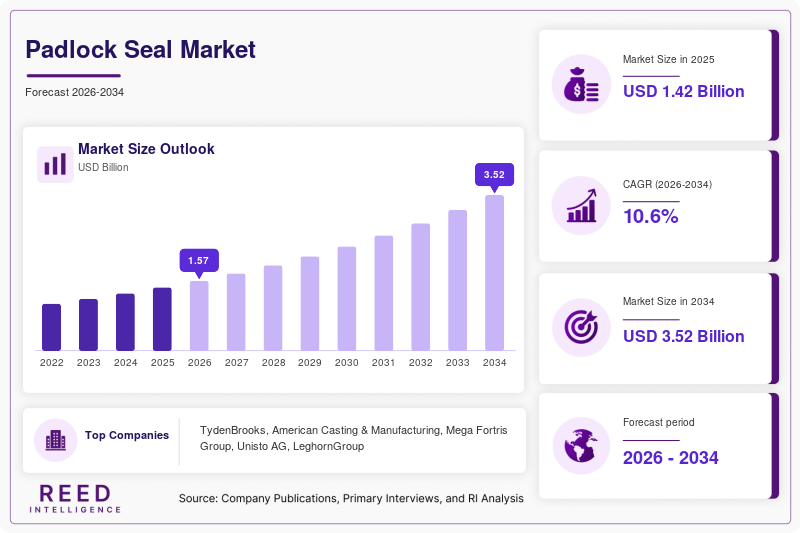
The global Padlock Seal Market size was valued at approximately USD 1.42 billion in 2026 and is projected to reach nearly USD 3.18 billion by 2034, expanding at a CAGR of 10.6% during the forecast period from 2026 to 2034. The market continues to gain momentum due to rising security requirements across logistics, transportation, utilities, food distribution, and customs operations. Padlock seals are widely used for securing cargo containers, trailers, tanker trucks, storage units, and industrial equipment because they provide visible tamper evidence and operational convenience. The increasing movement of goods through international supply chains has created consistent demand for reliable sealing solutions that can improve cargo integrity and reduce theft-related losses.
The expansion of global trade and cross-border freight transportation has remained one of the primary factors supporting market growth. Governments and logistics operators are implementing stricter cargo security regulations, especially for containerized shipping and high-value freight movement. Companies are also adopting serialized and RFID-enabled padlock seals to improve traceability and digital monitoring capabilities. In addition, the rise of e-commerce distribution networks and cold chain logistics has accelerated the use of tamper-evident sealing products across warehouses and transportation fleets. Manufacturers are responding by developing lightweight, corrosion-resistant, and recyclable seal materials that improve operational performance while supporting sustainability initiatives.
Key Highlights
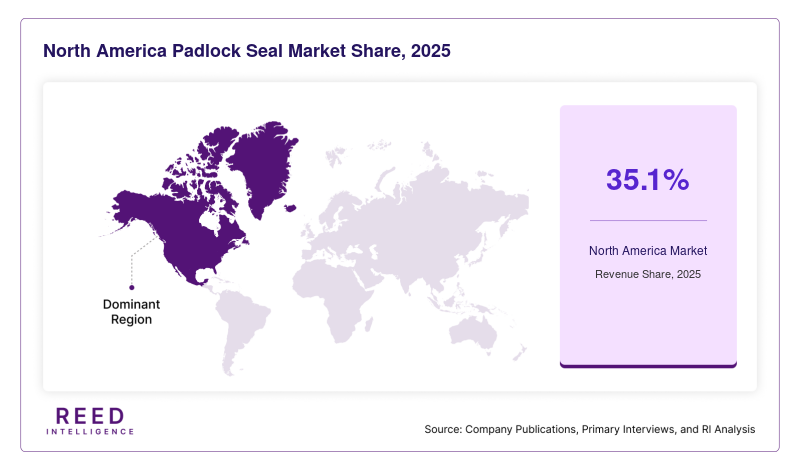
- North America dominated the market with a 35.1% share in 2025, while Asia Pacific is expected to grow at the fastest CAGR of 11.8% during 2026–2034.
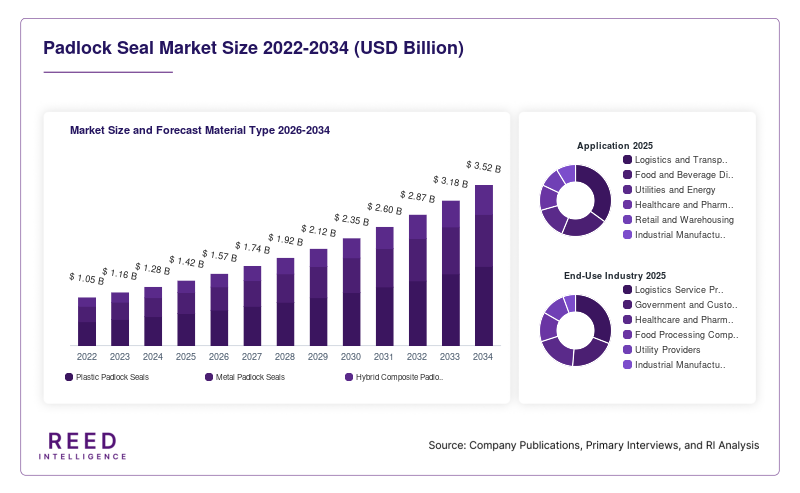
- By material type, plastic padlock seals accounted for the largest share of 43.6%, while metal padlock seals are projected to grow at a CAGR of 11.5%.
- By application, logistics and transportation led with a 39.8% share, whereas food and beverage distribution is expected to expand at a CAGR of 11.9%.
- By end-use industry, logistics service providers held the dominant share of 34.4%, while healthcare and pharmaceutical companies are forecast to grow at a CAGR of 12.2%.
- The United States remained the dominant country, with market values of USD 425 million in 2024 and USD 468 million in 2025.
Market Trends
Smart and RFID-Integrated Security Seals
The integration of RFID technology and digital tracking capabilities into padlock seals has emerged as a major trend influencing product innovation across the market. Logistics providers and customs authorities are increasingly deploying smart seals that can transmit shipment data in real time and improve visibility throughout transportation networks. RFID-enabled padlock seals support automated scanning, inventory management, and tamper alerts, which helps reduce manual inspection requirements and operational delays. This trend is particularly visible in container shipping, pharmaceutical transportation, and high-value cargo movement, where supply chain transparency has become essential for compliance and risk management. Manufacturers are focusing on compact designs, enhanced battery performance, and cloud-based monitoring systems to strengthen adoption among large-scale fleet operators.
The growing implementation of digital freight management systems is also encouraging the use of intelligent sealing technologies. Businesses are demanding integrated solutions that combine physical security with software-based analytics to improve operational efficiency. As global supply chains become more interconnected, companies are investing in digital seal ecosystems capable of supporting predictive maintenance and cargo authentication processes. The trend is expected to strengthen further as governments introduce stricter transportation monitoring requirements and logistics firms prioritize real-time tracking capabilities.
Rising Demand for Sustainable and Recyclable Seal Materials
Sustainability initiatives across packaging and transportation industries are driving the adoption of environmentally responsible padlock seal solutions. Manufacturers are increasingly introducing recyclable plastics, reusable metal components, and low-carbon production processes to align with environmental regulations and corporate sustainability goals. Companies operating in food distribution, retail logistics, and industrial transportation are under pressure to reduce waste generation across supply chain operations. This has increased demand for eco-friendly sealing products that can maintain durability and tamper resistance while lowering environmental impact.
The use of biodegradable materials and reusable locking mechanisms has gained traction among regional logistics operators and multinational corporations alike. Several producers are redesigning product portfolios to minimize raw material consumption and improve recyclability after disposal. Sustainability has also become an important purchasing factor for government agencies and international shipping companies seeking to meet carbon reduction targets. As environmental compliance standards continue to evolve, demand for recyclable and lightweight padlock seals is expected to remain a key trend shaping long-term market expansion.
Market Drivers
Expansion of Global Logistics and Cross-Border Trade
The rapid expansion of global logistics operations and international freight movement continues to drive demand for padlock seals across multiple industries. Increasing trade activity between manufacturing hubs and consumer markets has created higher requirements for cargo protection, shipment verification, and tamper-evident security solutions. Shipping companies, trucking fleets, and warehouse operators are adopting advanced sealing systems to prevent unauthorized access and reduce cargo theft incidents. The growing use of intermodal transportation and containerized shipping has further strengthened demand for durable padlock seals capable of withstanding harsh environmental conditions during transit.
E-commerce growth has also accelerated the need for efficient transportation security solutions, especially for last-mile delivery and warehouse distribution networks. Businesses handling pharmaceuticals, electronics, chemicals, and food products require reliable seals to ensure product integrity throughout the supply chain. Governments are additionally enforcing stricter customs inspection procedures and cargo monitoring regulations, encouraging broader deployment of serialized and traceable sealing systems. These factors collectively continue to support consistent market expansion across developed and emerging economies.
Increasing Security Regulations Across Industrial Sectors
Rising security concerns and stricter regulatory frameworks across transportation, utilities, healthcare, and manufacturing sectors are significantly supporting padlock seal adoption. Regulatory agencies are emphasizing cargo authentication, contamination prevention, and tamper detection to reduce operational risks and improve supply chain accountability. Industries dealing with hazardous chemicals, pharmaceutical products, and sensitive equipment are increasingly required to implement traceable sealing mechanisms that comply with international safety standards.
The utility sector has also increased the use of padlock seals for securing electrical infrastructure, meters, and energy distribution systems against unauthorized interference. In the healthcare industry, tamper-evident seals are widely used to secure medical storage units and pharmaceutical shipments during transportation. Additionally, airports, ports, and government facilities are adopting high-security metal padlock seals to strengthen asset protection and operational monitoring. The continuous expansion of industrial safety regulations and anti-theft initiatives is expected to sustain long-term demand for advanced padlock seal technologies.
Market Restraint
Price Sensitivity and Availability of Low-Cost Alternatives
Price sensitivity among small logistics providers and regional transportation companies remains a significant restraint affecting the growth of the padlock seal market. Many businesses operating with limited operational budgets continue to prioritize low-cost sealing products instead of adopting advanced tamper-evident or RFID-enabled solutions. The presence of inexpensive alternatives, including traditional cable ties and generic locking systems, has intensified pricing pressure for manufacturers across both developed and emerging markets. As a result, several suppliers face challenges in maintaining profit margins while simultaneously investing in product innovation and regulatory compliance.
The market also experiences quality inconsistency due to the availability of counterfeit and non-certified seals in certain regions. These low-quality alternatives often fail to meet international security standards and may compromise cargo safety during transportation. Smaller businesses sometimes prefer cheaper products despite the risk of theft, contamination, or customs rejection, particularly in highly competitive freight markets. In addition, fluctuations in raw material prices, especially for metals and industrial plastics, increase production costs and create additional pricing challenges for manufacturers. This restraint may slow the adoption of premium sealing technologies among cost-sensitive end users, particularly in developing economies where procurement decisions are strongly influenced by upfront expenses.
Market Opportunities
Growing Adoption Across Pharmaceutical and Healthcare Logistics
The expansion of pharmaceutical distribution and healthcare logistics presents a significant opportunity for the padlock seal market. Medical products, vaccines, laboratory samples, and controlled substances require secure transportation systems that can maintain product integrity and prevent unauthorized access. As healthcare supply chains become more globalized, logistics providers are investing in tamper-evident sealing technologies capable of improving compliance and shipment traceability. The increasing movement of temperature-sensitive medicines through cold chain networks has further strengthened the demand for durable and contamination-resistant padlock seals.
Governments and healthcare regulators are implementing stricter transportation standards to reduce counterfeit drug circulation and improve patient safety. This has encouraged pharmaceutical companies to deploy serialized and digitally monitored sealing systems across manufacturing plants, storage facilities, and transportation fleets. Emerging economies are also investing heavily in healthcare infrastructure, creating additional opportunities for seal manufacturers targeting hospital logistics and medical supply chains. The rising emphasis on healthcare security and compliance is expected to create sustained growth opportunities for advanced padlock seal solutions over the forecast period.
Expansion of Smart Infrastructure and Utility Security Applications
The growing investment in smart infrastructure projects and utility security systems offers another important opportunity for market participants. Utility companies are increasingly deploying padlock seals to secure electricity meters, water distribution systems, telecommunications equipment, and energy infrastructure against tampering and unauthorized access. The integration of digital monitoring technologies into utility networks has created demand for high-security seals that can support operational transparency and maintenance tracking.
Governments in several countries are investing in smart city development programs that require enhanced infrastructure protection and monitoring capabilities. This trend is encouraging the adoption of serialized and RFID-enabled padlock seals across public utilities and transportation systems. Industrial facilities are also expanding the use of tamper-evident seals to protect hazardous equipment and restricted-access areas. As infrastructure modernization initiatives continue to accelerate, manufacturers capable of delivering durable and digitally compatible sealing products are expected to benefit from substantial long-term growth opportunities.
Segmental Analysis
By Material Type
Plastic padlock seals accounted for the dominant share of approximately 43.6% in 2024 due to their cost efficiency, lightweight structure, and broad applicability across transportation and warehouse operations. These seals are widely used in retail logistics, food distribution, courier services, and utility applications where disposable tamper-evident solutions are required. Plastic variants offer advantages such as corrosion resistance, easy customization, and compatibility with serialized identification systems. Manufacturers are increasingly producing recyclable and biodegradable plastic seals to align with sustainability requirements from logistics operators and regulatory authorities. The availability of multiple color options and locking mechanisms has also improved their adoption in inventory management and cargo categorization processes. Growing e-commerce shipment volumes and expanding cold chain transportation activities continue to support the widespread deployment of plastic padlock seals across global supply chains.
Metal padlock seals are expected to register the fastest CAGR of 11.5% during the forecast period because of their superior durability and high-security performance. Industries handling valuable cargo, hazardous materials, and international freight increasingly prefer metal seals for enhanced tamper resistance and operational reliability. The transportation of chemicals, petroleum products, and industrial equipment has significantly increased the use of heavy-duty metal locking systems capable of withstanding extreme environmental conditions. Manufacturers are also introducing stainless steel and aluminum-based products with advanced corrosion-resistant coatings to improve long-term usability. Integration of laser marking, barcode systems, and RFID technologies into metal seals is further supporting adoption among customs authorities and logistics operators. The growing focus on cargo protection and compliance with international transportation standards is expected to accelerate demand for metal padlock seals in both developed and emerging markets.
By Application
Logistics and transportation represented the largest application segment, accounting for nearly 39.8% of the market share in 2024. The extensive movement of goods through trucking fleets, shipping containers, rail freight systems, and warehouse facilities has created sustained demand for tamper-evident security solutions. Padlock seals are widely used to secure cargo doors, trailers, tanker trucks, and storage containers against theft and unauthorized access. The increasing complexity of international supply chains has encouraged logistics companies to adopt serialized and digitally traceable seals for better shipment visibility and operational accountability. Growth in e-commerce activities and same-day delivery services has further strengthened demand for efficient sealing products that can support rapid transportation operations. Additionally, customs authorities and freight operators are implementing stricter inspection procedures, increasing the use of certified high-security seals across global logistics networks.
Food and beverage distribution is projected to witness the fastest CAGR of 11.9% during the forecast period due to rising concerns regarding product contamination and transportation security. Manufacturers and distributors are increasingly deploying tamper-evident seals to protect packaged foods, beverages, dairy products, and temperature-sensitive shipments throughout the supply chain. The expansion of cold chain logistics and international food trade has created higher demand for reliable sealing systems capable of maintaining hygiene and product integrity. Regulatory agencies in multiple countries are enforcing stricter food safety requirements, encouraging businesses to implement advanced traceability solutions. In addition, consumer awareness regarding packaging security and authenticity has influenced food companies to strengthen transportation monitoring processes. The adoption of recyclable sealing materials and digitally trackable systems is expected to further support segment growth over the coming years.
By End-Use Industry
Logistics service providers held the dominant share of approximately 34.4% in 2024 because of their extensive reliance on cargo protection and transportation monitoring systems. Third-party logistics companies, freight forwarding firms, and warehouse operators use padlock seals across large transportation networks to minimize theft risks and maintain shipment integrity. The rapid expansion of global trade and e-commerce distribution channels has increased the operational importance of secure transportation practices. Logistics service providers are increasingly implementing serialized seals and digital tracking technologies to improve supply chain transparency and customer confidence. The need to comply with customs regulations and cargo authentication standards has also contributed to higher adoption of advanced sealing products. Furthermore, the growth of intermodal transportation systems and cross-border shipping activities continues to create strong demand for reliable tamper-evident sealing solutions within the logistics industry.
Healthcare and pharmaceutical companies are expected to register the fastest CAGR of 12.2% during the forecast period owing to rising requirements for secure medical transportation and anti-counterfeit protection. Pharmaceutical manufacturers and healthcare distributors rely on tamper-evident seals to safeguard medicines, vaccines, laboratory materials, and medical devices during storage and transportation. Increasing regulatory pressure related to drug traceability and patient safety has accelerated the adoption of serialized and RFID-enabled sealing systems across healthcare supply chains. The rapid expansion of cold chain pharmaceutical logistics and biologics transportation has further strengthened demand for durable and contamination-resistant sealing products. Emerging economies are also investing heavily in healthcare infrastructure, creating additional opportunities for manufacturers specializing in high-security medical transportation solutions. Growing concerns regarding counterfeit medicines and supply chain integrity are expected to sustain strong segment growth throughout the forecast period.
Regional Analysis
North America
North America accounted for approximately 35.1% of the global Padlock Seal Market in 2025 and maintained its position as the leading regional market. The region is projected to expand at a CAGR of 9.8% during the forecast period due to the strong presence of logistics providers, transportation companies, and advanced manufacturing industries. High adoption of tamper-evident technologies across customs operations and cargo transportation has supported regional market expansion. The growing use of RFID-enabled seals and digital monitoring systems has further strengthened demand among shipping operators and warehouse management companies.
The United States remained the dominant country within the regional market because of its large-scale freight transportation network and strong focus on supply chain security. The country has experienced increasing investments in cargo monitoring infrastructure, particularly for cross-border transportation and pharmaceutical logistics. The expansion of e-commerce fulfillment centers and cold chain distribution systems has also contributed to rising demand for advanced sealing products. Government regulations related to transportation safety and anti-theft measures continue to encourage the adoption of certified high-security padlock seals across multiple industrial sectors.
Europe
Europe represented nearly 27.4% of the global market share in 2025 and is anticipated to grow at a CAGR of 9.4% between 2026 and 2034. The region benefits from well-established transportation networks, stringent product safety regulations, and increasing trade activities across the European Union. Companies operating in automotive logistics, chemical transportation, and food distribution are major users of tamper-evident sealing solutions. Manufacturers across Europe are focusing on recyclable materials and environmentally sustainable production processes to comply with regional environmental standards.
Germany emerged as the dominant country in the European market due to its extensive industrial manufacturing base and strong export activities. The country’s advanced automotive and engineering sectors require secure transportation systems capable of preventing cargo tampering and shipment losses. Germany has also witnessed increasing demand for intelligent sealing technologies integrated with digital logistics platforms. The emphasis on sustainability and regulatory compliance has encouraged companies to adopt reusable metal seals and recyclable plastic sealing products, supporting consistent market growth.
Asia Pacific
Asia Pacific held approximately 23.8% of the global Padlock Seal Market in 2025 and is forecast to register the fastest CAGR of 11.8% through 2034. Rapid industrialization, expanding trade routes, and rising manufacturing activities are driving significant demand for cargo security products across the region. Countries including China, India, Japan, and South Korea are investing heavily in logistics infrastructure and port modernization projects. The expansion of e-commerce distribution networks and regional export industries has further increased the use of tamper-evident padlock seals.
China remained the leading country in the Asia Pacific market because of its dominant manufacturing sector and extensive container shipping operations. The country continues to experience strong demand for transportation security solutions across industrial exports, consumer electronics, and pharmaceutical logistics. Government investments in smart ports and automated freight management systems are encouraging broader adoption of RFID-integrated sealing technologies. Additionally, the rapid growth of domestic logistics companies and cross-border trade operations continues to create favorable conditions for regional market expansion.
Middle East & Africa
The Middle East & Africa region accounted for around 7.2% of the global market share in 2025 and is expected to grow at a CAGR of 8.9% during the forecast period. Increasing investments in logistics infrastructure, energy transportation, and port development projects are contributing to market growth across the region. Countries within the Gulf Cooperation Council are adopting advanced cargo security systems to improve transportation efficiency and reduce theft-related risks. Demand for high-security metal seals is particularly strong in oil and gas transportation applications.
The United Arab Emirates dominated the regional market due to its position as a major global trade and logistics hub. The country has invested significantly in port modernization, airport expansion, and free trade zone development to strengthen supply chain operations. The growing movement of high-value cargo and international freight through UAE logistics networks has increased the need for tamper-evident sealing solutions. In addition, the adoption of smart logistics technologies and digital customs systems is encouraging demand for serialized and RFID-enabled padlock seals.
Latin America
Latin America captured nearly 6.5% of the global Padlock Seal Market share in 2025 and is projected to expand at a CAGR of 8.5% through 2034. The market is benefiting from rising trade activities, infrastructure modernization projects, and expanding transportation networks across several economies. Industries such as agriculture, mining, and food exports rely heavily on secure cargo transportation systems, supporting demand for durable sealing products. Governments are also increasing efforts to improve customs monitoring and reduce cargo theft across regional transportation corridors.
Brazil remained the dominant country within the Latin American market due to its large agricultural export industry and expanding logistics infrastructure. The country has witnessed increasing demand for tamper-evident seals in food transportation, mining operations, and industrial shipping activities. Investments in warehouse automation and port development projects are encouraging logistics operators to adopt advanced security solutions. Additionally, growing awareness regarding supply chain transparency and anti-counterfeit measures continues to support the adoption of certified padlock seal products across the country.
Competitive Landscape
The global Padlock Seal Market remains moderately fragmented, with international manufacturers competing through product innovation, material advancements, pricing strategies, and distribution expansion. Leading companies are focusing on RFID-enabled seals, recyclable product designs, and customized tamper-evident solutions to strengthen their market positions. Strategic partnerships with logistics providers and transportation companies have become increasingly important for improving product penetration across global trade routes.
TydenBrooks maintained a leading position in the market due to its broad product portfolio, strong international distribution network, and focus on high-security transportation seals. The company recently expanded its digital seal offerings by introducing RFID-integrated padlock seals designed for cargo monitoring and customs compliance applications. Other major participants are investing in sustainable materials and advanced serialization technologies to address evolving regulatory requirements and customer expectations.
Key Players
- TydenBrooks
- American Casting & Manufacturing
- Mega Fortris Group
- Unisto AG
- LeghornGroup
- Acme Seals Group
- Cambridge Security Seals
- ESSENTRA PLC
- Versapak International
- Onseal Co. Ltd.
- ShangHai JingFan Container Seal Co. Ltd.
- HSA International Group
- Envopak Ltd.
- Hoefon Security Seals
- Safeflex International Ltd.
Recent Developments
- In February 2026, TydenBrooks introduced a new RFID-enabled metal padlock seal series designed for high-value cargo transportation and real-time logistics monitoring.
- In August 2025, Mega Fortris Group expanded its manufacturing operations in Southeast Asia to increase production capacity for recyclable plastic padlock seals.
- In November 2025, Unisto AG launched a sustainable sealing product line developed with partially recycled industrial plastics to support environmental compliance initiatives.
- In March 2026, ESSENTRA PLC partnered with regional logistics providers to deploy digitally serialized padlock seals across pharmaceutical transportation networks.
- In January 2026, American Casting & Manufacturing introduced corrosion-resistant aluminum padlock seals targeted at energy transportation and marine shipping applications.
Padlock Seal Market Segments
Material Type
- Plastic Padlock Seals
- Metal Padlock Seals
- Hybrid Composite Padlock Seals
Application
- Logistics and Transportation
- Food and Beverage Distribution
- Utilities and Energy
- Healthcare and Pharmaceuticals
- Retail and Warehousing
- Industrial Manufacturing
End-Use Industry
- Logistics Service Providers
- Government and Customs Authorities
- Healthcare and Pharmaceutical Companies
- Food Processing Companies
- Utility Providers
- Industrial Manufacturers
By Region
- North America
- Europe
- APAC
- Middle East and Africa
- LATAM