Pancrelipase Market Size, Share & Demand Report By Type (Delayed-Release, Immediate-Release), By Application (Cystic Fibrosis, Chronic Pancreatitis, Pancreatic Cancer, Others), By End-Use (Hospitals, Clinics, Homecare), By Distribution Channel (Hospital Pharmacies, Retail Pharmacies, Online Pharmacies), By Region & Segment Forecasts, 2025–2034
USD 3950
Market Overview
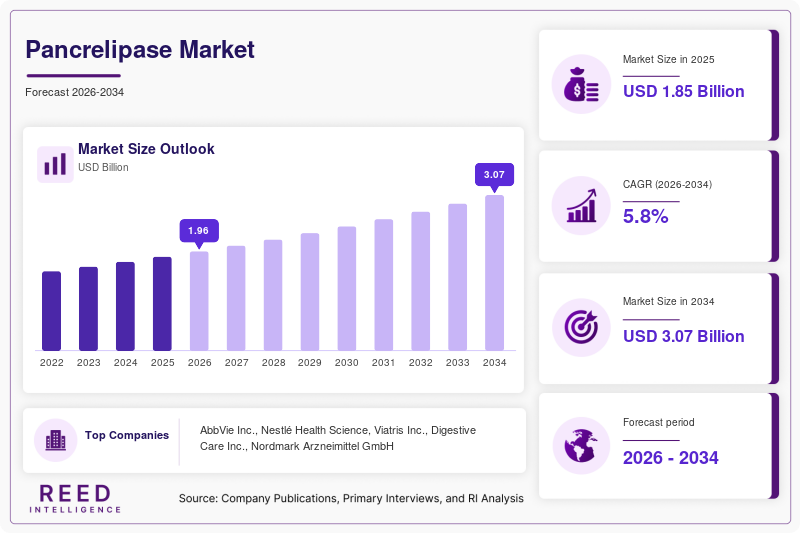
The Pancrelipase Market size is estimated at USD 1.85 billion, and it is projected to reach approximately USD 1.96 billion in 2026. Over the forecast period from 2025 to 2034, the market is expected to grow at a compound annual growth rate (CAGR) of 5.8%, reaching an estimated value of USD 3.12 billion by 2034. This growth trajectory reflects a combination of clinical need, technological advancement in formulation, and expanding access to treatment across emerging economies.
Pancrelipase is widely used as a pancreatic enzyme replacement therapy (PERT) to treat conditions such as cystic fibrosis, chronic pancreatitis, and pancreatic cancer. The increasing incidence of these conditions globally is a major factor supporting market expansion. Additionally, improved diagnostic capabilities have led to earlier identification of exocrine pancreatic insufficiency (EPI), thereby increasing treatment uptake.
Key Highlights
- Market size valued at USD 1.85 billion in 2025, reflecting steady demand across therapeutic applications. Growth is supported by increasing diagnosis rates and improved treatment accessibility globally.
- Expected to reach USD 3.12 billion by 2034, indicating sustained long-term expansion. This projection highlights consistent adoption of enzyme replacement therapies across regions.
- CAGR of 5.8% during 2025–2034, driven by stable clinical demand and innovation. The growth rate reflects both mature and emerging market contributions.
- Rising prevalence of pancreatic disorders boosting demand for pancrelipase therapies worldwide. Conditions such as cystic fibrosis and chronic pancreatitis are key contributors to this trend.
Market Trends
Increasing Adoption of Advanced Enzyme Formulations
The pancrelipase market is witnessing a transition toward advanced enzyme formulations that offer improved bioavailability and targeted delivery. Pharmaceutical companies are focusing on developing enteric-coated microspheres and delayed-release capsules that ensure enzyme activity is preserved through gastric transit and released effectively in the intestine. This innovation enhances therapeutic outcomes and reduces dosing frequency, which significantly improves patient adherence. Additionally, these formulations are being tailored to specific patient needs, such as pediatric and geriatric populations. The growing preference for such advanced products reflects a broader trend toward precision medicine and personalized treatment strategies in gastrointestinal care.
Expansion of Indications Beyond Traditional Applications
Another prominent trend in the pancrelipase market is the expansion of its use beyond traditional indications like cystic fibrosis. Increasing clinical research is exploring the benefits of pancrelipase in managing digestive complications associated with pancreatic cancer, diabetes, and post-surgical conditions. As awareness grows among healthcare professionals, off-label use is becoming more common, contributing to market growth. Moreover, ongoing clinical trials are expected to broaden the therapeutic scope of pancrelipase, opening new revenue streams for manufacturers. This diversification of applications is strengthening the market's resilience and creating opportunities for long-term expansion.
Market Drivers
Rising Prevalence of Pancreatic Disorders
The increasing global burden of pancreatic disorders such as chronic pancreatitis, cystic fibrosis, and pancreatic cancer is a major driver for the pancrelipase market. These conditions often result in exocrine pancreatic insufficiency, which necessitates enzyme replacement therapy for effective digestion and nutrient absorption. With lifestyle changes, aging populations, and improved diagnostic capabilities, the incidence of these disorders has risen steadily. Early diagnosis and treatment have become more common, leading to higher prescription rates of pancrelipase. Additionally, healthcare providers are emphasizing long-term management strategies, which further supports sustained demand for these therapies.
Growth in Healthcare Access and Awareness
Improved healthcare access and rising awareness about digestive health are significantly contributing to market growth. Governments and healthcare organizations are conducting awareness campaigns to educate patients about the symptoms and treatment options for pancreatic insufficiency. This has led to increased patient visits, early diagnoses, and higher treatment adoption rates. Furthermore, the expansion of healthcare infrastructure in developing regions has made enzyme replacement therapies more accessible. Insurance coverage for chronic conditions is also improving, reducing the financial burden on patients and encouraging consistent treatment adherence.
Market Restraint
High Cost of Treatment and Limited Generic Availability
One of the primary challenges facing the pancrelipase market is the high cost associated with treatment, particularly in regions with limited healthcare reimbursement systems. Branded pancrelipase products are often expensive due to complex manufacturing processes and stringent regulatory requirements. This cost burden can limit patient access, especially in low- and middle-income countries. Additionally, the availability of generic alternatives remains limited, which restricts price competition and keeps treatment costs elevated.
The impact of this restraint is significant in emerging markets, where patients may delay or discontinue therapy due to financial constraints. For example, individuals diagnosed with chronic pancreatitis may require lifelong enzyme supplementation, making affordability a critical factor in treatment adherence. This can lead to suboptimal health outcomes and reduced market penetration. Pharmaceutical companies are exploring cost-effective manufacturing techniques and expanding generic offerings to address this issue, but progress remains gradual.
Market Opportunities
Expansion in Emerging Markets
Emerging economies present significant growth opportunities for the pancrelipase market due to increasing healthcare investments and rising awareness about pancreatic disorders. Countries in Asia Pacific, Latin America, and parts of Africa are witnessing improvements in healthcare infrastructure, which is facilitating better diagnosis and treatment of exocrine pancreatic insufficiency. As governments prioritize healthcare accessibility, the demand for enzyme replacement therapies is expected to increase. Additionally, the growing middle-class population in these regions is more willing to spend on healthcare, further supporting market expansion.
Development of Generic and Cost-Effective Therapies
The development of generic pancrelipase products offers a promising opportunity to address affordability challenges and expand market reach. As patents for branded drugs expire, new entrants can introduce cost-effective alternatives, increasing competition and reducing prices. This is particularly beneficial in price-sensitive markets where high treatment costs have been a barrier to adoption. Moreover, advancements in manufacturing technologies are enabling companies to produce high-quality generics with improved stability and efficacy. This trend is expected to drive market growth by making treatment more accessible to a broader patient population.
Segmental Analysis
By Type
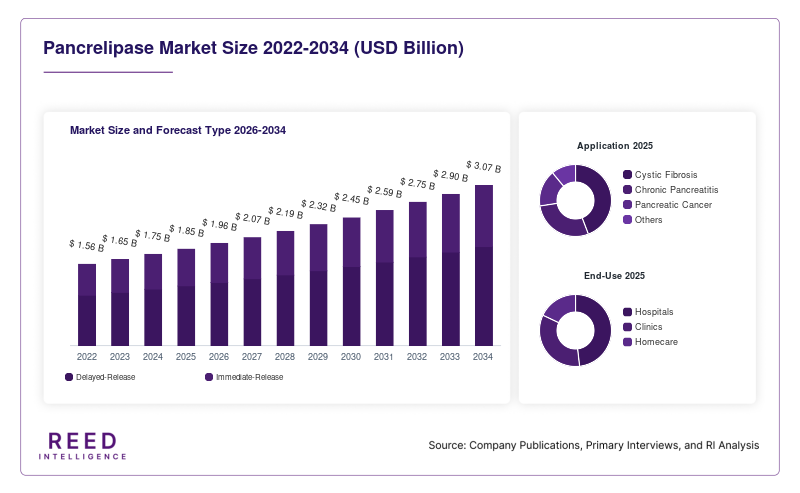
The delayed-release pancrelipase segment dominated the market in 2024, accounting for approximately 62% of the total share. These formulations are designed to protect enzymes from degradation in the stomach, ensuring effective release in the intestine. Their superior efficacy and convenience have made them the preferred choice among healthcare providers. Additionally, delayed-release capsules reduce dosing frequency, improving patient compliance. The segment’s dominance is further supported by strong clinical evidence demonstrating improved outcomes in patients with exocrine pancreatic insufficiency.
The immediate-release segment is expected to grow at the fastest CAGR of 6.5% during the forecast period. This growth is driven by the increasing demand for rapid symptom relief and the development of innovative formulations that enhance enzyme stability. Immediate-release products are particularly beneficial in acute conditions where quick therapeutic action is required. Advances in drug delivery technologies are further supporting the growth of this segment.
By Application
Cystic fibrosis accounted for the largest share of the pancrelipase market in 2024, contributing around 48%. Patients with cystic fibrosis commonly experience pancreatic insufficiency, making enzyme replacement therapy essential. The high prevalence of this condition and established treatment protocols drive consistent demand for pancrelipase in this segment.
Pancreatic cancer is the fastest-growing application segment, with a projected CAGR of 6.9%. The increasing incidence of pancreatic cancer and the growing recognition of enzyme therapy in managing digestive complications are key growth factors. Improved diagnosis and treatment strategies are also contributing to the expansion of this segment.
By End-Use
Hospitals dominated the end-use segment in 2024, accounting for approximately 55% of the market share. Hospitals serve as primary centers for diagnosis and treatment of pancreatic disorders, leading to high demand for pancrelipase. The availability of specialized healthcare professionals and advanced diagnostic tools further supports this segment’s dominance.
Homecare settings are expected to witness the fastest growth, with a CAGR of 6.7%. The increasing preference for home-based treatment and the availability of user-friendly drug formulations are driving this trend. Patients with chronic conditions prefer homecare due to convenience and cost-effectiveness, which is boosting demand in this segment.
Regional Analysis
North America
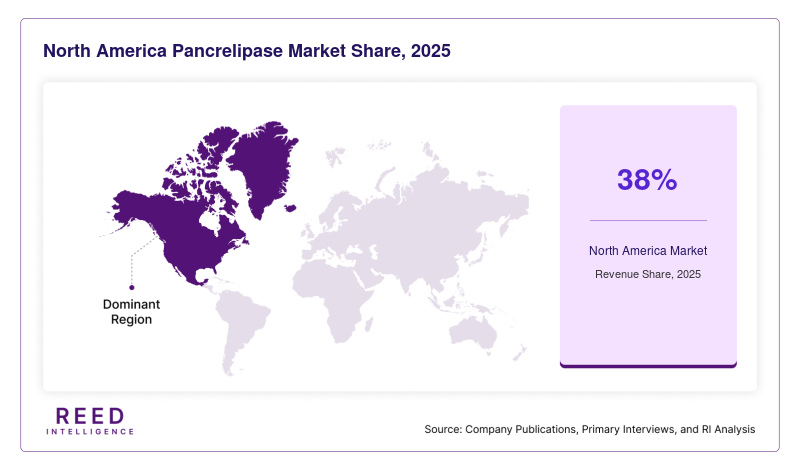
North America accounted for the largest share of the pancrelipase market in 2025, contributing approximately 38% of global revenue. The region is expected to maintain a steady CAGR of around 5.2% during the forecast period. The strong presence of leading pharmaceutical companies, advanced healthcare infrastructure, and high awareness levels contribute to the region’s dominant position. Additionally, the availability of reimbursement policies supports patient access to pancrelipase therapies.
The United States dominates the North American market due to its high prevalence of cystic fibrosis and pancreatic disorders. A key growth factor in this region is the widespread adoption of advanced drug formulations, which improve patient compliance and treatment outcomes. Continuous research and development efforts further strengthen the market.
Europe
Europe holds a significant share of the global pancrelipase market, accounting for approximately 27% in 2025. The region is projected to grow at a CAGR of 5.5% through 2034. Strong regulatory frameworks and well-established healthcare systems contribute to consistent demand for enzyme replacement therapies. Increasing awareness campaigns also support early diagnosis and treatment.
Germany leads the European market, driven by its robust healthcare infrastructure and high healthcare expenditure. A unique growth factor in this region is the increasing focus on preventive healthcare, which encourages early screening and treatment of pancreatic conditions, thereby boosting demand for pancrelipase.
Asia Pacific
Asia Pacific is the fastest-growing region in the pancrelipase market, with a CAGR of approximately 6.8%. In 2025, the region accounted for around 20% of the global market share. Rapid urbanization, increasing healthcare investments, and rising awareness about digestive disorders are key factors driving growth.
China dominates the Asia Pacific market due to its large patient population and improving healthcare infrastructure. A unique growth factor is the expansion of domestic pharmaceutical manufacturing, which is enhancing the availability and affordability of pancrelipase products in the region.
Middle East & Africa
The Middle East & Africa region accounted for about 8% of the global pancrelipase market in 2025 and is expected to grow at a CAGR of 5.1%. Growth in this region is supported by increasing healthcare investments and improving access to medical services.
Saudi Arabia is a key market within the region, driven by government initiatives to enhance healthcare infrastructure. A unique growth factor is the rising adoption of private healthcare services, which is improving access to advanced treatments, including enzyme replacement therapies.
Latin America
Latin America held approximately 7% of the global market share in 2025 and is projected to grow at a CAGR of 5.4%. The region’s growth is supported by improving healthcare systems and increasing awareness about pancreatic disorders.
Brazil leads the Latin American market due to its large population and expanding healthcare sector. A unique growth factor is the increasing availability of generic drugs, which is making pancrelipase therapy more accessible to a broader population.
Competitive Landscape
The pancrelipase market is moderately consolidated, with a mix of established pharmaceutical companies and emerging players competing for market share. Leading companies focus on product innovation, strategic partnerships, and geographic expansion to strengthen their market position. One of the key leaders in the market is AbbVie Inc., known for its strong portfolio of enzyme replacement therapies and extensive global presence.
Recent developments in the market include the introduction of advanced formulations with improved efficacy and patient compliance. Companies are also investing in research and development to expand the therapeutic applications of pancrelipase. Strategic collaborations and acquisitions are common, enabling companies to enhance their product offerings and enter new markets. The competitive environment is expected to intensify as new entrants introduce cost-effective alternatives and generics.
Key Players
- AbbVie Inc.
- Nestlé Health Science
- Viatris Inc.
- Digestive Care Inc.
- Nordmark Arzneimittel GmbH
- AzurRx BioPharma
- Sun Pharmaceutical Industries Ltd.
- Zydus Lifesciences Ltd.
- Teva Pharmaceutical Industries Ltd.
- Pfizer Inc.
- Johnson & Johnson
- Lupin Limited
- Cipla Limited
- Amneal Pharmaceuticals
- Hikma Pharmaceuticals
Recent Developments
- A major pharmaceutical company launched an advanced delayed-release pancrelipase formulation with improved enzyme stability and absorption.
- A leading player expanded its manufacturing facility in Asia to increase production capacity and meet growing regional demand.
- A strategic partnership between two companies focused on developing cost-effective generic pancrelipase products for emerging markets.
Pancrelipase Market Segments
Type
- Delayed-Release
- Immediate-Release
Application
- Cystic Fibrosis
- Chronic Pancreatitis
- Pancreatic Cancer
- Others
End-Use
- Hospitals
- Clinics
- Homecare
Distribution Channel
- Hospital Pharmacies
- Retail Pharmacies
- Online Pharmacies
By Region
- North America
- Europe
- APAC
- Middle East and Africa
- LATAM