Panthenol Market Size, Share & Demand Report By Type (D-Panthenol, DL-Panthenol), By Application (Personal Care Products, Pharmaceuticals, Food & Beverages, Animal Nutrition), By End-Use (Cosmetics & Personal Care Industry, Pharmaceutical Industry, Food Industry, Animal Feed Industry) & Segment Forecasts, 2026–2034
USD 3950
Market Overview
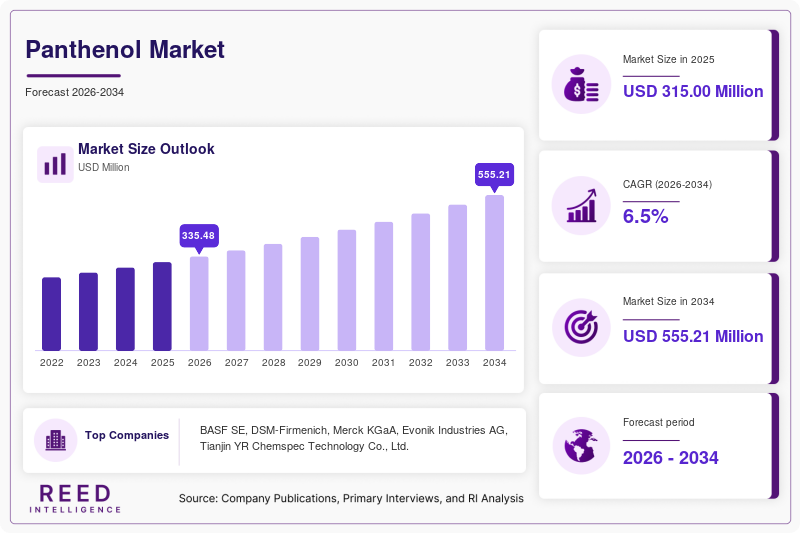
The global Panthenol Market size was valued at approximately USD 315 million in 2026 and is projected to reach around USD 520 million by 2034, expanding at a CAGR of 6.5% during the forecast period (2026–2034). The market growth is primarily driven by the increasing use of panthenol, also known as provitamin B5, across personal care, pharmaceutical, and food applications due to its moisturizing, healing, and anti-inflammatory properties. Its compatibility with a wide range of formulations and rising demand for functional ingredients in skincare and haircare products are further supporting market expansion.
A major global factor contributing to the growth of the market is the rising consumer awareness regarding ingredient transparency and skin health. Consumers are actively seeking products that contain clinically proven, skin-friendly components. Panthenol fits this demand due to its ability to improve skin hydration and strengthen hair structure. The increasing adoption of premium personal care products, especially in emerging economies, has significantly contributed to the consistent demand for panthenol-based formulations.
Key Highlights
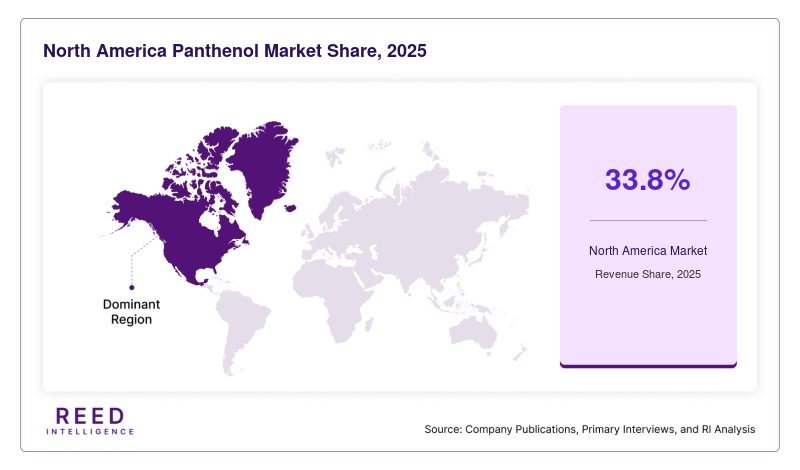
- North America dominated the market with a 33.8% share in 2025.
- Asia Pacific is expected to grow at the fastest CAGR of 7.4% during 2026–2034.
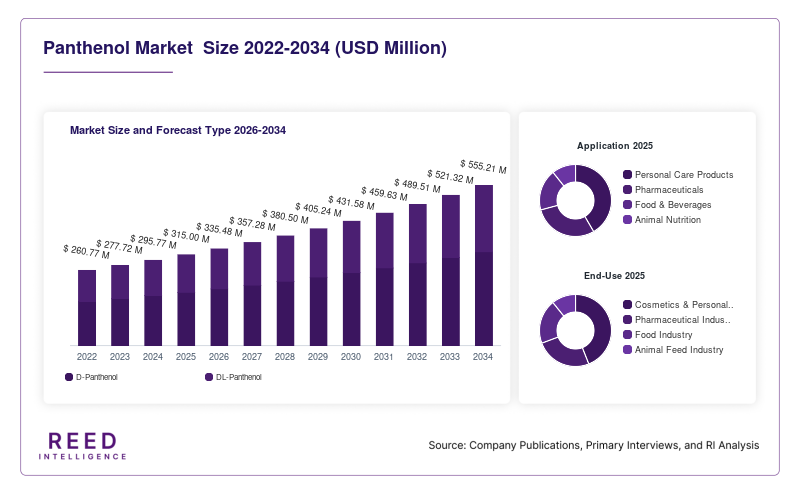
- By type, D-panthenol accounted for the largest share of 61.2%, while DL-panthenol is projected to grow at a CAGR of 6.9%.
- By application, personal care products led with a 48.6% share, whereas pharmaceutical applications are expected to expand at a CAGR of 7.1%.
- The United States remained the dominant country, with market values of USD 98 million in 2024 and USD 104 million in 2025.
Market Trends
Increasing Demand for Clean-Label and Functional Ingredients
One of the most notable trends shaping the Panthenol Market is the growing demand for clean-label and functional ingredients in consumer products. Consumers are becoming more aware of ingredient safety, formulation transparency, and long-term health benefits. This shift has encouraged manufacturers to adopt ingredients like panthenol that are recognized for their gentle yet effective performance. Panthenol’s multifunctional benefits, such as hydration, anti-irritation, and skin barrier repair, make it highly suitable for clean-label formulations.
The trend is especially prominent in skincare and haircare products, where consumers seek formulations free from harsh chemicals while still delivering visible results. As a result, companies are integrating panthenol into organic and natural product lines. Additionally, regulatory support for safer ingredients is accelerating this trend globally. The demand is not limited to developed regions but is also expanding in emerging economies, where middle-class consumers are increasingly prioritizing premium personal care products with functional benefits.
Expansion of Panthenol Applications in Pharmaceuticals
Another key trend is the expanding use of panthenol in pharmaceutical formulations. Panthenol is widely used in topical treatments for wound healing, dermatitis, and minor burns due to its ability to enhance tissue repair and reduce inflammation. Pharmaceutical companies are investing in research to explore additional therapeutic applications of panthenol, particularly in dermatology and oral care products.
The growing prevalence of skin-related conditions, such as eczema and dryness caused by environmental factors, is driving the demand for effective treatment solutions. Panthenol is gaining traction as an active ingredient in medicated creams, ointments, and sprays. Furthermore, the increasing aging population worldwide is contributing to the demand for products that promote skin regeneration and healing. This trend is expected to create sustained growth opportunities in the pharmaceutical segment over the forecast period.
Market Drivers
Rising Demand from the Personal Care Industry
The rapid expansion of the personal care industry is a major driver of the Panthenol Market. Panthenol is widely used in skincare, haircare, and cosmetic products due to its ability to improve hydration, elasticity, and overall appearance. The growing demand for premium and multifunctional beauty products is pushing manufacturers to incorporate ingredients like panthenol into their formulations.
Consumers are increasingly focusing on self-care and grooming, which has led to higher spending on personal care products. Additionally, the rise of e-commerce platforms has made such products more accessible, further boosting demand. Panthenol is particularly popular in haircare products such as shampoos and conditioners, where it helps strengthen hair and reduce damage. The increasing popularity of dermatologically tested and hypoallergenic products is also supporting the use of panthenol in various formulations, thereby driving market growth.
Growth in Pharmaceutical and Healthcare Applications
Another significant driver is the growing utilization of panthenol in pharmaceutical and healthcare applications. Panthenol’s proven effectiveness in wound healing, anti-inflammatory treatments, and skin protection has made it a preferred ingredient in medical formulations. The increasing prevalence of skin disorders and the need for effective treatment options are driving demand in this segment.
Healthcare professionals often recommend products containing panthenol for treating minor skin irritations and promoting faster healing. Additionally, the expansion of the global healthcare sector and increased investments in research and development are supporting the growth of panthenol-based products. The rising geriatric population, which is more prone to skin-related issues, further contributes to the demand. This driver is expected to remain strong as the focus on preventive healthcare continues to grow worldwide.
Market Restraint
Fluctuating Raw Material Prices and Supply Chain Constraints
A key restraint affecting the Panthenol Market is the fluctuation in raw material prices and supply chain disruptions. Panthenol production depends on specific chemical intermediates, and any volatility in their pricing can impact overall production costs. Manufacturers often face challenges in maintaining consistent pricing, which can affect profit margins and market competitiveness.
Additionally, global supply chain disruptions, including transportation delays and geopolitical uncertainties, have created challenges in sourcing raw materials and distributing finished products. These disruptions can lead to shortages and increased costs for end-users. Smaller manufacturers are particularly vulnerable, as they may lack the resources to manage such fluctuations effectively. This restraint can limit market growth, especially in price-sensitive regions, and may encourage companies to explore alternative ingredients or local sourcing strategies to mitigate risks.
Market Opportunities
Emerging Demand in Developing Economies
Developing economies present significant growth opportunities for the Panthenol Market. Rising disposable incomes, urbanization, and changing lifestyles are driving the demand for personal care and healthcare products in these regions. Consumers are becoming more aware of the benefits of high-quality ingredients, leading to increased adoption of panthenol-based formulations.
Countries in Asia Pacific, Latin America, and the Middle East are witnessing rapid growth in the beauty and healthcare sectors. Local manufacturers are expanding their product portfolios to include advanced ingredients like panthenol to cater to evolving consumer preferences. Additionally, the growth of online retail channels is improving product accessibility in these regions. This opportunity is expected to drive substantial market expansion as companies invest in regional distribution networks and marketing strategies.
Innovation in Product Formulations and Applications
Innovation in product formulations offers another major opportunity for market growth. Manufacturers are continuously exploring new ways to incorporate panthenol into a wider range of applications, including food supplements, oral care products, and advanced skincare solutions. The development of novel delivery systems, such as encapsulated panthenol, is enhancing its effectiveness and stability in formulations.
Research and development activities are also focusing on combining panthenol with other active ingredients to create multifunctional products. This approach allows companies to differentiate their offerings and meet diverse consumer needs. Additionally, advancements in biotechnology and green chemistry are enabling the production of sustainable and eco-friendly panthenol variants. These innovations are expected to open new avenues for growth and strengthen the market’s long-term potential.
Segmental Analysis
By Type
D-panthenol emerged as the dominant subsegment, accounting for approximately 61.2% of the market share in 2024. This dominance is attributed to its superior biological activity and higher absorption efficiency compared to other forms. D-panthenol is widely used in personal care and pharmaceutical products due to its proven effectiveness in improving skin hydration and promoting healing. Its compatibility with a wide range of formulations further enhances its adoption across industries.
DL-panthenol is the fastest-growing subsegment, projected to grow at a CAGR of 6.9% during the forecast period. This growth is driven by its cost-effectiveness and suitability for industrial applications. Manufacturers are increasingly using DL-panthenol in large-scale production due to its balanced performance and affordability. The rising demand for economical yet effective ingredients is expected to support the growth of this subsegment.
By Application
Personal care products dominated the market, holding a share of 48.6% in 2024. The extensive use of panthenol in skincare, haircare, and cosmetic products is a key factor driving this segment. Its ability to enhance product performance and provide visible benefits makes it a preferred choice among manufacturers. The increasing demand for premium and multifunctional beauty products is further supporting segment growth.
Pharmaceutical applications are the fastest-growing segment, with a projected CAGR of 7.1%. The growth is driven by the increasing use of panthenol in wound healing and dermatological treatments. The rising prevalence of skin conditions and the growing demand for effective treatment options are key factors contributing to this growth. Additionally, advancements in medical research are expanding the scope of panthenol in healthcare applications.
By End-Use
The cosmetics and personal care industry dominated the market, accounting for a significant share in 2024. The widespread use of panthenol in beauty products is driven by its multifunctional properties. It is commonly used in moisturizers, serums, shampoos, and conditioners, where it enhances product performance and consumer satisfaction. The growing focus on skincare routines and hair health is further supporting this segment.
The pharmaceutical industry is the fastest-growing end-use segment, expected to grow at a CAGR of 7.2%. The increasing demand for effective and safe treatment options is driving the use of panthenol in medical formulations. The expansion of healthcare infrastructure and rising investments in research and development are also contributing to segment growth. This trend is expected to continue as the demand for advanced healthcare solutions increases.
Regional Analysis
North America
North America held a significant share of the Panthenol Market, accounting for approximately 33.8% in 2025, and is expected to grow at a CAGR of 5.9% during the forecast period. The region’s growth is driven by strong demand for premium personal care products and a well-established pharmaceutical industry. Consumers in North America are highly aware of product ingredients, which supports the adoption of panthenol in skincare and haircare formulations.
The United States dominates the regional market due to its advanced manufacturing capabilities and high consumer spending on personal care products. A unique growth factor in this region is the strong presence of leading cosmetic brands that continuously innovate and launch new products. This innovation-driven environment supports the integration of panthenol into a wide range of applications, contributing to sustained market growth.
Europe
Europe accounted for a considerable share of the Panthenol Market in 2025 and is projected to grow at a CAGR of 6.1% through 2034. The region benefits from stringent regulatory standards that promote the use of safe and effective ingredients in personal care and pharmaceutical products. This regulatory framework encourages the adoption of panthenol in various formulations.
Germany leads the European market due to its strong chemical and pharmaceutical industries. A unique growth factor in this region is the increasing demand for sustainable and eco-friendly products. Consumers are actively seeking formulations that align with environmental standards, which has led to the increased use of biodegradable and safe ingredients like panthenol in product development.
Asia Pacific
Asia Pacific is the fastest-growing region in the Panthenol Market, with a projected CAGR of 7.4% during the forecast period. The region’s growth is driven by rapid urbanization, rising disposable incomes, and expanding personal care and healthcare industries. The increasing popularity of skincare and haircare products among younger consumers is also contributing to market expansion.
China dominates the regional market due to its large population and growing manufacturing sector. A unique growth factor in Asia Pacific is the influence of beauty trends and digital marketing. Social media platforms play a significant role in promoting products containing functional ingredients like panthenol, driving consumer demand and boosting market growth.
Middle East & Africa
The Middle East & Africa region is experiencing steady growth in the Panthenol Market, with a CAGR of 5.6% during the forecast period. The region’s market is supported by increasing investments in the healthcare sector and rising awareness of personal care products. The demand for high-quality skincare products is gradually increasing among consumers.
Saudi Arabia is a key market in this region due to its growing cosmetics industry. A unique growth factor is the rising influence of international beauty brands, which are introducing advanced formulations containing panthenol. This exposure is encouraging local consumers to adopt premium products, thereby driving market growth.
Latin America
Latin America is expected to witness moderate growth in the Panthenol Market, with a CAGR of 5.8% over the forecast period. The region’s growth is supported by increasing consumer awareness and the expansion of the personal care industry. Economic development and urbanization are also contributing to rising demand for skincare and haircare products.
Brazil dominates the regional market due to its large consumer base and strong beauty industry. A unique growth factor in Latin America is the increasing focus on natural and organic products. Consumers are showing a preference for ingredients that offer both safety and effectiveness, which is driving the adoption of panthenol in various formulations.
Competitive Landscape
The Panthenol Market is characterized by the presence of several established players focusing on product innovation, strategic partnerships, and expansion initiatives. The market is moderately consolidated, with leading companies maintaining a strong presence through extensive distribution networks and diversified product portfolios.
BASF SE is considered a leading player in the market due to its strong research capabilities and wide product range. The company has recently focused on developing sustainable and high-purity panthenol variants to meet evolving consumer demands. Other major companies are also investing in advanced manufacturing technologies and expanding their global footprint to strengthen their market position. Competitive strategies such as mergers, acquisitions, and collaborations are commonly adopted to enhance market share and drive growth.
Key Players
- BASF SE
- DSM-Firmenich
- Merck KGaA
- Evonik Industries AG
- Tianjin YR Chemspec Technology Co., Ltd.
- Xinfa Pharmaceutical Co., Ltd.
- Jiangxi Tongde Chemical Technology Co., Ltd.
- TRI-K Industries, Inc.
- Kunshan Tongde Chemical Co., Ltd.
- Anhui Huaheng Biotechnology Co., Ltd.
- Yifan Pharmaceutical Co., Ltd.
- Zhejiang NHU Co., Ltd.
- Guangzhou Tinci Materials Technology Co., Ltd.
- Shandong Sanyuan Biotechnology Co., Ltd.
- Spectrum Chemical Manufacturing Corp.
Recent Developments
- BASF SE introduced a high-purity panthenol variant aimed at premium skincare formulations, focusing on enhanced stability and performance.
- DSM-Firmenich expanded its production capacity for vitamin derivatives, including panthenol, to meet rising global demand.
- Evonik Industries AG invested in sustainable production processes to develop eco-friendly panthenol solutions for personal care applications.
Panthenol Market Segments
Type
- D-Panthenol
- DL-Panthenol
Application
- Personal Care Products
- Pharmaceuticals
- Food & Beverages
- Animal Nutrition
End-Use
- Cosmetics & Personal Care Industry
- Pharmaceutical Industry
- Food Industry
- Animal Feed Industry
By Region
- North America
- Europe
- APAC
- Middle East and Africa
- LATAM