Parking Meter Apps Market Size, Share & Demand Report By Platform Type (Mobile Applications, Integrated Smart Parking Systems), By Application (On-Street Parking, Off-Street Parking), By End-Use (Commercial, Municipal) & Segment Forecasts, 2026–2034
USD 3950
Market Overview
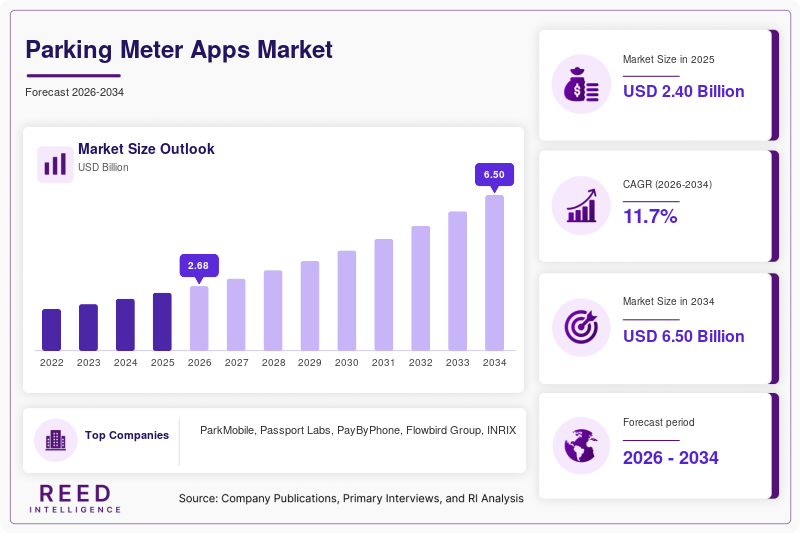
The Parking Meter Apps Market was valued at approximately USD 2.4 billion in 2026 and is projected to reach USD 5.8 billion by 2034, expanding at a compound annual growth rate (CAGR) of 11.7% during 2026–2034. The market is experiencing steady expansion due to the increasing digitization of urban infrastructure and the adoption of smart city initiatives worldwide. Municipal authorities and private operators are increasingly deploying mobile-based parking solutions to reduce congestion, improve operational efficiency, and enhance user convenience.
A key global factor supporting market growth is the rapid penetration of smartphones and mobile payment ecosystems. Consumers are increasingly shifting toward contactless and app-based services, which has accelerated the adoption of parking meter apps. These platforms enable real-time parking availability tracking, seamless digital payments, and automated billing, significantly improving the parking experience. Additionally, governments are encouraging digital transformation in transportation systems, further supporting the integration of parking apps with urban mobility frameworks.
Key Highlights
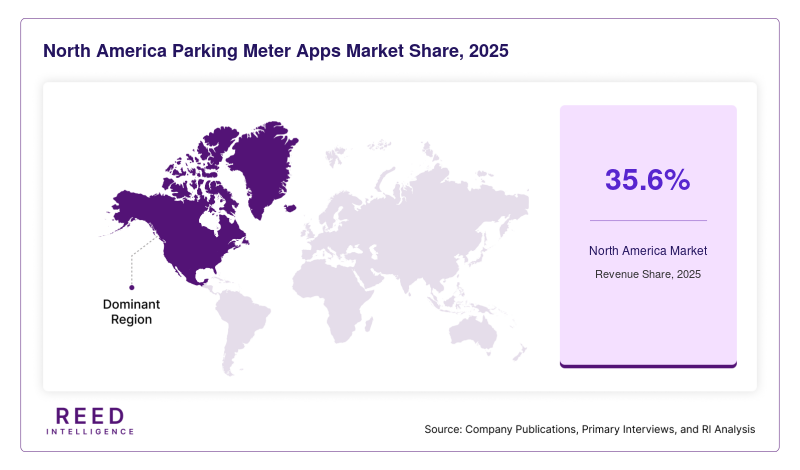
- North America dominated the market with a 35.6% share in 2025.
- Asia Pacific is expected to grow at the fastest CAGR of 12.8% during 2026–2034.
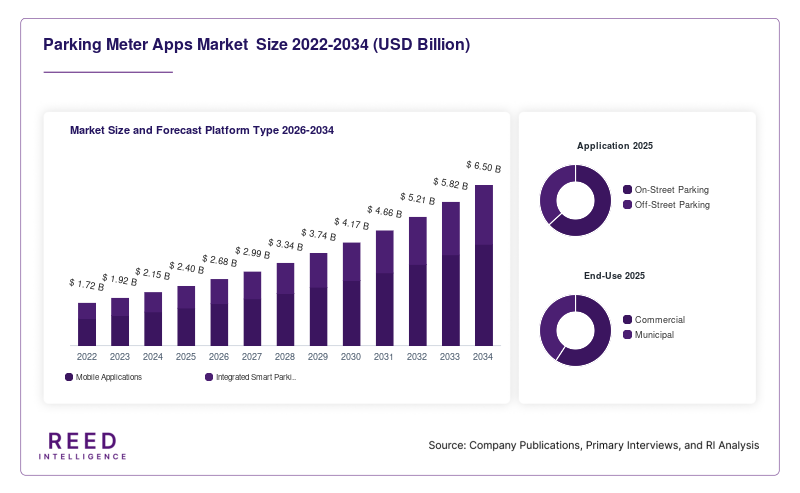
- By platform type, mobile applications accounted for the largest share of 62.3%, while integrated smart parking systems are projected to grow at a CAGR of 13.2%.
- By application, on-street parking led with a 54.1% share, whereas off-street parking is expected to expand at a CAGR of 12.5%.
- The United States remained the dominant country, with market values of USD 620 million in 2024 and USD 690 million in 2025.
Market Trends
Integration of Smart City Ecosystems and IoT Infrastructure
The integration of parking meter apps with smart city ecosystems is emerging as a key trend shaping the market. Cities are increasingly deploying Internet of Things (IoT) sensors, connected infrastructure, and centralized data platforms to manage urban mobility more efficiently. Parking meter apps are being integrated with these systems to provide real-time parking availability, predictive analytics, and dynamic pricing features. This enhances traffic flow and reduces congestion in densely populated urban areas. Additionally, municipalities are leveraging data collected through these apps to optimize parking policies and infrastructure planning. The trend is further supported by government investments in digital infrastructure and urban modernization initiatives, which are accelerating the deployment of connected parking solutions globally.
Adoption of Contactless and Cashless Payment Solutions
The growing preference for contactless and cashless transactions is significantly influencing the Parking Meter Apps Market. Consumers are increasingly relying on mobile wallets, digital payment gateways, and QR-based payment systems for convenience and safety. Parking apps are integrating multiple payment options, including credit cards, digital wallets, and subscription-based models, to enhance user experience. This trend gained momentum during recent years due to heightened awareness of hygiene and safety in public spaces. Furthermore, advancements in fintech technologies are enabling seamless payment processing and secure transactions, which is encouraging wider adoption. As urban populations grow and vehicle ownership increases, the demand for efficient and contactless parking payment solutions is expected to continue rising.
Market Drivers
Rising Urbanization and Vehicle Ownership
Rapid urbanization and increasing vehicle ownership are key drivers of the Parking Meter Apps Market. As cities expand and populations grow, the demand for efficient parking management solutions becomes more critical. Traditional parking systems often fail to address congestion and inefficiencies, leading to increased traffic and environmental concerns. Parking meter apps provide a scalable solution by enabling real-time parking management, reducing search time, and optimizing space utilization. Urban centers are increasingly adopting these solutions to address parking challenges and improve mobility. Additionally, the rise in personal vehicle usage, especially in developing economies, is creating a strong demand for digital parking solutions, further driving market growth.
Government Initiatives for Smart Mobility and Digital Infrastructure
Government initiatives promoting smart mobility and digital infrastructure development are significantly driving the market. Many cities are implementing smart transportation systems that include digital parking management as a core component. These initiatives aim to improve urban mobility, reduce emissions, and enhance the overall quality of life. Governments are also encouraging public-private partnerships to deploy advanced parking solutions, including mobile apps and integrated platforms. Financial incentives, regulatory support, and investments in smart city projects are accelerating the adoption of parking meter apps. This driver is particularly strong in developed regions, where infrastructure modernization and sustainability goals are key priorities.
Market Restraint
Data Privacy Concerns and Technological Barriers
One of the primary restraints affecting the Parking Meter Apps Market is data privacy concerns and technological barriers. Parking meter apps collect significant amounts of user data, including location information, payment details, and usage patterns. This raises concerns about data security and privacy, especially in regions with strict regulatory frameworks. Users may be hesitant to adopt such applications if they perceive risks related to data breaches or misuse of personal information. Additionally, integrating these apps with existing infrastructure can be complex and costly, particularly in older cities with legacy systems. Municipalities may face challenges in upgrading infrastructure and ensuring compatibility with modern technologies. These factors can slow down adoption rates and limit market growth, particularly in regions with limited technological readiness or stringent data protection regulations.
Market Opportunities
Expansion in Emerging Economies
Emerging economies present significant growth opportunities for the Parking Meter Apps Market. Rapid urbanization, increasing vehicle ownership, and growing smartphone penetration are creating a favorable environment for the adoption of digital parking solutions. Cities in Asia Pacific, Latin America, and Africa are investing in smart infrastructure to address urban mobility challenges. Parking meter apps can play a crucial role in modernizing parking systems and improving efficiency. Additionally, governments in these regions are increasingly adopting digital payment systems, which supports the integration of mobile-based parking solutions. The untapped potential in these markets offers substantial opportunities for companies to expand their presence and drive revenue growth.
Integration with Mobility-as-a-Service (MaaS) Platforms
The integration of parking meter apps with Mobility-as-a-Service (MaaS) platforms is another promising opportunity. MaaS platforms aim to provide a seamless transportation experience by integrating various modes of transport, including public transit, ride-sharing, and parking services. Parking apps can enhance these platforms by offering real-time parking availability and payment solutions. This integration can improve user convenience and encourage the adoption of multimodal transportation. As cities continue to invest in smart mobility solutions, the demand for integrated platforms is expected to increase. Companies that leverage this opportunity can gain a competitive advantage and expand their market reach.
Segmental Analysis
By Platform Type
Mobile applications dominated the Parking Meter Apps Market, accounting for 62.3% share in 2024. These applications offer convenience, real-time updates, and seamless payment options, making them highly popular among users. The widespread adoption of smartphones and mobile internet has significantly contributed to the growth of this segment. Additionally, mobile apps provide features such as notifications, parking reminders, and location tracking, which enhance user experience. Municipalities and private operators are increasingly adopting mobile-based solutions to improve efficiency and reduce operational costs.
Integrated smart parking systems are emerging as the fastest-growing subsegment, with a projected CAGR of 13.2% during the forecast period. These systems combine mobile applications with IoT sensors, data analytics, and centralized management platforms. The growth is driven by increasing investments in smart city projects and the need for efficient parking management. Integrated systems enable real-time monitoring, dynamic pricing, and predictive analytics, which improve overall efficiency and user satisfaction.
By Application
On-street parking accounted for the largest share of 54.1% in 2024, driven by high demand in urban areas. These applications are widely used in city centers, where parking spaces are limited and demand is high. On-street parking apps provide real-time availability, payment options, and time management features, which enhance user convenience. Municipalities are increasingly adopting these solutions to improve traffic flow and reduce congestion.
Off-street parking is the fastest-growing subsegment, with a CAGR of 12.5% during 2026–2034. This growth is driven by the expansion of commercial parking facilities, including malls, airports, and corporate offices. Off-street parking apps offer advanced features such as reservation systems, subscription models, and integrated payment options. The increasing demand for organized parking solutions in commercial spaces is a key factor driving this segment.
By End-Use
The commercial segment dominated the market with a 48.7% share in 2024, driven by high demand from businesses and commercial establishments. Shopping centers, office complexes, and entertainment venues are increasingly adopting parking meter apps to manage parking efficiently. These solutions help improve customer experience and optimize space utilization. Additionally, commercial operators are leveraging data analytics to enhance operational efficiency and maximize revenue.
The municipal segment is expected to grow at the fastest CAGR of 12.9% during the forecast period. Governments and local authorities are increasingly adopting digital parking solutions to improve urban mobility and reduce congestion. The growth is supported by smart city initiatives and government investments in digital infrastructure. Municipalities are focusing on integrating parking apps with broader transportation systems, which enhances efficiency and user experience.
Regional Analysis
North America
North America accounted for a 35.6% market share in 2025 and is expected to grow at a CAGR of 10.9% during 2026–2034. The region’s growth is driven by advanced digital infrastructure, high smartphone penetration, and strong adoption of smart city initiatives. Municipal governments are actively deploying smart parking solutions to reduce congestion and improve urban mobility. The presence of established technology providers and continuous innovation further supports market expansion in the region.
The United States remains the dominant country in North America, driven by widespread adoption of digital payment systems and smart parking technologies. A key growth factor is the integration of parking apps with urban transportation networks, enabling seamless user experiences. Cities are increasingly investing in data-driven solutions to optimize parking management and reduce traffic congestion, which is accelerating market growth.
Europe
Europe held a 27.4% market share in 2025 and is projected to grow at a CAGR of 10.5% during the forecast period. The region’s growth is supported by stringent environmental regulations and the adoption of sustainable urban mobility solutions. Governments are promoting digital parking systems to reduce emissions and improve traffic flow in urban areas. The presence of advanced infrastructure and supportive policies further contributes to market development.
Germany is the leading country in the European market, driven by strong government support for smart mobility initiatives. A unique growth factor is the emphasis on environmental sustainability, which encourages the adoption of digital parking solutions. Cities are implementing dynamic pricing and real-time monitoring systems to optimize parking usage and reduce congestion.
Asia Pacific
Asia Pacific is expected to grow at the fastest CAGR of 12.8% during 2026–2034, with a market share of 21.3% in 2025. The region’s growth is driven by rapid urbanization, increasing vehicle ownership, and expanding digital infrastructure. Governments are investing heavily in smart city projects, which include advanced parking management systems. The growing adoption of smartphones and digital payment platforms further supports market expansion.
China dominates the Asia Pacific market due to its large urban population and strong government initiatives for smart city development. A key growth factor is the rapid adoption of mobile payment systems, which facilitates the use of parking meter apps. The integration of these apps with broader urban mobility platforms is also driving market growth.
Middle East & Africa
The Middle East & Africa region accounted for a 8.2% market share in 2025 and is expected to grow at a CAGR of 11.3% during the forecast period. Growth in this region is supported by increasing investments in smart city projects and infrastructure development. Governments are focusing on modernizing urban transportation systems, which includes the adoption of digital parking solutions.
The United Arab Emirates is a leading country in the region, driven by its strong focus on technological innovation and smart city initiatives. A unique growth factor is the integration of parking apps with government-led digital platforms, which enhances efficiency and user convenience. The region’s focus on tourism and urban development further supports market growth.
Latin America
Latin America held a 7.5% market share in 2025 and is projected to grow at a CAGR of 10.7% during 2026–2034. The region’s growth is driven by increasing urbanization and the need for efficient parking management solutions. Governments are gradually adopting digital technologies to improve urban infrastructure and reduce congestion.
Brazil is the dominant country in Latin America, supported by growing investments in smart city initiatives. A key growth factor is the increasing adoption of mobile payment systems, which facilitates the use of parking meter apps. The region’s expanding urban population and rising vehicle ownership further contribute to market growth.
Competitive Landscape
The Parking Meter Apps Market is characterized by moderate competition, with several global and regional players competing to expand their market presence. Leading companies are focusing on technological innovation, strategic partnerships, and geographic expansion to gain a competitive edge. The market is witnessing increased investments in research and development to enhance app functionalities and integrate advanced technologies such as artificial intelligence and IoT.
One of the leading players in the market is ParkMobile, which has established a strong presence through its user-friendly platform and extensive network of partnerships. The company recently introduced enhanced features, including real-time parking availability and integrated payment solutions, to improve user experience. Other major players are also focusing on expanding their service offerings and entering new markets to strengthen their position. The competitive landscape is expected to evolve further as new entrants and technological advancements reshape the market dynamics.
Key Players
- ParkMobile
- Passport Labs
- PayByPhone
- Flowbird Group
- INRIX
- EasyPark Group
- Parkopedia
- SpotHero
- RingGo
- JustPark
- T2 Systems
- CivicSmart
- ParkWhiz
- ParkMe
- Streetline
Recent Developments
- In 2025, ParkMobile launched an AI-powered parking recommendation feature to enhance user experience and optimize parking selection.
- In 2024, EasyPark Group expanded its operations into new emerging markets, strengthening its global footprint.
- In 2025, Flowbird Group partnered with multiple municipalities to deploy integrated smart parking solutions across urban areas.
Parking Meter Apps Market Segments
Platform Type
- Mobile Applications
- Integrated Smart Parking Systems
Application
- On-Street Parking
- Off-Street Parking
End-Use
- Commercial
- Municipal
By Region
- North America
- Europe
- APAC
- Middle East and Africa
- LATAM