PD 1 Resistant Head Neck Cancer Market Size, Share Demand Report By Therapy Type (Combination Immunotherapy, Monoclonal Antibody Therapy, Cellular Immunotherapy, Chemotherapy Combinations), By Cancer Type (Recurrent Head and Neck Squamous Cell Carcinoma, Metastatic Oropharyngeal Cancer,Laryngeal Cancer, Oral Cavity Cancer), By End Use (Specialty Cancer Hospitals, Research Oncology Clinics, Academic Medical Centers, Contract Research Organizations), By Region & Segment Forecasts, 2026–2034
USD 3950
Market Overview
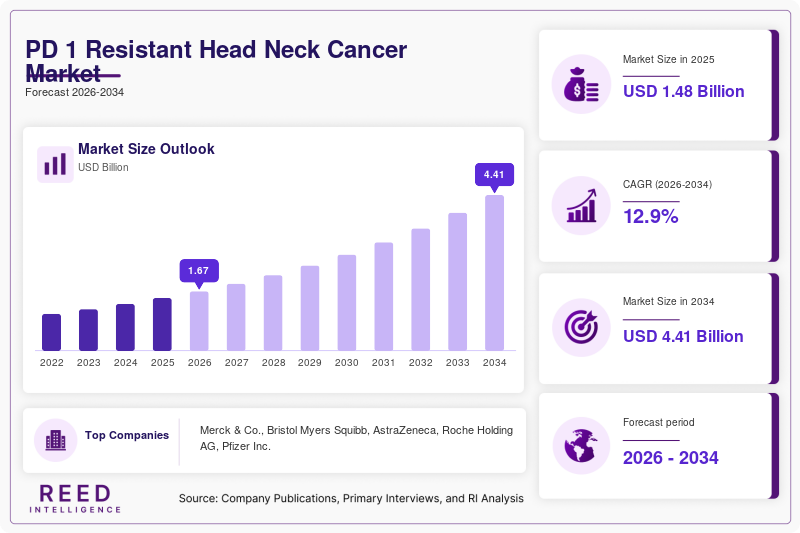
The global PD 1 Resistant Head Neck Cancer Market size was valued at USD 1.48 billion in 2026 and is projected to reach USD 3.92 billion by 2034, expanding at a CAGR of 12.9% during the forecast period from 2026 to 2034. The market is experiencing stable expansion due to the increasing incidence of recurrent and metastatic head and neck squamous cell carcinoma cases that fail to respond to PD-1 inhibitor therapies. Rising clinical focus on immunotherapy resistance mechanisms, combined with increasing investment in next-generation oncology drugs, has accelerated product development activities across major pharmaceutical companies and biotechnology firms. The market is also benefiting from the growing adoption of combination therapies involving checkpoint inhibitors, targeted therapies, antibody-drug conjugates, and tumor microenvironment modulation approaches.
A major global factor supporting market growth is the rapid increase in precision oncology programs and biomarker-driven treatment development. Healthcare systems and oncology research institutions are prioritizing genomic profiling and immune response mapping to identify patients resistant to conventional PD-1 therapies. This has created strong demand for advanced therapeutic solutions capable of overcoming acquired and primary resistance in head and neck cancer treatment. In addition, increasing regulatory support for orphan oncology therapies and accelerated approval pathways has improved commercialization opportunities for pipeline candidates.
Key Highlights
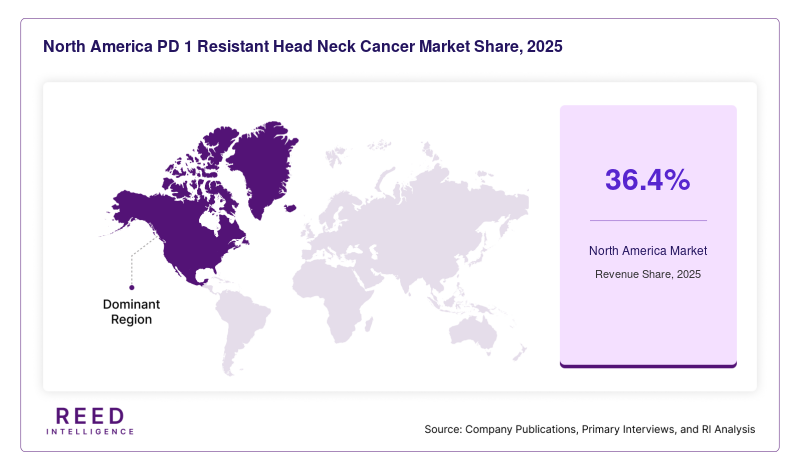
- North America dominated the market with a 36.4% share in 2025.
- Asia Pacific is expected to grow at the fastest CAGR of 13.8% during 2026–2034.
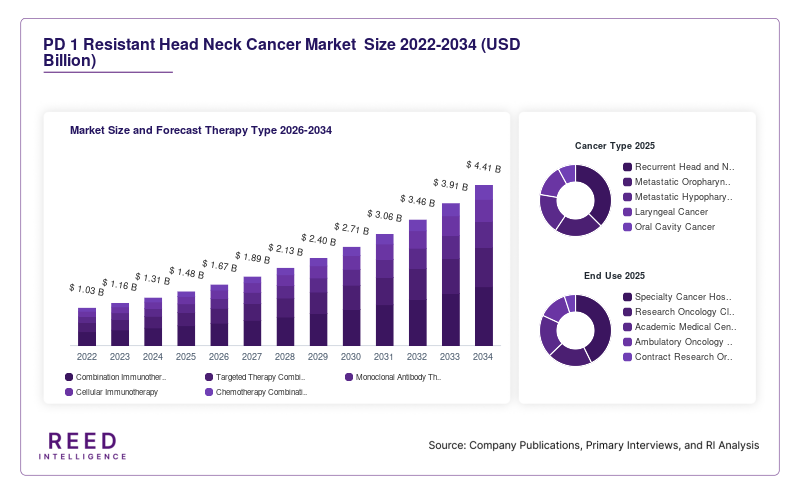
- By therapy type, combination immunotherapy accounted for the largest share of 42.1%.
- while targeted therapy combinations are projected to grow at a CAGR of 14.6%.
- By cancer type, recurrent head and neck squamous cell carcinoma led with a 47.3% share.
- whereas metastatic hypopharyngeal cancer is expected to expand at a CAGR of 13.9%.
- By end use, specialty cancer hospitals held the leading share of 51.6%, while research oncology clinics are anticipated to grow at a CAGR of 14.2%.
- The United States remained the dominant country, with market values of USD 420 million in 2024 and USD 468 million in 2025.
Market Trends
Expansion of Combination Immunotherapy Strategies
The PD 1 Resistant Head Neck Cancer Market is witnessing significant growth in combination immunotherapy approaches designed to overcome resistance against conventional checkpoint inhibitors. Pharmaceutical companies are increasingly combining PD-1 inhibitors with CTLA-4 inhibitors, EGFR-targeted agents, radiation therapy, and anti-angiogenic treatments to improve response rates among resistant patient populations. Clinical evidence indicates that combination therapies can improve immune activation and tumor microenvironment response, particularly in recurrent and metastatic cases. As a result, oncology treatment guidelines are gradually incorporating multi-drug regimens for difficult-to-treat head and neck cancer cases.
The trend is also supported by the growing number of phase II and phase III clinical trials investigating dual checkpoint blockade therapies. Several biotechnology firms are focusing on biomarker-based therapy selection to improve efficacy and reduce treatment failures. Hospitals and cancer research institutes are adopting molecular profiling tools to identify resistance pathways and personalize therapy strategies. This trend is expected to reshape treatment standards and create strong demand for innovative therapeutic combinations across developed and emerging healthcare markets.
Increasing Integration of Precision Medicine Technologies
Precision medicine technologies are becoming increasingly important in the PD 1 Resistant Head Neck Cancer Market as healthcare providers seek personalized treatment strategies for resistant cancer patients. Genomic sequencing, biomarker analysis, and immune profiling are being integrated into oncology workflows to identify patient-specific resistance mechanisms and optimize therapeutic outcomes. These technologies help clinicians determine whether patients may benefit from alternative checkpoint inhibitors, cellular therapies, or targeted molecular treatments.
The integration of artificial intelligence and bioinformatics platforms into oncology diagnostics is further strengthening this trend. AI-enabled platforms are improving data interpretation for genomic analysis and helping physicians select more effective treatment combinations. Pharmaceutical manufacturers are collaborating with diagnostic companies to develop companion diagnostics capable of predicting immunotherapy response. The rising adoption of precision medicine is expected to improve clinical success rates while reducing unnecessary treatment costs associated with ineffective therapies. This trend is particularly strong in North America and Europe, where healthcare infrastructure and reimbursement frameworks support advanced cancer diagnostics.
Market Drivers
Rising Incidence of Recurrent and Metastatic Head and Neck Cancer
The increasing prevalence of recurrent and metastatic head and neck cancer is a major factor driving the PD 1 Resistant Head Neck Cancer Market. A substantial number of patients treated with first-line PD-1 inhibitors eventually develop treatment resistance, creating demand for second-line and advanced therapeutic approaches. Factors such as tobacco consumption, alcohol use, HPV-related cancers, and aging populations continue to increase the global burden of head and neck malignancies. As patient volumes rise, healthcare providers are actively seeking therapies capable of extending survival rates and improving quality of life.
The growing patient population has encouraged pharmaceutical companies to accelerate drug discovery and clinical development activities focused on resistance management. Governments and cancer organizations are also increasing investments in oncology infrastructure and immunotherapy research programs. In several developed countries, cancer screening programs are contributing to earlier diagnosis and longer treatment durations, further supporting therapy demand. These factors collectively strengthen long-term market expansion opportunities across hospital oncology departments and specialized cancer treatment centers.
Growth in Oncology Research Funding and Clinical Trials
Increasing investment in oncology research and clinical trials is supporting rapid innovation within the PD 1 Resistant Head Neck Cancer Market. Biotechnology firms, pharmaceutical companies, and public health organizations are allocating significant funding toward understanding immune resistance pathways and developing next-generation immunotherapies. The growing number of ongoing clinical trials for novel checkpoint inhibitors, cellular therapies, and antibody-drug conjugates is accelerating product commercialization and expanding treatment availability.
Research collaborations between academic institutes and drug developers are also contributing to faster therapeutic innovation. Many cancer centers are conducting translational research programs focused on tumor microenvironment modulation and immune response enhancement. Regulatory agencies in several countries have introduced accelerated approval pathways for breakthrough oncology therapies, enabling faster market entry for promising candidates. The increasing availability of venture capital funding for oncology startups has additionally strengthened innovation across the immunotherapy landscape. These developments are expected to create sustainable growth opportunities throughout the forecast period.
Market Restraint
High Treatment Costs and Limited Accessibility in Emerging Economies
High treatment costs remain a major challenge for the PD 1 Resistant Head Neck Cancer Market, particularly in low-income and middle-income countries where advanced oncology therapies remain inaccessible to a large portion of the patient population. Combination immunotherapies, genomic testing procedures, and targeted treatments often involve substantial healthcare expenditures, making them difficult to adopt in resource-constrained healthcare systems. Many patients require prolonged treatment durations and repeated diagnostic monitoring, which further increases overall therapy costs.
The financial burden associated with advanced cancer therapies has created reimbursement challenges across several healthcare markets. In emerging economies, limited insurance coverage and inadequate oncology infrastructure reduce patient access to innovative treatments. Hospitals in rural regions often lack specialized oncology professionals and molecular diagnostic capabilities needed for personalized treatment planning. Delays in regulatory approvals for advanced biologics and targeted therapies also slow commercialization in developing countries.
These limitations can significantly impact treatment adoption rates and reduce market penetration for pharmaceutical companies. Smaller biotechnology firms may face commercialization barriers due to pricing pressures and limited reimbursement support. Although patient assistance programs and government-funded oncology initiatives are expanding gradually, affordability concerns continue to restrict broader access to advanced PD-1 resistance therapies.
Market Opportunities
Development of Biomarker-Driven Therapeutic Solutions
The growing emphasis on biomarker-driven therapies presents a strong opportunity for the PD 1 Resistant Head Neck Cancer Market. Researchers are increasingly identifying biomarkers associated with immune resistance, tumor mutation burden, and microenvironment activity to develop targeted treatment approaches. Biomarker-guided therapy selection improves treatment precision and increases the probability of positive patient outcomes. As a result, pharmaceutical companies are investing heavily in companion diagnostics and molecular testing platforms.
This opportunity is expected to support the commercialization of personalized immunotherapy regimens tailored to individual patient profiles. Diagnostic partnerships between biotechnology firms and oncology centers are becoming more common, particularly for advanced genomic sequencing technologies. Healthcare providers are also adopting liquid biopsy technologies to monitor treatment response and detect resistance progression at earlier stages. The rising adoption of personalized medicine models is expected to improve treatment efficiency while creating new revenue opportunities for therapy developers and diagnostic manufacturers.
Expansion of Oncology Infrastructure in Emerging Markets
Emerging economies across Asia Pacific, Latin America, and the Middle East are investing significantly in oncology infrastructure, creating favorable growth opportunities for the PD 1 Resistant Head Neck Cancer Market. Governments are increasing healthcare budgets to improve cancer screening programs, treatment accessibility, and hospital oncology capabilities. Several countries are establishing specialized cancer research institutes and expanding reimbursement programs for advanced immunotherapy treatments.
International pharmaceutical companies are also expanding their regional presence through partnerships with local healthcare providers and research organizations. This expansion is improving patient access to clinical trials and innovative therapies in developing markets. Rising awareness regarding precision oncology and immunotherapy benefits is encouraging greater adoption among oncologists and healthcare institutions. The availability of lower-cost biosimilars and region-specific manufacturing initiatives may further reduce treatment costs in emerging economies. These developments are expected to strengthen long-term market demand and improve commercial opportunities for global and regional market participants.
Segmental Analysis
By Therapy Type
Combination immunotherapy dominated the PD 1 Resistant Head Neck Cancer Market and accounted for 42.1% of the global revenue share in 2024. The segment’s leading position is primarily attributed to the growing clinical preference for dual and multi-agent therapeutic approaches that improve immune response among resistant patient populations. Combination regimens involving PD-1 inhibitors, CTLA-4 inhibitors, and EGFR-targeted therapies have demonstrated improved progression-free survival rates in recurrent and metastatic cases. Hospitals and oncology specialists are increasingly recommending combination treatment strategies to overcome acquired resistance mechanisms and improve overall treatment efficacy.
The segment also benefits from rising investment in late-stage clinical trials evaluating novel immunotherapy combinations. Pharmaceutical manufacturers are collaborating with research institutes to identify synergistic therapeutic pathways capable of enhancing anti-tumor activity. Increasing physician awareness regarding resistance biology and tumor microenvironment modulation is further strengthening adoption. In developed healthcare markets, reimbursement support for advanced immunotherapy combinations has improved accessibility for eligible patients. These factors continue to support the dominance of combination immunotherapy within the overall market.
By Cancer Type
Recurrent head and neck squamous cell carcinoma represented the largest segment in the PD 1 Resistant Head Neck Cancer Market and captured 47.3% of the total revenue share in 2024. The high prevalence of recurrent disease following first-line immunotherapy treatment has contributed significantly to segment dominance. Patients diagnosed with recurrent disease often require prolonged treatment durations and advanced therapeutic combinations, increasing overall healthcare spending. Oncology specialists are increasingly utilizing immunotherapy combinations and targeted agents to manage disease progression and improve survival outcomes.
The segment is also supported by the rising availability of specialized oncology centers capable of delivering advanced immunotherapy treatments. Increased awareness regarding recurrence monitoring and early intervention strategies has strengthened diagnosis rates across developed markets. Healthcare systems in North America and Europe are investing in comprehensive cancer management programs that include biomarker testing, genomic profiling, and personalized therapy planning. These developments continue to reinforce demand for therapies targeting recurrent head and neck cancer cases.
By End Use
Specialty cancer hospitals accounted for the largest share of the PD 1 Resistant Head Neck Cancer Market in 2024, representing 51.6% of total market revenue. These facilities remain the primary treatment centers for advanced and resistant head and neck cancer cases due to their specialized oncology expertise, multidisciplinary care teams, and access to advanced immunotherapy technologies. Specialty cancer hospitals are increasingly adopting genomic testing platforms and precision medicine protocols to improve treatment personalization and clinical outcomes.
The availability of integrated oncology services, including surgery, radiation therapy, molecular diagnostics, and immunotherapy administration, has further strengthened the dominance of this segment. Many leading cancer hospitals are actively participating in global clinical trials evaluating next-generation checkpoint inhibitors and targeted therapies. Strong collaborations between pharmaceutical companies and specialized oncology centers are also improving access to experimental treatments for patients with resistant disease profiles. These factors continue to support segment leadership across major healthcare markets.
Regional Analysis
North America
North America accounted for 36.4% of the global PD 1 Resistant Head Neck Cancer Market share in 2025 and is expected to maintain its leading position throughout the forecast period. The region is projected to expand at a CAGR of 12.4% between 2026 and 2034 due to strong adoption of advanced immunotherapy treatments and high oncology healthcare spending. The presence of major pharmaceutical companies, sophisticated cancer research infrastructure, and supportive reimbursement policies has contributed significantly to market growth. Clinical trial activity remains particularly strong in the United States and Canada.
The United States remains the dominant country in the regional market due to high rates of recurrent head and neck cancer diagnosis and strong availability of precision oncology services. A major growth factor in the country is the rapid expansion of biomarker-based treatment planning across cancer centers. Hospitals are increasingly integrating genomic sequencing and AI-driven diagnostic platforms into clinical workflows to improve therapy selection. In addition, favorable FDA pathways for oncology drug approvals continue to support rapid commercialization of innovative therapies.
Europe
Europe represented 28.1% of the global PD 1 Resistant Head Neck Cancer Market in 2025 and is forecast to grow at a CAGR of 11.9% during the assessment period. The region benefits from extensive public healthcare systems, increasing immunotherapy adoption, and rising investments in oncology research programs. Countries such as Germany, France, and the United Kingdom are expanding access to personalized cancer therapies through national reimbursement initiatives. The market is also supported by collaborative research projects involving pharmaceutical companies and academic cancer institutes.
Germany continues to dominate the European market due to its strong pharmaceutical manufacturing base and advanced cancer care infrastructure. A unique growth factor in the country is the increasing integration of multidisciplinary oncology treatment models that combine surgery, radiation therapy, and immunotherapy approaches. German healthcare providers are also participating in several multinational clinical studies focused on overcoming PD-1 therapy resistance. These developments are contributing to higher treatment adoption rates and strengthening the regional market landscape.
Asia Pacific
Asia Pacific is expected to record the fastest CAGR of 13.8% in the global PD 1 Resistant Head Neck Cancer Market between 2026 and 2034. The region accounted for 22.6% of the global market share in 2025 and is benefiting from rising cancer prevalence, expanding healthcare infrastructure, and growing awareness regarding advanced oncology treatments. Governments across China, India, Japan, and South Korea are increasing investments in cancer care facilities and immunotherapy research initiatives. The growing availability of regional clinical trials is also improving patient access to innovative therapies.
China remains the dominant country within Asia Pacific due to its large patient population and rapidly expanding biotechnology sector. A key growth factor in the country is the increasing domestic development of immuno-oncology drugs and biosimilars aimed at reducing treatment costs. Chinese pharmaceutical firms are entering strategic partnerships with global oncology companies to accelerate clinical development and manufacturing capabilities. The expansion of urban cancer hospitals and precision medicine programs is also supporting market penetration across major metropolitan regions.
Middle East & Africa
The Middle East & Africa region held 6.4% of the global PD 1 Resistant Head Neck Cancer Market in 2025 and is anticipated to grow at a CAGR of 10.8% during the forecast period. Market growth is being driven by increasing investments in healthcare modernization, improving oncology infrastructure, and rising awareness regarding advanced cancer treatment options. Gulf Cooperation Council countries are allocating significant funding toward specialized cancer hospitals and precision medicine initiatives. International pharmaceutical firms are also increasing their regional commercial presence.
Saudi Arabia is the dominant country within the regional market due to strong healthcare expenditure and expanding oncology treatment capacity. One unique growth factor is the implementation of national healthcare transformation programs focused on improving access to specialized cancer therapies. Government-backed initiatives are encouraging partnerships with international oncology institutions to strengthen clinical research and physician training. These efforts are expected to improve diagnosis rates and accelerate adoption of immunotherapy-based treatments across the country.
Latin America
Latin America accounted for 6.5% of the global PD 1 Resistant Head Neck Cancer Market share in 2025 and is projected to expand at a CAGR of 11.1% from 2026 to 2034. The region is experiencing gradual growth due to increasing cancer awareness programs, expanding private healthcare infrastructure, and improving access to biologic therapies. Countries such as Brazil and Mexico are investing in oncology care networks and strengthening partnerships with multinational pharmaceutical companies. The growing number of cancer screening initiatives is also contributing to earlier diagnosis and treatment demand.
Brazil remains the leading country in the Latin American market because of its relatively advanced healthcare system and growing oncology research activities. A major growth factor in the country is the increasing participation of Brazilian hospitals in global immunotherapy clinical trials. This participation is improving access to experimental therapies and supporting physician expertise in advanced oncology treatment protocols. Expanding private insurance coverage for biologic cancer therapies is also contributing to stronger market growth across urban healthcare centers.
Competitive Landscape
The PD 1 Resistant Head Neck Cancer Market is moderately consolidated, with global pharmaceutical companies and specialized biotechnology firms competing through clinical innovation, strategic partnerships, and pipeline expansion initiatives. Leading market participants are prioritizing research programs focused on combination immunotherapies, targeted molecular treatments, and biomarker-driven therapeutic solutions. Competitive intensity has increased significantly due to the growing demand for effective therapies capable of overcoming checkpoint inhibitor resistance.
Major companies are expanding collaborations with academic cancer centers and contract research organizations to accelerate drug development timelines and improve clinical success rates. Licensing agreements, co-development partnerships, and regional commercialization strategies are becoming increasingly common across the industry. Several firms are investing in AI-driven drug discovery platforms to identify novel immunotherapy targets and optimize patient selection models.
Key Players
- Bristol Myers Squibb
- Merck & Co.
- AstraZeneca
- Roche Holding AG
- Pfizer Inc.
- Eli Lilly and Company
- Novartis AG
- Sanofi
- GSK plc
- Regeneron Pharmaceuticals
- Amgen Inc.
- BeiGene Ltd.
- Incyte Corporation
- BioNTech SE
- Arcus Biosciences
Recent Developments
- In February 2026, Bristol Myers Squibb announced the expansion of a phase III clinical trial evaluating combination checkpoint inhibitor therapy for recurrent head and neck cancer patients resistant to first-line PD-1 treatments.
- In September 2025, AstraZeneca entered a strategic research partnership with a biotechnology firm to develop biomarker-driven therapies targeting immune resistance pathways in metastatic head and neck cancer.
- In June 2025, Roche Holding AG launched a multicenter clinical study focused on integrating genomic profiling technologies with immunotherapy treatment planning for resistant oncology cases.
PD 1 Resistant Head Neck Cancer Market Segments
Therapy Type
- Combination Immunotherapy
- Targeted Therapy Combinations
- Monoclonal Antibody Therapy
- Cellular Immunotherapy
- Chemotherapy Combinations
Cancer Type
- Recurrent Head and Neck Squamous Cell Carcinoma
- Metastatic Oropharyngeal Cancer
- Metastatic Hypopharyngeal Cancer
- Laryngeal Cancer
- Oral Cavity Cancer
End Use
- Specialty Cancer Hospitals
- Research Oncology Clinics
- Academic Medical Centers
- Ambulatory Oncology Centers
- Contract Research Organizations
By Region
- North America
- Europe
- APAC
- Middle East and Africa
- LATAM