Pectus Bar System Market Size, Share, Demand Report By Material Type (Titanium Alloy Bars, Stainless Steel Bars, Bioresorbable Systems, Hybrid Custom Bars), By Application (Pectus Excavatum Correction, Pectus Carinatum Correction, Revision Surgeries, Congenital Deformity Treatment), By End Use (Hospitals, Specialty Clinics, Ambulatory Surgical Centers, Pediatric Surgical Centers) – Global Industry Forecast, 2026–2034
USD 3950
Market Overview
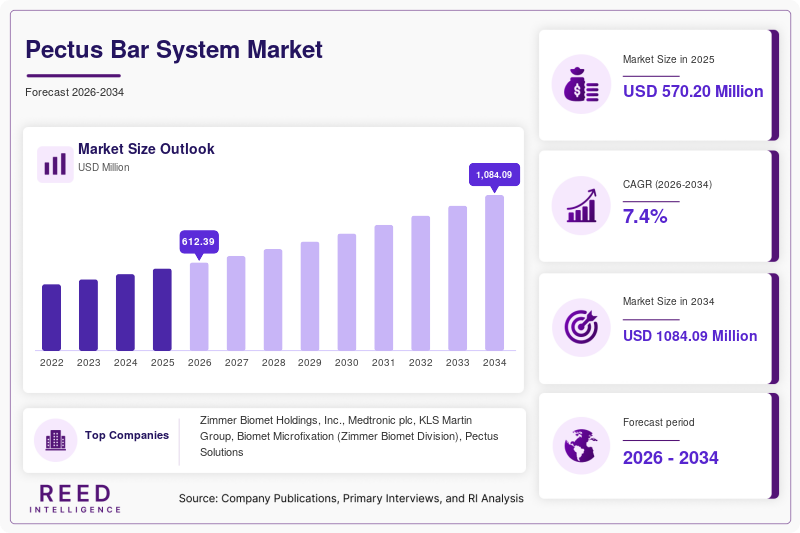
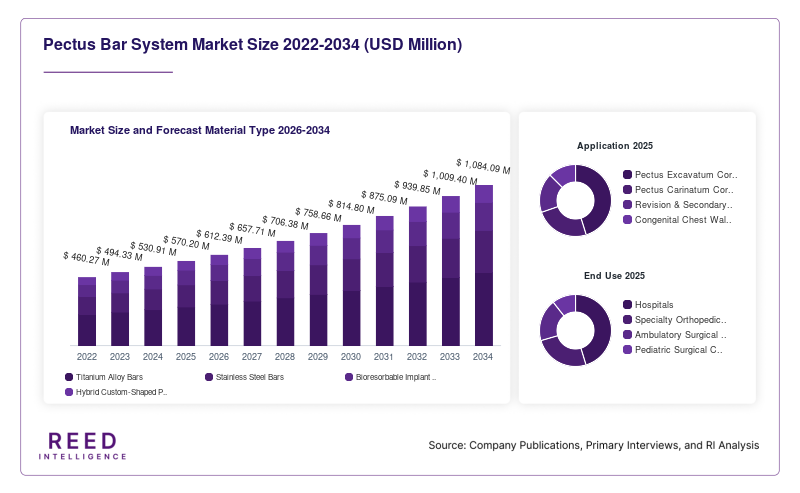
The Pectus Bar System Market size is projected to reach approximately USD 612.4 million in 2026, expanding to nearly USD 1084.7 million by 2034, registering a CAGR of 7.4% during 2026–2034. Growth is primarily supported by the increasing global prevalence of congenital chest wall deformities such as pectus excavatum and pectus carinatum, which require minimally invasive corrective surgical procedures. Rising awareness among pediatric surgeons and advancements in thoracic surgical techniques have significantly improved adoption rates of pectus bar systems in hospitals and specialty clinics.
A major global factor supporting market expansion is the increasing preference for minimally invasive surgical procedures. The Nuss procedure, which relies on pectus bar implantation, has become a widely accepted treatment standard due to reduced postoperative complications and shorter recovery time compared to open surgery. Additionally, improvements in titanium-based implant materials and customized bar shaping technologies have enhanced patient outcomes and surgical precision, further driving adoption across developed and emerging healthcare systems.
Key Highlights
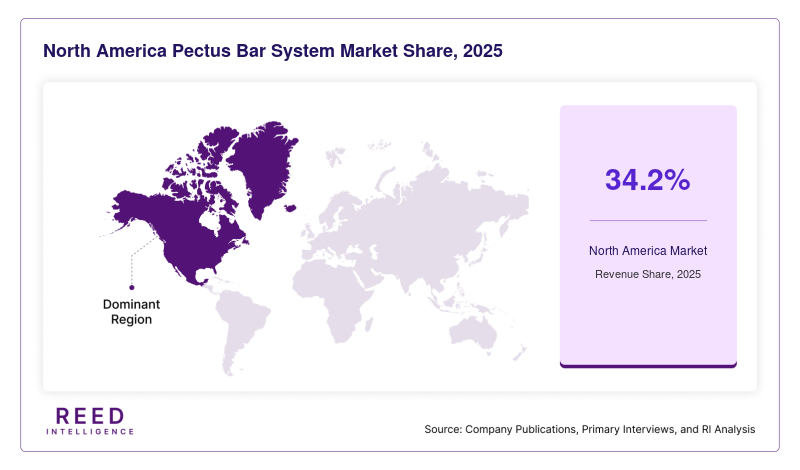
- North America dominated the market with a 34.2% share in 2025.
- Asia Pacific is expected to grow at the fastest CAGR of 11.2% during 2026–2034.
- By material type, titanium alloy bars accounted for the largest share of 42.6%.
- while bioresorbable systems are projected to grow at a CAGR of 12.8%.
- By application, pectus excavatum correction led with a 58.3% share, whereas pectus carinatum correction is expected to expand at a CAGR of 10.9%.
- The United States remained the dominant country, with market values of USD 285 million in 2024 and USD 312 million in 2025.
Market Trends
Advancements in Minimally Invasive Thoracic Surgery Adoption
The increasing adoption of minimally invasive thoracic surgery techniques is a major trend shaping the Pectus Bar System Market. Surgeons are increasingly favoring the Nuss procedure over traditional open repair methods due to its reduced scarring, shorter hospital stays, and improved recovery outcomes. This shift is encouraging hospitals to invest in advanced surgical tools and customizable pectus bar systems. Furthermore, integration of imaging guidance and intraoperative navigation technologies is improving placement accuracy, reducing complications, and enhancing procedural success rates, thereby strengthening market penetration globally.
Rising Customization and 3D-Printed Implant Designs
The market is witnessing a growing trend toward patient-specific implant customization using 3D printing and computer-aided design technologies. These innovations allow surgeons to design pectus bars tailored to individual chest wall anatomy, improving correction precision and reducing post-surgical adjustments. Hospitals and orthopedic centers are increasingly collaborating with biomedical manufacturers to produce personalized implants. This trend is particularly prominent in developed healthcare systems where technological adoption is high, and patient-centric surgical approaches are prioritized, leading to enhanced long-term clinical outcomes.
Market Drivers
Increasing Prevalence of Chest Wall Deformities
A significant driver of the Pectus Bar System Market is the rising prevalence of chest wall deformities such as pectus excavatum, which affects both pediatric and adolescent populations globally. Improved diagnostic screening and early detection programs have contributed to higher surgical intervention rates. Additionally, awareness campaigns conducted by healthcare institutions have encouraged patients and caregivers to seek corrective treatment at an early stage. This has led to a steady increase in demand for pectus bar implantation procedures across hospitals and specialized thoracic surgery centers.
Expanding Healthcare Infrastructure and Surgical Capabilities
The expansion of healthcare infrastructure, particularly in emerging economies, is another key growth driver. Governments are investing heavily in modernizing surgical facilities and increasing access to advanced orthopedic and thoracic procedures. The availability of trained surgeons and improved access to minimally invasive surgical equipment has boosted adoption rates. Furthermore, private healthcare providers are increasingly incorporating pectus correction surgeries into their specialized service offerings, contributing to sustained market growth across both developed and developing regions.
Market Restraint
High Cost of Surgical Procedures and Implant Systems
One of the primary restraints affecting the Pectus Bar System Market is the high cost associated with surgical correction procedures and implant systems. The pectus bar implantation procedure involves specialized surgical expertise, advanced operating room equipment, and post-operative monitoring, all of which increase overall treatment expenses. In many developing regions, limited insurance coverage further restricts patient access to these procedures. As a result, cost sensitivity among patients and healthcare providers continues to hinder widespread adoption, particularly in low- and middle-income countries.
Market Opportunities
Expansion in Emerging Healthcare Markets
Emerging economies present a significant opportunity for market expansion due to increasing healthcare investments and growing awareness of congenital deformity treatments. Countries in Asia Pacific and Latin America are improving their surgical infrastructure and expanding access to specialized orthopedic care. This is expected to drive demand for pectus bar systems in pediatric hospitals and tertiary care centers. Additionally, collaborations between global medical device companies and local distributors are improving product availability and affordability in these regions.
Technological Integration in Surgical Planning
The integration of advanced surgical planning technologies such as AI-assisted imaging, 3D modeling, and virtual simulation is creating new growth opportunities in the market. These technologies allow surgeons to predict surgical outcomes more accurately and optimize implant placement strategies. This reduces operative risks and enhances patient satisfaction. As healthcare systems increasingly adopt digital surgical planning tools, demand for technologically advanced pectus bar systems is expected to rise, supporting long-term market growth.
Segmental Analysis
By Material Type
Titanium alloy bars dominated the Pectus Bar System Market in 2024 with approximately 42.6% share due to their high strength, biocompatibility, and long-term durability. These materials are widely preferred in surgical procedures because they offer stability and reduced risk of rejection, making them a standard choice across hospitals and specialty clinics.
Bioresorbable materials are expected to register the fastest CAGR of 12.8% during the forecast period. Their growth is supported by increasing demand for implants that do not require removal surgery, reducing overall healthcare burden and improving patient comfort. Technological advancements in biodegradable polymers are further accelerating adoption.
By Application
Pectus excavatum correction accounted for the largest share of 58.3% in 2024 due to its higher prevalence compared to other chest wall deformities. The procedure is widely performed using minimally invasive techniques, increasing its acceptance among surgeons and patients.
Pectus carinatum correction is expected to grow at a CAGR of 10.9% due to increasing diagnosis rates and improved awareness. Growing preference for early-stage corrective surgery in pediatric patients is further supporting demand in this segment.
By End Use
Hospitals dominated the end-use segment with a 49.7% share in 2024 due to the availability of advanced surgical infrastructure and skilled professionals. Most pectus bar implantation procedures are performed in hospital settings, ensuring better patient monitoring.
Specialty orthopedic centers are projected to grow at a faster CAGR due to increasing preference for specialized surgical care. These centers offer focused expertise in thoracic deformity correction, improving procedural outcomes and patient satisfaction.
Regional Analysis
North America
North America accounted for approximately 34.2% market share in 2025 and is expected to grow at a steady CAGR during the forecast period. The region benefits from advanced healthcare infrastructure, high surgical awareness, and strong adoption of minimally invasive procedures. The presence of specialized thoracic surgery centers further supports market expansion.
The United States dominates the regional market due to high procedure volumes and strong reimbursement frameworks. A key growth factor is the widespread availability of trained pediatric and thoracic surgeons, enabling consistent adoption of pectus bar systems across hospitals and surgical centers.
Europe
Europe held a significant share of the Pectus Bar System Market in 2025, supported by well-established healthcare systems and increasing pediatric surgical interventions. The region is projected to grow at a moderate CAGR due to rising awareness of chest wall deformities and expanding use of minimally invasive techniques.
Germany leads the European market due to strong clinical research activity and early adoption of advanced surgical technologies. A key growth driver is the presence of specialized orthopedic institutions focusing on congenital deformity correction procedures.
Asia Pacific
Asia Pacific is expected to register the fastest CAGR of 11.2% during 2026–2034, driven by expanding healthcare infrastructure and rising patient awareness. Increasing birth rates and improving diagnostic capabilities are also contributing to market growth.
China dominates the regional market due to large patient populations and rapid hospital modernization programs. A major growth factor is increasing government investment in pediatric surgical care and expanding access to specialized treatment facilities.
Middle East & Africa
The Middle East & Africa region is witnessing gradual growth in the Pectus Bar System Market, supported by improving healthcare infrastructure and rising medical tourism. The region is expected to expand at a moderate CAGR during the forecast period.
Saudi Arabia leads the regional market due to strong healthcare investments and growing adoption of advanced surgical procedures. A key growth factor is the expansion of specialty hospitals offering thoracic corrective surgeries.
Latin America
Latin America is experiencing steady growth driven by increasing healthcare expenditure and improved access to surgical care. The region is expected to grow at a stable CAGR through 2034.
Brazil dominates the market due to its large healthcare network and rising adoption of minimally invasive surgeries. A key factor supporting growth is increasing awareness of pediatric chest deformity correction treatments.
Competitive Landscape
The Pectus Bar System Market is moderately consolidated, with key players focusing on product innovation, material advancements, and geographic expansion. Leading companies include Zimmer Biomet, Medtronic, Biomet Microfixation, Pectus Solutions, and KLS Martin Group. Zimmer Biomet holds a strong position due to its extensive orthopedic product portfolio and global distribution network. Recent developments include advancements in customizable titanium bar systems designed to improve surgical precision and patient outcomes.
Key Players List
- Zimmer Biomet
- Medtronic
- KLS Martin Group
- Biomet Microfixation
- Pectus Solutions
- Acumed LLC
- Stryker Corporation
- Johnson & Johnson (DePuy Synthes)
- Orthofix Medical Inc.
- Smith & Nephew
- NuVasive Inc.
- Braun Melsungen AG
- Integra LifeSciences
- Medartis AG
- Arthrex Inc.
Recent Developments
- Increasing focus on custom pectus bar systems has led to the development of patient-specific implants designed using advanced modeling technologies. These systems improve surgical precision and reduce complications, aligning with the growing trend toward personalized medical devices.
- Manufacturers are actively investing in material innovation, particularly in titanium and lightweight polymer-based bars, to enhance biocompatibility and reduce infection risks. Titanium continues to gain traction due to its durability and compatibility with human tissue.
- The market has seen a rise in minimally invasive surgical procedures, especially the Nuss procedure, which is driving the adoption of advanced pectus bar systems across hospitals and specialty clinics globally.
Pectus Bar System Market Segments
Material Type
- Titanium Alloy Bars
- Stainless Steel Bars
- Bioresorbable Implant Systems
- Hybrid Custom-Shaped Pectus Bars
Application
- Pectus Excavatum Correction
- Pectus Carinatum Correction
- Revision & Secondary Correction Procedures
- Congenital Chest Wall Deformity Treatment
End Use
- Hospitals
- Specialty Orthopedic Clinics
- Ambulatory Surgical Centers
- Pediatric Surgical Centers
By Region
- North America
- Europe
- APAC
- Middle East and Africa
- LATAM