Pediatric Ankle Orthoses Market Size, Share & Demand Report By Product Type (Rigid Ankle Orthoses, Dynamic Ankle Orthoses, Soft Ankle Orthoses), By Application (Cerebral Palsy Management, Sports Injury Rehabilitation, Muscular Dystrophy Treatment, Post-Surgical Recovery, Congenital Foot Deformities), By End Use (Hospitals and Pediatric Clinics, Rehabilitation Centers, Homecare Settings, Specialty Orthopedic Centers) By Region & Segment Forecasts, 2026–2034
USD 3950
Market Overview
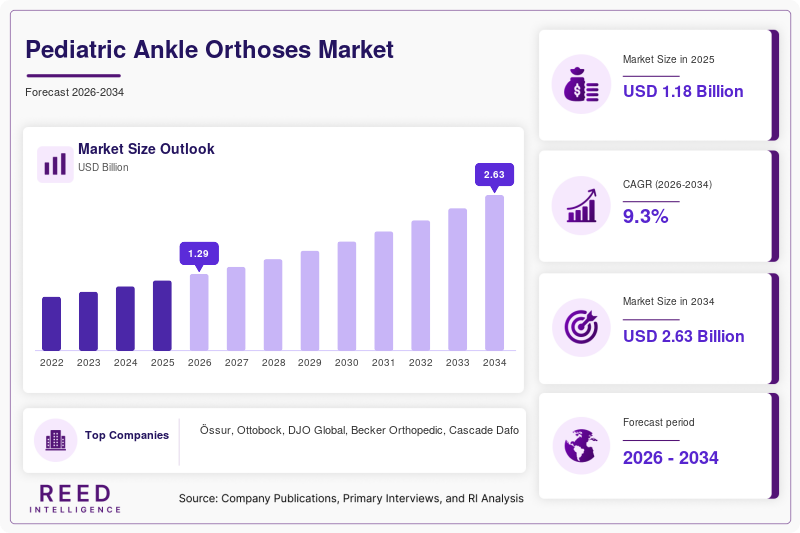
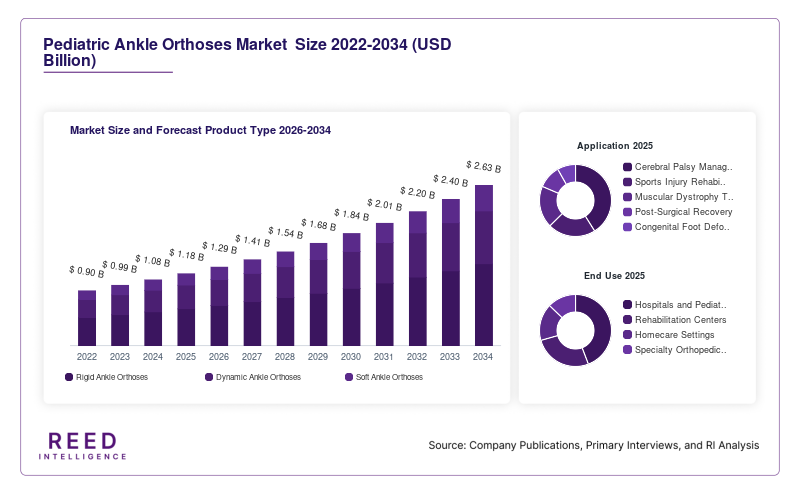
The global Pediatric Ankle Orthoses Market size was valued at USD 1.18 billion in 2026 and is projected to reach USD 2.41 billion by 2034, expanding at a CAGR of 9.3% during the forecast period from 2026 to 2034. The market is witnessing stable expansion due to the growing prevalence of pediatric musculoskeletal disorders, rising awareness regarding early mobility intervention, and increasing adoption of customized orthopedic support devices among children. Pediatric ankle orthoses are widely used to manage gait abnormalities, cerebral palsy, muscular dystrophy, clubfoot conditions, and sports-related injuries among children and adolescents.
Healthcare providers are increasingly focusing on preventive orthopedic care and rehabilitation therapies for pediatric patients. This shift has accelerated demand for lightweight, comfortable, and technologically advanced ankle orthoses that improve mobility while minimizing discomfort. Advancements in 3D printing technologies and smart orthotic materials are also influencing product innovation across hospitals, rehabilitation centers, and homecare settings. In addition, rising healthcare expenditure in developing economies and broader access to pediatric rehabilitation services continue to support market penetration.
Key Highlights
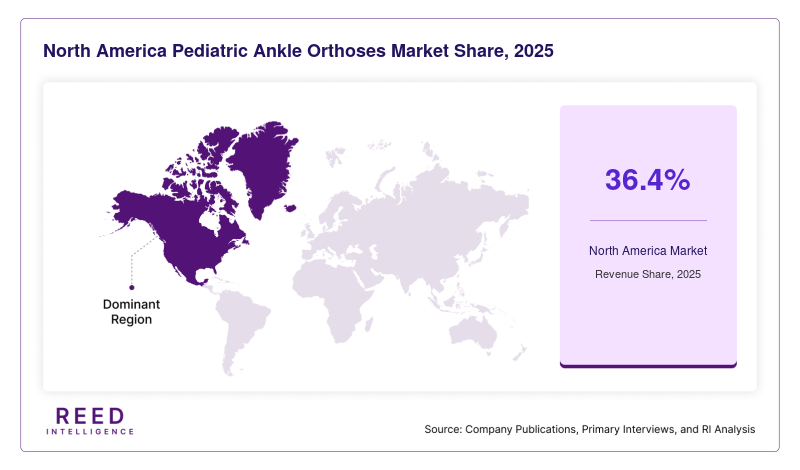
- North America dominated the market with a 36.4% share in 2025, while Asia Pacific is expected to grow at the fastest CAGR of 10.8% during 2026–2034.
- By product type, rigid ankle orthoses accounted for the largest share of 42.7%, while dynamic ankle orthoses are projected to grow at a CAGR of 11.4%.
- By application, cerebral palsy management led with a 39.6% share, whereas sports injury rehabilitation is expected to expand at a CAGR of 10.9%.
- By end use, hospitals and pediatric clinics accounted for the highest share of 48.3%, while homecare settings are projected to grow at a CAGR of 10.7%.
- The United States remained the dominant country, with market values of USD 405 million in 2024 and USD 448 million in 2025.
Market Trends
Integration of Lightweight and Custom-Fit Orthotic Technologies
The Pediatric Ankle Orthoses Market is experiencing significant transformation through the integration of lightweight materials and customized fitting technologies. Manufacturers are increasingly using carbon fiber composites, thermoplastics, and breathable fabrics to improve comfort and long-term wearability for pediatric patients. Customized orthoses developed using 3D scanning and digital modeling technologies are becoming more common in orthopedic centers and rehabilitation clinics. These innovations help healthcare professionals provide more accurate support for gait correction and mobility enhancement while reducing the risk of pressure sores and discomfort. Parents and caregivers are also showing higher preference for products that offer improved flexibility, durability, and child-friendly designs, supporting the shift toward personalized orthotic solutions.
Rising Adoption of Smart Orthotic Monitoring Solutions
The growing adoption of smart orthopedic technologies is emerging as a major trend within the Pediatric Ankle Orthoses Market. Companies are developing sensor-enabled orthoses capable of monitoring gait patterns, pressure distribution, and movement efficiency in real time. These devices help physicians track rehabilitation progress more effectively and adjust treatment plans based on patient performance data. The integration of digital health platforms with orthopedic care is improving patient engagement and treatment compliance among children. In addition, wearable monitoring technologies support remote rehabilitation programs, particularly in regions with limited access to pediatric orthopedic specialists. Increasing investment in connected healthcare infrastructure is expected to accelerate adoption of intelligent orthotic systems during the forecast period.
Market Drivers
Increasing Prevalence of Pediatric Neuromuscular Disorders
The rising prevalence of pediatric neuromuscular and musculoskeletal disorders is one of the primary growth drivers for the Pediatric Ankle Orthoses Market. Conditions such as cerebral palsy, muscular dystrophy, spina bifida, and congenital foot abnormalities require long-term orthopedic support to improve mobility and posture. Pediatric ankle orthoses are widely prescribed to stabilize joints, reduce muscle strain, and support gait development in affected children. The growing emphasis on early intervention therapies is encouraging healthcare providers to adopt orthotic treatment at earlier stages of diagnosis. In addition, improvements in neonatal healthcare and survival rates among children with congenital disorders have increased the long-term demand for pediatric rehabilitation products and mobility support devices across hospitals and rehabilitation centers.
Expansion of Pediatric Rehabilitation and Sports Medicine Services
The expansion of pediatric rehabilitation programs and sports medicine services is contributing significantly to market growth. Increasing participation of children in organized sports and recreational activities has resulted in a higher incidence of ankle sprains, ligament injuries, and stress fractures. Pediatric ankle orthoses are increasingly being used in injury prevention, post-surgical recovery, and rehabilitation programs for young athletes. Healthcare institutions are also investing in specialized pediatric orthopedic units to improve treatment accessibility and recovery outcomes. In addition, rising awareness among parents regarding corrective orthopedic care and mobility management is supporting higher adoption rates of orthotic devices. These factors continue to strengthen market demand across both developed and emerging healthcare systems.
Market Restraint
High Cost of Customized Orthotic Devices and Limited Accessibility
The high cost associated with customized pediatric ankle orthoses remains a major restraint for market expansion, particularly in low-income and underserved regions. Advanced orthotic devices manufactured using 3D printing technologies and premium lightweight materials often involve elevated production and fitting costs. Many families face financial challenges in accessing specialized pediatric orthopedic care, especially in countries where reimbursement coverage remains limited. In rural areas, the shortage of trained orthopedic professionals and rehabilitation specialists further restricts access to customized orthotic solutions. Frequent replacement requirements due to rapid child growth also increase long-term treatment expenses for caregivers. These factors may reduce product adoption among economically constrained populations and limit the broader penetration of advanced pediatric ankle orthoses in developing healthcare markets.
Market Opportunities
Expansion of Home-Based Pediatric Rehabilitation Programs
The growing shift toward home-based pediatric rehabilitation programs presents substantial opportunities for the Pediatric Ankle Orthoses Market. Families are increasingly seeking treatment solutions that allow children to continue mobility therapy outside clinical environments. Pediatric ankle orthoses designed for home use provide convenience, flexibility, and long-term rehabilitation support while reducing hospital visits. Healthcare providers are also encouraging homecare rehabilitation models to optimize clinical resources and improve patient comfort. Portable and easy-to-use orthotic devices are gaining popularity among caregivers who prefer continuous mobility management for children recovering from surgery or neurological conditions. As telehealth and remote physiotherapy services continue to expand, demand for user-friendly pediatric orthotic solutions is expected to rise steadily across global markets.
Growing Demand in Emerging Healthcare Economies
Emerging economies across Asia Pacific, Latin America, and the Middle East are creating favorable opportunities for manufacturers operating in the Pediatric Ankle Orthoses Market. Rising healthcare investments, improving pediatric care infrastructure, and increasing awareness regarding orthopedic rehabilitation are contributing to higher market demand. Governments and private healthcare organizations are focusing on improving access to mobility support devices for children with physical disabilities. In addition, the expansion of medical insurance coverage and pediatric specialty clinics is supporting adoption of orthopedic treatment solutions in urban and semi-urban regions. International manufacturers are also entering emerging markets through strategic partnerships and localized distribution networks. These developments are expected to create strong long-term growth potential for pediatric ankle orthoses suppliers during the forecast period.
Segmental Analysis
By Product Type
Rigid ankle orthoses accounted for the largest share of the Pediatric Ankle Orthoses Market in 2024, representing approximately 42.7% of total revenue. These orthoses are widely used for children requiring enhanced joint stabilization and post-surgical support. Healthcare providers commonly prescribe rigid orthoses for conditions such as cerebral palsy, severe ankle instability, and congenital foot deformities. Their strong structural support helps improve gait alignment and prevent further musculoskeletal complications. Hospitals and rehabilitation centers continue to prefer rigid devices due to their durability and effectiveness in long-term treatment programs. In addition, advancements in lightweight thermoplastic materials have improved patient comfort while maintaining the necessary stability required for pediatric orthopedic care.
Dynamic ankle orthoses are projected to register the fastest CAGR of 11.4% during the forecast period. These products are gaining popularity because they provide controlled movement while supporting mobility and muscle development among pediatric patients. Dynamic orthoses are increasingly used in rehabilitation therapies focused on improving walking patterns and physical activity levels in children. The rising demand for flexible and activity-friendly orthopedic solutions is encouraging manufacturers to develop lightweight and adaptive designs. Furthermore, the growing integration of sensor-based technologies and customizable fittings is enhancing product performance and patient compliance. Increasing awareness among caregivers regarding mobility-focused rehabilitation is expected to further accelerate demand for dynamic pediatric ankle orthoses across global markets.
By Application
Cerebral palsy management dominated the Pediatric Ankle Orthoses Market in 2024 with a revenue share of 39.6%. Pediatric ankle orthoses play a critical role in managing gait abnormalities, improving posture, and reducing muscle strain among children diagnosed with cerebral palsy. The increasing prevalence of neurological movement disorders and rising emphasis on early therapeutic intervention continue to drive product demand within this application segment. Healthcare providers frequently recommend ankle orthoses as part of long-term rehabilitation strategies designed to improve mobility and independence. In addition, the availability of customized orthotic solutions tailored to individual patient requirements has strengthened adoption rates across hospitals, pediatric clinics, and rehabilitation facilities globally.
Sports injury rehabilitation is expected to emerge as the fastest-growing application segment, expanding at a CAGR of 10.9% during the forecast period. The growing participation of children in school sports, fitness activities, and outdoor recreation has increased the incidence of ankle sprains, ligament injuries, and stress fractures. Pediatric ankle orthoses are increasingly used to stabilize joints during recovery and prevent recurrent injuries among young athletes. Sports medicine specialists are also recommending orthotic devices to improve rehabilitation outcomes and reduce recovery time. The rising popularity of preventive orthopedic care and increasing awareness regarding injury management among parents and coaches are expected to support significant growth within this segment over the coming years.
By End Use
Hospitals and pediatric clinics accounted for the largest share of the Pediatric Ankle Orthoses Market in 2024, contributing approximately 48.3% of global revenue. These healthcare facilities remain primary centers for orthopedic diagnosis, treatment planning, and rehabilitation services for pediatric patients. Hospitals commonly utilize advanced diagnostic tools and multidisciplinary treatment approaches to manage mobility disorders and post-surgical rehabilitation among children. The strong presence of orthopedic specialists and physiotherapists within hospital settings supports high adoption rates of customized ankle orthoses. In addition, growing investments in pediatric rehabilitation infrastructure and rising patient preference for professional clinical care continue to strengthen the dominance of this end-use segment across developed and emerging healthcare markets.
Homecare settings are anticipated to register the fastest CAGR of 10.7% during the forecast period due to the increasing shift toward home-based rehabilitation and long-term mobility management. Parents and caregivers are increasingly adopting pediatric ankle orthoses that can be comfortably used outside hospital environments. Homecare rehabilitation programs help reduce healthcare costs while improving convenience and emotional comfort for pediatric patients. Manufacturers are introducing lightweight and user-friendly orthotic products specifically designed for daily wear and extended use in home settings. Furthermore, the expansion of telehealth physiotherapy services and remote patient monitoring solutions is encouraging broader adoption of pediatric ankle orthoses within homecare applications, particularly in regions with limited access to rehabilitation centers.
Regional Analysis
North America
North America accounted for the largest share of the Pediatric Ankle Orthoses Market in 2025, representing approximately 36.4% of global revenue. The regional market is expected to expand at a CAGR of 8.7% during the forecast period. Strong healthcare infrastructure, high awareness regarding pediatric rehabilitation, and favorable reimbursement policies continue to support market growth across the region. Increasing diagnosis rates of cerebral palsy and musculoskeletal disorders among children have further accelerated the adoption of ankle orthoses. In addition, rising technological advancements in customized orthopedic solutions are strengthening product demand in hospitals and rehabilitation facilities.
The United States remained the dominant country within the North American market due to its advanced pediatric orthopedic care system and strong presence of medical device manufacturers. The country is witnessing increasing adoption of sensor-based and lightweight ankle orthoses designed specifically for children. A key growth factor supporting the market is the rapid expansion of pediatric sports medicine services, which has increased demand for injury prevention and rehabilitation products among young athletes. Canada is also contributing to regional growth through expanding physiotherapy and pediatric mobility support programs.
Europe
Europe represented a significant share of the Pediatric Ankle Orthoses Market in 2025 and is projected to grow at a CAGR of 8.5% between 2026 and 2034. The market is benefiting from strong healthcare funding, rising adoption of rehabilitation therapies, and increasing awareness regarding pediatric mobility disorders. Countries across Western Europe are actively integrating advanced orthopedic technologies into clinical rehabilitation programs. Demand for customized ankle orthoses is also increasing due to the growing focus on patient-specific treatment and long-term mobility management among pediatric patients with neurological and muscular disorders.
Germany emerged as the leading country in the European market due to its established orthopedic manufacturing sector and strong rehabilitation infrastructure. The country is witnessing increasing collaboration between healthcare providers and orthotic technology companies to improve treatment outcomes for children with mobility impairments. One unique growth factor supporting the German market is the growing use of 3D printing technologies in pediatric orthopedic device manufacturing. The United Kingdom and France are also experiencing stable growth due to rising investments in pediatric physiotherapy and rehabilitation centers.
Asia Pacific
Asia Pacific is anticipated to register the fastest CAGR of 10.8% during the forecast period owing to rising healthcare expenditure, improving pediatric care infrastructure, and increasing awareness regarding orthopedic rehabilitation. The region is witnessing substantial demand for affordable pediatric ankle orthoses, particularly in densely populated countries with growing pediatric populations. Governments across the region are expanding healthcare accessibility and disability support programs, which is positively influencing market penetration. Increasing participation of children in sports and physical activities is also contributing to higher incidence of ankle injuries and rehabilitation needs.
China dominated the Asia Pacific Pediatric Ankle Orthoses Market due to rapid healthcare modernization and rising investment in pediatric rehabilitation services. The country is experiencing strong demand for technologically advanced orthotic products across urban healthcare facilities. A major growth factor supporting the Chinese market is the expansion of domestic medical device manufacturing capabilities, which has improved product affordability and accessibility. India and Japan are also emerging as important markets due to increasing awareness regarding early orthopedic intervention and growing availability of specialized pediatric rehabilitation centers.
Middle East & Africa
The Middle East & Africa Pediatric Ankle Orthoses Market is showing gradual expansion and is projected to grow at a CAGR of 7.9% during the forecast period. Increasing healthcare investments and growing awareness regarding pediatric disability management are contributing to market development across the region. Several countries are focusing on strengthening rehabilitation infrastructure and improving access to mobility support devices for children. Demand for pediatric ankle orthoses is rising in urban hospitals and specialty clinics where advanced orthopedic care services are becoming more accessible. However, limited healthcare accessibility in remote areas continues to challenge broader market growth.
Saudi Arabia emerged as the dominant country within the regional market due to its ongoing healthcare modernization initiatives and expanding pediatric specialty care services. The country is investing heavily in rehabilitation centers and orthopedic treatment programs for children with neurological and musculoskeletal conditions. A unique growth factor supporting the Saudi Arabian market is the increasing adoption of digital healthcare platforms that facilitate early diagnosis and rehabilitation management. South Africa and the United Arab Emirates are also contributing to regional growth through improving orthopedic care infrastructure and expanding healthcare insurance coverage.
Latin America
Latin America accounted for a moderate share of the Pediatric Ankle Orthoses Market in 2025 and is expected to expand steadily during the forecast period at a CAGR of 8.1%. The regional market is benefiting from rising healthcare awareness, increasing rehabilitation service availability, and growing demand for pediatric mobility support products. Several countries are implementing public healthcare initiatives aimed at improving treatment accessibility for children with physical disabilities. The market is also witnessing increased participation from international orthopedic device manufacturers seeking to expand their presence in emerging economies.
Brazil remained the dominant country in the Latin American market due to its large pediatric population and expanding healthcare infrastructure. The country is experiencing increasing demand for orthopedic rehabilitation products in hospitals and physiotherapy clinics. One significant growth factor supporting the Brazilian market is the expansion of government-supported disability assistance programs, which are improving access to pediatric orthopedic treatment for lower-income families. Mexico and Argentina are also showing stable market growth due to increasing investment in rehabilitation facilities and rising awareness regarding early mobility intervention therapies.
Competitive Landscape
The Pediatric Ankle Orthoses Market is characterized by moderate competition with the presence of established orthopedic device manufacturers and specialized rehabilitation product providers. Companies are focusing on product customization, lightweight material innovation, and digital orthopedic technologies to strengthen their competitive positioning. Strategic partnerships with hospitals, pediatric rehabilitation centers, and physiotherapy clinics are becoming increasingly common as manufacturers seek to expand distribution networks and improve patient accessibility.
Össur remained one of the leading companies in the market due to its broad orthopedic product portfolio and strong global distribution capabilities. The company has focused on developing pediatric-friendly orthotic solutions with enhanced flexibility and comfort. Other major players including DJO Global, Ottobock, Becker Orthopedic, and Cascade Dafo are actively investing in advanced orthotic materials and customized product designs. Several companies are also expanding their presence in emerging economies through localized manufacturing and distributor partnerships.
Key Players
- Össur
- Ottobock
- DJO Global
- Becker Orthopedic
- Cascade Dafo
- SureStep
- Allard USA
- Boston Orthotics & Prosthetics
- Thuasne Group
- Fillauer LLC
- Orthomerica Products
- RCAI Restorative Care of America
- Breg Inc.
- Spinal Technology Inc.
- ComfortFit Orthotic Labs
Recent Developments
- In March 2026, Össur introduced a next-generation pediatric ankle orthosis featuring lightweight carbon composite materials and enhanced gait stabilization technology for children with cerebral palsy and mobility disorders.
- In October 2025, Ottobock expanded its pediatric rehabilitation portfolio by launching customized 3D-printed ankle orthoses aimed at improving comfort, flexibility, and long-term wearability for pediatric patients.
- In July 2025, DJO Global partnered with pediatric rehabilitation clinics across North America to improve access to advanced ankle support devices designed for sports injury recovery and post-surgical rehabilitation.
- In January 2026, Becker Orthopedic announced the development of sensor-enabled pediatric ankle orthoses capable of monitoring gait patterns and rehabilitation progress through integrated digital tracking technology.
- In November 2025, Cascade Dafo launched an upgraded dynamic ankle orthosis series featuring breathable materials and adaptive support systems for children requiring long-term mobility assistance.
Pediatric Ankle Orthoses Market Segments
Product Type
- Rigid Ankle Orthoses
- Dynamic Ankle Orthoses
- Soft Ankle Orthoses
Application
- Cerebral Palsy Management
- Sports Injury Rehabilitation
- Muscular Dystrophy Treatment
- Post-Surgical Recovery
- Congenital Foot Deformities
End Use
- Hospitals and Pediatric Clinics
- Rehabilitation Centers
- Homecare Settings
- Specialty Orthopedic Centers
By Region
- North America
- Europe
- APAC
- Middle East and Africa
- LATAM