Pendred Syndrome Market Size, Share & Demand Report By Diagnosis Type (Genetic Testing, Molecular Sequencing Services, Thyroid Function Testing, Imaging Diagnostics, Audiological Examination), By Treatment Type (Hearing Support Therapies, Thyroid Hormone Management, Cochlear Implants, Speech Rehabilitation, Targeted Gene-Based Therapies), By End User (Hospitals and Specialty Clinics, Diagnostic Laboratories, Research Institutes, Ambulatory Care Centers, Academic Medical Centers), By Region & Seg
USD 3950
Market Overview
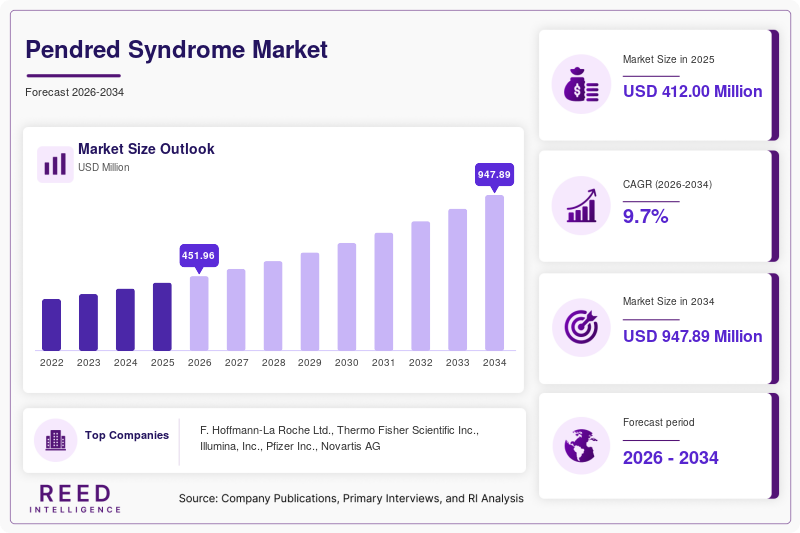
The global Pendred Syndrome Market size was valued at approximately USD 412 million in 2026 and is projected to reach nearly USD 865 million by 2034, expanding at a CAGR of 9.7% during the forecast period. The market is gaining traction due to the increasing awareness of rare genetic disorders, broader access to newborn hearing screening programs, and advancements in molecular diagnostic technologies. Pendred syndrome, a hereditary condition associated with hearing loss and thyroid dysfunction, has become an area of growing interest for healthcare providers, genetic testing laboratories, and pharmaceutical developers seeking to address unmet clinical needs in rare disease management.
A major factor supporting market growth is the global expansion of precision medicine initiatives. Governments and private healthcare organizations are investing in genomic research and early disease identification programs to improve treatment outcomes for patients with inherited disorders. This has encouraged wider adoption of next-generation sequencing, genetic counseling services, and personalized treatment pathways for rare endocrine and hearing-related diseases. Increased collaboration between biotechnology firms and academic institutions has also accelerated the development of targeted therapies and advanced diagnostic platforms designed for rare genetic syndromes.
Key Highlights
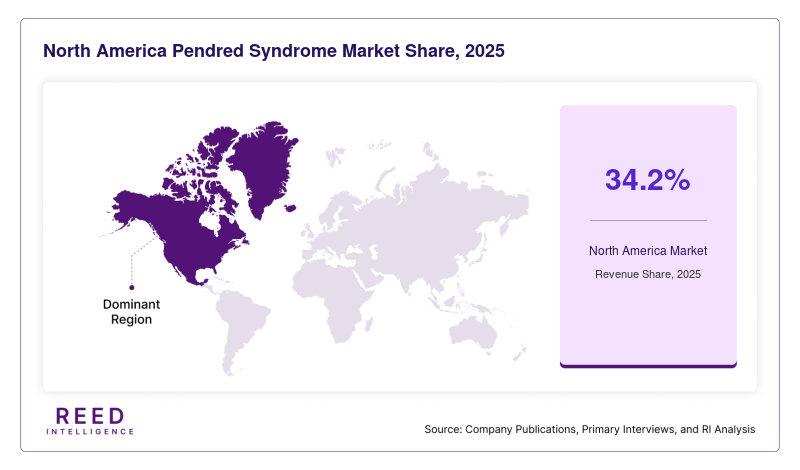
- North America dominated the market with a 34.2% share in 2025.
- Asia Pacific is expected to grow at the fastest CAGR of 11.4% during 2026–2034.
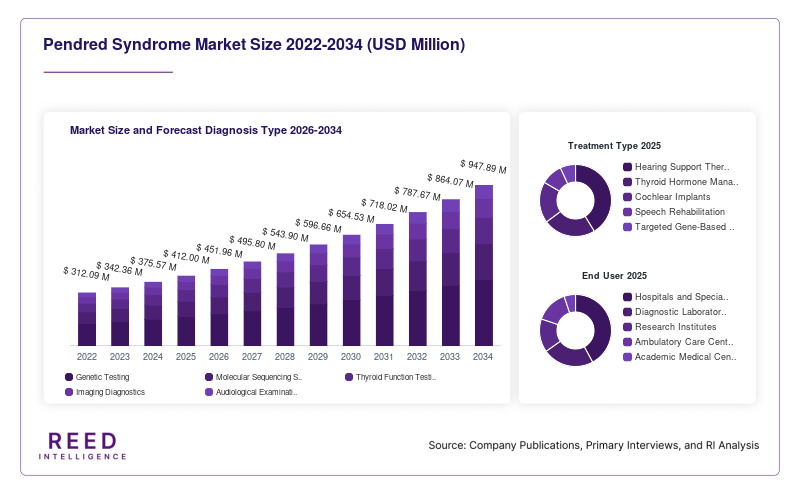
- By diagnosis type, genetic testing accounted for the largest share of 44.6%, while molecular sequencing services are projected to grow at a CAGR of 12.1%. By treatment type, hearing support therapies led with a 39.8% share, whereas targeted gene-based therapies are expected to expand at a CAGR of 13.3%.
- By end user, hospitals and specialty clinics accounted for the highest share of 46.9%, while research institutes are anticipated to grow at a CAGR of 10.8%. The United States remained the dominant country, with market values of USD 138 million in 2024 and USD 151 million in 2025.
Market Trends
Expansion of Genetic Screening Programs
The Pendred Syndrome Market is experiencing noticeable growth due to the expansion of national and regional genetic screening programs. Several healthcare systems are increasing investment in newborn hearing screening and inherited disease detection initiatives to support early diagnosis. Hospitals and diagnostic laboratories are adopting advanced sequencing tools capable of identifying SLC26A4 gene mutations with higher accuracy and shorter turnaround times. This trend is particularly visible in developed countries where healthcare providers are integrating genomic analysis into routine pediatric care. The availability of portable and cost-efficient genetic testing equipment has also improved patient accessibility, especially in urban healthcare centers. As awareness regarding hereditary hearing disorders rises, healthcare professionals are increasingly recommending preventive screening for high-risk families.
Integration of Digital Rare Disease Management Platforms
Digital healthcare platforms are becoming an important trend within the Pendred Syndrome Market as providers seek to improve long-term disease management and patient engagement. Telemedicine consultations, remote audiology monitoring, and cloud-based genetic data management systems are helping physicians deliver coordinated care to patients located in different geographic regions. Healthcare technology firms are introducing software tools that assist clinicians in tracking hearing progression, thyroid complications, and treatment outcomes in real time. These platforms also support collaboration among endocrinologists, audiologists, and genetic counselors, enabling more personalized treatment planning. The growing use of electronic health records and artificial intelligence-driven diagnostic support systems is expected to improve disease monitoring efficiency and strengthen market growth throughout the forecast period.
Market Drivers
Rising Incidence of Hereditary Hearing Disorders
The growing prevalence of hereditary hearing impairment is a significant driver supporting the expansion of the Pendred Syndrome Market. Increased screening of infants and young children has improved the identification of rare syndromes linked to congenital hearing loss, including Pendred syndrome. Healthcare providers are focusing on early intervention strategies to reduce the long-term impact of hearing impairment on language development and quality of life. This has increased demand for audiological diagnostics, cochlear implants, and hearing support therapies. In many countries, healthcare reimbursement programs for pediatric hearing treatment are also encouraging families to seek specialized diagnostic services. The combination of early screening initiatives and improved public awareness continues to strengthen market demand.
Advancements in Rare Disease Research and Personalized Medicine
Rapid progress in genomic science and precision medicine has created favorable conditions for the Pendred Syndrome Market. Pharmaceutical and biotechnology companies are investing in research programs focused on gene-targeted therapies, mutation analysis, and personalized treatment approaches for rare endocrine and genetic conditions. Improved sequencing technologies have reduced testing costs while increasing diagnostic precision, making genetic confirmation more accessible to healthcare providers. Academic institutions and research organizations are also participating in collaborative studies to better understand disease progression and treatment response patterns. These developments are encouraging innovation across diagnostic, therapeutic, and disease management segments. As healthcare systems continue prioritizing personalized medicine, demand for advanced rare disease solutions is expected to rise steadily.
Market Restraint
Limited Availability of Specialized Treatment Infrastructure
Despite positive market prospects, the Pendred Syndrome Market faces challenges related to the limited availability of specialized treatment infrastructure in several regions. Many low-income and middle-income countries lack adequate genetic counseling facilities, advanced diagnostic laboratories, and trained healthcare professionals capable of managing rare inherited disorders. Delayed diagnosis remains a major concern because symptoms are often confused with general hearing impairment or thyroid disorders during the early stages of disease progression. The high cost of molecular testing and limited insurance coverage for rare disease diagnostics also create barriers for patients seeking accurate confirmation.
The shortage of multidisciplinary care centers further affects treatment continuity, particularly in rural areas where access to audiologists, endocrinologists, and genetic specialists is restricted. In some healthcare systems, patients must travel long distances to receive comprehensive evaluation and treatment support, increasing financial burden and delaying intervention. Pharmaceutical companies developing advanced therapies may also face commercialization challenges due to small patient populations and lengthy regulatory pathways. These limitations could slow adoption rates for innovative treatment technologies and reduce market penetration in emerging regions during the forecast period.
Market Opportunities
Growth Potential in Emerging Healthcare Economies
Emerging economies present substantial opportunities for the Pendred Syndrome Market due to ongoing healthcare modernization and expanding investment in genetic medicine. Governments across Asia Pacific, Latin America, and parts of the Middle East are strengthening healthcare infrastructure and improving access to diagnostic services. Public health agencies are gradually incorporating newborn hearing screening and genetic counseling into national healthcare programs, creating new revenue opportunities for testing laboratories and healthcare providers. International healthcare partnerships and funding initiatives are also supporting the establishment of specialized rare disease centers in developing regions. As disposable income and healthcare awareness continue to increase, more families are expected to pursue advanced diagnostic evaluations and long-term disease management solutions.
Development of Gene-Based and Precision Therapeutics
The emergence of gene-based therapeutics offers promising opportunities for companies operating in the Pendred Syndrome Market. Biotechnology firms are exploring innovative approaches aimed at correcting or modifying the genetic mutations associated with the disorder. Research related to RNA-based therapies, targeted molecular treatments, and regenerative hearing restoration technologies is attracting investment from both public and private sectors. Clinical advancements in rare disease treatment are encouraging pharmaceutical manufacturers to expand their precision medicine portfolios. In addition, partnerships between research institutions and pharmaceutical companies are accelerating preclinical studies and therapeutic discovery programs. As regulatory agencies continue supporting orphan drug development, the market is expected to witness increased commercialization activity for advanced treatment solutions.
Segmental Analysis
By Diagnosis Type
Genetic testing represented the dominant subsegment within the diagnosis type category and accounted for approximately 44.6% of the global Pendred Syndrome Market share in 2024. The segment continues to lead because genetic analysis provides definitive confirmation of SLC26A4 gene mutations associated with Pendred syndrome. Hospitals, specialty clinics, and diagnostic laboratories increasingly rely on advanced sequencing tools to improve diagnostic accuracy and reduce delays in treatment planning. Growing adoption of newborn hearing screening programs has also strengthened demand for early-stage genetic evaluation. Healthcare providers are recommending comprehensive mutation testing for patients with unexplained sensorineural hearing loss, particularly in families with hereditary disease history. Improved affordability of sequencing technologies and broader insurance support for rare disease diagnostics have further contributed to segment expansion.
By Treatment Type
Hearing support therapies held the largest share within the treatment type segment in 2024, accounting for nearly 39.8% of the global Pendred Syndrome Market. This segment includes hearing aids, cochlear implants, speech therapy, and audiology rehabilitation services used to manage progressive hearing impairment associated with the disorder. The strong market position of hearing support therapies is driven by the need for long-term disease management and improved patient quality of life. Early intervention programs implemented by hospitals and pediatric healthcare centers are increasing demand for hearing rehabilitation solutions among children diagnosed with congenital hearing disorders. Technological advancements in digital hearing devices and implant systems have also improved treatment outcomes, encouraging broader adoption among healthcare providers and patients.
By End User
Hospitals and specialty clinics accounted for the largest share of the Pendred Syndrome Market by end user in 2024, representing approximately 46.9% of total revenue. These healthcare facilities serve as primary centers for diagnosis, treatment planning, audiological assessment, and long-term patient management. The segment benefits from the availability of multidisciplinary care teams that include endocrinologists, audiologists, genetic counselors, and pediatric specialists. Hospitals are increasingly integrating advanced molecular diagnostics into routine clinical workflows to improve early detection of hereditary hearing disorders. Rising healthcare spending and increasing patient preference for specialized treatment facilities have also contributed to segment growth. In addition, large healthcare institutions often participate in rare disease research programs, further strengthening their role in market development.
Regional Analysis
North America
North America accounted for the largest share of the Pendred Syndrome Market in 2025, representing approximately 34.2% of global revenue. The region is expected to maintain steady expansion at a CAGR of 8.9% through 2034 due to strong healthcare infrastructure and widespread adoption of genetic testing technologies. The presence of advanced audiology centers, high healthcare expenditure, and supportive reimbursement frameworks continues to support market growth. Research funding for rare diseases and ongoing collaboration between biotechnology firms and academic institutions are also contributing to technological advancement across the regional market.
Europe
Europe held a significant share of the Pendred Syndrome Market in 2025 and is forecast to expand at a CAGR of 8.5% during the assessment period. The region benefits from favorable healthcare policies, established rare disease registries, and strong collaboration among research institutions. Several European countries have implemented national strategies focused on improving early diagnosis and treatment access for inherited disorders. Growing adoption of molecular diagnostics and improved awareness among healthcare professionals are supporting regional demand for genetic screening services and specialized hearing management therapies.
Asia Pacific
Asia Pacific is projected to record the fastest growth in the Pendred Syndrome Market, with a forecast CAGR of 11.4% from 2026 to 2034. The regional market is expanding rapidly due to rising healthcare awareness, improving access to molecular diagnostics, and growing investment in biotechnology research. Governments across several Asian countries are strengthening healthcare infrastructure and introducing policies that encourage early disease detection. Increasing urbanization and expansion of private healthcare providers are also improving patient access to specialized diagnostic and treatment services for rare genetic disorders.
Middle East & Africa
The Middle East & Africa region represents a developing segment of the Pendred Syndrome Market and is anticipated to witness moderate growth during the forecast period. The market is projected to expand at a CAGR of 7.6% through 2034 due to gradual improvements in healthcare infrastructure and rising awareness regarding hereditary diseases. Several countries are investing in healthcare modernization programs aimed at expanding diagnostic capabilities and specialist treatment services. Increasing partnerships with international healthcare organizations are also supporting the introduction of advanced genetic testing technologies across selected urban healthcare facilities.
Latin America
Latin America is expected to experience stable growth in the Pendred Syndrome Market during the forecast period, supported by improving healthcare accessibility and rising awareness of rare genetic diseases. The regional market is projected to grow at a CAGR of 8.1% between 2026 and 2034. Expanding healthcare expenditure and increasing participation of international diagnostic companies are strengthening regional market development. Governments are also focusing on improving newborn screening capabilities and integrating advanced diagnostic services into public healthcare systems.
Competitive Landscape
The Pendred Syndrome Market is moderately fragmented, with biotechnology firms, diagnostic laboratories, pharmaceutical manufacturers, and specialty healthcare providers competing to strengthen their positions in rare disease diagnostics and treatment development. Companies are focusing on strategic partnerships, genomic research investments, and product innovation to expand their market presence. Many participants are also pursuing collaborations with academic institutions and research organizations to improve understanding of hereditary hearing disorders and accelerate therapeutic discovery.
F. Hoffmann-La Roche Ltd. remains one of the leading participants in the market due to its strong molecular diagnostics portfolio and investment in precision medicine technologies. The company recently expanded its rare disease genomic testing capabilities through partnerships with specialized research laboratories focused on inherited endocrine and hearing conditions. Other major companies are emphasizing next-generation sequencing platforms, digital disease management systems, and orphan drug development strategies to gain competitive advantage. Increased investment in clinical trials and personalized medicine solutions is expected to intensify competition during the forecast period.
Key Players
- F. Hoffmann-La Roche Ltd.
- Thermo Fisher Scientific Inc.
- Illumina, Inc.
- Pfizer Inc.
- Novartis AG
- Siemens Healthineers AG
- Quest Diagnostics Incorporated
- Bio-Rad Laboratories, Inc.
- Centogene N.V.
- Invitae Corporation
- Natera, Inc.
- Sonic Healthcare Limited
- Eurofins Scientific
- Oticon Medical
- Cochlear Limited
Recent Developments
- In February 2026, Thermo Fisher Scientific Inc. introduced an expanded rare disease sequencing panel designed to improve early detection of hereditary hearing disorders, including Pendred syndrome.
- In September 2025, Cochlear Limited announced a collaboration with a European research institute to develop advanced implant solutions tailored for patients with progressive genetic hearing loss.
- In June 2025, Illumina, Inc. expanded its genomic analysis software platform with enhanced artificial intelligence capabilities for identifying rare gene mutations associated with inherited endocrine disorders.
- In March 2026, Invitae Corporation launched a digital genetic counseling support program aimed at improving patient access to hereditary disease screening services across emerging healthcare markets.
Pendred Syndrome Market Segments
Diagnosis Type
- Genetic Testing
- Molecular Sequencing Services
- Thyroid Function Testing
- Imaging Diagnostics
- Audiological Examination
Treatment Type
- Hearing Support Therapies
- Thyroid Hormone Management
- Cochlear Implants
- Speech Rehabilitation
- Targeted Gene-Based Therapies
End User
- Hospitals and Specialty Clinics
- Diagnostic Laboratories
- Research Institutes
- Ambulatory Care Centers
- Academic Medical Centers
By Region
- North America
- Europe
- APAC
- Middle East and Africa
- LATAM