Pentanediamine Market Size, Share & Demand Report By Type (Bio-based Pentanediamine, Synthetic Pentanediamine), By Application (Polyamide Synthesis, Coatings, Adhesives, Others), By End-Use Industry (Automotive, Textile, Electronics, Construction, Others), By Region & Segment Forecasts, 2026–2034
USD 3950
Market Overview
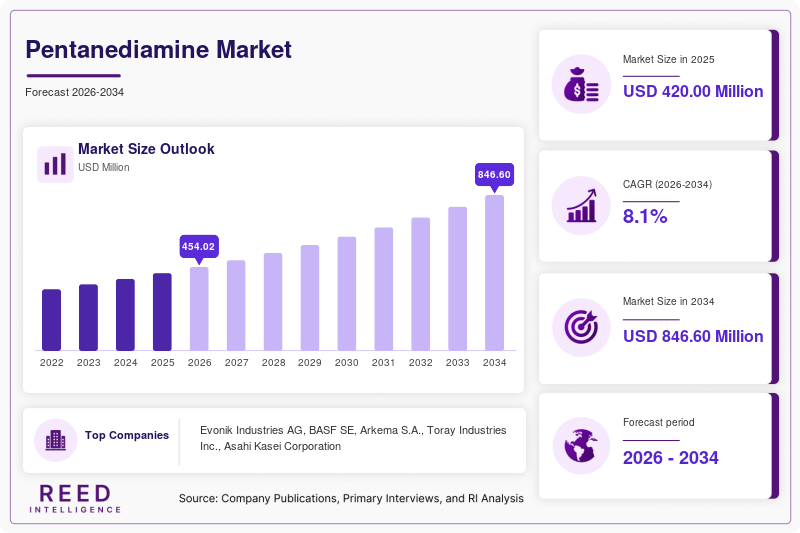
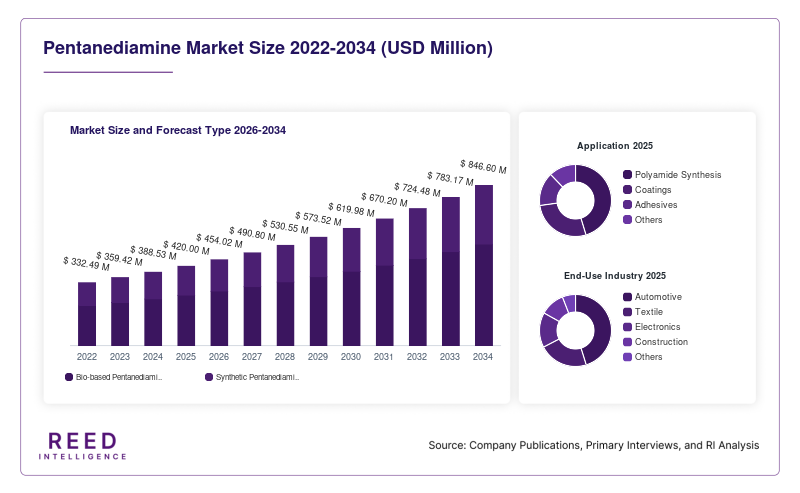
The Pentanediamine Market size was valued at approximately USD 420 million in 2026 and is projected to reach around USD 780 million by 2034, expanding at a CAGR of 8.1% during the forecast period (2026–2034). The market is witnessing steady growth due to increasing demand for bio-based chemicals and sustainable polymer production across industries such as automotive, textiles, and coatings. Pentanediamine, a key intermediate used in the production of high-performance polyamides, is gaining traction as manufacturers shift toward environmentally friendly alternatives to petroleum-based materials.
A major global factor supporting market expansion is the rising adoption of bio-based engineering plastics in response to regulatory pressure and consumer preference for low-carbon materials. Governments across regions are encouraging the use of renewable feedstocks, which has boosted investments in fermentation-based pentanediamine production processes. This transition is further supported by advancements in biotechnology that enable cost-effective and scalable manufacturing.
Key Highlights
- Asia Pacific dominated the market with a 38% share, while Latin America is projected to grow at the fastest CAGR of 9.3%
- Polyamide synthesis emerged as the leading application segment with a 46% share, while coatings applications are expected to grow at the fastest CAGR of 8.9%
- Bio-based pentanediamine led the type segment with a 52% share, while synthetic variants are projected to grow at a CAGR of 7.8%
- China remained the dominant country, with market values of USD 110 million in 2024 and USD 118 million in 2025
Market Trends
Increasing Adoption of Bio-Based Pentanediamine in Polymer Manufacturing
The market is experiencing a noticeable shift toward bio-based pentanediamine, driven by sustainability goals and regulatory frameworks aimed at reducing carbon emissions. Manufacturers are increasingly using renewable feedstocks such as sugar and agricultural waste to produce pentanediamine via microbial fermentation. This trend is particularly prominent in the automotive and textile sectors, where demand for lightweight and eco-friendly materials is rising. Bio-based polyamides derived from pentanediamine offer comparable mechanical strength and durability while reducing environmental impact. Additionally, brands are emphasizing green chemistry practices to align with ESG commitments, further accelerating adoption. As production technologies mature, cost parity with conventional materials is becoming achievable, enhancing market competitiveness and encouraging wider commercialization.
Expansion of High-Performance Polyamide Applications in Automotive and Electronics
Another key trend shaping the Pentanediamine Market is the growing use of high-performance polyamides in automotive and electronics applications. Pentanediamine is a critical building block for advanced polymers that exhibit superior thermal stability, chemical resistance, and mechanical strength. These properties make them suitable for use in engine components, electrical connectors, and lightweight structural parts. With the increasing focus on electric vehicles and miniaturized electronic devices, the need for durable and heat-resistant materials has intensified. Manufacturers are investing in research and development to enhance polymer properties, thereby expanding the application scope of pentanediamine-based products. This trend is expected to drive sustained demand over the forecast period.
Market Drivers
Rising Demand for Sustainable and Bio-Based Chemicals
The shift toward sustainable industrial practices is a primary driver of the Pentanediamine Market. Industries are under pressure to reduce carbon footprints and transition away from fossil-based raw materials. Pentanediamine, particularly bio-based variants, offers an effective solution as it can be derived from renewable resources and integrated into eco-friendly polymer systems. Regulatory policies in regions such as Europe and North America are promoting the use of bio-based chemicals through incentives and standards. This has encouraged manufacturers to invest in green production technologies and expand their product portfolios. As sustainability becomes a central theme across industries, the demand for pentanediamine is expected to rise significantly.
Growth in Automotive and Textile Industries
The expansion of the automotive and textile sectors is another major factor driving market growth. Pentanediamine is widely used in the production of polyamides that are utilized in automotive components such as fuel lines, connectors, and under-the-hood parts. In the textile industry, it is used to produce high-performance fibers that offer durability and resistance to wear. The increasing demand for lightweight vehicles and high-quality fabrics has amplified the need for advanced materials. Emerging economies are witnessing rapid industrialization, which further boosts demand for pentanediamine-based products. This trend is expected to continue, supporting long-term market growth.
Market Restraint
High Production Costs and Limited Raw Material Availability
One of the key challenges facing the Pentanediamine Market is the high cost associated with production, particularly for bio-based variants. The fermentation process requires specialized infrastructure, skilled labor, and consistent feedstock supply, which can increase operational expenses. Additionally, fluctuations in the availability and pricing of raw materials such as sugars and biomass can impact production efficiency and profitability. Smaller manufacturers often face difficulties in scaling up operations due to these cost constraints, limiting market entry and competition.
The impact of this restraint is evident in regions where infrastructure for bio-based chemical production is still developing. For example, companies in emerging markets may rely on imported technology or raw materials, increasing overall costs. This can hinder the adoption of pentanediamine in price-sensitive applications, where conventional alternatives remain more economical. Furthermore, the lack of standardized supply chains for bio-based feedstocks can create uncertainties, affecting long-term planning and investment decisions. Addressing these challenges requires advancements in production efficiency, improved supply chain management, and supportive government policies to reduce costs and encourage adoption.
Market Opportunities
Expansion in Emerging Economies
Emerging economies present significant growth opportunities for the Pentanediamine Market due to rapid industrialization and increasing demand for advanced materials. Countries in Asia Pacific, Latin America, and Africa are investing in infrastructure, automotive manufacturing, and textile production, all of which require high-performance polymers. As these regions focus on economic development, the demand for durable and cost-effective materials is rising. Pentanediamine-based polyamides offer a balance of performance and sustainability, making them attractive for various applications. Additionally, government initiatives aimed at promoting local manufacturing and reducing imports are encouraging investments in chemical production facilities. This creates opportunities for market players to expand their presence and tap into new customer bases.
Technological Advancements in Bio-Production Processes
Advancements in biotechnology and process engineering are opening new avenues for the Pentanediamine Market. Innovations in microbial fermentation and enzyme engineering are improving production efficiency and reducing costs. These developments enable manufacturers to produce pentanediamine at a larger scale while maintaining consistent quality. Furthermore, research into alternative feedstocks such as agricultural waste and non-food biomass is reducing dependence on traditional raw materials. This not only enhances sustainability but also mitigates supply chain risks. Companies that invest in advanced production technologies can gain a competitive edge by offering cost-effective and environmentally friendly solutions. As these technologies mature, they are expected to drive significant market growth.
Segmental Analysis
By Type
The bio-based pentanediamine segment dominated the market in 2024, accounting for approximately 52% of the total share. This dominance is attributed to the increasing emphasis on sustainability and the adoption of renewable feedstocks. Bio-based variants are widely used in the production of eco-friendly polyamides, which are gaining popularity across industries. Manufacturers are investing in fermentation technologies to produce pentanediamine from biomass, reducing reliance on fossil fuels. The growing awareness of environmental issues and regulatory support for green chemicals are further driving the demand for bio-based pentanediamine.
The synthetic pentanediamine segment is expected to be the fastest-growing, with a CAGR of 7.8% during the forecast period. This growth is driven by its cost-effectiveness and established production processes. Synthetic variants are widely used in applications where cost considerations are critical. Additionally, advancements in chemical synthesis methods are improving efficiency and reducing environmental impact. The availability of raw materials and established supply chains also contribute to the growth of this segment. As industries continue to balance cost and performance, synthetic pentanediamine is expected to maintain steady demand.
By Application
Polyamide synthesis was the leading application segment in 2024, accounting for 46% of the market share. Pentanediamine is a key intermediate in the production of high-performance polyamides, which are used in automotive, textiles, and industrial applications. These polymers offer excellent mechanical properties, chemical resistance, and thermal stability, making them suitable for demanding environments. The increasing demand for lightweight and durable materials is driving the growth of this segment. Additionally, the shift toward bio-based polyamides is further boosting demand for pentanediamine.
The coatings segment is projected to grow at the fastest CAGR of 8.9%. Pentanediamine is used in the formulation of advanced coatings that provide corrosion resistance and durability. The construction and infrastructure sectors are key drivers of this segment, as they require high-performance coatings for protection and longevity. Additionally, the growing demand for eco-friendly coatings is encouraging the use of bio-based pentanediamine. Innovations in coating technologies are expanding the application scope, further supporting market growth.
By End-Use
The automotive industry dominated the end-use segment in 2024, accounting for a significant share of the market. Pentanediamine-based polyamides are widely used in automotive components due to their strength, durability, and resistance to heat and chemicals. The increasing demand for lightweight vehicles to improve fuel efficiency is driving the adoption of these materials. Additionally, the rise of electric vehicles is creating new opportunities for pentanediamine in battery components and electrical systems.
The textile industry is expected to be the fastest-growing end-use segment, with a CAGR of 8.7%. Pentanediamine is used in the production of high-performance fibers that offer durability and resistance to wear. The growing demand for functional and sustainable textiles is driving this segment. Innovations in fiber technology and increasing consumer awareness of eco-friendly products are further supporting growth. As the textile industry continues to evolve, the demand for pentanediamine is expected to increase.
Regional Analysis
North America
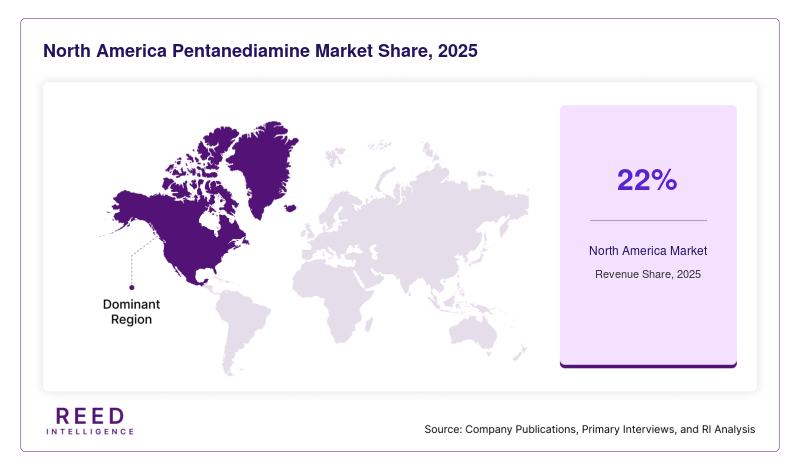
North America accounted for approximately 22% of the Pentanediamine Market share in 2025 and is projected to grow at a CAGR of 7.6% during the forecast period. The region benefits from strong research and development capabilities, particularly in bio-based chemical production. The presence of established chemical manufacturers and increasing demand for sustainable materials in automotive and packaging industries are supporting market growth. Additionally, regulatory frameworks encouraging the use of renewable resources are driving investments in pentanediamine production.
The United States dominates the regional market, driven by advancements in biotechnology and a well-established industrial base. A unique growth factor in the country is the increasing adoption of electric vehicles, which require lightweight and durable materials. Pentanediamine-based polyamides are being used in various EV components, contributing to market expansion.
Europe
Europe held a 25% market share in 2025 and is expected to grow at a CAGR of 7.9%. The region is characterized by stringent environmental regulations and a strong focus on sustainability. These factors are encouraging the adoption of bio-based chemicals, including pentanediamine. The automotive and textile industries are key consumers, with manufacturers prioritizing eco-friendly materials.
Germany is the leading country in the European market, supported by its advanced automotive sector. A unique growth factor is the country’s emphasis on circular economy practices, which promotes the use of recyclable and bio-based materials. This has led to increased demand for pentanediamine in polymer production.
Asia Pacific
Asia Pacific dominated the market with a 38% share in 2025 and is projected to grow at a CAGR of 8.5%. The region’s growth is driven by rapid industrialization, expanding manufacturing sectors, and increasing demand for high-performance materials. Countries such as China, Japan, and India are major contributors to market growth.
China leads the region, driven by its large-scale manufacturing capabilities and strong demand from automotive and textile industries. A unique growth factor is government support for bio-based chemical production, which has led to significant investments in research and development. This is expected to further strengthen the market.
Middle East & Africa
The Middle East & Africa region accounted for 7% of the market share in 2025 and is expected to grow at a CAGR of 6.8%. The market is gradually expanding due to increasing industrial activities and investments in chemical production. The region is also exploring opportunities in sustainable materials.
Saudi Arabia dominates the regional market, supported by its growing petrochemical industry. A unique growth factor is the diversification of the economy toward specialty chemicals, which includes pentanediamine production. This is expected to drive market growth in the coming years.
Latin America
Latin America held an 8% market share in 2025 and is projected to grow at the fastest CAGR of 9.3%. The region is witnessing increasing demand for advanced materials in automotive and construction sectors. Economic development and industrial expansion are key growth drivers.
Brazil is the leading country in the region, driven by its strong agricultural base. A unique growth factor is the availability of biomass feedstocks, which supports bio-based pentanediamine production. This provides a competitive advantage and encourages market growth.
Competitive Landscape
The Pentanediamine Market is moderately consolidated, with several key players focusing on innovation and sustainability to strengthen their market position. Leading companies are investing in research and development to improve production efficiency and expand their product portfolios. Strategic collaborations, mergers, and acquisitions are also common as companies aim to enhance their global presence.
A leading player in the market is Evonik Industries AG, which has established a strong foothold through its advanced bio-based chemical solutions. The company has recently expanded its production capacity to meet growing demand for sustainable materials. Other major players are focusing on developing cost-effective production methods and exploring new applications for pentanediamine. The competitive landscape is characterized by continuous innovation and efforts to achieve cost efficiency, which are expected to drive market growth.
Key Players
- Evonik Industries AG
- BASF SE
- Arkema S.A.
- Toray Industries Inc.
- Asahi Kasei Corporation
- Mitsubishi Chemical Group
- DuPont de Nemours Inc.
- Lanxess AG
- DSM-Firmenich
- Solvay S.A.
- Kuraray Co., Ltd.
- Huntsman Corporation
- Clariant AG
- UBE Corporation
- RadiciGroup
Recent Developments
- In 2025, Evonik Industries AG expanded its bio-based pentanediamine production facility to meet rising global demand.
- In 2024, BASF SE introduced a new sustainable polyamide grade derived from pentanediamine for automotive applications.
- In 2025, Arkema S.A. partnered with a biotechnology firm to develop advanced fermentation processes for pentanediamine production.
Pentanediamine Market Segments
Type
- Bio-based Pentanediamine
- Synthetic Pentanediamine
Application
- Polyamide Synthesis
- Coatings
- Adhesives
- Others
End-Use Industry
- Automotive
- Textile
- Electronics
- Construction
- Others
By Region
- North America
- Europe
- APAC
- Middle East and Africa
- LATAM