Peptides Heparin Market Size, Share & Demand Report By Product Type (Unfractionated Heparin, Low Molecular Weight Heparin, Synthetic Peptides, Recombinant Peptides), By Application (Anticoagulant Therapy, Oncology Therapeutics, Metabolic Disorders, Infectious Diseases, Cardiovascular Treatment), By End User (Hospitals, Specialty Clinics, Research Institutes, Ambulatory Surgical Centers, Pharmaceutical Companies), By Region & Segment Forecasts, 2026–2034
USD 3950
Market Overview
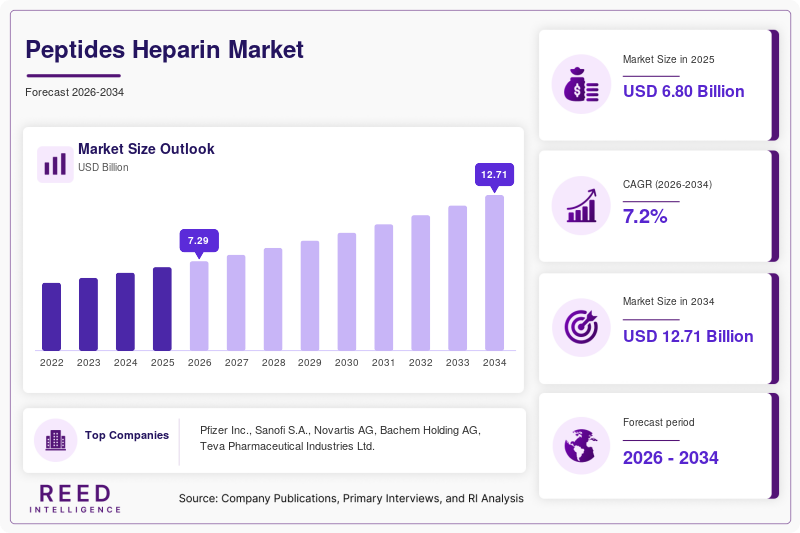
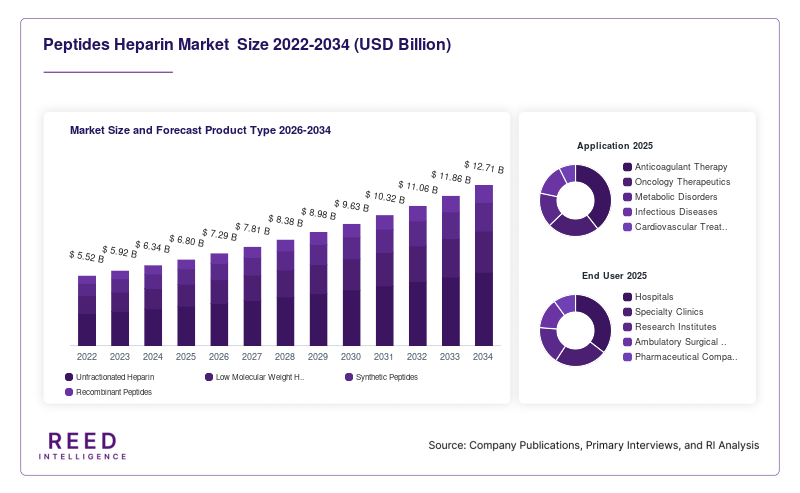
The global Peptides Heparin Market size was valued at approximately USD 6.8 billion in 2026 and is projected to reach nearly USD 11.9 billion by 2034, expanding at a compound annual growth rate (CAGR) of 7.2% during the forecast period from 2026 to 2034. The market is experiencing stable expansion due to the growing adoption of peptide-based therapeutics and the increasing use of heparin in anticoagulant treatments across hospitals, specialty clinics, and surgical centers. Rising cardiovascular disease prevalence, increasing surgical procedures, and higher demand for advanced biologics continue to create long-term demand for peptides and heparin-based pharmaceutical formulations worldwide.
The increasing investment in pharmaceutical biotechnology and peptide synthesis technologies has supported market growth across developed and emerging economies. Pharmaceutical manufacturers are expanding production capabilities for low molecular weight heparin products and peptide APIs to meet growing healthcare demand. In addition, regulatory support for biosimilar development and improvements in purification technologies have improved production efficiency and product quality. The market is also benefiting from the increasing use of peptide therapeutics in oncology, metabolic disorders, and rare diseases, where targeted treatment approaches are gaining importance.
Key Highlights
- North America dominated the market with a 34.2% share in 2025, while Asia Pacific is expected to grow at the fastest CAGR of 9.4% during 2026–2034.
- By product type, low molecular weight heparin accounted for the largest share of 42.8%, while synthetic peptides are projected to grow at a CAGR of 10.1%.
- By application, anticoagulant therapy led with a 46.5% share, whereas oncology therapeutics is expected to expand at a CAGR of 9.8%.
- By end user, hospitals accounted for the dominant share of 51.3%, while specialty clinics are projected to grow at a CAGR of 8.9%.
- The United States remained the dominant country, with market values of USD 1.82 billion in 2024 and USD 1.96 billion in 2025.
Market Trends
Expansion of Synthetic and Recombinant Peptide Manufacturing
The Peptides Heparin Market is witnessing a major shift toward synthetic and recombinant peptide manufacturing technologies. Pharmaceutical companies are increasingly investing in automated peptide synthesizers and recombinant biotechnology platforms to improve scalability, purity, and production consistency. Traditional extraction methods for heparin and peptide ingredients often involve complex biological sourcing processes, which can create supply chain risks and quality variations. As a result, biotechnology firms are moving toward advanced manufacturing systems that allow higher output with lower contamination risk. Synthetic peptides are also becoming more attractive because they offer greater structural customization and improved therapeutic targeting. The growing acceptance of recombinant production methods is expected to reduce dependence on animal-derived sources while supporting regulatory compliance across major healthcare markets.
Increasing Integration of Peptide Therapeutics in Precision Medicine
The adoption of precision medicine is creating favorable conditions for peptide-based therapeutics and heparin-associated treatment protocols. Healthcare providers are increasingly using targeted therapies that address patient-specific disease profiles, particularly in oncology, cardiovascular disorders, and metabolic diseases. Peptide therapeutics provide enhanced receptor selectivity and lower systemic toxicity, making them suitable for personalized treatment approaches. Pharmaceutical companies are therefore expanding research pipelines focused on peptide drug delivery systems, combination therapies, and long-acting peptide formulations. The trend is particularly visible in cancer treatment, where peptide-based targeted drugs are gaining clinical acceptance. In addition, digital healthcare technologies and biomarker-driven diagnostics are helping physicians optimize peptide therapy outcomes, further strengthening demand across hospitals and specialty treatment centers.
Market Drivers
Rising Prevalence of Cardiovascular and Thrombotic Disorders
The growing incidence of cardiovascular diseases and thrombotic conditions continues to support demand in the Peptides Heparin Market. Increasing rates of obesity, diabetes, hypertension, and sedentary lifestyles have contributed to higher cases of blood clotting disorders and cardiac complications worldwide. Heparin products remain widely used for anticoagulant therapy during surgeries, dialysis procedures, and emergency cardiovascular treatment. Healthcare providers are also increasing preventive anticoagulation practices for high-risk patients, especially among aging populations. The demand for low molecular weight heparin formulations is rising because of their improved safety profile and predictable pharmacokinetics. In addition, the expansion of cardiac surgery volumes and critical care procedures across developing healthcare systems is creating consistent consumption of peptide and heparin products in hospitals and acute care settings.
Growth in Biopharmaceutical Research and Drug Development
The rapid expansion of biopharmaceutical research activities is significantly driving market growth. Pharmaceutical and biotechnology companies are increasing investments in peptide therapeutics because peptides offer strong efficacy, lower toxicity, and higher specificity compared to many conventional drugs. Research pipelines now include peptide-based treatments for oncology, infectious diseases, endocrinology, and autoimmune disorders. Governments and private organizations are also supporting biotechnology innovation through funding programs and clinical research incentives. As clinical trials for peptide therapeutics expand globally, manufacturers are scaling up peptide API production and purification capabilities. Improved analytical technologies, automated synthesis systems, and advanced purification methods are reducing manufacturing costs and supporting commercial adoption. These developments are encouraging broader application of peptide-based drugs and strengthening the overall growth outlook for the market.
Market Restraint
Stringent Regulatory Requirements and Raw Material Supply Challenges
The Peptides Heparin Market faces significant challenges related to regulatory compliance and raw material sourcing. Heparin production traditionally depends on animal-derived raw materials, particularly porcine intestinal mucosa, which creates vulnerability to supply disruptions, disease outbreaks, and trade restrictions. Regulatory agencies across North America and Europe continue to enforce strict quality standards for biologic products and anticoagulants, increasing the complexity of manufacturing operations. Companies must maintain high levels of traceability, purification accuracy, and contamination control throughout production processes. Any inconsistency in raw material quality can lead to product recalls, delayed approvals, or supply shortages.
In addition, peptide drug manufacturing involves technically demanding synthesis and purification procedures that require substantial capital investment and specialized expertise. Smaller manufacturers often struggle to meet international regulatory standards, limiting market entry opportunities. Rising compliance costs associated with clinical validation, biosafety testing, and quality assurance are also affecting profit margins across the industry. For example, disruptions in animal-derived heparin supply chains during global disease outbreaks have previously created pricing volatility and temporary shortages in several healthcare markets. These challenges continue to restrain the pace of expansion for some manufacturers despite growing long-term demand.
Market Opportunities
Growing Demand for Peptide-Based Oncology Therapies
The increasing use of peptide therapeutics in oncology treatment is creating substantial growth opportunities for market participants. Cancer treatment strategies are evolving toward targeted drug delivery systems that improve treatment precision while minimizing side effects. Peptide-based oncology drugs offer advantages such as enhanced tumor targeting, improved receptor binding, and lower toxicity compared to some traditional chemotherapy agents. Pharmaceutical companies are therefore expanding clinical trials and research collaborations focused on peptide conjugates, therapeutic vaccines, and peptide-mediated imaging technologies. As cancer prevalence rises globally, healthcare systems are increasing investment in advanced oncology therapies, creating favorable commercial opportunities for peptide manufacturers and biotechnology firms operating in the market.
Emerging economies are also expanding cancer treatment infrastructure and improving access to biologic therapies. This trend is expected to support higher adoption of peptide-based cancer therapeutics over the forecast period. In addition, partnerships between biotechnology companies and research institutes are accelerating innovation in peptide engineering and targeted delivery systems. Manufacturers capable of offering cost-effective and scalable peptide production solutions are likely to benefit from rising demand across both developed and developing healthcare markets.
Expansion of Pharmaceutical Manufacturing in Emerging Economies
The rapid development of pharmaceutical manufacturing infrastructure in emerging economies presents another important opportunity for the Peptides Heparin Market. Countries across Asia Pacific and Latin America are investing heavily in biotechnology parks, API production facilities, and pharmaceutical export capabilities. Governments are also supporting domestic drug manufacturing through tax incentives, infrastructure development, and regulatory modernization initiatives. These investments are encouraging multinational pharmaceutical companies to establish regional production partnerships and outsourcing agreements.
Emerging economies provide cost advantages related to labor, raw materials, and large-scale production capacity, making them attractive locations for peptide synthesis and heparin processing operations. Increasing healthcare expenditure and rising demand for affordable biologics are also expanding domestic consumption. Furthermore, local manufacturers are improving compliance with international quality standards, enabling greater participation in global pharmaceutical supply chains. The continued growth of contract manufacturing organizations specializing in peptide APIs and anticoagulant products is expected to create strong business opportunities for both regional and international market players.
Segmental Analysis
By Product Type
Low molecular weight heparin accounted for the dominant share of the Peptides Heparin Market in 2024, representing approximately 42.8% of total revenue. The segment continues to lead because of its widespread use in anticoagulant therapy, surgical procedures, and thrombosis prevention. Healthcare providers prefer low molecular weight heparin products because they offer improved bioavailability, predictable pharmacokinetics, and reduced monitoring requirements compared to unfractionated heparin. Hospitals and emergency care centers increasingly utilize these formulations for cardiovascular treatment and postoperative care. The segment is also supported by rising cardiovascular disease prevalence and increasing numbers of orthopedic and cardiac surgeries globally. Pharmaceutical manufacturers are expanding production capacity for low molecular weight heparin products to meet growing demand from both developed and emerging healthcare markets.
Synthetic peptides are expected to witness the fastest CAGR of 10.1% during the forecast period due to increasing pharmaceutical innovation and broader therapeutic applications. Synthetic peptide technologies enable precise molecular customization, improved stability, and enhanced therapeutic targeting, making them attractive for oncology, endocrinology, and metabolic disease treatment. Biotechnology firms are investing heavily in automated synthesis technologies and recombinant manufacturing systems to improve production scalability and cost efficiency. In addition, growing demand for personalized medicine and targeted therapies is supporting the adoption of synthetic peptide formulations. Regulatory advancements and improvements in purification technologies are also helping manufacturers commercialize innovative peptide-based drugs more efficiently across international healthcare markets.
By Application
Anticoagulant therapy held the largest share of the Peptides Heparin Market in 2024, accounting for nearly 46.5% of total market revenue. The segment dominates because heparin products remain essential for preventing and treating blood clotting disorders across hospitals, surgical centers, and intensive care units. Rising prevalence of cardiovascular diseases, deep vein thrombosis, pulmonary embolism, and chronic kidney disease has increased the use of anticoagulants worldwide. In addition, expanding geriatric populations and higher rates of surgical procedures continue to drive demand for effective anticoagulant therapies. Healthcare providers also prefer peptide-associated anticoagulants because they offer rapid therapeutic action and strong clinical effectiveness during emergency cardiovascular treatment and postoperative patient management.
Oncology therapeutics is projected to register the fastest CAGR of 9.8% between 2026 and 2034 due to increasing use of peptide-based targeted cancer treatments. Pharmaceutical companies are developing advanced peptide therapeutics that improve drug delivery precision and reduce toxicity associated with traditional chemotherapy approaches. Rising global cancer incidence and growing investment in precision medicine are accelerating clinical adoption of peptide-based oncology solutions. Biotechnology firms are also expanding research on peptide conjugates, tumor-targeting agents, and peptide vaccines to improve treatment outcomes. In addition, improved biomarker diagnostics and personalized medicine approaches are enabling broader integration of peptide therapeutics into cancer care protocols across specialized healthcare institutions.
By End User
Hospitals represented the largest end-user segment in the Peptides Heparin Market in 2024, accounting for approximately 51.3% of overall revenue. Hospitals remain the primary consumers of heparin products and peptide therapeutics because they perform large volumes of surgeries, dialysis procedures, cardiovascular treatments, and critical care interventions. The increasing prevalence of chronic diseases and rising hospitalization rates are contributing to sustained demand across public and private healthcare facilities. Hospitals also maintain advanced diagnostic infrastructure and specialized treatment units that support the administration of biologics and anticoagulant therapies. In addition, growing healthcare expenditure and expansion of multispecialty hospital networks in emerging economies continue to strengthen segment growth.
Specialty clinics are anticipated to record the fastest CAGR of 8.9% during the forecast period owing to the increasing shift toward outpatient treatment services and personalized care models. Specialty clinics focusing on oncology, endocrinology, and cardiovascular care are increasingly adopting peptide-based therapeutics to improve treatment efficiency and patient outcomes. These facilities often provide targeted treatment programs and advanced monitoring services that support the use of specialized biologic therapies. Rising patient preference for minimally invasive procedures and outpatient care is also contributing to segment expansion. Furthermore, healthcare providers are investing in specialty treatment centers equipped with modern diagnostic technologies, creating favorable conditions for higher adoption of peptide and heparin products.
Regional Analysis
North America
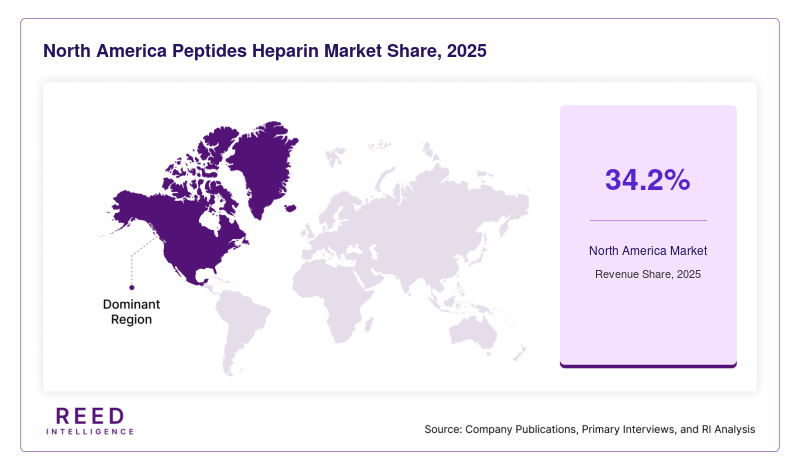
North America accounted for approximately 34.2% of the global Peptides Heparin Market in 2025 and is expected to maintain a steady CAGR of 6.8% during the forecast period. The region benefits from strong pharmaceutical research infrastructure, high healthcare spending, and broad adoption of advanced biologics. The presence of major pharmaceutical companies and biotechnology firms has strengthened product innovation and clinical research activity across the United States and Canada. In addition, rising cardiovascular disease prevalence and increasing surgical procedure volumes continue to support strong demand for anticoagulant therapies and peptide-based therapeutics.
The United States remained the dominant country within the region due to its advanced biotechnology ecosystem and strong hospital infrastructure. Increasing investment in peptide drug development and rising adoption of targeted therapies are contributing to market expansion. The country is also benefiting from regulatory support for biologic innovation and biosimilar development. Growing use of peptide therapeutics in oncology and endocrinology applications is creating new commercial opportunities for manufacturers. Furthermore, the expansion of outpatient surgical procedures and critical care services continues to increase demand for heparin products across healthcare facilities.
Europe
Europe represented nearly 27.6% of the global Peptides Heparin Market in 2025 and is projected to register a CAGR of 6.5% through 2034. The regional market is supported by strong pharmaceutical manufacturing capabilities, advanced healthcare systems, and increasing adoption of peptide therapeutics for chronic disease treatment. Countries across Western Europe continue to invest in biotechnology research and biologic drug development programs. Regulatory agencies are also promoting higher quality standards for anticoagulants and biologics, which is encouraging innovation and product differentiation within the market.
Germany emerged as the leading country in the European market due to its strong pharmaceutical industry and high research expenditure. The country hosts several biotechnology firms specializing in peptide synthesis and biologic manufacturing technologies. Rising prevalence of cardiovascular disorders and increasing use of anticoagulants during surgical procedures are supporting market demand. In addition, collaboration between academic research institutions and pharmaceutical companies is accelerating the development of novel peptide therapies. Government funding for advanced healthcare innovation is further contributing to long-term regional market growth.
Asia Pacific
Asia Pacific held around 24.1% of the global Peptides Heparin Market in 2025 and is anticipated to expand at the fastest CAGR of 9.4% between 2026 and 2034. The region is experiencing rapid pharmaceutical manufacturing growth due to lower production costs, expanding healthcare infrastructure, and increasing biotechnology investment. Countries such as China, India, South Korea, and Japan are strengthening domestic pharmaceutical capabilities while increasing exports of active pharmaceutical ingredients and biologic products. Growing awareness regarding advanced therapeutics and increasing healthcare expenditure are also contributing to higher regional demand.
China remained the dominant country in Asia Pacific because of its large-scale pharmaceutical manufacturing base and growing biotechnology sector. The country continues to expand peptide API production facilities and biologic research investments to meet domestic and international demand. Rising incidence of chronic diseases and cardiovascular conditions is increasing the use of anticoagulants and peptide therapeutics in hospitals. In addition, government initiatives supporting pharmaceutical innovation and export-oriented manufacturing are accelerating market growth. Increasing partnerships between local manufacturers and multinational pharmaceutical firms are also strengthening the region’s competitive position.
Middle East & Africa
The Middle East & Africa region accounted for approximately 7.2% of the global Peptides Heparin Market in 2025 and is expected to grow at a CAGR of 6.1% during the forecast period. Market growth is being supported by improving healthcare infrastructure, rising investments in hospital development, and increasing access to advanced pharmaceuticals. Countries across the Gulf Cooperation Council are modernizing healthcare systems and expanding specialty treatment services, which is increasing demand for anticoagulants and biologic therapies. In addition, growing awareness regarding cardiovascular disease prevention is contributing to market expansion.
Saudi Arabia emerged as the leading country within the region due to increasing healthcare expenditure and ongoing pharmaceutical sector modernization. The country is investing in domestic drug manufacturing capabilities to reduce dependence on imported medicines. Rising incidence of diabetes and cardiovascular disorders is creating higher demand for anticoagulant therapies and peptide-based treatments. Government healthcare transformation programs are also encouraging partnerships between international pharmaceutical companies and regional healthcare providers. Furthermore, expansion of private hospital networks is supporting higher adoption of advanced therapeutic products across the country.
Latin America
Latin America captured nearly 6.9% of the global Peptides Heparin Market in 2025 and is projected to record a CAGR of 6.4% through 2034. The regional market is benefiting from gradual healthcare modernization, improving pharmaceutical distribution networks, and increasing public healthcare investment. Countries across the region are expanding access to specialty care services and biologic therapies, particularly in urban healthcare centers. Growing awareness regarding cardiovascular disease management and increasing surgical procedure volumes are also contributing to higher consumption of anticoagulant products.
Brazil dominated the Latin American market due to its large population base and expanding pharmaceutical manufacturing sector. The country has experienced increasing demand for peptide therapeutics and heparin products across hospitals and diagnostic centers. Government support for local pharmaceutical production and healthcare access initiatives is encouraging market growth. In addition, rising investment in biotechnology research and expansion of private healthcare providers are improving access to advanced treatment solutions. The growth of domestic pharmaceutical partnerships with international drug manufacturers is also strengthening regional supply chain capabilities.
Competitive Landscape
The Peptides Heparin Market remains moderately consolidated, with major pharmaceutical and biotechnology companies competing through product innovation, manufacturing expansion, and strategic collaborations. Leading market participants are focusing on peptide synthesis technologies, biologic drug pipelines, and advanced anticoagulant formulations to strengthen their competitive position. Companies are also investing in contract manufacturing partnerships and regional production facilities to improve supply chain stability and meet growing global demand.
Pfizer Inc. continues to hold a strong position within the market due to its extensive biologics portfolio, global distribution network, and ongoing investment in peptide therapeutic research. The company recently expanded its peptide-focused drug development initiatives to support oncology and cardiovascular treatment applications. Other major companies are emphasizing biosimilar development, recombinant manufacturing technologies, and advanced purification systems to improve product efficiency and regulatory compliance.
Key Players
- Pfizer Inc.
- Sanofi S.A.
- Novartis AG
- Bachem Holding AG
- Teva Pharmaceutical Industries Ltd.
- Dr. Reddy’s Laboratories Ltd.
- Fresenius Kabi AG
- CordenPharma International
- Novo Nordisk A/S
- Sun Pharmaceutical Industries Ltd.
- Lonza Group AG
- Amphastar Pharmaceuticals, Inc.
- Nanjing King-Friend Biochemical Pharmaceutical Co., Ltd.
- Hepalink Pharmaceutical Group
- Aspen Pharmacare Holdings Limited
Recent Developments
- Pfizer Inc. announced the expansion of its peptide therapeutics research program in 2025 to accelerate targeted oncology drug development and improve biologic treatment capabilities.
- Bachem Holding AG expanded its peptide manufacturing facility in Switzerland to increase production capacity for pharmaceutical-grade peptide APIs and support global commercial demand.
- Fresenius Kabi AG introduced an advanced low molecular weight heparin formulation designed for improved dosing efficiency in cardiovascular treatment applications.
- Novo Nordisk A/S entered a strategic collaboration with a biotechnology research organization to develop next-generation peptide therapies for metabolic and endocrine disorders.
- Dr. Reddy’s Laboratories Ltd. expanded its injectable anticoagulant product portfolio in emerging markets to strengthen regional healthcare distribution networks.
Peptides Heparin Market Segments
Product Type
- Unfractionated Heparin
- Low Molecular Weight Heparin
- Synthetic Peptides
- Recombinant Peptides
Application
- Anticoagulant Therapy
- Oncology Therapeutics
- Metabolic Disorders
- Infectious Diseases
- Cardiovascular Treatment
End User
- Hospitals
- Specialty Clinics
- Research Institutes
- Ambulatory Surgical Centers
- Pharmaceutical Companies
By Region
- North America
- Europe
- APAC
- Middle East and Africa
- LATAM