Periodic Fever Syndrome Market Size, Share & Demand Report By Treatment Type (Biologic Therapies, NSAIDs, Corticosteroids, Gene-Targeted Therapies), By Disease Type (Familial Mediterranean Fever (FMF), TRAPS, Hyper-IgD Syndrome, Others), By Diagnosis Method (Genetic Testing, Biomarker Testing, Clinical Evaluation), By Distribution Channel (Hospital Pharmacies, Retail Pharmacies, Online Pharmacies), By Region & Segment Forecasts, 2026–2034
USD 3950
Market Overview
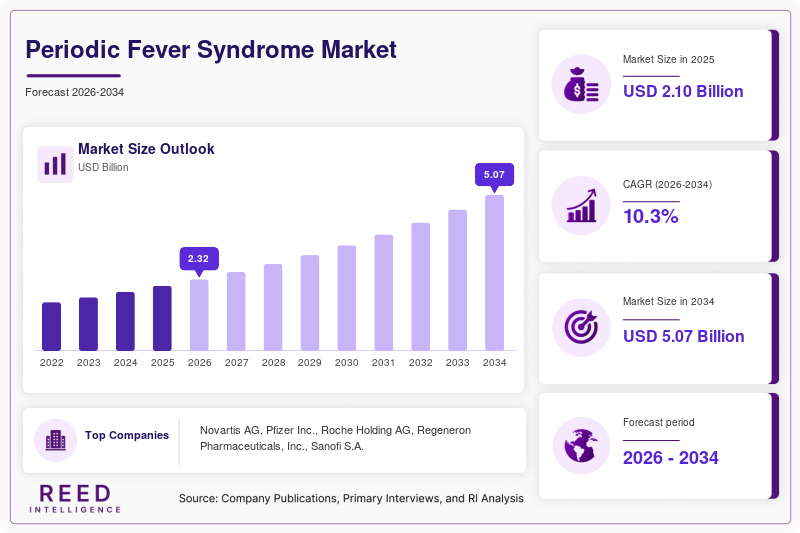
The global Periodic Fever Syndrome Market was valued at approximately USD 2.1 billion in 2026 and is projected to reach USD 4.6 billion by 2034, expanding at a compound annual growth rate (CAGR) of 10.3% during the forecast period. The market growth is primarily supported by increasing awareness of rare autoinflammatory disorders and advancements in genetic diagnostics, which enable earlier and more accurate identification of periodic fever syndromes such as Familial Mediterranean Fever (FMF), TRAPS, and Hyper-IgD Syndrome.
A key global factor driving expansion is the growing integration of precision medicine in rare disease management. Healthcare systems across developed and emerging economies are adopting targeted therapies, particularly biologics, which have significantly improved patient outcomes and treatment adherence. In addition, increased funding for orphan drug development and regulatory incentives have encouraged pharmaceutical companies to expand their pipelines for rare inflammatory diseases.
Key Highlights:
- North America dominated the market with a 41.2% share in 2025, while Asia Pacific is expected to register the fastest CAGR of 12.6% during 2026–2034.
- Biologic therapies emerged as the leading treatment segment with a 52.4% share, whereas gene-targeted therapies are projected to grow at a CAGR of 13.8%.
- Hospital pharmacies led distribution channels with a 46.7% share, while online pharmacies are expected to grow at a CAGR of 14.1%.
- The United States remained the dominant country, with market values of USD 780 million in 2024 and USD 840 million in 2025.
Market Trends
Expansion of Biologic Therapies in Rare Disease Treatment
The increasing adoption of biologic drugs, particularly interleukin inhibitors such as IL-1 blockers, is transforming the Periodic Fever Syndrome Market. These therapies offer targeted action, reducing systemic inflammation and minimizing long-term complications. Their clinical efficacy has led to broader acceptance among healthcare providers and inclusion in treatment guidelines. Pharmaceutical companies are also investing in biosimilars to improve accessibility and reduce treatment costs.
Rising Integration of Genetic Testing and Personalized Medicine
Advancements in genomic sequencing technologies have enabled precise diagnosis of periodic fever syndromes. Genetic testing is increasingly being integrated into routine clinical workflows, particularly in developed healthcare systems. This trend supports personalized treatment approaches, allowing clinicians to tailor therapies based on specific genetic mutations. The availability of next-generation sequencing (NGS) platforms has reduced diagnostic delays, which historically posed challenges in managing rare inflammatory conditions.
Market Drivers
Increasing Prevalence of Rare Autoinflammatory Disorders
The growing recognition and diagnosis of periodic fever syndromes are contributing to market expansion. Improved awareness among healthcare professionals and patient advocacy groups has led to higher diagnosis rates. Additionally, population screening in high-risk regions has facilitated early detection, boosting demand for therapeutic interventions.
Government Support and Orphan Drug Incentives
Regulatory agencies across major markets are offering incentives such as tax credits, fast-track approvals, and market exclusivity for orphan drugs. These policies have encouraged pharmaceutical companies to invest in research and development for rare diseases. As a result, the pipeline for periodic fever syndrome treatments has expanded significantly, supporting sustained market growth.
Market Restraint
High Cost of Biologic Treatments
The elevated cost of biologic therapies remains a significant barrier in the Periodic Fever Syndrome Market. These treatments often require long-term administration and specialized handling, leading to high overall healthcare expenditure. In many low- and middle-income countries, limited reimbursement policies and inadequate insurance coverage restrict patient access to advanced therapies. Additionally, the high cost of genetic testing and diagnostic procedures further adds to the financial burden. This pricing challenge may slow adoption rates in emerging markets and create disparities in treatment accessibility across regions.
Market Opportunities
Development of Gene-Based Therapies
Emerging gene-editing technologies and RNA-based treatments present significant opportunities for long-term disease management. These approaches aim to address the underlying genetic causes of periodic fever syndromes, offering potential curative outcomes. Ongoing clinical research and increasing investments in biotechnology are expected to accelerate the commercialization of such therapies.
Expansion in Emerging Healthcare Markets
Rapid improvements in healthcare infrastructure across Asia Pacific, Latin America, and parts of the Middle East & Africa are creating new growth avenues. Governments in these regions are focusing on rare disease management programs and improving access to diagnostic tools. As awareness increases and healthcare spending rises, demand for advanced therapies is expected to grow, providing opportunities for market expansion.
Segmental Analysis
By Treatment Type
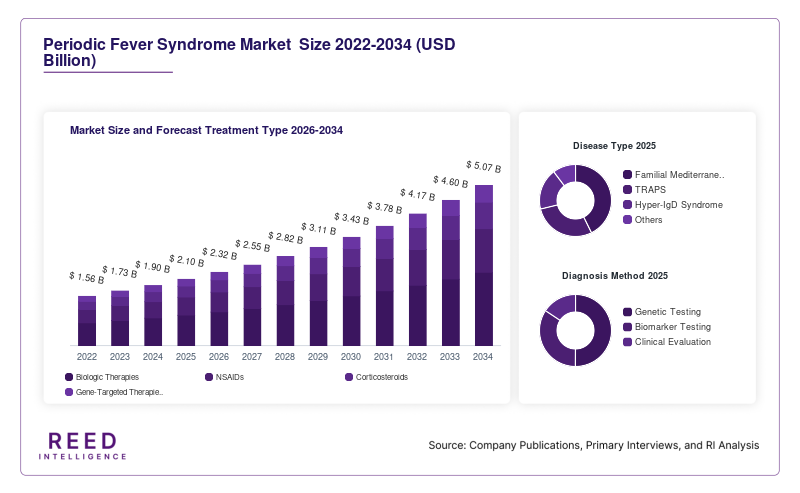
Biologic therapies dominated the Periodic Fever Syndrome Market in 2025, accounting for approximately 52.4% of the total share. Their targeted mechanism of action and effectiveness in controlling inflammation contributed to their widespread adoption.
Gene-targeted therapies are expected to register the fastest growth, with a projected CAGR of 13.8% during the forecast period. These therapies will gain traction due to their potential to address underlying genetic mutations, offering long-term disease management solutions.
By Disease Type
Familial Mediterranean Fever (FMF) represented the largest segment in 2025, capturing 44.6% of the market share. Its higher prevalence compared to other periodic fever syndromes contributed to its dominance.
TRAPS (Tumor Necrosis Factor Receptor Associated Periodic Syndrome) is anticipated to grow at a CAGR of 11.9%. Increasing awareness and improved diagnostic techniques will support its growth.
By Diagnosis Method
Genetic testing led the market with a 48.2% share in 2025, driven by its accuracy and ability to identify specific mutations.
Biomarker-based diagnostics are projected to grow at a CAGR of 12.4%, supported by advancements in laboratory technologies and increasing demand for faster diagnostic solutions.
By Distribution Channel
Hospital pharmacies accounted for 46.7% of the market share in 2025 due to the need for specialized handling of biologic drugs.
Online pharmacies are expected to grow at a CAGR of 14.1%, driven by increasing digitalization and patient preference for convenient access to medications.
Regional Analysis
North America
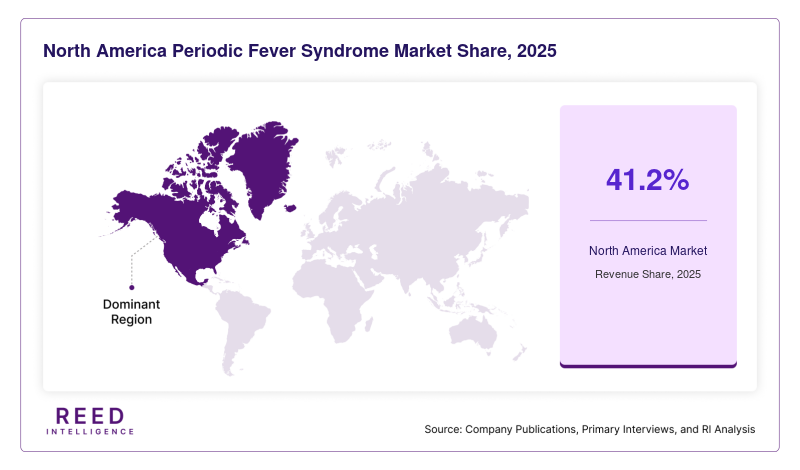
North America accounted for approximately 41.2% of the global Periodic Fever Syndrome Market share in 2025 and will continue to maintain its dominance, growing at a projected CAGR of 9.8% from 2026 to 2034. The region’s strong healthcare infrastructure, high awareness levels, and advanced diagnostic capabilities contributed to its leading position.
The United States remained the dominant country due to its robust research ecosystem and high adoption of biologic therapies. The presence of specialized treatment centers and ongoing clinical trials supported sustained growth.
Europe
Europe held a market share of 28.5% in 2025 and is expected to grow at a CAGR of 9.5% during the forecast period. The region benefits from strong regulatory frameworks and increasing funding for rare disease research.
Germany emerged as the dominant country, supported by its well-established healthcare system and focus on genetic testing. Government initiatives aimed at improving rare disease diagnosis have further strengthened market growth.
Asia Pacific
Asia Pacific captured 17.3% of the market share in 2025 and is anticipated to grow at the fastest CAGR of 12.6% from 2026 to 2034. The region is witnessing rapid improvements in healthcare access and diagnostic capabilities.
China dominated the regional market due to its large population base and increasing investment in healthcare infrastructure. Rising awareness and expanding access to advanced therapies are driving demand.
Middle East & Africa
The Middle East & Africa region accounted for 7.1% of the market share in 2025 and is projected to grow at a CAGR of 10.2% over the forecast period. Increasing government focus on rare diseases and improving healthcare systems are contributing to growth.
Saudi Arabia emerged as the dominant country, driven by national healthcare reforms and investments in specialized treatment facilities. The prevalence of genetic disorders in certain populations also supports market expansion.
Latin America
Latin America held a 5.9% share in 2025 and is expected to grow at a CAGR of 10.7% during 2026–2034. The region is gradually improving access to advanced diagnostics and therapies.
Brazil dominated the market due to its expanding healthcare infrastructure and increasing awareness of rare diseases. Government initiatives aimed at improving treatment accessibility are supporting growth.
Competitive Landscape
The Periodic Fever Syndrome Market is moderately consolidated, with key players focusing on research and development of targeted therapies. Leading companies are investing in biologics and gene-based treatments to strengthen their market position. Strategic collaborations, mergers, and acquisitions are common as firms aim to expand their product portfolios.
One of the leading players, Novartis AG, has strengthened its position through continuous innovation in IL-1 inhibitors and expansion of its rare disease portfolio. The company recently announced advancements in next-generation biologic therapies aimed at improving patient outcomes and reducing treatment frequency.
Other prominent players are also focusing on expanding their global presence and enhancing access to therapies in emerging markets.
Key Players List
- Novartis AG
- Pfizer Inc.
- Roche Holding AG
- Regeneron Pharmaceuticals, Inc.
- Sanofi S.A.
- AbbVie Inc.
- Amgen Inc.
- AstraZeneca plc
- Bristol-Myers Squibb Company
- GlaxoSmithKline plc
- Takeda Pharmaceutical Company Limited
- Biogen Inc.
- CSL Limited
- Horizon Therapeutics plc
- Swedish Orphan Biovitrum AB
Recent Developments
- Novartis AG expanded its biologics pipeline with new IL-1 inhibitor formulations.
- Regeneron Pharmaceuticals initiated clinical trials for advanced anti-inflammatory therapies targeting rare syndromes.
- Pfizer Inc. invested in gene therapy research for autoinflammatory diseases.
- Sanofi S.A. strengthened its rare disease portfolio through strategic partnerships.
- Amgen Inc. focused on biosimilar development to improve treatment affordability.
Periodic Fever Syndrome Market Segments
Treatment Type
- Biologic Therapies
- NSAIDs
- Corticosteroids
- Gene-Targeted Therapies
Disease Type
- Familial Mediterranean Fever (FMF)
- TRAPS
- Hyper-IgD Syndrome
- Others
Diagnosis Method
- Genetic Testing
- Biomarker Testing
- Clinical Evaluation
Distribution Channel
- Hospital Pharmacies
- Retail Pharmacies
- Online Pharmacies
By Region
- North America
- Europe
- APAC
- Middle East and Africa
- LATAM