Peripheral Myelin Protein 22 Gene Related Disorder Market Size, Share Demand Report By Type (Charcot-Marie-Tooth Disease Type 1A (CMT1A), Hereditary Neuropathy with Liability to Pressure Palsies (HNPP)), By Application (Diagnostics, Therapeutics), By End-Use (Hospitals and Clinics, Research Institutes, Diagnostic Laboratories) By Region & Segment Forecasts, 2025–2034
USD 3950
Market Overview
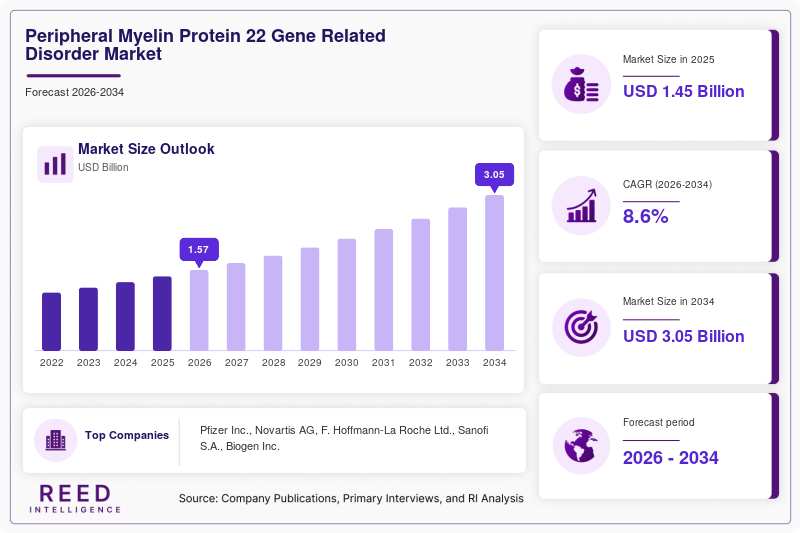
The Peripheral Myelin Protein 22 Gene Related Disorder Market size was estimated at USD 1.45 billion in 2025 and is projected to reach USD 1.58 billion in 2026, with further growth expected to achieve USD 3.05 billion by 2034. This reflects a compound annual growth rate (CAGR) of 8.6% during the forecast period (2025–2034). The market is primarily driven by growing diagnosis rates of disorders such as Charcot-Marie-Tooth disease type 1A (CMT1A), which is closely linked to PMP22 gene duplication.
One of the key growth factors is the increasing adoption of genetic testing technologies, which has significantly improved early detection and diagnosis rates. With next-generation sequencing becoming more accessible, healthcare providers are identifying a larger patient population, thus driving demand for targeted therapies. Additionally, advancements in molecular biology and gene therapy research are creating new therapeutic avenues, which are expected to enhance treatment outcomes and stimulate market expansion.
Key Highlights
- The market size is projected to reach USD 3.05 billion by 2034, reflecting steady expansion over the forecast period. This growth is supported by increasing diagnosis rates and advancements in treatment approaches for rare neurological disorders.
- The market is expected to grow at a CAGR of 8.6% during the forecast period from 2025 to 2034. Consistent investments in research and improved healthcare infrastructure are contributing to this stable growth trajectory.
- Increasing adoption of genetic testing technologies is significantly enhancing early detection and diagnosis. This is enabling healthcare providers to identify PMP22-related disorders more accurately and initiate timely interventions.
- The rising prevalence and improved diagnosis of hereditary neuropathies are driving demand for targeted therapies. Growing awareness among clinicians and patients is further supporting higher reporting and treatment rates.
Market Trends
Increasing Focus on Gene Therapy Development
The market is experiencing a shift toward gene-based therapeutic approaches, particularly targeting PMP22 gene expression abnormalities. Gene therapy is emerging as a promising solution for addressing the root cause of peripheral myelin protein 22 gene-related disorders rather than merely managing symptoms. Companies and research institutions are focusing on techniques such as gene silencing and gene editing to regulate PMP22 overexpression. This trend is supported by growing investments in biotechnology and increased regulatory support for orphan drug development. Clinical pipelines are expanding, with several candidates progressing through early and mid-stage trials. This trend is expected to transform treatment paradigms by offering long-term or potentially curative solutions, thereby significantly impacting market growth.
Expansion of Precision Medicine and Personalized Treatment Approaches
Another prominent trend is the adoption of precision medicine in the management of PMP22-related disorders. Personalized treatment strategies based on genetic profiling are gaining traction, enabling clinicians to tailor therapies according to individual patient needs. Advances in biomarker identification and molecular diagnostics are facilitating targeted interventions, improving efficacy and reducing adverse effects. Pharmaceutical companies are increasingly investing in companion diagnostics to support precision therapies. This trend is also supported by digital health technologies that allow for better patient monitoring and data analysis. As a result, personalized medicine is becoming a central component of treatment strategies, contributing to improved clinical outcomes and enhanced market growth.
Market Drivers
Rising Adoption of Advanced Genetic Diagnostic Tools
The increasing availability and affordability of advanced genetic diagnostic tools are significantly driving the growth of the Peripheral Myelin Protein 22 Gene Related Disorder Market. Technologies such as next-generation sequencing and multiplex ligation-dependent probe amplification are enabling accurate and early detection of PMP22 gene abnormalities. Early diagnosis plays a critical role in disease management, allowing for timely intervention and better patient outcomes. Healthcare providers are increasingly integrating genetic testing into routine clinical practice, which is expanding the diagnosed patient pool. Additionally, awareness campaigns and educational initiatives are encouraging patients to undergo genetic screening. This driver is expected to continue supporting market growth by facilitating early identification and treatment of affected individuals.
Increasing Research and Development Activities in Rare Diseases
The growing focus on rare disease research is another major factor driving the market. Governments, non-profit organizations, and pharmaceutical companies are investing heavily in the development of treatments for hereditary neuropathies. Incentives such as orphan drug designation, tax credits, and accelerated approval pathways are encouraging companies to invest in this space. As a result, the pipeline of investigational therapies targeting PMP22-related disorders is expanding. Collaborative research initiatives are also playing a crucial role in advancing scientific understanding and accelerating innovation. These efforts are leading to the development of novel therapies, which are expected to improve treatment options and drive market growth over the forecast period.
Market Restraint
High Cost of Treatment and Limited Accessibility
One of the primary restraints affecting the Peripheral Myelin Protein 22 Gene Related Disorder Market is the high cost associated with advanced therapies and diagnostic procedures. Gene therapies and precision medicine approaches often involve significant research and development expenses, which are reflected in the pricing of these treatments. As a result, access to such therapies remains limited, particularly in low- and middle-income countries. The lack of reimbursement policies and insurance coverage for rare disease treatments further exacerbates this issue. Additionally, the limited availability of specialized healthcare facilities and trained professionals restricts patient access to advanced care. For example, patients in developing regions may face delays in diagnosis and treatment due to inadequate infrastructure. This restraint is expected to hinder market growth to some extent, despite ongoing advancements in treatment options.
Market Opportunities
Expansion of Orphan Drug Development Programs
The increasing emphasis on orphan drug development presents significant growth opportunities for the market. Regulatory agencies are offering incentives such as market exclusivity, reduced clinical trial requirements, and financial support to encourage the development of treatments for rare diseases. These incentives are attracting pharmaceutical and biotechnology companies to invest in PMP22-related disorder therapies. The expansion of orphan drug pipelines is expected to result in the introduction of innovative treatments, addressing unmet medical needs. Additionally, partnerships between public and private entities are facilitating research and development efforts. This opportunity is likely to accelerate the availability of effective therapies and drive market expansion over the forecast period.
Growth in Emerging Markets and Healthcare Infrastructure Development
Emerging markets are expected to offer substantial growth opportunities due to improving healthcare infrastructure and increasing awareness of rare diseases. Countries in Asia Pacific, Latin America, and the Middle East are investing in healthcare modernization, which includes the adoption of advanced diagnostic technologies. Rising disposable incomes and expanding insurance coverage are also enabling patients to access better healthcare services. Furthermore, government initiatives aimed at improving rare disease management are supporting market growth in these regions. Pharmaceutical companies are increasingly focusing on expanding their presence in emerging markets through strategic collaborations and distribution networks. This opportunity is expected to contribute significantly to the overall growth of the market.
Segmental Analysis
By Type
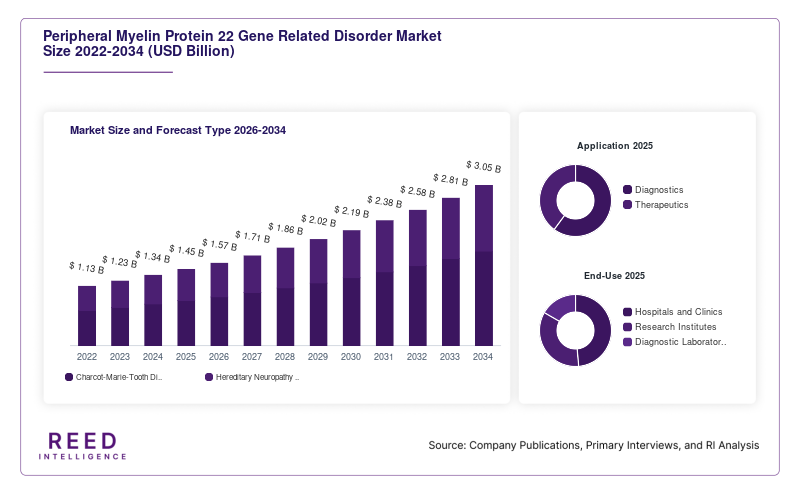
The Charcot-Marie-Tooth Disease Type 1A (CMT1A) segment dominated the market in 2024, accounting for approximately 62% of the total share. This dominance is attributed to the high prevalence of CMT1A among PMP22-related disorders. The segment benefits from increasing awareness and improved diagnostic capabilities, which are leading to higher detection rates. Additionally, ongoing research and clinical trials focused on CMT1A are contributing to the development of targeted therapies, further strengthening this segment’s position in the market.
The Hereditary Neuropathy with Liability to Pressure Palsies (HNPP) segment is expected to be the fastest-growing, with a CAGR of 9.1% during the forecast period. The growth is driven by increasing recognition of the condition and advancements in diagnostic techniques. Improved understanding of the genetic basis of HNPP is facilitating the development of more effective treatment strategies. This segment is also benefiting from growing research interest and increased funding for rare disease studies.
By Application
The Diagnostics segment held the largest share in 2024, accounting for approximately 55% of the market. This dominance is due to the critical role of diagnostic procedures in identifying PMP22 gene abnormalities. The increasing adoption of genetic testing and advancements in diagnostic technologies are driving growth in this segment. Healthcare providers are increasingly emphasizing early diagnosis, which is essential for effective disease management.
The Therapeutics segment is expected to witness the fastest growth, with a CAGR of 9.5% during the forecast period. The growth is driven by the development of novel treatment approaches, including gene therapy and targeted drug therapies. Increasing investment in research and development and the expansion of clinical trials are contributing to the growth of this segment. The introduction of innovative therapies is expected to significantly improve patient outcomes.
By End-Use
Hospitals and Clinics dominated the market in 2024, accounting for approximately 60% of the total share. This dominance is attributed to the availability of advanced diagnostic and treatment facilities in these settings. Hospitals serve as primary centers for the diagnosis and management of PMP22-related disorders, providing comprehensive care to patients.
Research Institutes are expected to be the fastest-growing segment, with a CAGR of 9.3% during the forecast period. The growth is driven by increasing research activities focused on understanding the genetic basis of these disorders. Collaborations between research institutes and pharmaceutical companies are facilitating the development of innovative therapies. This segment is expected to play a crucial role in advancing treatment options.
Regional Analysis
North America
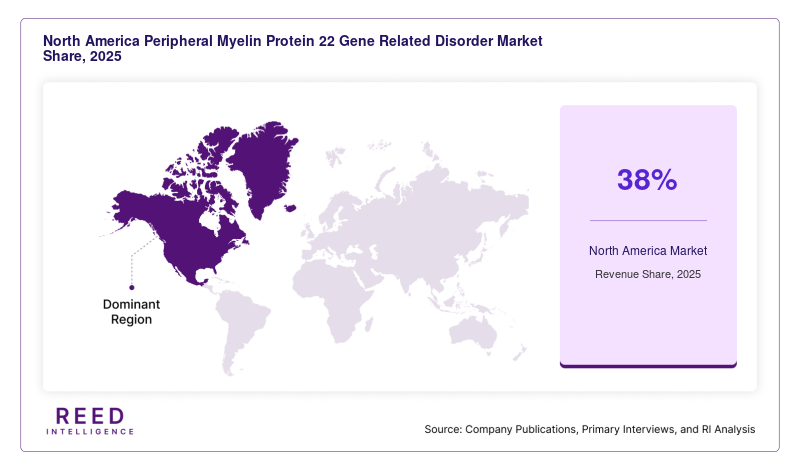
North America held the largest share of the Peripheral Myelin Protein 22 Gene Related Disorder Market in 2025, accounting for approximately 38% of the global market. The region is expected to maintain its dominance, growing at a CAGR of around 8.2% during the forecast period. The presence of advanced healthcare infrastructure, high adoption of genetic testing, and strong investment in research and development are key factors supporting market growth in this region.
The United States dominates the North American market due to its well-established healthcare system and significant funding for rare disease research. A unique growth factor in this region is the strong presence of patient advocacy groups, which actively promote awareness and support clinical research initiatives. These organizations play a crucial role in improving diagnosis rates and facilitating access to treatment.
Europe
Europe accounted for a substantial share of the market in 2025, contributing approximately 27% of global revenue. The region is projected to grow at a CAGR of 8.0% during the forecast period. Factors such as increasing government support for rare diseases and expanding research activities are driving market growth in Europe.
Germany leads the European market due to its robust healthcare system and strong focus on genetic research. A unique growth factor in this region is the implementation of comprehensive rare disease policies, which aim to improve diagnosis and treatment access. These policies are supporting the development and adoption of innovative therapies.
Asia Pacific
Asia Pacific is expected to witness the fastest growth, with a CAGR of 9.4% during the forecast period, and held around 20% market share in 2025. The region’s growth is driven by improving healthcare infrastructure and increasing awareness of genetic disorders.
China dominates the Asia Pacific market due to its large population and growing investment in healthcare. A unique growth factor in this region is the rapid expansion of diagnostic laboratories, which is enhancing access to genetic testing services. This is expected to significantly increase diagnosis rates and drive market growth.
Middle East & Africa
The Middle East & Africa region accounted for approximately 8% of the global market in 2025 and is projected to grow at a CAGR of 7.5%. The market growth is supported by gradual improvements in healthcare infrastructure and increasing focus on rare diseases.
Saudi Arabia leads the market in this region due to its investments in healthcare modernization. A unique growth factor is the implementation of national healthcare transformation programs, which aim to enhance diagnostic capabilities and improve access to specialized treatments.
Latin America
Latin America held around 7% market share in 2025 and is expected to grow at a CAGR of 7.8% during the forecast period. The region is witnessing increasing adoption of advanced diagnostic technologies and growing awareness of genetic disorders.
Brazil dominates the Latin American market due to its large healthcare system and ongoing healthcare reforms. A unique growth factor is the expansion of public healthcare programs, which are improving access to genetic testing and treatment services for rare diseases.
Competitive Landscape
The Peripheral Myelin Protein 22 Gene Related Disorder Market is moderately competitive, with several key players focusing on research and development to strengthen their market position. Companies are investing in innovative therapies, particularly gene-based treatments, to address unmet medical needs. Strategic collaborations, partnerships, and acquisitions are common strategies adopted by market participants.
A leading player in the market is Pfizer Inc., which has a strong pipeline of therapies targeting neurological disorders. The company recently announced advancements in its gene therapy research programs, focusing on hereditary neuropathies. Other companies are also expanding their portfolios through clinical trials and regulatory approvals. The competitive landscape is expected to intensify as new entrants and emerging biotechnology firms enter the market.
Key Players List
- Pfizer Inc.
- Novartis AG
- F. Hoffmann-La Roche Ltd.
- Sanofi S.A.
- Biogen Inc.
- Amgen Inc.
- Takeda Pharmaceutical Company Limited
- Bristol-Myers Squibb Company
- Eli Lilly and Company
- Regeneron Pharmaceuticals Inc.
- Sarepta Therapeutics Inc.
- Ionis Pharmaceuticals Inc.
- Vertex Pharmaceuticals Incorporated
- Ultragenyx Pharmaceutical Inc.
- Blueprint Medicines Corporation
Recent Developments
- A biotechnology firm announced the initiation of a Phase II clinical trial for a gene therapy targeting PMP22 overexpression.
- A leading pharmaceutical company expanded its rare disease portfolio through a strategic collaboration focused on hereditary neuropathies.
- Regulatory authorities granted orphan drug designation to a novel therapy aimed at treating CMT1A, supporting accelerated development and approval processes.
Peripheral Myelin Protein 22 Gene Related Disorder Market Segments
Type
- Charcot-Marie-Tooth Disease Type 1A (CMT1A)
- Hereditary Neuropathy with Liability to Pressure Palsies (HNPP)
Application
- Diagnostics
- Therapeutics
End-Use
- Hospitals and Clinics
- Research Institutes
- Diagnostic Laboratories
By Region
- North America
- Europe
- APAC
- Middle East and Africa
- LATAM