Pessary Market Size, Share, Demand Report By Product Type (Ring Pessary, Gellhorn Pessary, Shelf Pessary, Donut Pessary), By Application (Pelvic Organ Prolapse, Urinary Incontinence, Others), By End-Use (Hospitals, Specialty Clinics, Ambulatory Surgical Centers) and Regional Forecasts, 2026–2034
USD 3950
Market Overview
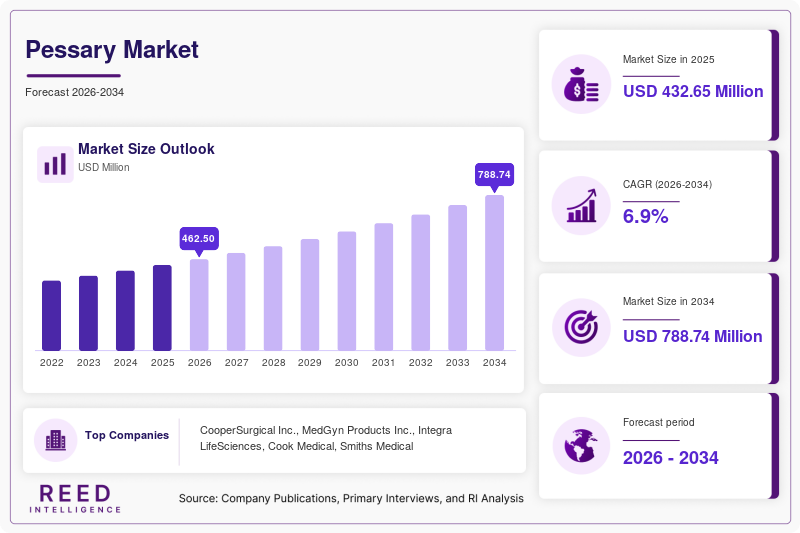
The global Pessary Market size is projected to reach approximately USD 462.5 million in 2026 and is expected to attain USD 784.3 million by 2034, registering a compound annual growth rate (CAGR) of 6.9% during the forecast period (2026–2034). The market expansion is primarily influenced by the rising prevalence of pelvic organ prolapse (POP) and stress urinary incontinence among the aging female population worldwide. Increasing awareness regarding non-surgical treatment options has significantly strengthened the adoption of pessary devices across both developed and emerging healthcare systems. In addition, improvements in gynecological care accessibility and expanding outpatient care infrastructure have supported consistent market penetration.
A key global factor supporting market growth is the demographic shift toward an aging population, particularly among women aged above 50 years. This group is more susceptible to pelvic floor disorders due to childbirth history, hormonal changes, and weakened pelvic muscles. Healthcare providers are increasingly recommending pessaries as a first-line conservative treatment due to their cost-effectiveness and minimal risk profile compared to surgical interventions. Moreover, product innovation in silicone-based and customized-fit pessaries has improved patient comfort and long-term usability, further contributing to market expansion.
Key Highlights
- North America dominated the market with a 34.2% share in 2025.
- Asia Pacific is expected to grow at the fastest CAGR of 11.2% during 2026–2034.
- By product type, ring pessaries accounted for the largest share of 38.5%.
- while shelf pessaries are projected to grow at a CAGR of 9.8%.
- By application, pelvic organ prolapse led with a 41.7% share, whereas urinary incontinence management is expected to expand at a CAGR of 10.6%.
- The United States remained the dominant country, with market values of USD 510 million in 2024 and USD 560 million in 2025.
Market Trends
Rising Adoption of Minimally Invasive Gynecological Treatments
The Pessary Market is experiencing a steady shift toward minimally invasive treatment approaches for pelvic floor disorders. Patients and healthcare providers are increasingly preferring pessary devices over surgical procedures due to lower complication risks, reduced hospital stays, and faster recovery times. This trend is particularly strong in outpatient gynecology clinics where conservative treatment methods are prioritized. Furthermore, advancements in medical-grade silicone materials have improved device durability and comfort, making long-term usage more acceptable. Increased patient education programs and awareness campaigns by healthcare organizations are also contributing to the broader acceptance of non-surgical management solutions.
Technological Advancements and Customization in Device Design
Another significant trend shaping the market is the growing emphasis on customization and technological improvement in pessary design. Manufacturers are developing anatomically optimized devices that cater to different pelvic conditions and patient anatomies. The introduction of 3D imaging-based fitting solutions and personalized sizing systems has enhanced treatment outcomes. Additionally, antimicrobial coatings and hypoallergenic materials are being integrated into product development to reduce infection risks and improve safety. These innovations are strengthening patient compliance and encouraging repeat usage, particularly among elderly populations who require long-term management solutions.
Market Drivers
Increasing Prevalence of Pelvic Floor Disorders
One of the primary drivers of the Pessary Market is the rising incidence of pelvic floor disorders, including pelvic organ prolapse and urinary incontinence. These conditions are becoming more common due to aging populations, obesity, and multiple childbirths. The growing burden on healthcare systems has increased demand for cost-effective and non-invasive treatment alternatives such as pessaries. In many cases, pessaries serve as the first-line treatment before surgical intervention is considered. Healthcare professionals are also recommending pessaries for patients who are not eligible for surgery due to comorbidities, further expanding their adoption across clinical settings.
Growing Awareness and Expanding Women’s Healthcare Infrastructure
Improved awareness regarding women’s reproductive health is significantly contributing to market growth. Governments and healthcare organizations are increasingly investing in gynecological health programs, particularly in developing economies. These initiatives focus on early diagnosis and management of pelvic disorders, thereby increasing pessary adoption rates. Additionally, the expansion of women’s health clinics and specialized gynecology centers has improved access to pessary fitting services. Educational campaigns highlighting non-invasive treatment benefits are further encouraging patients to opt for pessary devices as a reliable long-term management option.
Market Restraint
Patient Discomfort and Limited Long-Term Compliance
A major restraint affecting the Pessary Market is patient discomfort and limited long-term compliance associated with device usage. Some users experience irritation, vaginal discharge, or difficulty in maintaining hygiene, which leads to discontinuation of treatment. Additionally, improper fitting or lack of follow-up care can result in complications such as ulceration or device displacement. In regions with limited access to trained healthcare professionals, pessary management becomes challenging, reducing overall adoption rates. This issue is particularly evident in rural healthcare systems where regular gynecological monitoring is not easily available, restricting consistent market growth.
Market Opportunities
Expansion in Emerging Healthcare Markets
Emerging economies present significant growth opportunities for the Pessary Market due to improving healthcare infrastructure and increasing awareness of women’s health disorders. Countries in Asia Pacific, Latin America, and parts of Africa are witnessing rising investments in gynecology services. Government-led maternal health programs and NGO initiatives are also promoting early diagnosis of pelvic floor conditions. As access to affordable medical devices increases, pessary adoption is expected to grow substantially. Additionally, the availability of low-cost manufacturing bases in these regions is attracting global players to expand distribution networks.
Integration of Digital Health and Remote Monitoring Solutions
The integration of digital health technologies presents another promising opportunity for market expansion. Telemedicine platforms and remote consultation services are enabling better follow-up care for pessary users. Healthcare providers are increasingly using digital tools to monitor patient outcomes and provide guidance on device maintenance. Smart gynecology care solutions, including app-based reminders and virtual fitting assistance, are improving patient adherence. This digital transformation is particularly beneficial for elderly patients who require continuous monitoring but have limited mobility, thereby improving overall treatment efficiency.
Segmental Analysis
By Product Type
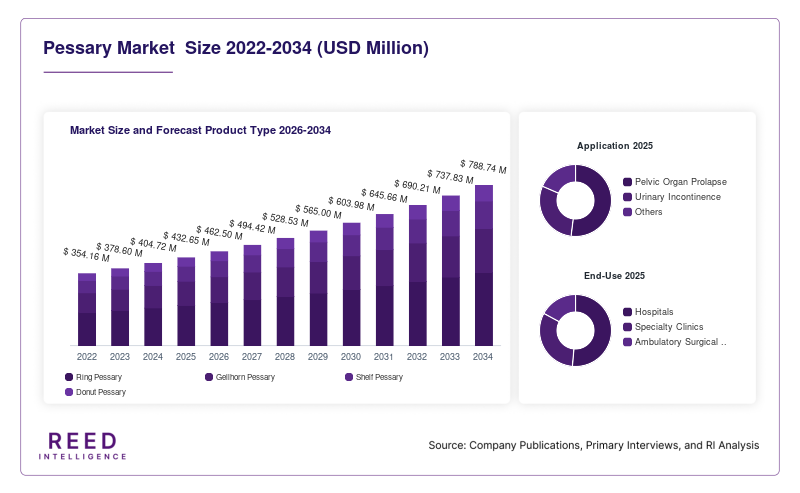
Ring pessaries dominated the segment with approximately 38.5% share in 2024 due to their ease of use and broad applicability across mild to moderate pelvic organ prolapse cases. Their simple design and availability in multiple sizes make them widely preferred in clinical practice. Healthcare providers often recommend ring pessaries as first-line devices for non-surgical management.
Shelf pessaries are expected to register the fastest growth with a CAGR of 9.8% during 2026–2034 due to their effectiveness in advanced prolapse cases. Increasing demand for specialized devices and improved patient-specific customization options is supporting their adoption in tertiary care centers.
By Application
Pelvic organ prolapse accounted for 41.7% share in 2024, driven by its high prevalence among postmenopausal women and those with multiple childbirth histories. Pessaries remain a widely accepted conservative treatment option in this application segment.
Urinary incontinence management is projected to grow at a CAGR of 10.6% due to rising awareness and increasing preference for non-invasive treatment solutions. Improved diagnostic rates are further strengthening demand.
By End-Use
Hospitals held 45.3% share in 2024 due to availability of trained specialists and advanced gynecological care facilities. Hospitals remain the primary setting for pessary fitting and follow-up care.
Specialty clinics are expected to grow fastest at a CAGR of 10.1% due to increasing outpatient procedures and rising demand for personalized women’s healthcare services.
Regional Analysis
North America
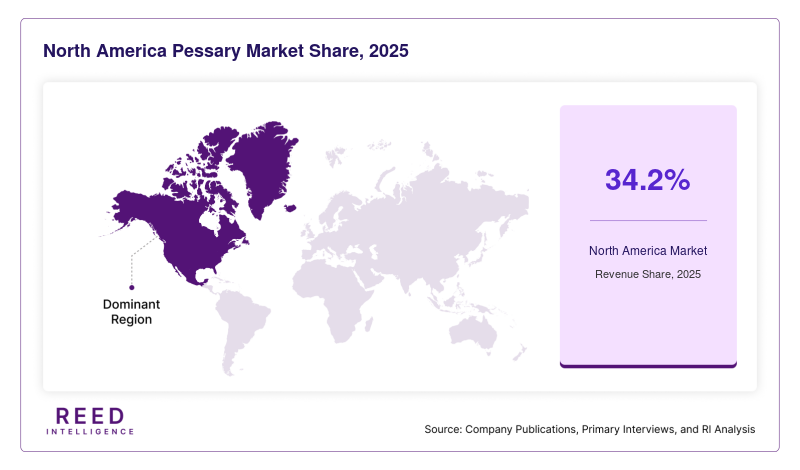
North America accounted for approximately 34.2% share of the global Pessary Market in 2025 and is expected to grow at a CAGR of 6.3% during 2026–2034. The region benefits from advanced healthcare infrastructure and high awareness regarding pelvic health disorders. Strong insurance coverage and early diagnosis practices further support market penetration.
The United States remains the dominant country in the region due to its well-established gynecology care system and high prevalence of pelvic organ prolapse cases. Increasing adoption of outpatient care solutions and regular gynecological screenings are key growth factors driving demand across the country.
Europe
Europe held nearly 27.5% market share in 2025 and is projected to grow at a CAGR of 6.1% during the forecast period. The region demonstrates steady demand supported by aging demographics and strong public healthcare systems.
Germany leads the European market due to high healthcare spending and widespread availability of specialized pelvic floor treatment centers. Increased focus on preventive healthcare and early-stage diagnosis contributes significantly to regional growth.
Asia Pacific
Asia Pacific is expected to grow at the fastest CAGR of 11.2% during 2026–2034, with a market share of 21.4% in 2025. Rising population base and improving women’s healthcare access are major growth drivers.
China is the dominant country in the region, supported by rapid hospital expansion and increasing awareness campaigns on reproductive health. Growing urbanization and government healthcare investments are also accelerating adoption rates.
Middle East & Africa
Middle East & Africa held 8.6% share in 2025 and is expected to grow at a CAGR of 7.4% during the forecast period. Limited but improving access to specialized gynecology care supports gradual market expansion.
South Africa leads the region due to better healthcare infrastructure compared to neighboring countries. Increasing NGO involvement in women’s health awareness programs is contributing to market development.
Latin America
Latin America accounted for 8.3% of the global market in 2025 and is projected to grow at a CAGR of 7.0% through 2034. Rising healthcare investments and improving diagnostic capabilities are supporting growth.
Brazil is the leading country in the region, driven by expanding hospital networks and increasing awareness of pelvic floor disorders among women in urban areas.
Competitive Landscape
The Pessary Market is moderately consolidated, with key players focusing on product innovation, material advancements, and global distribution expansion. Major companies include CooperSurgical Inc., MedGyn Products Inc., Integra LifeSciences, Panpac Medical Corporation, and Smiths Medical. These companies emphasize silicone-based product development and ergonomic designs to improve patient comfort and compliance. CooperSurgical Inc. maintains a leading position due to its broad product portfolio and strong global presence. Recent developments include expansion of manufacturing capabilities and introduction of next-generation customizable pessary devices aimed at improving long-term patient outcomes.
Key Players List
- CooperSurgical Inc.
- MedGyn Products Inc.
- Integra LifeSciences
- Panpac Medical Corporation
- Smiths Medical
- Thomas Medical
- Personal Medical Corp.
- Dr. Arabin GmbH & Co. KG
- Pelvital
- Bioteque America
- Milex Products
- Medesign I.C. GmbH
- Cook Medical
- Mediplus Ltd.
- AllQ Medical
Recent Developments
- Introduction of next-generation silicone-based pessaries with antimicrobial surface coatings to reduce infection risks.
- Expansion of CooperSurgical Inc. distribution network across Asia Pacific to strengthen regional penetration.
- Launch of digital fitting support tools by leading manufacturers to improve device selection accuracy and patient outcomes.
Pessary Market Segments
Product Type
- Ring Pessary
- Gellhorn Pessary
- Shelf Pessary
- Donut Pessary
Application
- Pelvic Organ Prolapse
- Urinary Incontinence
- Others
End-Use
- Hospitals
- Specialty Clinics
- Ambulatory Surgical Centers
By Region
- North America
- Europe
- APAC
- Middle East and Africa
- LATAM