Pet Blood Pressure Monitoring Device Market Size, Share Demand Report By Product Type (Doppler Blood Pressure Monitors, Oscillometric Blood Pressure Monitors, Wearable and Remote Monitoring Devices), By Animal Type (Dogs, Cats, Other Companion Animals), By End Use (Veterinary Hospitals, Veterinary Clinics, Veterinary Diagnostic Laboratories, Research Institutions) By Region & Segment Forecasts, 2022–2034
USD 3950
Market Overview
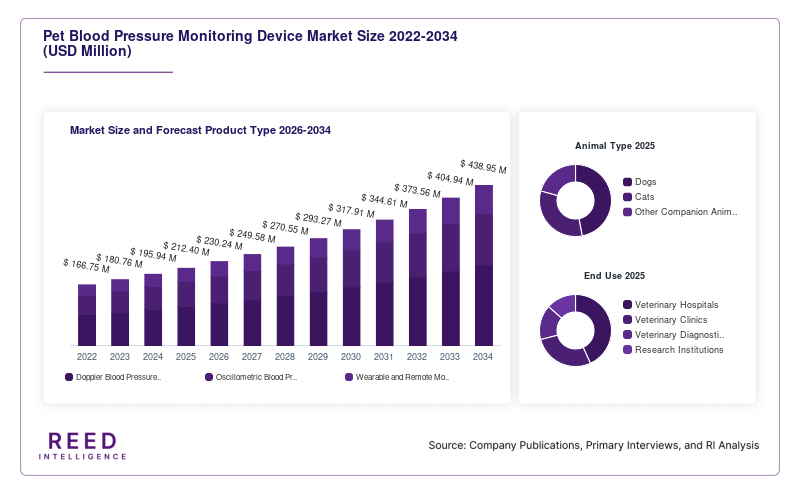
The Pet Blood Pressure Monitoring Device Market size was valued at approximately USD 212.4 million in 2025 and is projected to reach USD 438.7 million by 2033, registering a compound annual growth rate (CAGR) of 8.4% from 2025 to 2033. The market growth is driven by the increasing integration of advanced veterinary diagnostic technologies and the rising emphasis on preventive healthcare for companion animals. Veterinary professionals are increasingly adopting non-invasive monitoring systems to diagnose hypertension, renal disorders, and cardiovascular complications in pets, which has supported consistent demand for pet blood pressure monitoring devices across veterinary clinics and hospitals.
The market has witnessed notable technological improvements in portable monitoring devices, including Doppler-based systems and oscillometric monitors designed specifically for animals. These systems enable veterinarians to obtain accurate readings in clinical settings and during routine wellness examinations. As veterinary practices adopt more diagnostic tools for chronic disease management, demand for specialized blood pressure monitoring equipment for pets continues to expand.

Key Highlights
- North America held the dominant regional share of 38.5% in 2025, while Asia Pacific is projected to record the fastest growth with a CAGR of 9.6% through 2033.
- By Product Type, Doppler blood pressure monitors accounted for the largest share of 46.2% in 2024, whereas wearable and remote monitoring devices are projected to grow at a CAGR of 10.2%.
- By Animal Type, dogs represented the leading segment with a 58.4% market share in 2024, while cats are expected to grow at a CAGR of 9.1% during the forecast period.
- The United States dominated the market, reaching USD 72.8 million in 2024 and estimated to reach USD 78.6 million in 2025.
Market Trends
Integration of Portable Veterinary Diagnostic Devices
Veterinary clinics are increasingly adopting portable diagnostic systems that support quick health assessments in pets. Portable blood pressure monitoring devices designed specifically for animals allow veterinarians to measure cardiovascular parameters without requiring complex clinical setups. These devices reduce procedure time and help minimize stress for pets during examination.
Portable Doppler monitors and compact oscillometric systems are being incorporated into routine veterinary checkups, especially for older pets and animals with chronic health conditions. Veterinary professionals are also integrating blood pressure monitoring into broader diagnostic workflows that include cardiac and renal screenings. This trend supports the wider adoption of veterinary diagnostic tools, contributing to sustained growth in the Pet Blood Pressure Monitoring Device Market.
Expansion of Preventive Veterinary Healthcare Programs
Preventive healthcare programs for pets are gaining prominence among veterinary practices and pet owners. Veterinary clinics are implementing wellness programs that include routine blood pressure monitoring to detect early signs of hypertension and related disorders.
Such programs emphasize regular health screenings, particularly for aging pets that are more susceptible to cardiovascular complications. Veterinary professionals are encouraging routine monitoring as part of annual health evaluations. This trend has encouraged the adoption of blood pressure monitoring devices in veterinary clinics, diagnostic centers, and specialized animal hospitals, strengthening the long-term market outlook.
Market Drivers
Increasing Prevalence of Hypertension and Cardiovascular Disorders in Pets
Veterinary professionals are observing a gradual increase in hypertension and cardiovascular conditions among companion animals, particularly aging dogs and cats. These conditions often occur alongside chronic diseases such as kidney disorders and endocrine abnormalities. Early detection of blood pressure abnormalities has become essential in veterinary clinical practice.
Blood pressure monitoring devices enable veterinarians to diagnose and manage such conditions effectively. The increasing need for accurate diagnostic tools to monitor cardiovascular health in pets is contributing to higher adoption rates across veterinary hospitals and specialty clinics. This factor is supporting steady growth in the Pet Blood Pressure Monitoring Device Market.
Growth in Veterinary Diagnostic Infrastructure
The expansion of veterinary diagnostic infrastructure has increased the availability of specialized medical equipment for animals. Veterinary hospitals and clinics are incorporating advanced monitoring tools to improve the quality of medical care for companion animals.
Many veterinary practices are expanding their diagnostic capabilities by investing in specialized equipment, including blood pressure monitors designed specifically for animals. As veterinary healthcare services continue to expand globally, the demand for monitoring systems that support accurate clinical diagnosis is expected to rise.
Market Restraint
High Cost of Specialized Veterinary Monitoring Equipment
One major challenge affecting the Pet Blood Pressure Monitoring Device Market is the relatively high cost of specialized veterinary monitoring systems. Blood pressure monitors designed for animal use require specific calibration, specialized cuffs, and animal-specific measurement algorithms. These design requirements increase manufacturing costs compared to conventional human blood pressure monitors.
Smaller veterinary clinics, particularly in developing regions, often operate with limited diagnostic budgets. As a result, some practices may delay or avoid investing in dedicated blood pressure monitoring systems. This cost barrier can limit market expansion in regions where veterinary infrastructure is still developing. Although technological advancements are gradually reducing production costs, price sensitivity among veterinary clinics remains a restraint for broader adoption.
Market Opportunities
Development of Remote Monitoring Devices for Pets
The emergence of remote monitoring technologies presents significant opportunities for the Pet Blood Pressure Monitoring Device Market. Manufacturers are developing wearable monitoring solutions that enable continuous tracking of vital signs in pets. These devices allow veterinarians to monitor cardiovascular health remotely and provide ongoing assessments without requiring frequent clinic visits.
Remote monitoring systems are particularly useful for pets undergoing long-term treatment for hypertension or cardiovascular disorders. As digital veterinary healthcare solutions expand, remote monitoring devices are expected to gain traction across veterinary practices.
Expansion of Veterinary Services in Emerging Economies
Emerging economies are witnessing rapid expansion in veterinary healthcare services due to increasing awareness of animal health and rising pet ownership. Veterinary hospitals and clinics in developing markets are gradually incorporating diagnostic technologies to improve service capabilities.
As veterinary practices expand their infrastructure, the adoption of diagnostic devices such as blood pressure monitors is expected to increase. Manufacturers are also focusing on introducing cost-effective monitoring systems tailored for emerging markets. This expansion in veterinary services presents considerable growth potential for the Pet Blood Pressure Monitoring Device Market.
Segmental Analysis
By Product Type
Doppler blood pressure monitors accounted for the largest share of the Pet Blood Pressure Monitoring Device Market in 2024, representing 46.2% of total revenue. Doppler-based monitoring devices are widely used in veterinary practices because they provide reliable readings for animals with low blood pressure levels. Veterinarians frequently rely on Doppler monitors for measuring systolic blood pressure in dogs and cats during routine clinical examinations.
Wearable and remote monitoring devices are expected to record the fastest growth, with a projected CAGR of 10.2% through 2033. These devices will support continuous monitoring of cardiovascular parameters in pets outside clinical settings. Remote monitoring technologies are being developed to improve long-term disease management, enabling veterinarians to monitor animals undergoing treatment for hypertension or cardiac conditions.
By Animal Type
Dogs represented the dominant segment in 2024, accounting for 58.4% of the Pet Blood Pressure Monitoring Device Market share. Veterinary clinics frequently perform blood pressure assessments for dogs due to their higher incidence of cardiovascular and endocrine disorders. Routine monitoring of blood pressure in dogs has become common in veterinary cardiology and general practice.
Cats will likely experience the fastest growth during the forecast period, with an expected CAGR of 9.1%. Hypertension associated with kidney disease and endocrine disorders is increasingly observed in cats. Veterinary professionals are expected to increase the use of monitoring devices to support early diagnosis and disease management for feline patients.
By End Use
Veterinary hospitals accounted for the largest market share in 2024, representing 44.8% of the Pet Blood Pressure Monitoring Device Market. These facilities often provide specialized medical services for companion animals and are equipped with advanced diagnostic equipment. Veterinary hospitals routinely conduct comprehensive health examinations that include blood pressure monitoring for pets.
Veterinary diagnostic laboratories are projected to record the fastest growth, with a CAGR of 9.4% during the forecast period. Diagnostic laboratories will likely expand their capabilities by incorporating specialized monitoring equipment that supports detailed cardiovascular assessments for animals referred by veterinary clinics.
Regional Analysis
North America
North America accounted for 38.5% of the Pet Blood Pressure Monitoring Device Market share in 2025. The region will likely register a CAGR of 7.9% from 2025 to 2033. The strong presence of established veterinary hospitals and advanced veterinary diagnostic infrastructure contributed to the region’s dominant market position. Veterinary practices across the region have adopted specialized diagnostic devices to support early detection of cardiovascular disorders in pets.
The United States represented the leading country in the region. Veterinary clinics across the country have widely adopted diagnostic equipment that supports routine health evaluations for companion animals. The presence of specialized veterinary cardiology services has increased the use of blood pressure monitoring devices for accurate diagnosis and long-term disease management.
Europe
Europe represented 27.2% of the global Pet Blood Pressure Monitoring Device Market in 2025. The regional market will likely expand at a CAGR of 7.8% during the forecast period. Veterinary healthcare systems in Europe have continued to incorporate advanced diagnostic technologies for companion animals, which supported demand for blood pressure monitoring equipment.
Germany emerged as the dominant country within the European market. The country has a well-developed veterinary healthcare infrastructure and a strong network of veterinary hospitals and clinics. Veterinary professionals in Germany are increasingly focusing on diagnostic precision in animal healthcare, which has encouraged the use of specialized monitoring devices.
Asia Pacific
Asia Pacific held 21.6% of the Pet Blood Pressure Monitoring Device Market share in 2025 and will likely expand at a CAGR of 9.6% through 2033, making it the fastest-growing regional market. Increasing adoption of companion animals and expanding veterinary healthcare infrastructure have supported market growth across several countries in the region.
China represented the dominant country in the Asia Pacific region. The rapid growth of urban pet ownership and the development of veterinary clinics have contributed to increased demand for diagnostic equipment. Veterinary service providers in China are expanding their clinical capabilities, which is expected to support adoption of pet blood pressure monitoring devices.
Middle East & Africa
The Middle East & Africa region accounted for 6.3% of the Pet Blood Pressure Monitoring Device Market in 2025. The regional market will likely grow at a CAGR of 7.1% from 2025 to 2033. Increasing awareness of companion animal health and gradual improvements in veterinary infrastructure have supported the regional market outlook.
South Africa represented the dominant country in the region. Veterinary clinics and animal hospitals in South Africa have expanded diagnostic services for companion animals. The growth of veterinary practices that provide specialized medical care for pets has supported the adoption of diagnostic monitoring devices.
Latin America
Latin America held 6.4% of the global Pet Blood Pressure Monitoring Device Market in 2025. The regional market will likely grow at a CAGR of 7.4% during the forecast period. Veterinary clinics across the region have gradually increased investments in diagnostic equipment to improve clinical capabilities.
Brazil emerged as the leading country within Latin America. The country has experienced growth in companion animal ownership and expansion of veterinary services. Veterinary professionals are adopting diagnostic technologies that support accurate health assessments for pets, contributing to regional market growth.

Competitive Landscape
The Pet Blood Pressure Monitoring Device Market features a mix of veterinary diagnostic equipment manufacturers and specialized animal healthcare technology companies. Market participants focus on developing animal-specific monitoring devices that provide reliable and accurate readings during veterinary examinations.
SunTech Medical has emerged as a leading player in the market due to its portfolio of veterinary blood pressure monitoring systems designed specifically for companion animals. The company has expanded its product portfolio by introducing advanced oscillometric monitoring systems tailored for veterinary clinics.
Other companies in the market are focusing on improving device portability and integrating digital monitoring technologies to enhance diagnostic capabilities. Strategic product launches and technology upgrades remain key competitive strategies within the market.
Key Players
- SunTech Medical
- Midmark Corporation
- Kent Scientific Corporation
- Mindray Animal Medical
- Vetronic Services Ltd.
- Contec Medical Systems Co., Ltd.
- Burtons Medical Equipment Ltd.
- Ramsey Medical Inc.
- Beijing Choice Electronic Technology Co., Ltd.
- Digicare Biomedical Technology
Recent Developments
- Veterinary device manufacturers have introduced compact oscillometric monitoring systems designed for routine clinical use in veterinary practices.
- Several companies have expanded their veterinary diagnostic product portfolios with portable blood pressure monitoring devices for companion animals.
- Technology providers have introduced monitoring systems that integrate digital data recording to improve veterinary patient management.
- Veterinary equipment manufacturers are developing wearable monitoring solutions that support continuous cardiovascular monitoring for pets.
Pet Blood Pressure Monitoring Device Market Segments
Product Type
- Doppler Blood Pressure Monitors
- Oscillometric Blood Pressure Monitors
- Wearable and Remote Monitoring Devices
Animal Type
- Dogs
- Cats
- Other Companion Animals
End Use
- Veterinary Hospitals
- Veterinary Clinics
- Veterinary Diagnostic Laboratories
- Research Institutions
By Region
- North America
- Europe
- APAC
- Middle East and Africa
- LATAM