Phelan Mcdermid Syndrome Market Size, Share & Demand Report By Treatment Type (Symptomatic Therapy, Gene Therapy, Pharmacological Treatment), By Diagnosis Method (Genetic Testing, Prenatal Testing, Clinical Evaluation), By End-Use (Hospitals, Specialty Clinics, Research Institutes), By Distribution Channel (Hospital Pharmacies, Retail Pharmacies, Online Pharmacies), By Region & Segment Forecasts, 2025–2034
USD 3950
Market Overview
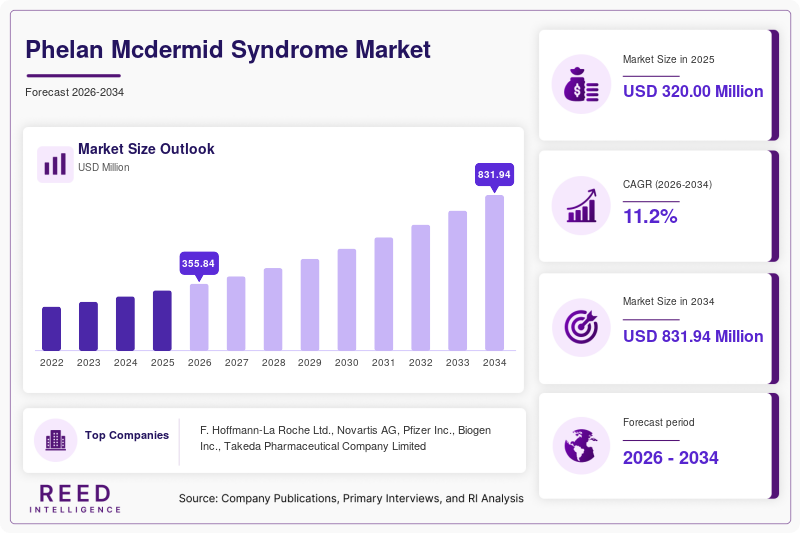
The global Phelan Mcdermid Syndrome Market size was valued at approximately USD 320 million in 2025 and is projected to reach USD 820 million by 2034, expanding at a compound annual growth rate (CAGR) of 11.2% from 2025 to 2034. The market growth is primarily driven by increasing recognition of rare genetic disorders and improvements in diagnostic technologies that enable early detection of Phelan McDermid Syndrome (PMS). As healthcare systems continue to prioritize rare disease management, investments in research and development have increased, supporting pipeline drug development and therapeutic innovations.
One significant global factor contributing to the growth of the Phelan Mcdermid Syndrome Market is the expansion of genomic medicine and precision healthcare. Advances in genetic sequencing technologies have improved the diagnosis rate of PMS, which historically remained underdiagnosed. This has led to a rise in patient identification and subsequent demand for targeted therapies, clinical trials, and supportive care solutions.
Key Highlights
- North America dominated the market with a 41% share in 2025, while Asia Pacific is expected to register the fastest CAGR of 13.6% through 2034.
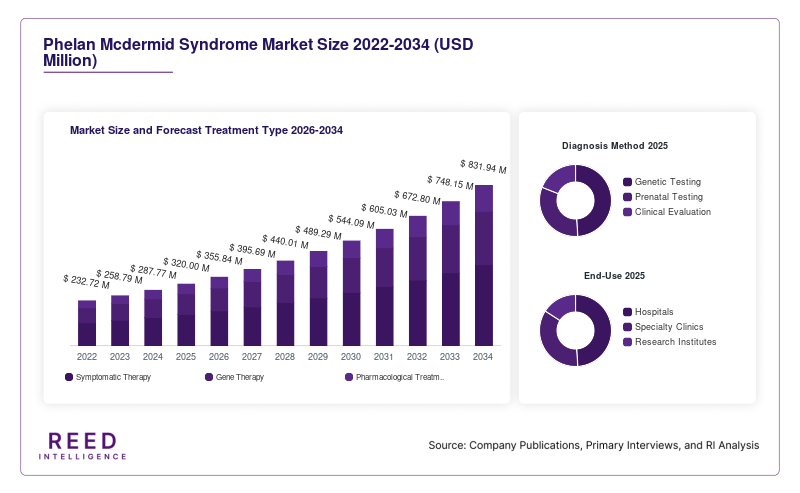
- By treatment type, symptomatic therapy accounted for 58% share in 2025, while gene therapy is projected to grow at a CAGR of 15.1%.
- The United States remained the dominant country with a market value of USD 115 million in 2025, expected to reach USD 128 million in 2026.
Market Trends
Increasing Focus on Gene-Based Therapeutics
The Phelan Mcdermid Syndrome Market is witnessing a gradual shift toward gene-based therapeutic approaches. Researchers are exploring treatments that directly target SHANK3 gene mutations, which are the primary cause of PMS. Gene therapy and RNA-based interventions are gaining traction due to their potential to address the root cause rather than just managing symptoms. This trend is supported by increased funding from both public and private sectors, as well as the growing number of clinical trials focused on rare neurological disorders.
Rising Integration of Digital Health Tools
Another key trend shaping the Phelan Mcdermid Syndrome Market is the integration of digital health technologies such as telemedicine platforms, wearable devices, and patient monitoring applications. These tools enhance disease management by enabling continuous monitoring of behavioral and developmental patterns. Caregivers and clinicians benefit from improved communication and data-driven insights, leading to better treatment outcomes. This trend is particularly relevant in regions with limited access to specialized healthcare providers, where digital solutions bridge care gaps.
Market Drivers
Advancements in Genetic Diagnostic Technologies
The development of advanced genetic testing techniques, including next-generation sequencing (NGS) and chromosomal microarray analysis, has significantly improved the identification of Phelan McDermid Syndrome. Early and accurate diagnosis enables timely intervention, which is critical in managing developmental delays associated with PMS. As diagnostic tools become more accessible and affordable, the number of diagnosed cases is increasing, directly contributing to the expansion of the Phelan Mcdermid Syndrome Market.
Growing Investment in Rare Disease Research
Increasing investments from government bodies, biotechnology firms, and non-profit organizations have accelerated research into rare diseases, including PMS. Funding initiatives aimed at orphan drug development have encouraged pharmaceutical companies to enter the market. Incentives such as tax credits, regulatory support, and exclusivity periods for orphan drugs are further boosting innovation. This influx of capital is facilitating clinical trials and expanding the pipeline of potential therapies, thereby driving market growth.
Market Restraint
Limited Availability of Approved Therapies
Despite growing research efforts, the Phelan Mcdermid Syndrome Market faces a significant challenge due to the limited availability of approved and standardized treatment options. Most existing therapies focus on managing symptoms such as developmental delays, speech impairments, and behavioral issues rather than addressing the underlying genetic cause. This lack of disease-modifying treatments restricts the overall effectiveness of care and limits market expansion.
Additionally, the complexity of PMS as a rare neurodevelopmental disorder poses challenges in clinical trial design and patient recruitment. Small patient populations make it difficult to conduct large-scale studies, which can delay regulatory approvals. Furthermore, high development costs associated with advanced therapies such as gene editing and biologics may result in expensive treatment options, limiting accessibility in low- and middle-income regions.
Market Opportunities
Expansion of Gene Therapy Pipelines
The emergence of gene therapy presents a significant opportunity in the Phelan Mcdermid Syndrome Market. As research progresses, therapies targeting SHANK3 gene restoration or modulation are expected to revolutionize treatment approaches. Pharmaceutical companies investing in gene editing technologies such as CRISPR are likely to gain a competitive advantage. Successful commercialization of these therapies could transform the market landscape by offering long-term or potentially curative solutions.
Increasing Role of Patient Advocacy and Awareness Programs
Rising awareness initiatives led by patient advocacy groups are creating new growth avenues for the Phelan Mcdermid Syndrome Market. These organizations play a crucial role in educating healthcare professionals and families, improving early diagnosis rates, and driving funding for research. Enhanced awareness also encourages participation in clinical trials, accelerating drug development. As awareness continues to grow globally, demand for specialized care services and therapies is expected to increase.
Segmental Analysis
By Treatment Type
Symptomatic therapy dominated the Phelan Mcdermid Syndrome Market in 2025, accounting for approximately 58% of the total share. These therapies include behavioral interventions, speech therapy, and medications to manage associated conditions such as seizures and anxiety. The widespread use of symptomatic treatments is due to their accessibility and established role in managing PMS-related symptoms.
Gene therapy is expected to be the fastest-growing subsegment, projected to expand at a CAGR of 15.1% during the forecast period. This growth will be driven by advancements in genetic research and increasing clinical trials focused on targeting the SHANK3 gene. The potential to address the underlying cause of PMS is expected to significantly boost demand for gene-based treatments.
By Diagnosis Method
Genetic testing held the largest share of the market in 2025, accounting for around 62%. Techniques such as chromosomal microarray analysis and sequencing are widely used for accurate diagnosis of PMS. The growing availability of these technologies has improved diagnostic rates globally.
Prenatal testing is projected to be the fastest-growing subsegment, with a CAGR of 12.9%. Increasing awareness among expectant parents and advancements in prenatal screening technologies are expected to drive this growth. Early detection enables better planning and intervention strategies.
By End-Use
Hospitals accounted for the largest share of the Phelan Mcdermid Syndrome Market in 2025, representing approximately 46%. Hospitals serve as primary centers for diagnosis, treatment, and patient management, offering multidisciplinary care.
Specialty clinics are expected to witness the fastest growth, with a projected CAGR of 13.4%. These clinics provide focused care for neurodevelopmental disorders and are gaining popularity due to personalized treatment approaches and shorter waiting times.
By Distribution Channel
Hospital pharmacies dominated the market in 2025 with a share of around 49%, as most treatments are administered in clinical settings. The centralized distribution of medications ensures better patient monitoring and adherence.
Online pharmacies are anticipated to grow at the fastest CAGR of 14.2%, driven by increasing digitalization and convenience. Patients and caregivers are increasingly opting for online platforms to access medications and support products, especially in remote areas.
Regional Analysis
North America
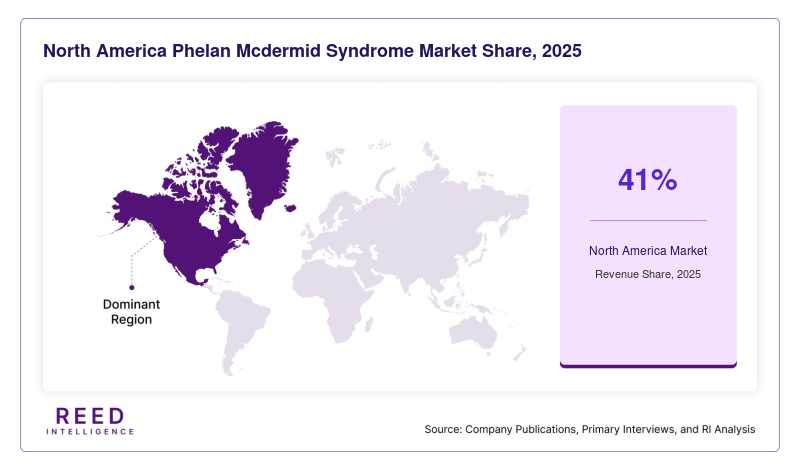
North America accounted for approximately 41% of the Phelan Mcdermid Syndrome Market share in 2025 and is expected to grow at a CAGR of 10.8% from 2025 to 2034. The region benefited from advanced healthcare infrastructure, strong research capabilities, and high awareness levels regarding rare genetic disorders. Government support for orphan drug development further contributed to market growth.
The United States dominated the regional market due to its robust biotechnology ecosystem. The presence of leading pharmaceutical companies and research institutions has accelerated clinical trials and therapy development. Additionally, favorable reimbursement policies and access to advanced diagnostic technologies have supported early detection and treatment adoption.
Europe
Europe held around 27% market share in 2025 and is projected to grow at a CAGR of 10.5% during the forecast period. The region experienced steady growth due to increasing investments in rare disease research and supportive regulatory frameworks.
Germany emerged as the dominant country, driven by strong healthcare funding and a focus on genetic research. The country’s emphasis on precision medicine and collaboration between academic institutions and biotech firms has facilitated the development of innovative therapies for PMS.
Asia Pacific
Asia Pacific captured approximately 18% of the Phelan Mcdermid Syndrome Market share in 2025 and is expected to grow at the fastest CAGR of 13.6% through 2034. The region’s growth is attributed to improving healthcare infrastructure and rising awareness of rare diseases.
China led the regional market due to its expanding healthcare investments and growing adoption of genetic testing technologies. Increasing government initiatives aimed at improving rare disease diagnosis and treatment accessibility are expected to drive further market expansion.
Middle East & Africa
The Middle East & Africa region accounted for about 8% market share in 2025 and is projected to grow at a CAGR of 9.4% over the forecast period. Growth in this region has been supported by gradual improvements in healthcare systems and increasing focus on rare disease awareness.
Saudi Arabia dominated the regional market due to government initiatives aimed at enhancing healthcare infrastructure and promoting genetic screening programs. The country’s investments in specialized healthcare facilities have improved diagnosis and treatment access.
Latin America
Latin America held approximately 6% share of the Phelan Mcdermid Syndrome Market in 2025 and is expected to grow at a CAGR of 9.8% from 2025 to 2034. The region’s growth has been driven by increasing healthcare spending and rising awareness of genetic disorders.
Brazil emerged as the dominant country, supported by expanding healthcare services and growing adoption of diagnostic technologies. Government initiatives to improve rare disease management have also contributed to market development.
Competitive Landscape
The Phelan Mcdermid Syndrome Market is moderately fragmented, with a mix of established pharmaceutical companies and emerging biotech firms focusing on rare disease therapies. Key players are investing in research collaborations, clinical trials, and innovative treatment approaches to strengthen their market position.
One leading company in the market is Roche, which has been actively involved in neurological disorder research. The company recently advanced a clinical-stage therapy targeting neurodevelopmental pathways associated with PMS, reflecting its commitment to expanding its rare disease portfolio.
Other companies are focusing on strategic partnerships with academic institutions to accelerate drug development. The competitive landscape is characterized by increasing investments in gene therapy and precision medicine, which are expected to shape the future of the market.
Key Players
- F. Hoffmann-La Roche Ltd.
- Novartis AG
- Pfizer Inc.
- Biogen Inc.
- Takeda Pharmaceutical Company Limited
- Amgen Inc.
- Eli Lilly and Company
- Jazz Pharmaceuticals plc
- UCB S.A.
- Sarepta Therapeutics
- Ionis Pharmaceuticals
- Ultragenyx Pharmaceutical Inc.
- Regeneron Pharmaceuticals Inc.
- Bluebird Bio
- Vertex Pharmaceuticals Incorporated
Recent Developments
- In 2024, several biotechnology firms initiated early-stage clinical trials focusing on gene therapy solutions targeting SHANK3 mutations.
- In 2025, collaborations between research institutions and pharmaceutical companies increased to accelerate rare disease drug development.
- Digital health platforms for monitoring neurodevelopmental disorders saw increased adoption globally.
- Regulatory agencies introduced supportive frameworks for orphan drug approvals, improving market entry opportunities.
- Patient advocacy organizations expanded global awareness campaigns, enhancing diagnosis and treatment accessibility.
Phelan Mcdermid Syndrome Market Segments
Treatment Type
- Symptomatic Therapy
- Gene Therapy
- Pharmacological Treatment
Diagnosis Method
- Genetic Testing
- Prenatal Testing
- Clinical Evaluation
End-Use
- Hospitals
- Specialty Clinics
- Research Institutes
Distribution Channel
- Hospital Pharmacies
- Retail Pharmacies
- Online Pharmacies
By Region
- North America
- Europe
- APAC
- Middle East and Africa
- LATAM