Phenytoin Testing Market Size, Share & Demand Report By Product Type (Consumables, Instruments, Point-of-Care Testing Devices, Software Solutions), By Technology (Immunoassay Testing, Chromatographic Testing, Spectrophotometric Testing, Other Technologies), By End Use (Hospitals and Clinics, Diagnostic Laboratories, Research Institutes, Academic Medical Centers), By Region & Segment Forecasts, 2026–2034
USD 3950
Market Overview
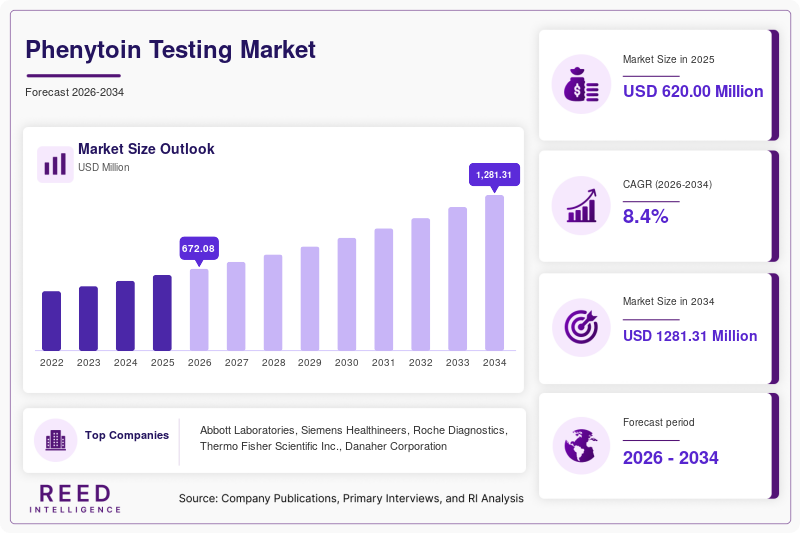
The global Phenytoin Testing Market size was valued at USD 620 million in 2026 and is projected to reach USD 1.18 billion by 2034, expanding at a CAGR of 8.4% during the forecast period from 2026 to 2034. The market is gaining momentum due to the rising burden of neurological disorders and the increasing use of therapeutic drug monitoring in clinical settings. Phenytoin testing plays a critical role in managing epilepsy treatment, as maintaining the drug within its therapeutic range is essential for avoiding toxicity and improving patient outcomes. Healthcare providers across developed and emerging economies are increasing investments in diagnostic laboratories and automated testing systems to improve precision in anti-epileptic drug monitoring.
One of the major global factors supporting market expansion is the growing prevalence of epilepsy and seizure-related disorders. According to healthcare industry estimates, millions of patients worldwide require long-term anticonvulsant therapy, which has increased the demand for regular phenytoin blood concentration testing. In addition, advancements in immunoassay technologies, laboratory automation, and point-of-care testing devices have improved the efficiency and accuracy of therapeutic drug monitoring procedures. Hospitals and specialty neurology clinics are integrating advanced laboratory systems that reduce turnaround time and enhance clinical decision-making.
Key Highlights
- North America dominated the market with a 36.4% share in 2025, while Asia Pacific is expected to grow at the fastest CAGR of 10.8% during 2026–2034.
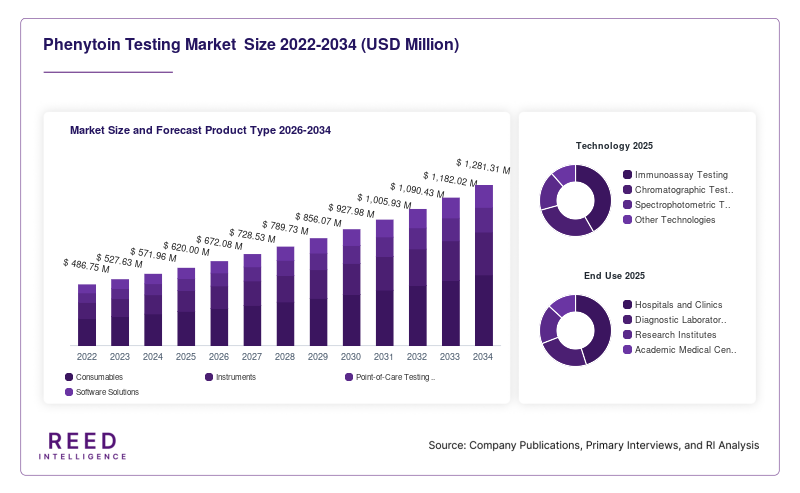
- By product type, consumables accounted for the largest share of 42.1%, while point-of-care testing devices are projected to grow at a CAGR of 11.5%.
- By technology, immunoassay testing led with a 47.3% share, whereas chromatographic testing is expected to expand at a CAGR of 10.9%.
- By end use, hospitals and clinics held a 51.6% share, while diagnostic laboratories are anticipated to grow at a CAGR of 10.4%.
- The United States remained the dominant country, with market values of USD 188 million in 2024 and USD 205 million in 2025.
Market Trends
Increasing Adoption of Automated Therapeutic Drug Monitoring Systems
Healthcare facilities are increasingly adopting automated therapeutic drug monitoring systems to improve the efficiency of phenytoin testing procedures. Automated analyzers reduce manual intervention, enhance laboratory productivity, and minimize the possibility of testing errors. Hospitals and reference laboratories are deploying integrated systems capable of processing large sample volumes within shorter turnaround times. These developments are supporting the demand for advanced phenytoin testing platforms in both developed and emerging healthcare markets. Automation is also helping healthcare providers improve treatment planning by offering accurate real-time results that support rapid clinical decisions.
The trend is particularly visible in tertiary care hospitals and specialty neurology centers where epilepsy management requires continuous patient monitoring. Laboratories are integrating artificial intelligence-enabled workflow management solutions that optimize sample tracking and reporting accuracy. In addition, cloud-based laboratory information systems are supporting data sharing between physicians and diagnostic teams. The increasing adoption of digital healthcare infrastructure is expected to strengthen the long-term demand for automated phenytoin testing technologies across hospitals, laboratories, and outpatient care centers.
Expansion of Personalized Medicine and Precision Healthcare
The growing focus on personalized medicine is shaping the future of the Phenytoin Testing Market. Physicians are increasingly recognizing the importance of individualized drug dosing to improve treatment effectiveness and reduce adverse drug reactions. Since phenytoin has a narrow therapeutic index, accurate dosage adjustments based on patient-specific metabolic response are becoming essential. This trend is encouraging healthcare institutions to incorporate regular therapeutic drug monitoring into standard epilepsy management protocols.
Advancements in pharmacogenomics and biomarker-based diagnostics are also contributing to the expansion of precision healthcare practices. Diagnostic companies are introducing testing solutions that support personalized treatment pathways for patients with chronic neurological conditions. Furthermore, the rise in home healthcare services and remote patient monitoring is encouraging the development of compact testing devices suitable for decentralized healthcare environments. The combination of personalized therapy management and digital health integration is expected to create sustained opportunities for the adoption of phenytoin testing solutions during the forecast period.
Market Drivers
Rising Prevalence of Epilepsy and Neurological Disorders
The increasing prevalence of epilepsy and related neurological disorders is one of the major factors driving the growth of the Phenytoin Testing Market. Healthcare systems across multiple countries are witnessing a growing patient population requiring long-term anticonvulsant therapy. Phenytoin remains a commonly prescribed anti-epileptic medication due to its effectiveness in controlling seizures. However, the drug requires consistent therapeutic monitoring because small dosage variations can lead to toxicity or reduced treatment efficacy. This requirement has significantly increased the demand for routine blood concentration testing.
Growing awareness regarding neurological health is also encouraging patients to seek regular diagnosis and follow-up care. Governments and healthcare organizations are investing in neurological treatment programs, which has strengthened access to epilepsy management services. In addition, the expansion of specialty neurology clinics and advanced hospital laboratories is increasing the availability of therapeutic drug monitoring services. These developments are creating favorable conditions for the continued expansion of the global phenytoin testing industry.
Advancements in Diagnostic Technologies and Laboratory Infrastructure
Technological advancements in diagnostic systems and laboratory infrastructure are supporting the growth of the market. Modern immunoassay analyzers and chromatographic testing systems provide improved sensitivity, precision, and operational efficiency. Diagnostic manufacturers are introducing automated instruments that can perform multiple therapeutic drug monitoring tests simultaneously, reducing operational costs for laboratories. These innovations are improving clinical workflow efficiency and helping healthcare providers deliver timely treatment recommendations.
Healthcare institutions are also increasing investments in centralized laboratory networks and digital healthcare systems. Advanced laboratory information management solutions are improving data accuracy and reducing reporting delays. Furthermore, the growing adoption of point-of-care diagnostic technologies is enhancing testing accessibility in remote and underserved areas. These technological developments are expanding the application scope of phenytoin testing across hospitals, independent laboratories, and outpatient facilities, thereby strengthening overall market growth during the forecast period.
Market Restraint
High Cost of Advanced Diagnostic Systems and Limited Access in Developing Regions
The high cost associated with advanced diagnostic systems remains a key challenge for the growth of the Phenytoin Testing Market. Automated immunoassay analyzers, chromatographic testing instruments, and integrated laboratory management systems require substantial capital investment, which can limit adoption among small healthcare facilities and diagnostic centers. Many hospitals in developing economies continue to rely on conventional laboratory methods due to budget limitations and inadequate healthcare infrastructure. This situation reduces the penetration of advanced therapeutic drug monitoring technologies in several emerging markets.
In addition, maintenance costs, calibration requirements, and the need for skilled laboratory professionals increase the overall operational expenses associated with phenytoin testing systems. Rural healthcare centers and community clinics often face difficulties in implementing sophisticated testing platforms because of limited technical expertise and inconsistent funding support. Delayed reimbursement policies in certain healthcare systems also discourage healthcare providers from investing in high-cost testing equipment. For example, smaller diagnostic facilities in parts of Africa and Southeast Asia frequently outsource therapeutic drug monitoring services to centralized laboratories, which increases testing turnaround time and affects patient management efficiency. These factors may restrain market expansion to some extent during the forecast period.
Market Opportunities
Growing Demand for Point-of-Care Testing Solutions
The increasing demand for point-of-care testing solutions is creating significant opportunities for the Phenytoin Testing Market. Healthcare providers are seeking rapid and decentralized diagnostic solutions that support faster clinical decision-making. Point-of-care devices enable physicians to assess phenytoin drug levels directly at hospitals, emergency care units, and outpatient clinics without depending entirely on centralized laboratories. These systems improve patient convenience, reduce diagnostic delays, and enhance treatment efficiency.
The adoption of portable testing devices is particularly increasing in regions with limited access to large diagnostic laboratories. Companies are developing compact and user-friendly devices that deliver accurate results within a shorter timeframe. The integration of wireless connectivity and digital reporting features is also improving the functionality of modern point-of-care systems. As healthcare systems continue to prioritize rapid diagnostics and decentralized patient care, the demand for advanced point-of-care phenytoin testing technologies is expected to increase steadily over the coming years.
Expansion of Healthcare Infrastructure in Emerging Economies
Emerging economies are investing heavily in healthcare infrastructure development, creating favorable opportunities for market participants. Governments in Asia Pacific, Latin America, and parts of the Middle East are increasing healthcare spending to improve access to advanced diagnostic services. New hospital construction projects, laboratory modernization programs, and expansion of specialty care centers are supporting the adoption of therapeutic drug monitoring technologies.
The growing middle-class population and rising healthcare awareness are also contributing to increased demand for advanced neurological treatment services. International diagnostic companies are expanding their regional presence through strategic partnerships and distribution agreements in emerging countries. Furthermore, public healthcare initiatives aimed at improving epilepsy management are encouraging the use of regular drug monitoring procedures. These factors are expected to create long-term growth opportunities for manufacturers of phenytoin testing equipment, reagents, and laboratory software solutions.
Segmental Analysis
By Product Type
Consumables represented the dominant subsegment in the Phenytoin Testing Market and accounted for 42.1% of total revenue in 2024. The segment includes reagents, calibrators, quality control materials, and assay kits used in routine therapeutic drug monitoring procedures. The high market share of consumables is attributed to their recurring usage across hospitals, diagnostic laboratories, and specialty clinics. Healthcare facilities require continuous replenishment of testing reagents and assay materials to manage growing patient volumes and ensure uninterrupted laboratory operations. In addition, manufacturers are introducing advanced reagent formulations with improved stability and sensitivity to enhance testing precision.
Point-of-care testing devices are expected to witness the fastest CAGR of 11.5% during the forecast period due to increasing demand for decentralized diagnostics. These devices allow healthcare providers to perform rapid therapeutic drug monitoring at patient care locations without relying entirely on centralized laboratories. The segment is benefiting from technological advancements such as miniaturized analyzers, wireless connectivity, and digital reporting systems. Hospitals and emergency care centers are increasingly adopting portable testing platforms to improve patient management and reduce treatment delays. The growing focus on home healthcare and remote monitoring is also expected to support strong growth in this segment.
By Technology
Immunoassay testing held the largest share of the market in 2024, accounting for 47.3% of total revenue. The widespread adoption of immunoassay systems is driven by their operational efficiency, high throughput capability, and compatibility with automated laboratory analyzers. Hospitals and reference laboratories prefer immunoassay technologies because they provide reliable and rapid results for routine therapeutic drug monitoring applications. The availability of commercially standardized assay kits has further strengthened the adoption of immunoassay-based phenytoin testing across developed healthcare systems. In addition, advancements in chemiluminescent and fluorescence immunoassay techniques are improving analytical sensitivity and reducing testing variability.
Chromatographic testing is projected to register the fastest CAGR of 10.9% during the forecast period owing to its superior analytical precision and growing application in specialized laboratories. Technologies such as high-performance liquid chromatography and liquid chromatography-mass spectrometry are increasingly being used for confirmatory testing and detailed drug analysis. These methods provide accurate quantification of phenytoin concentration levels, particularly in complex clinical cases requiring high diagnostic accuracy. Research institutions and tertiary healthcare facilities are investing in advanced chromatographic systems to support personalized medicine approaches and complex neurological treatment protocols.
By End Use
Hospitals and clinics accounted for the largest share of the Phenytoin Testing Market in 2024, representing 51.6% of total revenue. The dominance of this segment is linked to the high volume of epilepsy diagnosis and treatment procedures conducted in hospital settings. Hospitals possess advanced laboratory infrastructure and skilled healthcare professionals capable of managing therapeutic drug monitoring programs efficiently. In addition, the increasing number of neurology departments and emergency care units is supporting demand for regular phenytoin testing procedures. Large hospitals are also integrating automated laboratory analyzers and digital information systems that improve testing efficiency and patient management outcomes.
Diagnostic laboratories are anticipated to grow at the fastest CAGR of 10.4% during the forecast period due to the increasing outsourcing of therapeutic drug monitoring services. Independent laboratory chains are expanding their service portfolios to include advanced neurological drug testing solutions. These laboratories provide cost-effective and high-volume testing services for hospitals, clinics, and physician practices. The segment is also benefiting from growing investments in centralized laboratory networks equipped with automated diagnostic systems. Rising demand for specialized testing services and the expansion of laboratory partnerships with healthcare providers are expected to support strong segment growth over the forecast timeline.
Regional Analysis
North America
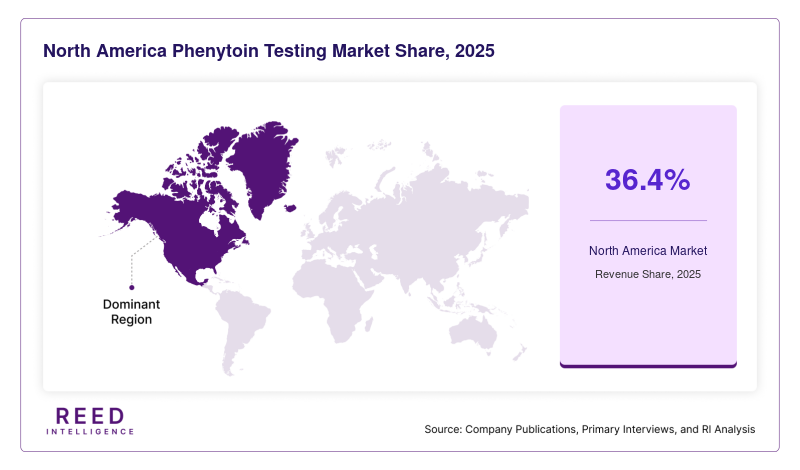
North America accounted for the largest share of the global Phenytoin Testing Market in 2025, representing 36.4% of total revenue. The region is expected to maintain a steady CAGR of 7.9% during the forecast period due to the strong presence of advanced healthcare infrastructure and widespread adoption of therapeutic drug monitoring practices. Hospitals and diagnostic laboratories across the United States and Canada are increasingly implementing automated immunoassay systems to improve operational efficiency and testing accuracy. In addition, favorable reimbursement frameworks and growing investments in neurological disease management are supporting market expansion across the region.
The United States remains the dominant country in North America due to its large epilepsy patient population and extensive healthcare spending. A major growth factor supporting the market is the increasing integration of digital laboratory management systems within hospital networks. Healthcare providers are emphasizing real-time patient monitoring and precision medicine approaches to improve treatment outcomes. The country is also witnessing growing collaboration between diagnostic companies and research institutions focused on enhancing therapeutic drug monitoring technologies, which continues to strengthen the regional market position.
Europe
Europe held a significant share of the global market in 2025 and is projected to grow at a CAGR of 7.5% through 2034. The region benefits from a well-established healthcare system and strong regulatory support for diagnostic testing procedures. Countries across Western Europe are increasingly adopting advanced chromatographic and immunoassay technologies for neurological drug monitoring applications. The expansion of public healthcare programs and increasing investments in laboratory automation are also supporting the regional demand for phenytoin testing solutions.
Germany emerged as the leading country within the European market due to its advanced laboratory infrastructure and strong pharmaceutical industry presence. A unique growth factor driving the German market is the increasing emphasis on precision healthcare initiatives supported by public and private healthcare organizations. Hospitals are adopting integrated laboratory information systems that streamline testing workflows and improve reporting efficiency. In addition, growing awareness regarding adverse drug reactions is encouraging physicians to recommend regular therapeutic drug monitoring for epilepsy patients.
Asia Pacific
Asia Pacific is expected to register the fastest CAGR of 10.8% during the forecast period due to rapid healthcare modernization and increasing awareness regarding neurological disorders. The region accounted for a substantial portion of global revenue in 2025, supported by expanding hospital networks and rising healthcare expenditure. Countries such as China, India, Japan, and South Korea are witnessing increased demand for therapeutic drug monitoring solutions because of the growing burden of epilepsy and chronic neurological conditions. The expansion of diagnostic laboratory chains is also contributing to regional market growth.
China remains the dominant country in the Asia Pacific market owing to its large patient population and improving healthcare infrastructure. One major growth factor is the increasing government investment in healthcare digitization and laboratory modernization programs. Public hospitals are adopting automated diagnostic systems to enhance testing accuracy and reduce patient waiting times. In addition, domestic manufacturers are introducing cost-effective testing reagents and devices that improve market accessibility across secondary and tertiary healthcare facilities.
Middle East & Africa
The Middle East & Africa region is gradually expanding within the global Phenytoin Testing Market and is projected to grow at a CAGR of 6.8% through 2034. Rising healthcare investments and improving diagnostic capabilities are supporting market development across several countries in the region. Gulf Cooperation Council countries are investing in advanced healthcare facilities and laboratory technologies to strengthen neurological treatment services. In addition, increasing awareness regarding therapeutic drug monitoring is encouraging hospitals to adopt modern diagnostic systems.
Saudi Arabia represents the leading country within the regional market due to ongoing healthcare infrastructure transformation initiatives. A unique factor contributing to growth is the government focus on expanding specialized healthcare centers under long-term national healthcare development programs. Hospitals are increasingly partnering with international diagnostic companies to access advanced testing technologies and laboratory automation systems. The country is also experiencing growth in private healthcare investments, which is supporting the adoption of therapeutic drug monitoring procedures across urban healthcare facilities.
Latin America
Latin America accounted for a moderate share of the global market in 2025 and is expected to grow at a CAGR of 7.1% during the forecast period. The market is benefiting from the gradual expansion of diagnostic laboratory services and improving healthcare access in major economies such as Brazil and Mexico. Public healthcare reforms and increasing awareness regarding epilepsy treatment are contributing to the adoption of therapeutic drug monitoring solutions. In addition, international healthcare organizations are supporting regional efforts to improve neurological disease diagnosis and treatment.
Brazil emerged as the dominant country within the Latin American market due to its expanding hospital network and growing healthcare expenditure. One distinctive growth factor is the increasing availability of private diagnostic laboratories offering advanced therapeutic drug monitoring services. Healthcare providers are focusing on reducing epilepsy-related complications through early diagnosis and optimized medication management. The country is also witnessing rising demand for automated laboratory systems that enhance testing speed and operational efficiency across large healthcare institutions.
Competitive Landscape
The global Phenytoin Testing Market is moderately consolidated, with leading diagnostic companies focusing on technological innovation, strategic collaborations, and product portfolio expansion to strengthen their market position. Major players are investing in automated therapeutic drug monitoring systems, advanced assay technologies, and integrated laboratory solutions to improve testing efficiency and analytical accuracy. Companies are also expanding their geographic presence through partnerships with hospitals, diagnostic laboratories, and regional distributors.
Abbott Laboratories remains one of the leading participants in the market due to its extensive diagnostic portfolio and strong global distribution network. The company recently introduced enhanced immunoassay testing solutions designed to improve therapeutic drug monitoring workflows in high-volume laboratories. Other major players are emphasizing research and development activities focused on point-of-care diagnostics and digital laboratory integration. The competitive environment is further shaped by mergers, acquisitions, and long-term supply agreements aimed at strengthening laboratory service capabilities and improving access to advanced testing technologies.
Key Players
- Abbott Laboratories
- Siemens Healthineers
- Roche Diagnostics
- Thermo Fisher Scientific Inc.
- Danaher Corporation
- Bio-Rad Laboratories Inc.
- Quest Diagnostics Incorporated
- Laboratory Corporation of America Holdings
- Randox Laboratories Ltd.
- ARUP Laboratories
- Sekisui Diagnostics
- Beckman Coulter Inc.
- Ortho Clinical Diagnostics
- Sysmex Corporation
- Agilent Technologies Inc.
Recent Developments
- In February 2025, Abbott Laboratories expanded its therapeutic drug monitoring portfolio with a new automated immunoassay solution designed for improved phenytoin concentration analysis in high-throughput laboratories.
- In September 2024, Siemens Healthineers partnered with regional hospital networks in Asia Pacific to strengthen access to advanced neurological diagnostic testing solutions and laboratory automation systems.
- In June 2025, Roche Diagnostics introduced upgraded laboratory software integration capabilities aimed at improving data management and reporting efficiency for therapeutic drug monitoring procedures.
- In November 2024, Thermo Fisher Scientific Inc. expanded its chromatography testing product line to support high-precision neurological drug monitoring applications across research and clinical laboratories.
Phenytoin Testing Market Segments
Product Type
- Consumables
- Instruments
- Point-of-Care Testing Devices
- Software Solutions
Technology
- Immunoassay Testing
- Chromatographic Testing
- Spectrophotometric Testing
- Other Technologies
End Use
- Hospitals and Clinics
- Diagnostic Laboratories
- Research Institutes
- Academic Medical Centers
By Region
- North America
- Europe
- APAC
- Middle East and Africa
- LATAM