Pistachio Market Size, Share & Demand Report By Product Type (Raw Pistachios, Roasted Pistachios, Salted Pistachios, Flavored Pistachios, Organic Pistachios), By Application (Snacks and Convenience Foods, Bakery and Confectionery, Dairy Products, Desserts and Frozen Foods, Foodservice Applications), By Distribution Channel (Supermarkets and Hypermarkets, Convenience Stores, Specialty Stores, Online Retail, Wholesale Distribution), By Region & Segment Forecasts, 2026–2034
USD 3950
Market Overview
The global Pistachio Market size was valued at approximately USD 5.84 billion in 2026 and is projected to reach nearly USD 9.96 billion by 2034, expanding at a CAGR of 6.9% during the forecast period from 2026 to 2034. The market continues to witness stable expansion due to increasing consumer preference for plant-based protein snacks, premium dry fruits, and nutrient-rich food ingredients. Pistachios are widely consumed in confectionery, bakery, dairy, and packaged snack applications, which has strengthened demand across developed and emerging economies. The growing awareness regarding heart health, weight management, and clean-label food products has further supported market penetration among health-conscious consumers.
The expansion of organized retail and e-commerce grocery platforms has improved pistachio product visibility worldwide. Food manufacturers are also incorporating pistachios into flavored snacks, spreads, desserts, frozen products, and nutritional bars to meet changing dietary habits. In addition, advancements in irrigation technology and cultivation practices in major producing countries have improved yield consistency and export capabilities. Increasing disposable income in urban populations, particularly across Asia Pacific and the Middle East, continues to support premium nut consumption.
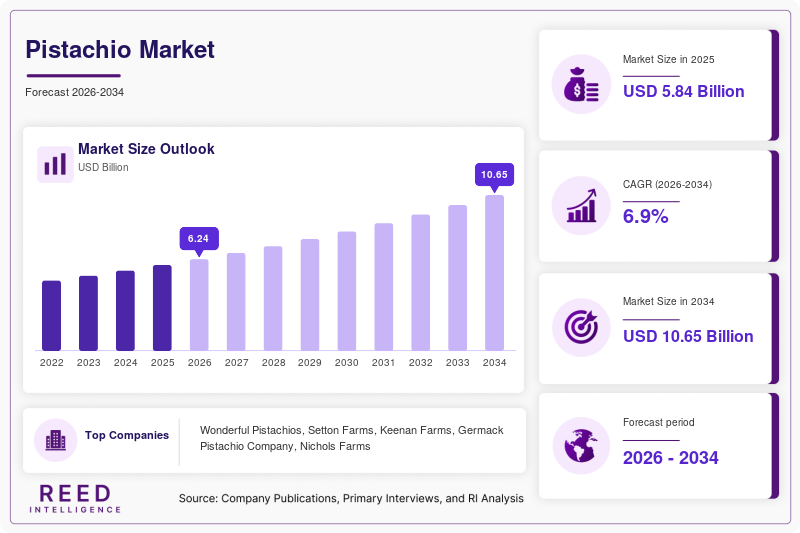
Key Highlights
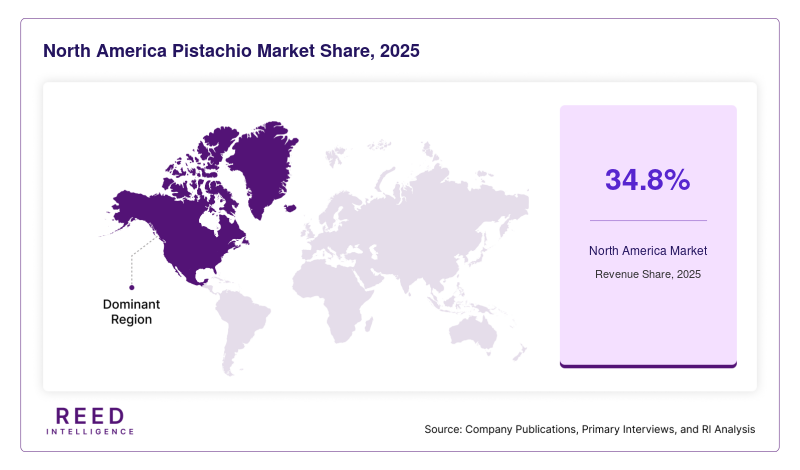
- North America dominated the market with a 34.8% share in 2025.
- Asia Pacific is expected to grow at the fastest CAGR of 8.7% during 2026–2034.
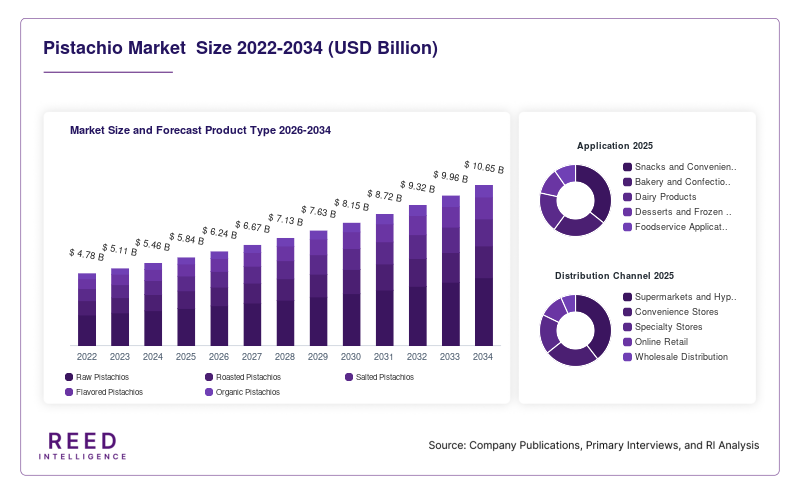
- By product type, roasted pistachios accounted for the largest share of 42.1%, while flavored pistachios are projected to grow at a CAGR of 9.1%.
- By application, snacks and convenience foods led with a 46.3% share, whereas bakery and confectionery applications are expected to expand at a CAGR of 8.4%.
- The United States remained the dominant country, with market values of USD 1.74 billion in 2024 and USD 1.89 billion in 2025.
Market Trends
Rising Demand for Healthy Snacking Products
Consumer preference for nutritious snacking products has become one of the most visible trends shaping the Pistachio Market. Pistachios contain protein, fiber, antioxidants, and healthy fats, making them attractive to consumers seeking balanced dietary options. Food brands are increasingly promoting pistachios as a functional snack ingredient for energy support and weight management. This trend has encouraged manufacturers to launch portion-controlled packs, organic pistachio variants, and flavored products aimed at younger demographics. Retail chains are allocating more shelf space to premium nut products, while online grocery platforms continue to increase product accessibility.
The trend is particularly visible in North America and Europe, where consumers are shifting away from processed snacks containing artificial additives. Foodservice operators are also integrating pistachios into salads, desserts, frozen yogurt toppings, and protein mixes. Premium packaging innovations and sustainable sourcing claims are further influencing purchasing decisions. As consumers continue prioritizing wellness-oriented foods, pistachio consumption is expected to remain strong across both retail and institutional channels.
Expansion of Pistachio-Based Ingredient Applications
The use of pistachios as a value-added food ingredient is expanding steadily across multiple food processing industries. Manufacturers in bakery, dairy, confectionery, and frozen dessert categories are introducing pistachio-based innovations to differentiate premium product portfolios. Pistachio paste, pistachio milk, pistachio butter, and pistachio flour are gaining commercial traction due to changing consumer interest in alternative plant-based ingredients. This trend has increased demand from industrial food processors and specialty ingredient suppliers.
Food companies are also capitalizing on the distinctive flavor and visual appeal of pistachios in luxury desserts and artisanal products. Premium ice cream brands, chocolate manufacturers, and café chains continue introducing pistachio-infused offerings to attract urban consumers. In Asia Pacific, pistachio-flavored beverages and desserts are witnessing rising popularity among middle-income populations. The increasing adoption of clean-label formulations and natural ingredients is expected to strengthen the commercial value of pistachio-based ingredients over the coming years.
Market Drivers
Increasing Consumption of Plant-Based Protein Foods
The growing adoption of plant-based diets worldwide is significantly contributing to Pistachio Market growth. Consumers are increasingly seeking natural protein alternatives that align with vegetarian, vegan, and flexitarian lifestyles. Pistachios provide a convenient source of plant protein and healthy fats, making them suitable for modern dietary patterns. Nutrition-focused consumers are incorporating pistachios into breakfast meals, snack boxes, smoothies, and protein-rich desserts. This shift has encouraged food manufacturers to include pistachios in high-protein packaged products and wellness-oriented formulations.
The demand for nutrient-dense foods has increased among millennials and fitness-conscious populations. Health campaigns promoting reduced consumption of processed foods and animal fats have further improved pistachio demand across supermarkets and specialty stores. In addition, foodservice operators are developing menu offerings centered on premium nuts and natural ingredients. Rising awareness regarding cardiovascular health and balanced nutrition continues to strengthen the role of pistachios within the global healthy food ecosystem.
Growth of Global Premium Dry Fruit Trade
The expansion of international dry fruit trade networks has emerged as another important growth driver for the Pistachio Market. Major producing countries have invested heavily in export infrastructure, processing plants, cold chain logistics, and advanced cultivation methods. These developments have improved year-round product availability and enhanced product quality across global markets. Strong export demand from Asia Pacific, Europe, and the Middle East has encouraged producers to diversify product portfolios and improve distribution efficiency.
Premiumization trends in packaged food industries are also supporting pistachio demand. Consumers increasingly associate pistachios with high-quality snacking experiences and luxury food products. Retailers are expanding imported nut offerings to attract affluent consumers willing to pay higher prices for premium products. Government initiatives supporting agricultural exports in countries such as the United States and Iran have further strengthened international market participation. These factors collectively continue to enhance the long-term commercial potential of the industry.
Market Restraint
Climate Variability and Agricultural Supply Risks
Climate variability remains a major restraint affecting the Pistachio Market due to the crop’s dependence on specific environmental conditions. Pistachio cultivation requires controlled temperature ranges, long growing seasons, and adequate irrigation availability. Extreme weather events such as droughts, heat waves, irregular rainfall, and water shortages can significantly reduce crop yields and affect product quality. Major producing countries have experienced fluctuations in annual production volumes because of changing climatic conditions, leading to unstable pricing patterns in international trade markets.
The industry also faces challenges associated with rising irrigation costs and water management regulations in agricultural regions. Smaller growers often struggle to maintain productivity during periods of unfavorable weather, limiting supply consistency. Price volatility can affect food manufacturers relying on pistachios as a key ingredient in confectionery and snack products. In addition, logistical disruptions and export restrictions during low-yield seasons may create procurement challenges for global distributors. These supply-side risks continue to influence market stability and long-term profitability across the value chain.
Market Opportunities
Expansion of Organic and Sustainable Pistachio Farming
The increasing consumer preference for sustainably sourced food products is creating new growth opportunities for the Pistachio Market. Organic pistachio cultivation is gaining attention among health-conscious consumers who prioritize chemical-free farming practices and environmentally responsible food production. Retailers and food brands are introducing certified organic pistachio products to address premium market demand. This transition is encouraging growers to invest in water-efficient irrigation systems, soil management techniques, and eco-friendly agricultural practices.
Sustainability-focused packaging and traceable sourcing systems are also strengthening product appeal among environmentally aware consumers. Organic pistachios are increasingly used in premium bakery products, dairy alternatives, and specialty snacks. Developed markets such as Europe and North America continue to witness rising demand for transparent food supply chains and ethically produced agricultural commodities. As sustainability standards become more influential in food purchasing decisions, organic pistachio cultivation is expected to create long-term revenue opportunities for growers and exporters.
Growing Demand from Emerging Economies
Emerging economies present considerable opportunities for Pistachio Market participants due to rising disposable income and changing dietary habits. Urbanization and expanding middle-class populations in countries such as China, India, Indonesia, and Brazil are increasing demand for premium dry fruits and packaged healthy snacks. Modern retail expansion and digital grocery platforms are improving accessibility to imported pistachio products in metropolitan areas. Food manufacturers are also developing region-specific flavors and smaller packaging formats to attract price-sensitive consumers.
The hospitality, café, and bakery industries in emerging markets are increasingly using pistachios in desserts, sweets, and beverages to cater to evolving consumer tastes. Growing awareness regarding nutrition and wellness is encouraging consumers to replace conventional fried snacks with healthier nut-based alternatives. International suppliers are strengthening partnerships with local distributors and retailers to improve regional market penetration. These economic and demographic trends are expected to create substantial demand potential throughout the forecast period.
Segmental Analysis
By Product Type
Roasted pistachios accounted for the largest share of the Pistachio Market in 2024, contributing approximately 42.1% of total revenue. The segment maintains strong consumer preference because roasted variants offer enhanced flavor, longer shelf life, and convenient snack consumption. Retailers continue to expand roasted pistachio offerings in salted, unsalted, and lightly seasoned formats to attract a wider customer base. Demand remains particularly high in supermarkets, convenience stores, and travel retail outlets where packaged snack products experience strong sales performance. Foodservice operators also prefer roasted pistachios for use in salads, desserts, and catering applications due to their consistent texture and taste profile. Rising health awareness has further increased consumer interest in roasted nuts as alternatives to conventional processed snacks with high artificial ingredient content.
Flavored pistachios are projected to witness the fastest CAGR of 9.1% during the forecast period due to evolving consumer preference for innovative snack experiences. Manufacturers are introducing spicy, barbecue, honey-coated, chili-lime, and herb-seasoned variants to attract younger consumers and expand premium product portfolios. Flavor innovation is becoming a key differentiation strategy among packaged snack brands competing in urban retail markets. Growth in convenience food consumption and impulse purchasing behavior has also strengthened demand for value-added flavored pistachio products. In addition, the expansion of online retail channels has enabled specialty brands to introduce limited-edition and region-specific flavors more efficiently. Increasing demand for premium snacking experiences across Asia Pacific and North America is expected to further accelerate the segment’s long-term growth potential.
By Application
Snacks and convenience foods represented the dominant application segment in the Pistachio Market during 2024, accounting for nearly 46.3% of total market share. Consumer demand for portable, nutritious, and ready-to-eat food products has strongly supported segment growth across developed and emerging economies. Pistachios are increasingly incorporated into trail mixes, protein snacks, granola bars, and packaged nut assortments due to their nutritional profile and premium positioning. Convenience stores, supermarkets, and e-commerce grocery platforms continue to expand shelf presence for healthy snacking products containing pistachios. In addition, fitness-oriented consumers increasingly view pistachios as a natural source of protein and energy, further improving product demand. Food manufacturers are also emphasizing clean-label formulations and minimal processing techniques to align with evolving consumer expectations regarding healthier snack alternatives.
Bakery and confectionery applications are expected to register the fastest CAGR of 8.4% over the forecast period due to increasing demand for premium dessert products and artisanal baked goods. Pistachios are widely used in chocolates, pastries, cakes, cookies, and luxury confectionery items because of their distinct flavor and visual appeal. Premium dessert brands and café chains are introducing pistachio-infused products to attract consumers seeking indulgent yet high-quality food experiences. Growth in festive gifting culture and specialty confectionery consumption has also increased industrial demand for pistachio ingredients. Emerging markets are witnessing rising popularity of pistachio-flavored sweets and frozen desserts among middle-income consumers. Continuous product innovation and expanding café culture are expected to strengthen long-term opportunities within the bakery and confectionery segment.
By Distribution Channel
Supermarkets and hypermarkets held the largest share of the Pistachio Market in 2024, accounting for approximately 48.7% of global sales revenue. These retail formats remain dominant because they offer extensive product visibility, competitive pricing, and convenient access to packaged nut products. Consumers prefer supermarkets for comparing brands, flavors, packaging formats, and promotional offers under one location. Large retail chains also provide strong distribution support for domestic and imported pistachio brands. Shelf expansion for healthy snacks and premium dry fruits has increased product exposure among urban consumers. In-store promotional campaigns and bulk purchasing discounts further contribute to strong sales performance within this segment. The availability of private-label pistachio products at affordable price points has also improved market penetration among middle-income consumers across developed economies.
Online retail channels are anticipated to witness the fastest CAGR of 10.2% during the forecast period due to increasing digital grocery adoption and changing shopping behavior. Consumers increasingly purchase packaged food products online because of convenience, subscription models, and broader product availability. E-commerce platforms allow specialty brands and organic product manufacturers to reach geographically diverse consumer bases without extensive physical retail investments. Online channels also support targeted marketing strategies and personalized product recommendations that improve customer engagement. The growth of quick-commerce delivery services in metropolitan regions has further accelerated online pistachio sales. In addition, premium imported brands are utilizing digital marketplaces to strengthen visibility among younger and tech-oriented consumers. Continued investment in digital retail infrastructure is expected to support long-term segment expansion.
Regional Analysis
North America
North America accounted for the largest share of the Pistachio Market in 2025, representing approximately 34.8% of global revenue. The region is expected to maintain stable expansion with a projected CAGR of 6.3% during the forecast period. Strong consumer demand for healthy snacks, protein-rich foods, and premium dry fruits continues to support regional growth. The presence of large-scale pistachio cultivation infrastructure and advanced agricultural technologies has strengthened regional supply capabilities. Retail expansion and increasing demand for flavored pistachio products have also contributed to consistent market development across the United States and Canada.
The United States remained the dominant country in the regional market due to extensive domestic cultivation and export capacity. The country benefits from advanced irrigation systems, large commercial orchards, and efficient processing facilities that support year-round supply. Rising demand for plant-based snacks and protein-rich foods has further strengthened pistachio consumption among health-conscious consumers. The expansion of private-label nut brands and premium packaged snack offerings continues to improve market competitiveness across major retail chains.
Europe
Europe represented a significant portion of the Pistachio Market in 2025 and is forecast to expand at a CAGR of 6.5% through 2034. The region continues to experience strong demand for organic nuts, premium confectionery ingredients, and functional food products. European consumers increasingly prefer clean-label snacks and natural food ingredients, supporting higher pistachio consumption across retail and foodservice channels. Growth in artisanal bakery products and luxury desserts has further strengthened the use of pistachios in food manufacturing industries throughout the region.
Germany remained the leading country within the European market due to strong retail distribution networks and increasing demand for healthy packaged snacks. The country has witnessed rising consumption of pistachio-based bakery items, dairy products, and plant-based spreads. Consumer awareness regarding nutritional benefits and sustainable sourcing practices has also improved demand for premium pistachio imports. Expansion of vegan and flexitarian dietary preferences continues to support long-term product adoption across urban populations.
Asia Pacific
Asia Pacific is projected to register the fastest growth in the Pistachio Market, with an estimated CAGR of 8.7% during 2026–2034. The region is benefiting from rapid urbanization, rising disposable income, and changing dietary patterns among middle-class consumers. Demand for imported premium dry fruits and packaged healthy snacks has increased considerably across metropolitan markets. E-commerce grocery platforms and modern supermarket chains are improving accessibility to pistachio products across several developing economies.
China dominated the regional market due to strong import demand and increasing popularity of premium nut products among urban consumers. The country has experienced rapid growth in packaged snack consumption and premium gifting traditions, particularly during festive seasons. Food manufacturers are introducing pistachio-flavored desserts, beverages, and confectionery products to attract younger demographics. Rising health awareness and increased spending on functional foods continue to create substantial opportunities for regional suppliers and international exporters.
Middle East & Africa
The Middle East & Africa region accounted for a moderate share of the Pistachio Market in 2025 and is expected to grow at a CAGR of 5.8% during the forecast period. Traditional consumption patterns and strong cultural preference for dry fruits continue to support regional demand. Pistachios are widely used in desserts, confectionery, and festive food preparations across several Middle Eastern countries. Growth in tourism, hospitality, and luxury food retail sectors has also contributed to increasing consumption of premium pistachio products.
Saudi Arabia remained the dominant country in the regional market due to strong demand for imported nuts and premium packaged food products. The country benefits from a large consumer base with high spending on luxury food items and festive gifting products. Expansion of modern retail infrastructure and premium supermarket chains has improved product availability across urban centers. Rising demand for healthy snacks among younger consumers is expected to further strengthen market growth over the coming years.
Latin America
Latin America continues to emerge as a developing market for pistachio consumption, supported by changing food preferences and expanding urban retail infrastructure. The regional market is anticipated to grow at a CAGR of 5.9% between 2026 and 2034. Consumers are increasingly adopting premium nut products as part of healthy dietary lifestyles. Growing awareness regarding nutritional benefits and increasing availability of imported packaged snacks have improved market visibility across several Latin American countries.
Brazil remained the leading country within the regional market due to rising demand for functional foods and premium confectionery products. Expansion of café culture and modern bakery chains has increased the use of pistachios in desserts and gourmet applications. Imported food consumption has also increased among upper-middle-income consumers seeking diversified snacking products. The growth of organized retail and online grocery channels continues to improve product accessibility and strengthen long-term market opportunities.
Competitive Landscape
The Pistachio Market remains moderately consolidated, with major producers focusing on cultivation expansion, processing efficiency, export growth, and premium product innovation. Leading companies are investing in sustainable farming technologies, automated sorting systems, and advanced packaging solutions to strengthen operational efficiency and improve product quality. Strategic partnerships with retail chains and food manufacturers are also becoming increasingly important for market penetration.
Wonderful Pistachios emerged as one of the leading participants in the global market due to its extensive production capabilities, strong retail presence, and diversified flavored product portfolio. The company recently expanded its sustainable irrigation initiatives and introduced new seasoning variants targeting younger consumers. Other prominent companies continue to focus on geographic expansion and value-added pistachio ingredients for bakery, confectionery, and snack applications.
Key Players
- Wonderful Pistachios
- Setton Farms
- Keenan Farms
- Germack Pistachio Company
- Nichols Farms
- Horizon Growers
- Ariya Nuts
- Olam Food Ingredients
- Bazzini Holdings
- Royal Nut Company
- Sunbeam Foods
- Borges Agricultural & Industrial Nuts
- Nutopia Foods
- Tierra Farm
- Meray Nuts
Recent Developments
- In 2025, Wonderful Pistachios expanded its flavored snack portfolio with new spicy seasoning variants targeting younger consumers in North America.
- In 2024, Setton Farms invested in automated processing and packaging technology to improve export efficiency and reduce operational waste.
- In 2025, Olam Food Ingredients strengthened its premium nut ingredient distribution network across Asia Pacific to support rising demand from bakery and confectionery manufacturers.
Pistachio Market Segments
Product Type
- Raw Pistachios
- Roasted Pistachios
- Salted Pistachios
- Flavored Pistachios
- Organic Pistachios
Application
- Snacks and Convenience Foods
- Bakery and Confectionery
- Dairy Products
- Desserts and Frozen Foods
- Foodservice Applications
Distribution Channel
- Supermarkets and Hypermarkets
- Convenience Stores
- Specialty Stores
- Online Retail
- Wholesale Distribution
By Region
- North America
- Europe
- APAC
- Middle East and Africa
- LATAM