Plant Based Hot Dogs Market Size, Share & Demand Report By Type (Soy-Based, Pea Protein-Based, Wheat-Based, Others), By Application (Retail, Foodservice), By End-Use (Household, Commercial), By Region & Segment Forecasts, 2025–2034
USD 3950
Market Overview
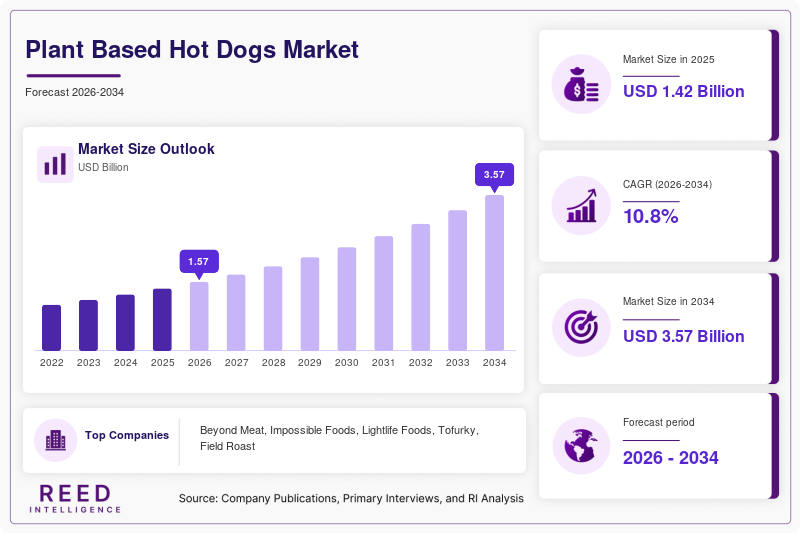
The Plant Based Hot Dogs Market size is estimated at USD 1.42 billion, and it is projected to reach approximately USD 1.58 billion in 2026. Over the forecast period from 2025 to 2034, the market is expected to grow at a compound annual growth rate (CAGR) of 10.8%, reaching an estimated value of USD 3.75 billion by 2034.
The market growth is primarily influenced by increasing adoption of plant-based diets across developed and emerging economies. Consumers are becoming more conscious of the health implications associated with processed meat consumption, leading to a gradual shift toward plant-based alternatives. In addition, rising concerns regarding greenhouse gas emissions from livestock farming are encouraging environmentally conscious purchasing behavior, thereby supporting demand for plant-based hot dogs.
Key Highlights
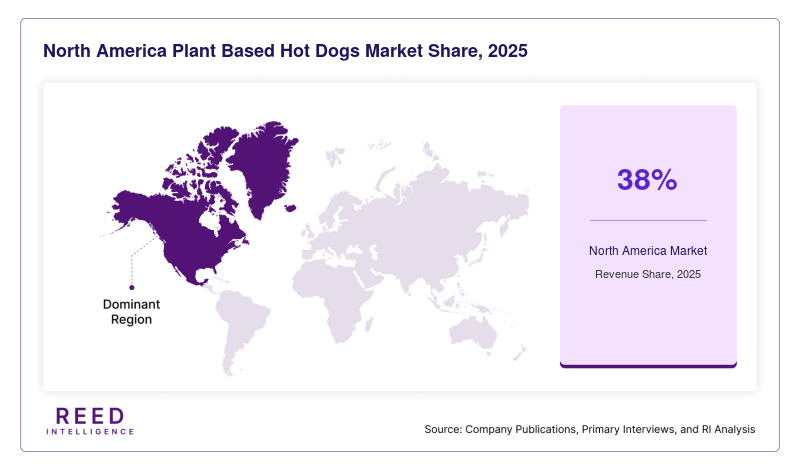
- North America dominated the Plant Based Hot Dogs Market with a 38% share in 2025, while Asia Pacific is expected to register the fastest CAGR of 12.6% during the forecast period
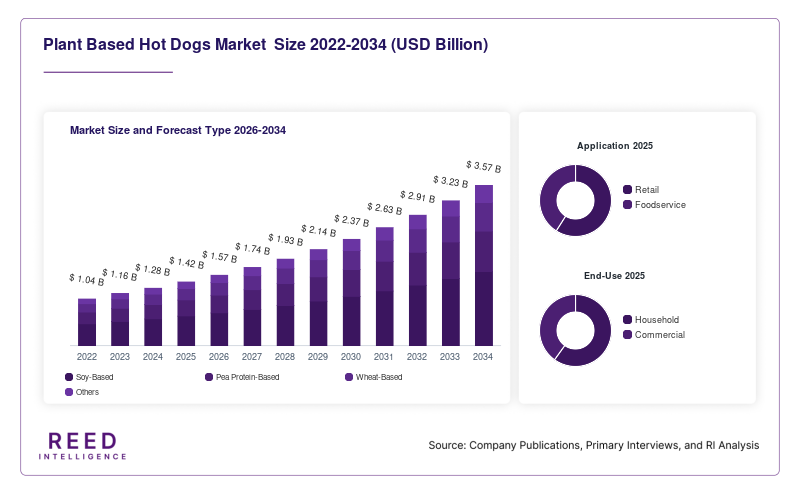
- Soy-based hot dogs accounted for the leading segment with a 46% share in 2024, while pea protein-based products are projected to grow fastest at a CAGR of 12.9%
- Retail distribution held the dominant application segment with a 58% share, whereas the foodservice segment is expected to expand at a CAGR of 11.7%
- Household consumption dominated the end-use segment with a 62% share, while the commercial segment is projected to grow at a CAGR of 11.3%
- The Plant Based Hot Dogs Market is projected to reach USD 3.75 billion by 2034, growing at a CAGR of 10.8% during 2025–2034
Market Trends
Product Innovation and Flavor Enhancement
A prominent trend in the Plant Based Hot Dogs Market is the continuous innovation in product formulation aimed at enhancing taste, texture, and nutritional value. Manufacturers are investing in advanced food technologies such as extrusion processing and fermentation to create products that closely mimic traditional meat-based hot dogs. The use of natural flavoring agents, plant oils, and protein blends has significantly improved consumer acceptance. Companies are also introducing variants such as smoked, spicy, and low-sodium plant-based hot dogs to cater to diverse taste preferences. This trend is helping brands expand their consumer base beyond vegans to flexitarians and meat reducers, thereby supporting sustained market growth.
Expansion of Foodservice and Quick-Service Partnerships
Another significant trend is the increasing collaboration between plant-based food manufacturers and quick-service restaurants (QSRs). Foodservice operators are incorporating plant-based hot dogs into their menus to attract health-conscious and environmentally aware customers. This trend is particularly evident in urban markets where demand for convenient, ready-to-eat plant-based options is rising. The inclusion of plant-based hot dogs in stadiums, cafeterias, and food trucks is also boosting visibility and trial rates. As more foodservice providers adopt plant-based offerings, the market is expected to benefit from increased exposure and higher consumption frequency.
Market Drivers
Rising Health Awareness and Dietary Shifts
One of the primary drivers of the Plant Based Hot Dogs Market is the growing awareness regarding the health risks associated with excessive consumption of processed meat. Consumers are increasingly seeking alternatives that are lower in saturated fats and free from cholesterol. Plant-based hot dogs are often perceived as healthier options, enriched with dietary fiber and plant proteins. This shift is particularly noticeable among younger demographics and urban populations who prioritize wellness and preventive healthcare. As awareness campaigns and nutritional education continue to expand, the demand for plant-based alternatives is expected to grow steadily.
Environmental Sustainability Concerns
Environmental sustainability is another critical factor driving market growth. Traditional meat production is associated with high carbon emissions, water usage, and land degradation. In contrast, plant-based food production requires fewer natural resources and generates lower environmental impact. Consumers are increasingly making purchasing decisions based on sustainability considerations, supporting the adoption of plant-based hot dogs. Governments and organizations are also promoting sustainable food systems, which further strengthens the market outlook. This driver is expected to remain influential throughout the forecast period.
Market Restraint
High Product Cost and Price Sensitivity
Despite the positive growth outlook, the Plant Based Hot Dogs Market faces challenges related to high product pricing compared to conventional meat-based hot dogs. The cost of raw materials such as plant proteins, along with advanced processing technologies, contributes to higher production costs. As a result, plant-based hot dogs are often priced at a premium, limiting their adoption among price-sensitive consumers, particularly in developing regions.
This pricing disparity impacts market penetration, especially in regions where affordability plays a crucial role in purchasing decisions. For example, in emerging economies, consumers may prefer traditional meat products due to lower costs and established consumption patterns. Additionally, limited economies of scale in plant-based production further restrict cost reduction. While ongoing technological advancements and increased production volumes may gradually lower prices, cost competitiveness remains a significant barrier to widespread adoption in the near term.
Market Opportunities
Growth in Emerging Markets
Emerging markets present a substantial opportunity for the expansion of the Plant Based Hot Dogs Market. Rapid urbanization, increasing disposable income, and growing awareness of health and sustainability are driving demand for plant-based foods in regions such as Asia Pacific and Latin America. Local manufacturers are also entering the market with region-specific flavors and formulations, enhancing consumer acceptance. As distribution networks improve and product availability increases, these markets are expected to contribute significantly to overall market growth during the forecast period.
Product Diversification and Clean Label Demand
The rising demand for clean label and minimally processed foods is creating opportunities for product diversification in the market. Consumers are increasingly looking for products with simple ingredient lists, free from artificial additives and preservatives. Manufacturers can capitalize on this trend by developing plant-based hot dogs with organic ingredients, non-GMO certifications, and allergen-free formulations. Additionally, incorporating functional ingredients such as vitamins and probiotics can further enhance product appeal. This opportunity is expected to drive innovation and support long-term market expansion.
Segmental Analysis
By Type
The soy-based segment dominated the Plant Based Hot Dogs Market in 2024, accounting for approximately 46% of the total market share. Soy protein is widely used due to its high protein content, cost-effectiveness, and ability to replicate the texture of meat products. Manufacturers prefer soy-based formulations as they offer scalability and consistent quality. Additionally, soy-based hot dogs are widely accepted by consumers due to their established presence in the market. The segment also benefits from extensive research and development, leading to continuous improvements in taste and texture.
The pea protein-based segment is expected to be the fastest-growing, registering a CAGR of 12.9% during the forecast period. This growth is driven by increasing demand for allergen-free and non-GMO products. Pea protein is gaining popularity due to its clean-label appeal and neutral flavor profile, which allows for better customization. Manufacturers are increasingly investing in pea protein formulations to cater to health-conscious consumers and expand their product portfolios.
By Application
The retail segment held the largest share in 2024, accounting for approximately 58% of the market. Supermarkets, hypermarkets, and online platforms are key distribution channels driving retail sales. The availability of a wide range of products and competitive pricing strategies contribute to the dominance of this segment. Consumers prefer purchasing plant-based hot dogs for home consumption, especially as awareness of plant-based diets increases. Retailers are also expanding their plant-based product offerings, further supporting segment growth.
The foodservice segment is expected to grow at the fastest CAGR of 11.7% during the forecast period. The increasing adoption of plant-based menus by restaurants and quick-service chains is driving demand in this segment. Foodservice providers are leveraging plant-based offerings to attract new customers and enhance brand image. The convenience factor and growing popularity of dining out are also contributing to the rapid growth of this segment.
By End-Use
The household segment dominated the market in 2024, accounting for approximately 62% of the total share. The increasing adoption of plant-based diets at home, coupled with the availability of ready-to-cook products, is driving this segment. Consumers are incorporating plant-based hot dogs into their daily meals as a healthier alternative to traditional meat products. The segment also benefits from growing awareness campaigns and social media influence promoting plant-based lifestyles.
The commercial segment is expected to grow at a CAGR of 11.3% during the forecast period. This growth is driven by increasing demand from restaurants, cafeterias, and catering services. Commercial establishments are expanding their menus to include plant-based options, catering to diverse consumer preferences. The rising trend of plant-based dining experiences is also supporting the growth of this segment.
Regional Analysis
North America
North America accounted for approximately 38% of the global market share in 2025, making it the leading region in the Plant Based Hot Dogs Market. The region is expected to grow at a CAGR of 10.2% during the forecast period. Strong consumer awareness, widespread availability of plant-based products, and the presence of major industry players are key factors contributing to market dominance. The increasing number of flexitarian consumers is also supporting demand.
The United States dominates the regional market due to high consumption of processed foods and rapid adoption of plant-based diets. A unique growth factor in this region is the strong presence of foodservice partnerships, where plant-based hot dogs are widely offered in restaurants and fast-food chains. This integration significantly boosts product visibility and consumer trial rates.
Europe
Europe held around 27% market share in 2025 and is projected to grow at a CAGR of 10.5%. The region benefits from strong regulatory support for sustainable food systems and increasing vegan and vegetarian populations. Countries such as Germany, the UK, and the Netherlands are leading adopters of plant-based products.
Germany is the dominant country in the European market, driven by high consumer awareness and demand for meat alternatives. A unique growth factor in this region is the emphasis on organic and clean-label products, which aligns with consumer preferences for transparency and sustainability in food production.
Asia Pacific
Asia Pacific accounted for approximately 18% of the market share in 2025 and is expected to register the fastest CAGR of 12.6%. Rapid urbanization, changing dietary habits, and increasing disposable income are driving demand for plant-based foods in the region.
China dominates the Asia Pacific market due to its large population and growing interest in alternative proteins. A unique growth factor is the increasing investment in plant-based food startups and innovation hubs, which is accelerating product development and market penetration.
Middle East & Africa
The Middle East & Africa region held around 9% market share in 2025 and is projected to grow at a CAGR of 9.4%. The market is gradually gaining traction as awareness of plant-based diets increases.
The UAE is a key market in this region, supported by a growing expatriate population and rising demand for premium food products. A unique growth factor is the expansion of modern retail infrastructure, which is improving product availability and accessibility.
Latin America
Latin America accounted for approximately 8% of the market share in 2025 and is expected to grow at a CAGR of 10.1%. The market is supported by increasing health awareness and a growing middle-class population.
Brazil dominates the regional market due to its large consumer base and expanding food industry. A unique growth factor is the rising popularity of plant-based diets among younger consumers, driven by social media influence and changing lifestyle preferences.
Competitive Landscape
The Plant Based Hot Dogs Market is characterized by moderate competition with the presence of several established players and emerging startups. Companies are focusing on product innovation, strategic partnerships, and expansion of distribution networks to strengthen their market position.
One of the leading players in the market is Beyond Meat, which has gained significant market share through continuous innovation and strong brand recognition. The company recently introduced new plant-based hot dog variants with improved flavor profiles and enhanced nutritional value, targeting a broader consumer base.
Other key players are also investing in research and development to improve product quality and expand their portfolios. Collaborations with foodservice providers and retailers are common strategies used to increase market reach. The competitive landscape is expected to remain dynamic, with new entrants contributing to innovation and market growth.
Key Players
- Beyond Meat
- Impossible Foods
- Lightlife Foods
- Tofurky
- Field Roast
- MorningStar Farms
- Yves Veggie Cuisine
- Moving Mountains Foods
- Vegetarian Butcher
- Good Catch Foods
- Maple Leaf Foods
- Alpha Foods
- Fry’s Family Food
- VBites Foods
- Garden Protein International
Recent Developments
- In 2025, Beyond Meat launched a new range of plant-based hot dogs with enhanced protein content and reduced sodium levels.
- In 2024, Impossible Foods expanded its distribution network to include major supermarket chains across Europe.
- In 2025, Maple Leaf Foods invested in expanding its plant-based production facilities to meet growing global demand.
Plant Based Hot Dogs Market Segments
Type
- Soy-Based
- Pea Protein-Based
- Wheat-Based
- Others
Application
- Retail
- Foodservice
End-Use
- Household
- Commercial
By Region
- North America
- Europe
- APAC
- Middle East and Africa
- LATAM