Global Platysmaplasty Treatment Market Size, Share & Demand Report By Type (Surgical Platysmaplasty, Non-Surgical Platysmaplasty), By Application (Aesthetic Enhancement, Reconstructive Procedures), By End-Use (Hospitals, Ambulatory Surgical Centers, Specialty Clinics), By Region & Segment Forecasts, 2025–2034
USD 3950
Market Overview
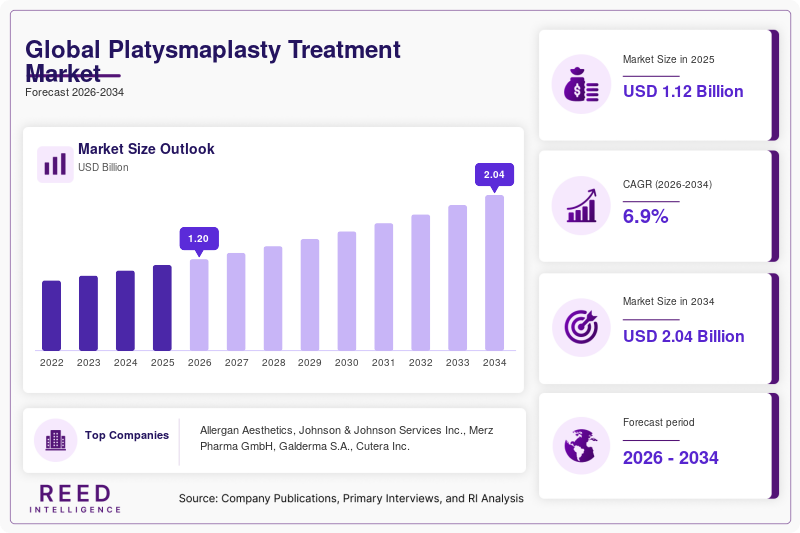
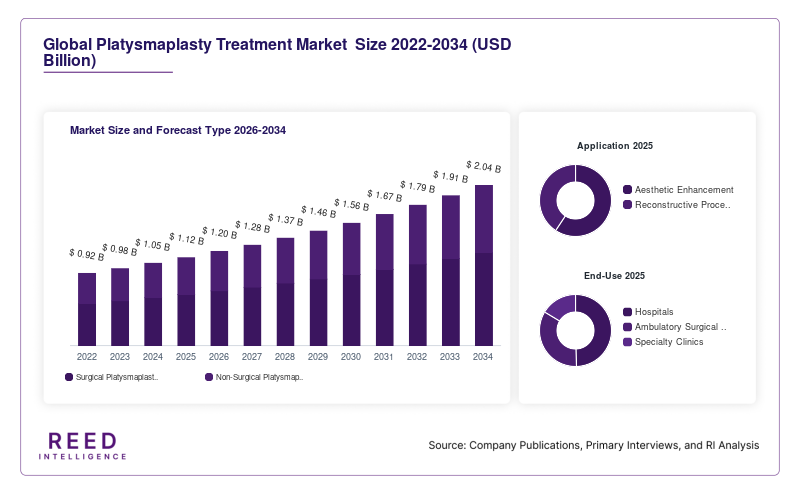
The Platysmaplasty Treatment Market size is witnessing steady expansion, driven by increasing demand for aesthetic procedures focused on neck rejuvenation and facial contouring. Platysmaplasty, a cosmetic surgical procedure that tightens the platysma muscle to reduce sagging and improve neck definition, is gaining traction among aging populations and younger demographics seeking preventive cosmetic interventions. In 2025, the global Platysmaplasty Treatment Market size is estimated at USD 1.12 billion and is projected to reach USD 1.19 billion in 2026. By 2034, the market is expected to attain a valuation of approximately USD 2.05 billion, growing at a CAGR of 6.9% during the forecast period (2025–2034).
Several factors are contributing to this market growth. First, the rising awareness of aesthetic procedures and the normalization of cosmetic surgeries across social and professional settings are driving adoption. Second, technological advancements in minimally invasive techniques and improved surgical outcomes are encouraging more patients to opt for platysmaplasty procedures. Third, the increasing disposable income in emerging economies is enabling a broader population to access premium aesthetic treatments.
Key Highlights
- Market size estimated at USD 1.12 billion in 2025
- Expected to reach USD 2.05 billion by 2034
- CAGR of 6.9% during 2025–2034
- Rising demand for minimally invasive procedures
- Increasing adoption in emerging economies
Market Trends
Rising Preference for Minimally Invasive Platysmaplasty Techniques
One of the notable trends in the Platysmaplasty Treatment Market is the growing preference for minimally invasive and non-surgical alternatives. Patients are increasingly seeking procedures that offer shorter recovery times, reduced scarring, and lower risk profiles. Techniques such as laser-assisted platysmaplasty and radiofrequency-based skin tightening are gaining popularity among both practitioners and patients. These approaches provide subtle yet effective results, making them appealing to individuals who want to enhance their appearance without undergoing extensive surgery.
Healthcare providers are also investing in training and equipment to support these advanced techniques. The shift toward outpatient settings and ambulatory surgical centers further supports this trend, as patients prefer convenience and reduced hospital stays. This movement is expected to redefine treatment protocols and expand the patient base significantly over the coming years.
Integration of Personalized Aesthetic Treatment Plans
Another emerging trend is the integration of personalized treatment approaches in platysmaplasty procedures. Clinics are increasingly using digital imaging, AI-based facial analysis, and patient-specific data to design customized surgical plans. This approach ensures more precise outcomes and aligns with individual aesthetic goals, enhancing overall satisfaction.
The demand for tailored treatments is particularly strong among younger consumers who prioritize natural-looking results. Surgeons are combining platysmaplasty with complementary procedures such as liposuction and dermal fillers to achieve comprehensive facial rejuvenation. This integrated approach is contributing to higher procedure volumes and improved clinical outcomes, further driving market growth.
Market Drivers
Increasing Demand for Aesthetic Procedures Among Aging Population
The global aging population is a significant driver for the Platysmaplasty Treatment Market. As individuals age, the platysma muscle weakens, leading to visible signs of aging such as sagging skin and neck bands. This demographic is increasingly seeking cosmetic solutions to maintain a youthful appearance and boost self-confidence.
In addition, advancements in surgical techniques have made procedures safer and more accessible for older patients. Clinics are offering comprehensive pre- and post-operative care, which reduces risks and enhances recovery outcomes. This has led to higher acceptance rates among older individuals, contributing to consistent market growth.
Growing Influence of Social Media and Beauty Standards
The influence of social media platforms and digital content is another key driver. The widespread use of high-resolution cameras and video communication tools has increased awareness of facial aesthetics, including the neck region. Consumers are becoming more conscious of their appearance and are actively seeking treatments to improve their profile.
Influencers and celebrities showcasing cosmetic procedures have also reduced the stigma associated with aesthetic surgeries. This has led to increased inquiries and consultations for platysmaplasty treatments. Clinics are leveraging digital marketing strategies to reach potential clients, further accelerating market expansion.
Market Restraint
High Cost and Limited Accessibility of Surgical Procedures
Despite its growth potential, the Platysmaplasty Treatment Market faces challenges related to the high cost of procedures and limited accessibility in certain regions. Surgical platysmaplasty involves specialized expertise, advanced equipment, and post-operative care, which contribute to higher treatment costs. This can limit adoption among middle-income populations and restrict market penetration.
Additionally, the availability of skilled surgeons is uneven across regions, particularly in developing countries. This disparity creates barriers to access and affects overall market growth. For example, patients in rural or underserved areas may need to travel to urban centers to undergo the procedure, increasing overall expenses and inconvenience. Addressing these challenges through cost optimization and training programs will be essential for sustained market expansion.
Market Opportunities
Expansion in Emerging Markets
Emerging economies present significant growth opportunities for the Platysmaplasty Treatment Market. Increasing urbanization, rising disposable incomes, and growing awareness of aesthetic procedures are driving demand in countries across Asia Pacific and Latin America. Governments and private healthcare providers are investing in infrastructure and training, enabling wider access to cosmetic treatments.
Medical tourism is also contributing to market growth in these regions. Countries offering cost-effective procedures with high-quality care are attracting international patients. This trend is expected to boost revenue streams and expand the global footprint of market players.
Technological Advancements in Non-Surgical Treatments
The development of innovative non-surgical technologies offers another key opportunity. Devices utilizing ultrasound, radiofrequency, and laser technologies are enabling effective skin tightening and muscle toning without invasive procedures. These solutions are appealing to a broader audience, including individuals who are hesitant to undergo surgery.
Manufacturers are focusing on product innovation and clinical validation to enhance efficacy and safety. The introduction of portable and user-friendly devices is also enabling clinics to expand their service offerings. This technological evolution is expected to create new revenue streams and diversify the market landscape.
Segmental Analysis
By Type
The surgical platysmaplasty segment dominated the market in 2024, accounting for approximately 62% of the total share. This dominance is attributed to the long-lasting and more visible results achieved through surgical procedures. Patients seeking significant correction of neck sagging and muscle laxity often prefer surgical interventions. Additionally, advancements in surgical techniques have improved safety and reduced recovery times, further supporting segment growth.
The non-surgical segment is expected to grow at the fastest CAGR of 8.5% during the forecast period. This growth is driven by increasing demand for less invasive procedures with minimal downtime. Technologies such as radiofrequency and ultrasound-based treatments are gaining traction. The affordability and convenience of these procedures are key factors contributing to their rapid adoption.
By Application
The aesthetic enhancement segment held the largest share in 2024, accounting for nearly 70% of the market. This segment includes procedures performed primarily for cosmetic purposes, such as improving neck contour and reducing signs of aging. The growing influence of beauty standards and social media has significantly increased demand in this segment.
The reconstructive application segment is expected to grow at a CAGR of 6.7%. This segment includes procedures performed to correct congenital or acquired deformities. Increasing awareness and availability of advanced surgical techniques are driving growth in this segment. Healthcare providers are also expanding their services to include reconstructive procedures, enhancing overall market opportunities.
By End-Use
Hospitals dominated the market in 2024, accounting for approximately 55% of the total share. Hospitals offer comprehensive facilities, including advanced surgical equipment and post-operative care, making them a preferred choice for patients undergoing complex procedures. The presence of experienced surgeons further supports this segment’s dominance.
Ambulatory surgical centers are expected to grow at the fastest CAGR of 7.8%. These centers provide cost-effective and convenient treatment options, attracting a growing number of patients. The shift toward outpatient procedures and shorter recovery times is driving the adoption of ambulatory centers. Their ability to offer high-quality care at lower costs makes them an attractive option for both patients and providers.
Regional Analysis
North America
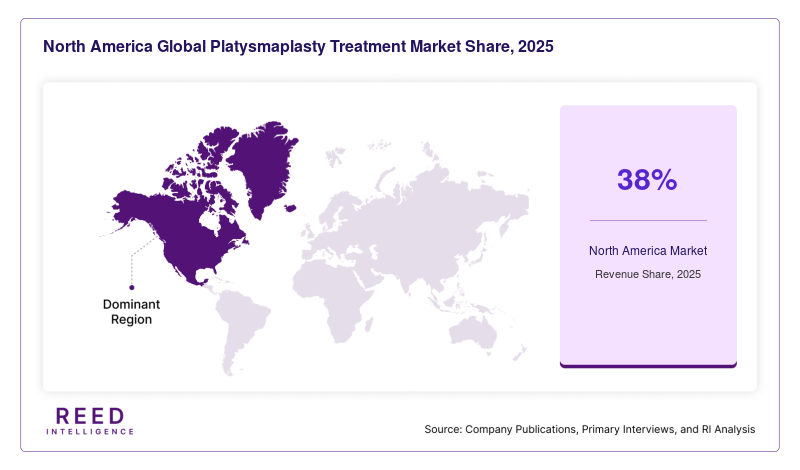
North America holds the largest share in the Platysmaplasty Treatment Market, accounting for approximately 38% of the global market in 2025. The region is projected to grow at a CAGR of 6.5% during the forecast period. High awareness of aesthetic procedures, advanced healthcare infrastructure, and the presence of skilled professionals contribute to this dominance. The region also benefits from strong consumer spending on cosmetic treatments.
The United States dominates the North American market due to its well-established cosmetic surgery industry and high adoption rates. A unique growth factor is the increasing demand for combination procedures, where platysmaplasty is performed alongside other facial treatments. This trend enhances treatment outcomes and drives higher revenue generation for clinics.
Europe
Europe accounts for around 27% of the global market share in 2025 and is expected to grow at a CAGR of 6.2%. The region is characterized by increasing acceptance of cosmetic procedures and a growing aging population. Countries such as Germany, France, and the UK are key contributors to market growth.
Germany leads the European market, driven by its advanced medical infrastructure and high-quality healthcare services. A unique growth factor in this region is the emphasis on natural-looking results, which encourages the adoption of refined surgical techniques and personalized treatment plans.
Asia Pacific
Asia Pacific is one of the fastest-growing regions, with a market share of 20% in 2025 and a projected CAGR of 8.1%. Rapid urbanization, increasing disposable income, and growing awareness of aesthetic treatments are key drivers. The region is also witnessing a rise in medical tourism.
China dominates the Asia Pacific market, supported by a large population base and expanding healthcare infrastructure. A unique growth factor is the increasing influence of beauty standards and social media, which is driving demand for aesthetic enhancements, including platysmaplasty procedures.
Middle East & Africa
The Middle East & Africa region holds approximately 8% of the market share in 2025 and is expected to grow at a CAGR of 6.8%. The market is driven by increasing investments in healthcare infrastructure and rising awareness of cosmetic procedures.
The United Arab Emirates leads the region due to its strong medical tourism sector and high demand for premium aesthetic services. A unique growth factor is the presence of luxury cosmetic clinics that cater to high-income individuals seeking advanced treatments.
Latin America
Latin America accounts for about 7% of the global market in 2025 and is projected to grow at a CAGR of 7.2%. The region is known for its strong culture of aesthetic enhancement and growing adoption of cosmetic procedures.
Brazil dominates the Latin American market, supported by a large number of skilled surgeons and high procedure volumes. A unique growth factor is the cultural acceptance of cosmetic surgery, which encourages individuals to seek treatments for both aesthetic and confidence-related reasons.
Competitive Landscape
The Platysmaplasty Treatment Market is moderately fragmented, with several established players and emerging companies competing based on technology, service quality, and pricing. Leading companies are focusing on expanding their service portfolios and investing in advanced technologies to enhance patient outcomes.
A key market leader is Allergan Aesthetics, known for its strong presence in the cosmetic treatment space. The company has recently expanded its product offerings and invested in research to develop innovative solutions for facial rejuvenation. Other companies are adopting strategies such as partnerships, acquisitions, and geographic expansion to strengthen their market position.
Key Players List
- Allergan Aesthetics
- Johnson & Johnson Services Inc.
- Merz Pharma GmbH
- Galderma S.A.
- Cutera Inc.
- Cynosure LLC
- Alma Lasers Ltd.
- Syneron Medical Ltd.
- Lumenis Ltd.
- Bausch Health Companies Inc.
- Revance Therapeutics Inc.
- Sientra Inc.
- Candela Corporation
- InMode Ltd.
- Fotona d.o.o.
Recent Developments
- In 2024, Allergan Aesthetics introduced an advanced imaging system to enhance pre-surgical planning for facial procedures.
- In 2023, Cynosure LLC launched a new radiofrequency device designed for non-invasive neck tightening treatments.
- In 2024, Alma Lasers expanded its product portfolio with a multifunctional platform targeting skin tightening and rejuvenation applications.
Global Platysmaplasty Treatment Market Segments
Type
- Surgical Platysmaplasty
- Non-Surgical Platysmaplasty
Application
- Aesthetic Enhancement
- Reconstructive Procedures
End-Use
- Hospitals
- Ambulatory Surgical Centers
- Specialty Clinics
By Region
- North America
- Europe
- APAC
- Middle East and Africa
- LATAM