Plexiform Neurofibromas Treatment Market Size, Share, Demand Report By Treatment Type (Pharmacological Therapy, Surgical Treatment, Targeted Therapy), By Drug Class (MEK Inhibitors, mTOR Inhibitors, Biologics), By End User (Hospitals, Specialty Clinics, Research Institutes), By Distribution Channel (Hospital Pharmacies, Retail Pharmacies, Online Pharmacies), By Region & Segment Forecasts, 2026–2034
USD 3950
Market Overview
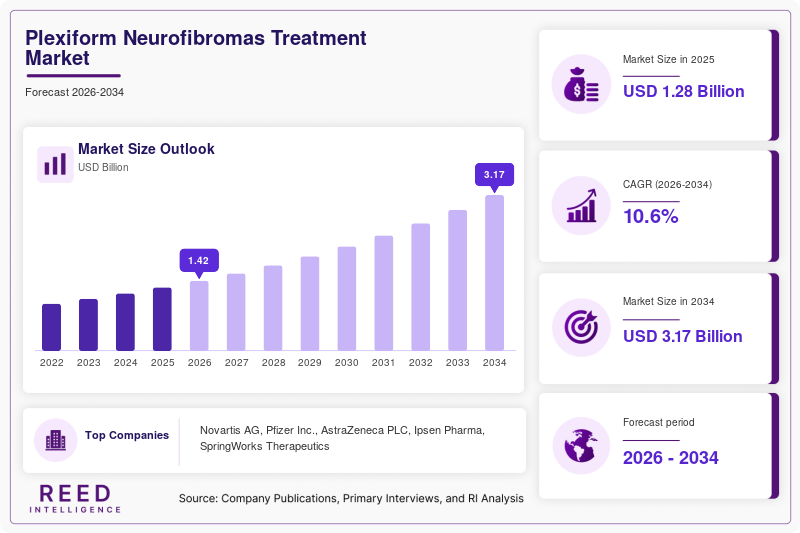
The Plexiform Neurofibromas Treatment Market is witnessing steady expansion, with the global market size estimated at USD 1.42 billion in 2026 and projected to reach USD 3.18 billion by 2034, registering a compound annual growth rate (CAGR) of 10.6% (2026–2034). Growth in the Plexiform Neurofibromas Treatment Market is primarily supported by the increasing global prevalence of neurofibromatosis type 1 (NF1), along with rising awareness of rare genetic disorders and advancements in targeted biologic therapies.
One global factor significantly supporting the Plexiform Neurofibromas Treatment Market is the accelerated adoption of precision medicine approaches, particularly MEK inhibitors, which have demonstrated clinical efficacy in tumor size reduction and symptom management. Expanding genetic screening programs and improved diagnostic imaging technologies are further strengthening early detection rates, contributing to higher treatment uptake.
Key Highlights
- Dominant region share (2025): North America accounted for approximately 38.4% of the global Plexiform Neurofibromas Treatment Market.
- Fastest-growing region CAGR (2026–2034): Asia Pacific is projected to grow at 12.1% CAGR.
- Leading subsegment: Pharmacological treatment dominated the treatment type segment in 2025.
- Fastest-growing subsegment: Targeted MEK inhibitor therapy is expected to expand at a 13.4% CAGR.
- Dominant country (2024–2025): The United States market was valued at USD 410 million in 2024 and USD 455 million in 2025 within the Plexiform Neurofibromas Treatment Market.
Market Trends
Expansion of Targeted Molecular Therapies
The Plexiform Neurofibromas Treatment Market is increasingly shaped by the shift toward targeted molecular therapies, particularly MEK inhibitors such as selumetinib. These therapies have demonstrated measurable tumor shrinkage in pediatric NF1 patients, significantly improving quality of life. Pharmaceutical pipelines are now focusing on next-generation kinase inhibitors, combination therapies, and improved drug delivery mechanisms, enhancing the long-term treatment outlook.
Integration of Advanced Imaging and AI Diagnostics
Another key trend in the Plexiform Neurofibromas Treatment Market is the integration of AI-driven imaging tools in tumor detection and monitoring. Advanced MRI-based volumetric analysis is enabling earlier diagnosis and more precise treatment tracking. Artificial intelligence applications are also improving predictive modeling for tumor progression, helping clinicians optimize therapeutic strategies.
Market Drivers
Rising Prevalence of NF1-Associated Tumors
The increasing incidence of neurofibromatosis type 1 is a major driver of the Plexiform Neurofibromas Treatment Market. A significant proportion of NF1 patients develop plexiform neurofibromas, many of which become symptomatic or disfiguring. Growing patient identification rates and improved genetic testing are expanding the addressable treatment population.
Advancements in Orphan Drug Development
Regulatory incentives such as orphan drug designation, fast-track approvals, and extended exclusivity periods are accelerating pharmaceutical investments in the Plexiform Neurofibromas Treatment Market. These incentives are encouraging biopharmaceutical companies to develop specialized therapies targeting rare tumor pathways.
Market Restraint
High Treatment Cost and Limited Accessibility
A major restraint affecting the Plexiform Neurofibromas Treatment Market is the high cost associated with long-term biologic therapies and surgical interventions. In many low- and middle-income countries, limited reimbursement frameworks and inadequate healthcare infrastructure restrict patient access to advanced treatment options, slowing overall market penetration.
Market Opportunities
Expansion of Gene-Based Therapeutics
The emergence of gene-editing technologies such as CRISPR and RNA-based therapies presents a strong opportunity in the Plexiform Neurofibromas Treatment Market. These approaches aim to address the root genetic mutations associated with NF1, offering potential long-term disease modification rather than symptomatic relief.
Growth in Pediatric Treatment Programs
Increasing focus on pediatric oncology programs is opening new opportunities in the Plexiform Neurofibromas Treatment Market. Early intervention strategies in children diagnosed with NF1 are expected to significantly improve treatment outcomes, driving demand for safer and long-duration therapeutic options tailored for younger populations.
Segmental Analysis
By Treatment Type
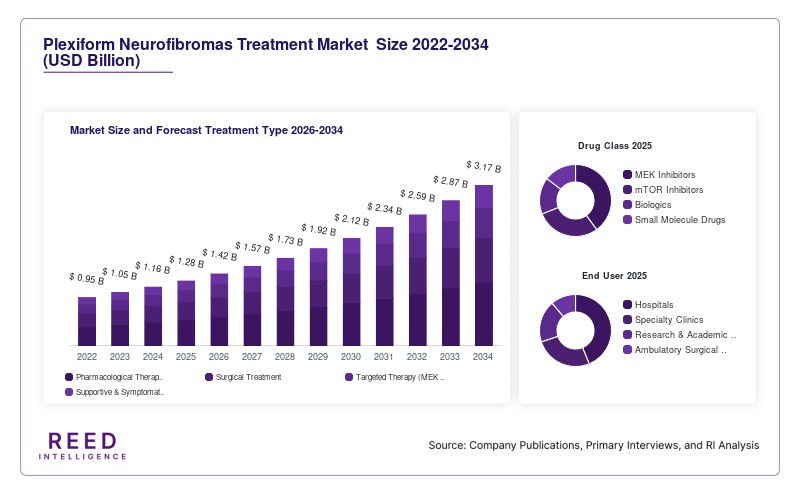
Pharmacological therapy dominated this segment in 2025 with a 52.8% share of the Plexiform Neurofibromas Treatment Market, driven by increasing adoption of MEK inhibitors and supportive drug regimens. Surgical interventions remain essential for severe cases but are limited by recurrence risks. Targeted therapy is projected to be the fastest-growing subsegment with a 13.4% CAGR, supported by continuous drug innovation and clinical trial expansion.
By Drug Class
MEK inhibitors represented the leading drug class in 2025 due to proven efficacy in tumor volume reduction. The biologics segment is expected to grow at the fastest pace, driven by pipeline advancements in monoclonal antibodies and pathway-specific inhibitors in the Plexiform Neurofibromas Treatment Market.
By End User
Hospitals held the dominant share of 47.1% in 2025, supported by advanced diagnostic and surgical capabilities. Specialty clinics are projected to be the fastest-growing end-user segment due to increasing outpatient care adoption and personalized treatment approaches.
By Distribution Channel
Hospital pharmacies led the distribution channel segment in 2025 due to direct administration of specialized drugs. Online pharmacies are expected to grow rapidly as digital healthcare access expands and prescription management becomes more integrated.
Regional Analysis
North America
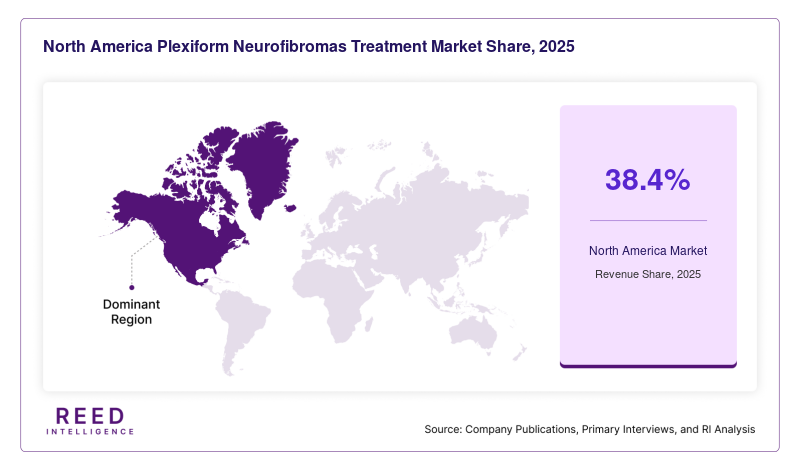
North America held approximately 38.4% share of the Plexiform Neurofibromas Treatment Market in 2025 and is expected to maintain steady growth through 2034. The region benefits from strong healthcare infrastructure, high awareness of rare genetic diseases, and early adoption of novel therapeutics. The United States remains the dominant country due to extensive clinical trial activity and robust pharmaceutical pipelines focused on targeted therapies.
Europe
Europe accounted for around 27.6% share in 2025 and is projected to grow at a moderate CAGR during the forecast period. Strong regulatory frameworks supporting orphan drug development and increasing funding for rare disease research are key growth contributors. Countries such as Germany, France, and the United Kingdom are leading adoption in the Plexiform Neurofibromas Treatment Market due to structured healthcare reimbursement systems.
Asia Pacific
Asia Pacific represented approximately 21.3% share in 2025 and is expected to record the highest CAGR of 12.1% (2026–2034). Growth is driven by rising healthcare investments, expanding diagnostic capabilities, and improving awareness of genetic disorders. China, Japan, and India are emerging as high-potential markets due to increasing patient identification rates.
Middle East & Africa
The Middle East & Africa held nearly 6.2% share in 2025 of the Plexiform Neurofibromas Treatment Market. Growth is supported by gradual improvements in healthcare infrastructure and increasing collaborations with global pharmaceutical companies. However, limited access to advanced therapies continues to constrain rapid expansion.
Latin America
Latin America accounted for approximately 6.5% share in 2025 and is expected to grow steadily over the forecast period. Brazil and Mexico are leading markets due to expanding specialty care centers and rising awareness of rare disease management. Public-private healthcare initiatives are improving treatment accessibility in the Plexiform Neurofibromas Treatment Market.
Competitive Landscape
The Plexiform Neurofibromas Treatment Market is moderately consolidated, with a mix of large pharmaceutical companies and emerging biotech firms focusing on rare disease therapeutics. Key players include Novartis AG, AstraZeneca PLC, Pfizer Inc., SpringWorks Therapeutics, and Ipsen Pharma. These companies are actively investing in clinical trials, particularly for MEK inhibitors and next-generation targeted therapies. Novartis maintains a leading position due to its established product portfolio and strong clinical pipeline in NF1-related treatments. SpringWorks Therapeutics is gaining traction with its focused rare tumor programs and ongoing regulatory submissions. Strategic collaborations, licensing agreements, and orphan drug designations are shaping competitive dynamics. Companies are increasingly focusing on expanding geographic reach, improving drug efficacy, and reducing treatment side effects to strengthen their position in the Plexiform Neurofibromas Treatment Market.
Key Players List
- Novartis AG
- Pfizer Inc.
- AstraZeneca PLC
- Ipsen Pharma
- SpringWorks Therapeutics
- Merck & Co., Inc.
- Roche Holding AG
- Sanofi S.A.
- Bristol-Myers Squibb Company
- Eli Lilly and Company
- Takeda Pharmaceutical Company Limited
- Amgen Inc.
- Johnson & Johnson
- Bayer AG
- AbbVie Inc.
Recent Developments
- In 2025, several clinical-stage therapies targeting MEK and mTOR pathways entered Phase II trials, expanding innovation in the Plexiform Neurofibromas Treatment Market.
- Regulatory agencies granted expanded orphan drug designations to multiple pipeline candidates, accelerating approval timelines.
- Strategic partnerships between biotech firms and academic research institutes increased for pediatric NF1-focused drug development.
- Advanced MRI-based tumor monitoring systems integrated with AI analytics were adopted in leading oncology centers, improving treatment response tracking.
- Pharmaceutical companies expanded patient assistance programs to improve accessibility of high-cost therapies across emerging markets.
Plexiform Neurofibromas Treatment Market Segments
Treatment Type
- Pharmacological Therapy
- Surgical Treatment
- Targeted Therapy (MEK Inhibitors, mTOR Inhibitors)
- Supportive & Symptomatic Care
Drug Class
- MEK Inhibitors
- mTOR Inhibitors
- Biologics
- Small Molecule Drugs
End User
- Hospitals
- Specialty Clinics
- Research & Academic Institutes
- Ambulatory Surgical Centers
Distribution Channel
- Hospital Pharmacies
- Retail Pharmacies
- Online Pharmacies
- Specialty Drug Stores
By Region
- North America
- Europe
- APAC
- Middle East and Africa
- LATAM