Plus Size Clothing Market Size, Share & Demand Report By Product Type (Casual Wear, Formal Wear, Activewear, Innerwear, Outerwear), By Gender (Women, Men, Children), By Distribution Channel (Offline Retail Stores, Online Retail), By Region & Segment Forecasts, 2026–2034
USD 3950
Market Overview
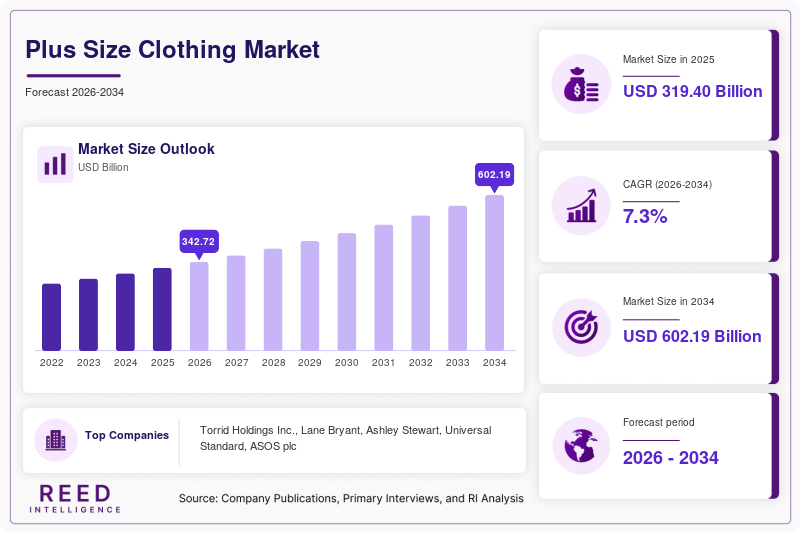
The global Plus Size Clothing Market size was valued at approximately USD 319.4 billion in 2026 and is projected to reach USD 562.8 billion by 2034, expanding at a CAGR of 7.3% during 2026–2034. The market continues to evolve as apparel manufacturers, fashion brands, and retailers increase their focus on inclusive sizing and body-positive product offerings. Growing consumer demand for fashionable clothing across diverse body shapes has transformed the market from a niche category into a mainstream segment within the global apparel industry.
One of the major global factors supporting market growth is the increasing acceptance of body diversity across developed and developing economies. Social media platforms, digital influencers, and changing consumer attitudes have encouraged apparel brands to expand their size ranges and launch dedicated collections for plus-size consumers. In addition, the rapid growth of e-commerce has improved accessibility to a wider variety of products, enabling consumers to purchase clothing that fits their style preferences and sizing requirements.
Key Highlights
- North America dominated the market with a 35.4% share in 2025, while Asia Pacific is expected to grow at the fastest CAGR of 9.1% during 2026–2034.
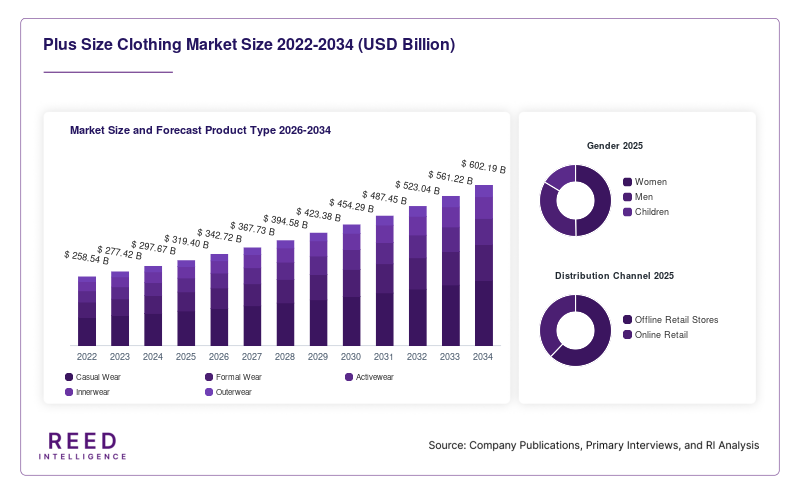
- By product type, Casual Wear accounted for the largest share of 42.8%, while Activewear is projected to grow at a CAGR of 9.7%.
- By gender, Women’s Plus Size Clothing led with a 67.5% share, whereas Men’s Plus Size Clothing is expected to expand at a CAGR of 8.4%.
- By distribution channel, Offline Retail Stores held a 58.3% share, while Online Retail is projected to grow at a CAGR of 10.2%.
- The United States remained the dominant country, with market values of USD 58.6 billion in 2024 and USD 62.9 billion in 2025.
Market Trends
Growing Influence of Inclusive Fashion Campaigns
Inclusive fashion campaigns have become a significant trend shaping the Plus Size Clothing Market. Global apparel brands increasingly feature models representing different body types, ages, and lifestyles in advertising campaigns. This shift reflects changing consumer expectations and growing demand for authentic representation. Consumers are actively seeking brands that promote inclusivity rather than traditional beauty standards. As a result, retailers are expanding their plus-size collections and integrating them into mainstream product lines rather than treating them as separate categories. This approach has strengthened customer loyalty while increasing brand visibility among underserved consumer groups. The trend is particularly visible across digital marketing channels, where social media engagement and influencer partnerships continue to drive awareness and purchasing decisions.
Expansion of Digital-First Retail Strategies
Digital transformation is reshaping the way plus-size apparel is marketed and sold worldwide. E-commerce platforms are adopting advanced technologies such as virtual fitting tools, AI-powered size recommendations, and personalized shopping experiences. These innovations help consumers overcome traditional fitting challenges associated with online apparel purchases. Retailers are also leveraging customer data to optimize inventory management and develop targeted product assortments. Mobile commerce growth has further accelerated online purchasing behavior among younger consumers. The increasing availability of customer reviews, detailed sizing charts, and product visualization tools has improved confidence in online purchases. Consequently, digital-first retail strategies are becoming a critical component of growth within the Plus Size Clothing Market, particularly in emerging economies where online shopping adoption continues to increase rapidly.
Market Drivers
Rising Demand for Size-Inclusive Apparel Collections
The growing consumer demand for size-inclusive apparel remains a primary growth driver for the Plus Size Clothing Market. Fashion-conscious consumers increasingly expect brands to offer stylish clothing options across extended size ranges. Historically, plus-size shoppers faced limited product choices and inconsistent sizing standards. However, changing market dynamics have encouraged manufacturers to address these gaps. Major apparel companies are allocating more resources toward research, design, and production of plus-size collections. Retailers are also expanding shelf space and online inventory dedicated to this segment. As consumers gain access to broader product selections that align with contemporary fashion trends, purchasing frequency and spending levels continue to rise. This demand-driven expansion is expected to support long-term market growth across multiple apparel categories.
Growth of E-Commerce and Direct-to-Consumer Channels
The expansion of e-commerce platforms has significantly enhanced market accessibility for plus-size consumers. Online retail channels allow shoppers to explore a wider range of brands, styles, and sizes than traditional brick-and-mortar stores. Direct-to-consumer business models further enable brands to establish stronger relationships with customers through personalized recommendations and targeted marketing campaigns. Improved logistics networks and flexible return policies have increased consumer confidence in online apparel purchases. Additionally, digital marketplaces allow smaller and emerging brands to enter the market with lower operational costs. These factors collectively contribute to increased product availability and market penetration. As internet connectivity and smartphone adoption continue to grow worldwide, e-commerce is expected to remain a major driver supporting future market expansion.
Market Restraint
Challenges Associated with Sizing Standardization and Inventory Management
Despite strong growth prospects, the Plus Size Clothing Market faces challenges related to sizing standardization and inventory management. Apparel sizing varies considerably across brands, regions, and product categories, creating confusion among consumers and increasing product return rates. Manufacturers often struggle to develop consistent fit models that accommodate diverse body shapes while maintaining design aesthetics. The production of extended-size garments may also require additional fabric, pattern modifications, and specialized manufacturing processes, resulting in higher costs. Inventory planning becomes more complex as retailers must stock a broader range of sizes while managing demand fluctuations. For example, excess inventory in specific sizes can reduce profitability and increase operational expenses. These challenges may limit product availability and affect customer satisfaction if not addressed through technological innovation and improved sizing frameworks. Consequently, market participants must invest in advanced analytics, fit technologies, and supply chain optimization strategies to minimize operational inefficiencies.
Market Opportunities
Rising Penetration in Emerging Fashion Markets
Emerging economies present substantial opportunities for growth in the Plus Size Clothing Market. Rapid urbanization, expanding middle-class populations, and increasing disposable incomes are contributing to greater apparel spending across countries in Asia Pacific, Latin America, and parts of the Middle East. Consumers in these regions are becoming more receptive to global fashion trends and body-positive messaging. However, the availability of dedicated plus-size apparel remains relatively limited in many markets. This gap creates opportunities for international and regional brands to establish a stronger presence through localized product offerings. Strategic partnerships with online marketplaces and regional retailers can further enhance market reach. As awareness of inclusive fashion continues to grow, emerging economies are expected to become important revenue-generating regions during the forecast period.
Innovation in Performance and Sustainable Plus-Size Apparel
Product innovation represents another significant opportunity for market participants. Consumers increasingly seek apparel that combines comfort, functionality, and sustainability. As a result, brands are developing plus-size collections using eco-friendly fabrics, recycled materials, and advanced textile technologies. Demand for performance-oriented clothing, including activewear and athleisure products, is also rising among plus-size consumers. Manufacturers that invest in moisture-wicking fabrics, stretch materials, and ergonomic designs can differentiate themselves within a competitive market environment. Sustainability initiatives further enhance brand reputation and appeal to environmentally conscious consumers. The integration of innovative materials and responsible production practices is expected to create new growth avenues while strengthening long-term competitiveness within the global market.
Segmental Analysis
By Product Type
Casual Wear emerged as the dominant subsegment, accounting for approximately 42.8% of market share in 2024. The segment benefits from consistent consumer demand for everyday clothing that combines comfort, functionality, and affordability. Casual apparel includes t-shirts, jeans, tops, dresses, and other versatile garments suitable for multiple occasions. Manufacturers continue introducing fashion-forward designs and expanded size ranges to address changing consumer preferences. Increased remote work adoption and evolving lifestyle trends have also encouraged demand for comfortable clothing options. Retailers are dedicating greater shelf space and online inventory to casual wear collections, recognizing their importance in generating recurring sales. Strong consumer acceptance and broad product availability have reinforced the segment’s leadership position within the global market.
Activewear is projected to register the fastest CAGR of 9.7% during 2026–2034. Growing health awareness and increased participation in fitness activities are supporting demand for performance-oriented plus-size apparel. Consumers increasingly seek activewear products that offer comfort, flexibility, and moisture-management capabilities. Manufacturers are responding through innovations in fabric technology and ergonomic garment construction. The popularity of athleisure fashion further expands market opportunities, as consumers wear activewear beyond traditional fitness settings. Social media trends and wellness-focused lifestyles continue encouraging purchases of leggings, sports bras, training apparel, and performance tops. These factors position activewear as a rapidly expanding category within the broader Plus Size Clothing Market.
By Gender
Women’s Plus Size Clothing accounted for approximately 67.5% of market share in 2024, making it the largest gender-based segment. The dominance of this category reflects broader product availability, stronger brand engagement, and higher fashion expenditure among female consumers. Retailers have significantly expanded offerings across casual wear, formal wear, activewear, and occasion-specific clothing categories. Fashion brands continue introducing seasonal collections designed specifically for plus-size women, addressing both style preferences and fit requirements. Consumer demand for inclusive fashion representation has further encouraged product diversification. Additionally, digital marketing campaigns and influencer collaborations have strengthened awareness and purchasing behavior, supporting sustained growth within this segment.
Men’s Plus Size Clothing is expected to grow at a CAGR of 8.4% during the forecast period. The segment benefits from increasing awareness of body inclusivity within the menswear industry and rising demand for fashionable extended-size apparel. Historically underserved, male consumers now have access to a wider range of products spanning casual wear, business attire, sportswear, and outerwear categories. Apparel brands are investing in fit improvements and modern designs tailored to larger body types. Growing acceptance of online shopping and expanding e-commerce inventories further support market penetration. As consumer expectations continue evolving, men’s plus-size apparel is expected to experience accelerated adoption across global markets.
By Distribution Channel
Offline Retail Stores held approximately 58.3% of total market share in 2024. Physical retail locations remain important because many consumers prefer trying on apparel before making purchasing decisions. Department stores, specialty fashion retailers, and branded outlets provide opportunities for customers to assess garment fit, fabric quality, and styling options. Retailers increasingly incorporate dedicated plus-size sections to improve shopping experiences and product visibility. Personalized customer service and immediate product availability also contribute to sustained demand through offline channels. Despite growing e-commerce adoption, brick-and-mortar stores continue playing a critical role in supporting consumer confidence and brand engagement.
Online Retail is projected to expand at a CAGR of 10.2% between 2026 and 2034, making it the fastest-growing distribution channel. E-commerce platforms offer extensive product assortments, competitive pricing, and convenient shopping experiences. Advanced technologies such as virtual fitting tools, AI-based recommendations, and detailed sizing guides help address common purchase concerns. Consumers benefit from broader access to domestic and international brands that may not be available through local retail stores. The increasing popularity of mobile commerce and social shopping platforms further accelerates online sales growth. As digital infrastructure continues improving worldwide, online retail is expected to capture a growing share of market revenue.
Regional Analysis
North America
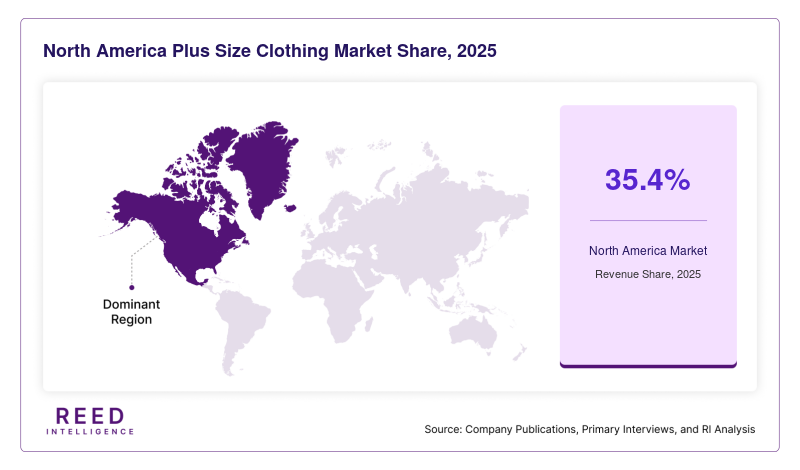
North America accounted for approximately 35.4% of the global Plus Size Clothing Market in 2025 and maintained its position as the largest regional market. The region benefits from high consumer spending on apparel, strong brand presence, and widespread adoption of inclusive fashion initiatives. Market growth is projected at a CAGR of 6.8% through 2034. Retailers across the United States and Canada continue expanding size-inclusive collections, supported by robust e-commerce infrastructure and growing consumer awareness regarding body diversity.
The United States remains the dominant country within North America. A key growth factor is the strong integration of body-positive marketing campaigns across fashion retail channels. Major brands increasingly invest in product development and digital engagement strategies targeting plus-size consumers. High online shopping penetration and the availability of extensive product selections further strengthen market growth opportunities throughout the country.
Europe
Europe represented approximately 27.8% of global market revenue in 2025 and is expected to register a CAGR of 6.9% during the forecast period. The region benefits from a mature fashion industry, established retail networks, and increasing consumer demand for inclusive apparel. European consumers place considerable emphasis on product quality, comfort, and sustainable manufacturing practices. These preferences encourage brands to expand premium plus-size collections and improve product differentiation.
The United Kingdom remains the leading market within Europe. One significant growth factor is the increasing popularity of sustainable fashion initiatives. Consumers are actively seeking environmentally responsible clothing options, prompting manufacturers to adopt sustainable materials and ethical production practices. This trend supports innovation while creating new opportunities for plus-size apparel brands operating within the region.
Asia Pacific
Asia Pacific held approximately 21.3% of the Plus Size Clothing Market in 2025 and is projected to record the fastest CAGR of 9.1% through 2034. Rapid urbanization, rising disposable incomes, and growing internet penetration contribute significantly to market expansion. Younger consumers increasingly embrace global fashion trends and online shopping platforms, creating favorable conditions for apparel manufacturers and retailers focused on inclusive sizing solutions.
China remains the dominant country in the Asia Pacific market. A unique growth factor is the rapid expansion of digital commerce ecosystems that connect consumers with domestic and international fashion brands. Advanced mobile payment infrastructure, social commerce platforms, and increasing awareness of body diversity are supporting demand for plus-size apparel. These developments position China as a major contributor to regional growth.
Middle East & Africa
The Middle East & Africa region accounted for approximately 7.4% of global market revenue in 2025 and is anticipated to grow at a CAGR of 7.5% during the forecast period. Economic diversification efforts, expanding retail infrastructure, and increasing fashion awareness support market development across several countries. International apparel brands continue entering the region through franchise agreements and digital retail channels, improving product accessibility.
Saudi Arabia serves as the dominant country within the region. A key growth factor is the rapid modernization of the retail sector combined with increasing participation of women in economic activities. Rising disposable incomes and growing demand for fashion-forward apparel contribute to stronger adoption of plus-size clothing. Retail expansion and digital commerce initiatives further enhance market growth prospects.
Latin America
Latin America captured approximately 8.1% of the global Plus Size Clothing Market in 2025 and is projected to expand at a CAGR of 7.2% through 2034. The region benefits from improving economic conditions, growing urban populations, and rising interest in contemporary fashion trends. Local and international apparel companies are increasing investments in inclusive sizing collections to address evolving consumer preferences and expand market reach.
Brazil remains the dominant country in Latin America. A distinctive growth factor is the strong cultural emphasis on fashion and personal appearance. Consumers actively engage with social media and fashion influencers, driving awareness of inclusive apparel options. Expanding e-commerce adoption and increasing availability of domestic plus-size brands further support market growth across the country.
Competitive Landscape
The Plus Size Clothing Market remains moderately fragmented, with established apparel manufacturers and specialized fashion retailers competing through product innovation, branding, and digital expansion strategies. Companies focus on improving fit accuracy, expanding size ranges, and enhancing omnichannel retail experiences to strengthen competitive positioning. Investments in sustainable materials and data-driven product development are also becoming increasingly important across the industry.
Among leading participants, Torrid Holdings Inc. maintains a strong market presence due to its dedicated focus on plus-size fashion and extensive product portfolio. The company continues to expand its digital capabilities and customer engagement initiatives. Other notable competitors include Lane Bryant, ASOS, Ashley Stewart, and Universal Standard, all of which actively invest in inclusive product development and e-commerce growth.
Key Players
- Torrid Holdings Inc.
- Lane Bryant
- Ashley Stewart
- Universal Standard
- ASOS plc
- H&M Group
- Forever 21
- Old Navy
- Target Corporation
- Walmart Inc.
- Nike Inc.
- Adidas AG
- Boohoo Group plc
- Mango
- Simply Be
Recent Developments
- In 2025, a leading plus-size apparel retailer expanded its omnichannel retail network and launched new inclusive fashion collections to meet growing consumer demand across North America and Europe.
- In 2025, several apparel brands introduced AI-powered sizing and virtual fitting technologies to improve fit accuracy, reduce product return rates, and enhance online shopping experiences for plus-size consumers.
- In 2024, a major fashion company launched a sustainable plus-size clothing line featuring recycled fabrics and environmentally responsible manufacturing processes to address increasing demand for eco-conscious apparel.
- In 2024, manufacturers increased investments in advanced body-measurement analytics and digital design technologies to develop more precise sizing standards and improve garment comfort.
- In 2025, strategic collaborations between apparel brands, fashion influencers, and e-commerce platforms accelerated the commercialization of inclusive fashion campaigns and expanded market reach among younger consumer groups.
Plus Size Clothing Market Segments
Product Type
- Casual Wear
- Formal Wear
- Activewear
- Innerwear
- Outerwear
Gender
- Women
- Men
- Children
Distribution Channel
- Offline Retail Stores
- Online Retail
By Region
- North America
- Europe
- APAC
- Middle East and Africa
- LATAM