Pocket Otoscope Market Size, Share & Demand Report By Product Type (LED Pocket Otoscope, Halogen Pocket Otoscope, Digital Pocket Otoscope), By Application (Ear Infection Diagnosis, Hearing Assessment, General Examination), By End-Use (Hospitals, Clinics, Homecare, Others), By Region & Segment Forecasts, 2025–2034
USD 3950
Market Overview
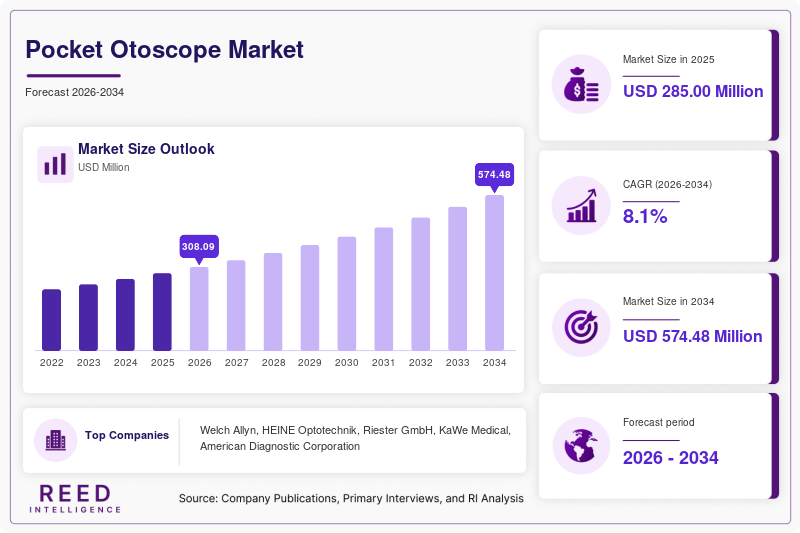
The Pocket Otoscope Market size was estimated at USD 285 million in 2025 and is projected to reach approximately USD 312 million in 2026. Over the forecast period from 2025 to 2034, the market is expected to grow to around USD 625 million, registering a compound annual growth rate (CAGR) of 8.1%. This growth reflects increasing demand for compact medical devices that support early diagnosis and improved patient outcomes in both clinical and homecare settings.
The rise in primary healthcare services and the growing prevalence of ear-related disorders, such as otitis media and hearing impairments, are key factors contributing to market growth. Pocket otoscopes offer convenience, portability, and ease of use, making them essential tools for general practitioners, pediatricians, and emergency care providers. Additionally, technological advancements, including LED illumination, digital imaging capabilities, and wireless connectivity, are enhancing the functionality of these devices and expanding their application scope.
Key Highlights
- Market size reached USD 285 million in 2025 and is estimated to grow to USD 312 million in 2026.
This steady increase reflects rising adoption of compact diagnostic tools across healthcare settings. - The market is expected to reach USD 625 million by 2034, growing at a CAGR of 8.1%.
Consistent expansion is driven by increasing investments in portable medical technologies globally. - Rising demand for portable diagnostic devices is significantly driving market adoption.
Healthcare providers prefer compact tools that enable quick and efficient point-of-care examinations. - Increasing prevalence of ear disorders is supporting overall market growth.
Higher cases of infections and hearing issues are leading to frequent diagnostic needs.
Market Trends
Integration of Digital and Smart Technologies
A significant trend shaping the Pocket Otoscope Market is the integration of digital and smart technologies into traditional diagnostic devices. Manufacturers are increasingly incorporating features such as high-resolution cameras, LED lighting, and wireless connectivity into pocket otoscopes. These advancements allow clinicians to capture images and videos, which can be stored and shared for further analysis. This trend is particularly important in telemedicine, where remote consultations are becoming more common. Digital pocket otoscopes enable accurate diagnosis without the need for physical presence, improving access to healthcare services. The use of mobile applications for real-time visualization and patient data management is further enhancing clinical efficiency and diagnostic accuracy.
Growing Adoption in Home Healthcare Settings
Another notable trend is the increasing adoption of pocket otoscopes in home healthcare environments. With rising awareness of self-care and preventive healthcare, patients and caregivers are using these devices for basic ear examinations. This trend is supported by the availability of user-friendly devices designed for non-professional use. Manufacturers are focusing on ergonomic designs and simplified interfaces to make these tools accessible to a broader audience. The expansion of e-commerce platforms is also facilitating easy access to such devices. This shift toward home-based diagnostics is reducing the burden on healthcare facilities and enabling early detection of ear conditions, which contributes to improved patient outcomes and cost savings.
Market Drivers
Rising Prevalence of Ear-Related Disorders
The increasing incidence of ear-related disorders is a major driver of the Pocket Otoscope Market. Conditions such as ear infections, hearing loss, and tinnitus are becoming more common due to factors like aging populations, environmental pollution, and lifestyle changes. Pediatric populations are particularly prone to ear infections, which necessitates frequent examinations. Pocket otoscopes provide a convenient and efficient solution for routine check-ups and early diagnosis. Healthcare providers rely on these devices to ensure timely treatment, which helps prevent complications. The growing burden of ear diseases is encouraging both public and private healthcare institutions to invest in portable diagnostic tools, thereby driving market growth.
Expansion of Primary and Preventive Healthcare Services
The expansion of primary healthcare infrastructure and the growing emphasis on preventive care are significantly boosting the demand for pocket otoscopes. Governments and healthcare organizations are focusing on improving access to basic medical services, especially in rural and underserved areas. Pocket otoscopes play a vital role in such settings due to their portability and ease of use. They enable healthcare professionals to conduct on-site examinations without requiring advanced equipment. Preventive healthcare initiatives, including routine screenings and health awareness programs, are further increasing the adoption of these devices. As healthcare systems continue to prioritize early detection and intervention, the demand for compact diagnostic tools is expected to rise steadily.
Market Restraint
Limited Diagnostic Capabilities Compared to Advanced Systems
One of the key restraints affecting the Pocket Otoscope Market is the limited diagnostic capability of these devices compared to advanced imaging systems. While pocket otoscopes are effective for basic examinations, they may not provide the level of detail required for complex diagnoses. This limitation can lead to reliance on more sophisticated equipment such as video otoscopes or endoscopic systems in specialized healthcare settings. As a result, their adoption may be restricted in hospitals and advanced diagnostic centers that require high-resolution imaging and comprehensive analysis. Additionally, variations in image quality among different product models can impact diagnostic accuracy. For instance, low-cost devices may lack adequate illumination or magnification, reducing their effectiveness. This constraint can hinder market growth, particularly in regions with access to advanced healthcare technologies.
Market Opportunities
Growth in Telemedicine and Remote Diagnostics
The increasing adoption of telemedicine presents a significant opportunity for the Pocket Otoscope Market. As healthcare providers shift toward digital platforms, the demand for portable devices that support remote diagnosis is rising. Pocket otoscopes equipped with wireless connectivity and smartphone integration enable clinicians to examine patients remotely and share findings instantly. This capability is particularly beneficial in rural areas where access to healthcare facilities is limited. Telemedicine platforms are incorporating these devices to enhance diagnostic capabilities and improve patient engagement. The growing acceptance of virtual consultations is expected to create new growth avenues for manufacturers, encouraging innovation and product development in this segment.
Emerging Markets and Healthcare Infrastructure Development
Emerging economies offer substantial growth opportunities for the Pocket Otoscope Market due to ongoing healthcare infrastructure development. Countries in Asia, Africa, and Latin America are investing in primary healthcare systems to improve accessibility and quality of care. Pocket otoscopes are well-suited for these regions as they are cost-effective and easy to use. Increasing government initiatives aimed at strengthening healthcare services and promoting early diagnosis are driving demand for portable diagnostic tools. Additionally, rising disposable incomes and growing awareness of healthcare are supporting market expansion. Manufacturers are focusing on expanding their presence in these regions by offering affordable and durable products tailored to local needs.
Segmental Analysis
By Type
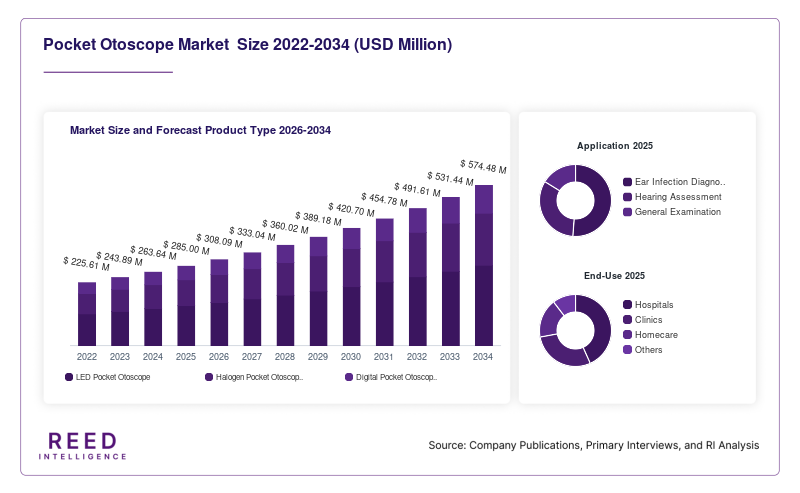
The LED pocket otoscope segment dominated the market in 2024, accounting for approximately 58% of the total share. These devices are preferred due to their superior illumination, energy efficiency, and longer lifespan compared to traditional halogen-based models. LED technology provides clearer visualization of the ear canal, improving diagnostic accuracy. Healthcare professionals favor these devices for routine examinations in clinical settings. The increasing demand for reliable and durable diagnostic tools is further supporting the growth of this segment. Additionally, manufacturers are focusing on enhancing LED-based devices with advanced features such as adjustable brightness and improved optical systems.
The digital pocket otoscope segment is expected to witness the fastest growth, with a projected CAGR of 9.8% during the forecast period. This growth is driven by increasing demand for devices that offer imaging and data storage capabilities. Digital otoscopes enable clinicians to capture and share images, facilitating better diagnosis and patient communication. The integration of wireless connectivity and mobile applications is further enhancing their adoption. As telemedicine continues to expand, the demand for digital diagnostic tools is expected to rise significantly.
By Application
The diagnosis of ear infections segment held the largest share in 2024, accounting for around 46% of the market. Pocket otoscopes are widely used for detecting conditions such as otitis media and ear canal blockages. The high prevalence of these conditions, particularly among children, is driving demand for diagnostic tools. Healthcare providers rely on pocket otoscopes for quick and accurate examinations, enabling timely treatment. The increasing focus on early diagnosis is further supporting the growth of this segment.
The hearing assessment segment is expected to grow at the fastest rate, with a CAGR of 9.2%. This growth is attributed to rising awareness of hearing health and increasing cases of hearing impairment. Pocket otoscopes are being used as preliminary screening tools in hearing assessments. The growing aging population and increased exposure to noise pollution are contributing to the demand for hearing evaluation. As awareness campaigns and screening programs expand, this segment is expected to witness significant growth.
By End-Use
The hospitals segment dominated the market in 2024, accounting for approximately 49% of the total share. Hospitals are the primary users of pocket otoscopes due to the high volume of patients and the need for efficient diagnostic tools. These devices are essential for routine examinations and emergency care. The availability of skilled healthcare professionals and advanced infrastructure supports the widespread use of pocket otoscopes in hospital settings.
The homecare segment is projected to grow at the fastest CAGR of 10.1% during the forecast period. This growth is driven by increasing adoption of self-monitoring devices and rising awareness of preventive healthcare. Patients and caregivers are using pocket otoscopes for basic ear examinations at home. The availability of user-friendly devices and online purchasing options is supporting this trend. As healthcare shifts toward patient-centric models, the demand for home-based diagnostic tools is expected to increase.
Regional Analysis
North America
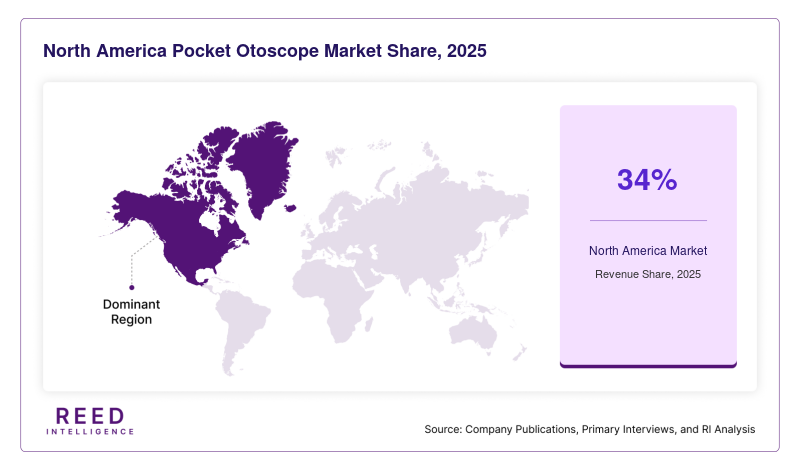
North America held a significant share of the Pocket Otoscope Market in 2025, accounting for approximately 34% of the global market. The region is expected to maintain steady growth with a CAGR of around 7.5% during the forecast period. This growth is supported by well-established healthcare infrastructure and high adoption of advanced medical technologies. The presence of key market players and continuous innovation in diagnostic devices are further contributing to market expansion.
The United States dominates the regional market due to its advanced healthcare system and high healthcare expenditure. A unique growth factor in this region is the strong integration of digital health technologies, which supports the use of connected diagnostic devices. The increasing focus on telehealth services is also boosting the demand for portable otoscopes.
Europe
Europe accounted for nearly 27% of the global Pocket Otoscope Market in 2025 and is projected to grow at a CAGR of 7.8%. The region benefits from a well-developed healthcare system and strong regulatory frameworks that ensure product quality and safety. Increasing awareness about early diagnosis and preventive care is driving the adoption of pocket otoscopes across healthcare facilities.
Germany leads the European market, supported by its advanced medical technology sector and strong emphasis on research and development. A key growth factor in this region is the increasing adoption of portable diagnostic devices in outpatient and primary care settings, which enhances efficiency and patient care.
Asia Pacific
Asia Pacific is expected to witness the fastest growth in the Pocket Otoscope Market, with a CAGR of 9.5% during the forecast period. The region held around 22% market share in 2025, driven by rising healthcare investments and expanding population. Increasing awareness of healthcare services and improving access to medical facilities are supporting market growth.
China dominates the regional market due to its large population and growing healthcare infrastructure. A unique growth factor is the rapid expansion of telemedicine services, which is driving demand for portable diagnostic tools. Government initiatives to improve rural healthcare access are also contributing to market expansion.
Middle East & Africa
The Middle East & Africa region accounted for approximately 9% of the Pocket Otoscope Market in 2025 and is projected to grow at a CAGR of 8.3%. The market is supported by increasing investments in healthcare infrastructure and rising demand for basic diagnostic tools. Efforts to improve healthcare accessibility in remote areas are driving adoption.
Saudi Arabia leads the market in this region due to its focus on healthcare modernization. A key growth factor is the increasing government spending on healthcare projects, which includes the adoption of portable medical devices to enhance primary care services.
Latin America
Latin America held around 8% of the global Pocket Otoscope Market in 2025 and is expected to grow at a CAGR of 8.0%. The region is experiencing steady growth due to improving healthcare systems and increasing awareness of diagnostic tools. Economic development and healthcare reforms are contributing to market expansion.
Brazil dominates the regional market, supported by its large healthcare sector and growing demand for medical devices. A unique growth factor is the rising adoption of community healthcare programs, which rely on portable diagnostic tools for efficient service delivery in remote areas.
Competitive Landscape
The Pocket Otoscope Market is moderately competitive, with several established players focusing on product innovation and strategic expansion. Key companies are investing in research and development to introduce advanced features such as digital imaging and wireless connectivity. The competitive environment is characterized by partnerships, mergers, and product launches aimed at strengthening market presence.
Welch Allyn is considered a leading player in the market, known for its high-quality diagnostic devices. The company has recently introduced upgraded digital otoscopes with enhanced imaging capabilities, targeting both clinical and telehealth applications. Other major players are also focusing on expanding their product portfolios to cater to diverse end-user needs. The emphasis on affordability and accessibility is encouraging companies to develop cost-effective solutions for emerging markets. Continuous innovation and technological advancements are expected to intensify competition in the coming years.
Key Players List
- Welch Allyn
- HEINE Optotechnik
- Riester GmbH
- KaWe Medical
- American Diagnostic Corporation
- Prestige Medical
- Rudolf Riester
- Dino-Lite
- Firefly Global
- SyncVision Technology
- Zhejiang Honsun Medical
- Timesco Healthcare
- MedRx
- Oaktree Products
- Luxamed
Recent Developments
- A leading manufacturer launched a smartphone-compatible digital pocket otoscope to support telemedicine applications.
- A major company introduced an upgraded LED otoscope with enhanced battery life and improved illumination.
- A healthcare technology firm expanded its product portfolio by introducing affordable pocket otoscopes targeting emerging markets.
Pocket Otoscope Market Segments
Product Type
- LED Pocket Otoscope
- Halogen Pocket Otoscope
- Digital Pocket Otoscope
Application
- Ear Infection Diagnosis
- Hearing Assessment
- General Examination
End-Use
- Hospitals
- Clinics
- Homecare
- Others
By Region
- North America
- Europe
- APAC
- Middle East and Africa
- LATAM